


Many AI competitions still place heavy emphasis on proposals and demonstrations. The Shenzhi Cup does something different. It puts teams through real testing conditions, on real problems, before anyone gets called a winner. If you have been keeping an eye on how AI competitions are evolving, this one is worth understanding properly.

What the Shenzhi Cup Actually Is
The Shenzhi Cup is an international AI Innovation Competition guided by the Organizing Committee Office of the World Artificial Intelligence Conference (WAIC). It recently wrapped up its online preliminary round, and the results say a lot about where global AI talent currently sits.
The Organizations Behind It
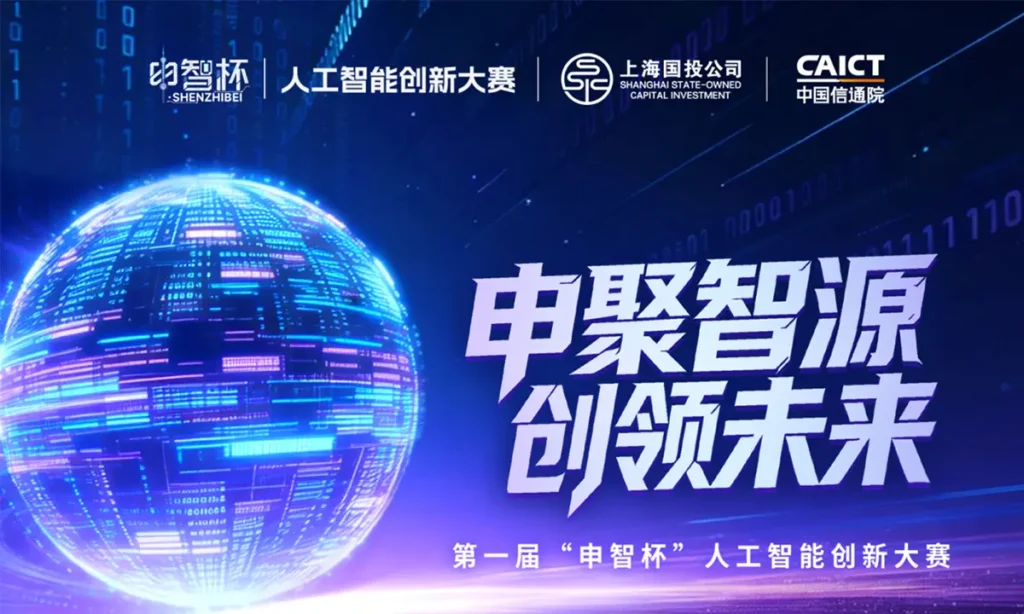
The competition is co-hosted by Shanghai State-owned Capital Investment Co., Ltd. and the China Academy of Information and Communications Technology (CAICT). That pairing matters, since one side brings serious investment infrastructure and the other brings technical credibility, something most competitions do not combine.

Why This Competition Looks Different From Typical AI Contests
Plenty of AI contests attract a decent number of entries. What stands out here is both the scale and the mix of who showed up.
A Global Field With Real Range
The preliminary round pulled in 1,451 teams from more than 30 countries and regions, including China, the United States, the United Kingdom, France, Canada, Singapore, and India. That is a record for a competition of this kind. Entrants ranged from major tech companies and top-tier research universities to national research institutes, startups, and independent developers.
One detail worth noting: overseas teams tended to stand out in algorithm originality and cross-discipline thinking, while teams based in China tended to be stronger in applying AI to real scenarios and engineering it into working systems. Some projects have already moved into joint verification with manufacturing companies, which tells you the work is not staying theoretical.
A Common Misunderstanding: Thinking This Is Just Another Hackathon
It is easy to assume a competition like this ends at a demo and a trophy. That is not how the Shenzhi Cup is built. The involvement of an investment platform and a leading professional research institution means the evaluation process and the path after the competition are both far more structured than a typical hackathon.
The Capital and Technical Backing That Sets It Apart
This is where the Shenzhi Cup separates itself from most AI competitions you have probably heard of.
Industrial Capital With Real Investment Channels
Shanghai State-owned Capital Investment manages close to RMB 300 billion in assets and serves as a core investment platform for several of Shanghai’s leading industries. On top of the RMB 4 million prize pool spread across the competition’s four tracks, the company offers participating teams access to investment and financing connections, real application scenarios, and support moving technology from a lab setting into production.
Technical Credibility From CAICT
CAICT is one of China’s leading research institutions in information and communications technology, with deep experience in technical standards, testing and verification, and industrial policy. Its involvement in judging and organizing the competition is meant to keep the technical evaluation credible rather than purely promotional.
Four Tracks, Four Very Different Challenges
The competition is organized around the idea of testing real scenarios with real data, not just reviewing proposals on paper.
- AI Computing Power and Architecture Track: teams are tested on a third-party AI chip evaluation platform, measured on system stability and energy efficiency.
- Embodied Intelligence and Robotics Track: an on-site, real-machine competition covering dynamic sorting, material handling, and component assembly.
- AI4S Scientific Intelligence Application Track: teams complete live system verification demonstrations rather than submitting a written proposal.
- AI Terminal and Human-Computer Interaction Hackathon Track: a 48-hour, time-limited build culminating in a real-scenario prototype demo.
What Happens After the Final Round
The final round is scheduled right before WAIC, and the competition’s results are built directly into the conference’s agenda rather than running as a separate event. Teams that stand out do not just get recognition on a large stage. They also get priority access to capital matchmaking and real-world application opportunities through Shanghai State-owned Capital Investment’s broader industrial network.
That structure is why industry observers have described it as a competition-conference-industry loop rather than a standalone contest.
Wrapping Up
The Shenzhi Cup is not trying to be a flashy AI hackathon with a big check at the end. It is built as a pipeline: global teams get tested under real conditions, credible institutions handle the evaluation, and the strongest projects get a direct route toward funding and industry adoption. With the final round happening in mid-July and results feeding straight into WAIC, this is one AI competition worth watching through to the end, not just at the headline stage.
FAQs
What is the Shenzhi Cup?
It is an international AI Innovation Competition guided by the WAIC Organizing Committee Office and co-hosted by Shanghai State-owned Capital Investment and CAICT.
When is the final round of the Shenzhi Cup?
The final round takes place in Shanghai from July 14 to 18, 2026, with results shown during the 2026 World Artificial Intelligence Conference.
How many teams are competing in the final round?
Forty teams advanced to the final round out of 1,451 that entered the preliminary round from more than 30 countries and regions.
What are the four tracks in the Shenzhi Cup?
They are the AI Computing Power and Architecture Track, the Embodied Intelligence and Robotics Track, the AI4S Scientific Intelligence Application Track, and the AI Terminal and Human-Computer Interaction Hackathon Track.
How is the Shenzhi Cup connected to WAIC?
The competition’s final round and results are scheduled around and integrated into the World Artificial Intelligence Conference’s agenda, rather than run as a separate standalone event.
Images: Shenzi Cup.