


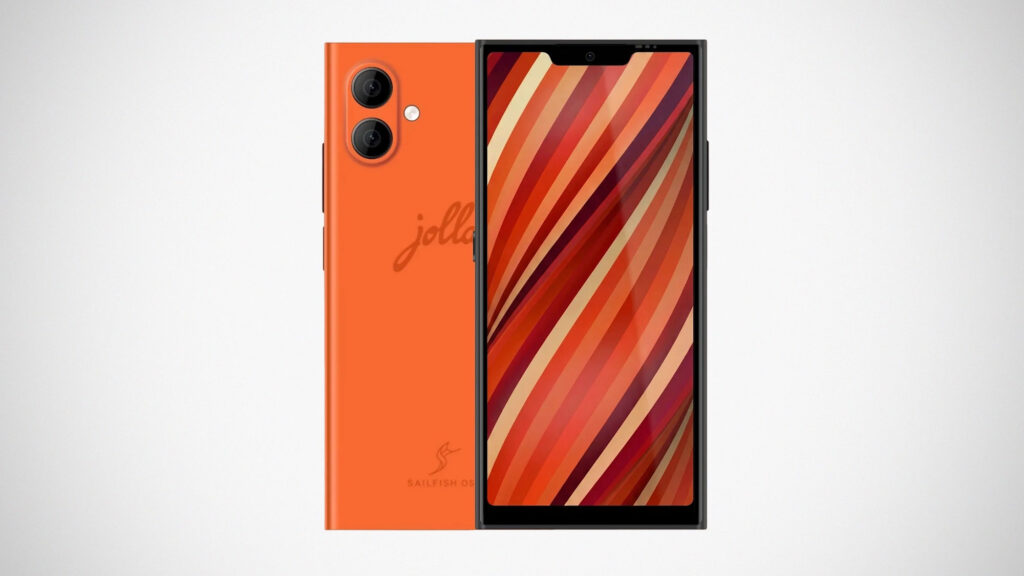
More than 10 years after its first Android and iOS alternative smartphone, Jolla (pronounced as “yo la”) is back with a new smartphone. I know. I was just as surprised.

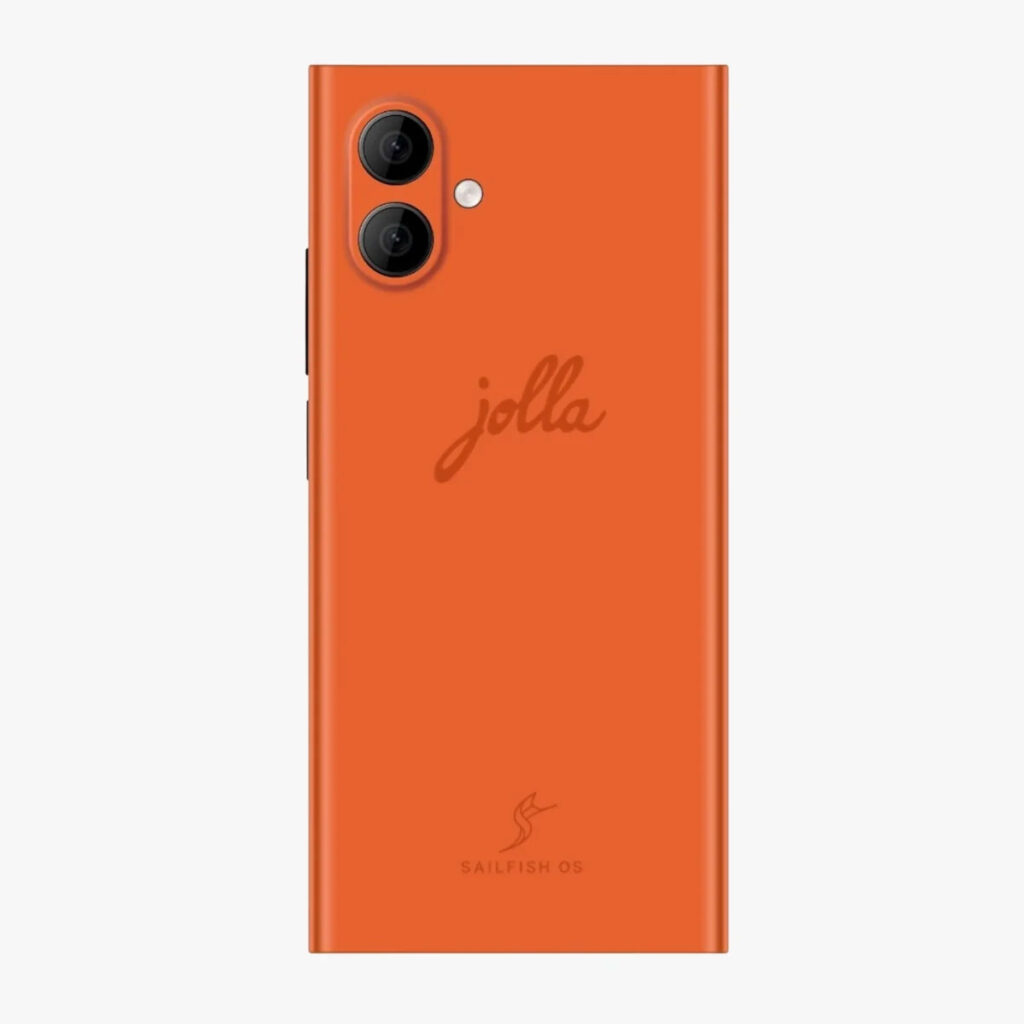
After its first phone, the Finnish tech outfit embarked on a tablet, but neither device saw a follow-up—except for the phone now returning 13 years later.
Jolla took to MWC 2026 to reveal the new hardware, along with a bunch of products that probably are not as interesting to end users and consumers.
Anyhoo, we have reason to believe that Sailfish OS, a Linux-based operating system for small devices developed by the Finnish tech company, is going to be more powerful than ever before. The team has been developing and licensing Sailfish OS the whole time, committing to software partnerships and niche devices.
As before, the Jolla Phone (2026) is marketed as a phone that respects your privacy. The device promises no tracking, no calling home, and no hidden analytics. It even has a user-configurable physical Privacy Switch to turn off the microphone, Bluetooth, Android apps, or whatever you desire.
Oh yes, it can run Android apps too, so you are not really outside the circle, so to speak.
Let me explain. Sailfish OS is built on the Linux kernel, much like Android. However, it uses its own middleware and user interface layers. It was developed for smartphones, tablets, and other lightweight connected devices, and it is optimized for touch and resource efficiency.
The OS relied heavily on gesture-based navigation back when Android was still using software buttons. These days, Android is also heavily gesture-based.
It runs native Sailfish apps and, through an Android compatibility layer, it can run many Android apps as well.
The detailed specs are not complete yet. Key details such as the SoC, RAM, storage types, and display technology are not available.

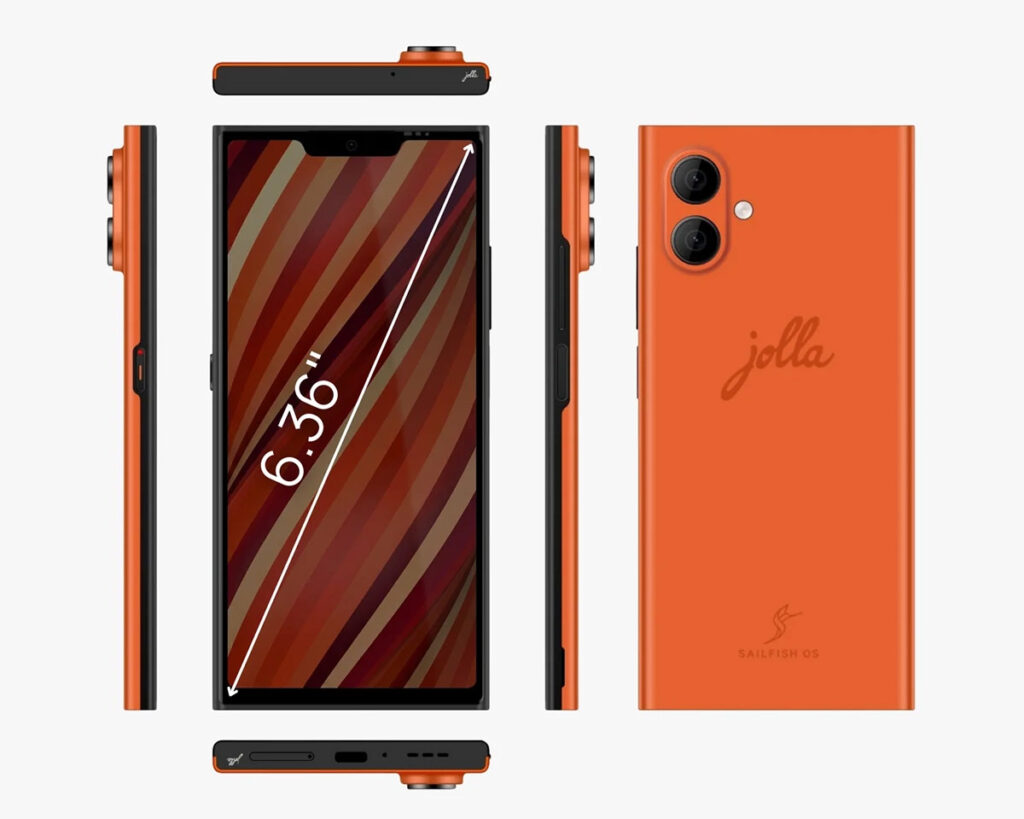
What we do know is that the device is a nod to the OG design. It looks like the original Jolla Phone, only larger and sleeker—thanks to the narrow bezel and rounded aesthetic that reminds us of early Windows Phone devices.
The dimensions and weight are not publicly available, though we heard it is around 9 mm thick. So no, it is not competing in the thin-phone Olympics.
It has a 6.36-inch FHD touchscreen display with a pixel density of around 390 ppi, which is pretty impressive. The screen benefits from Corning Gorilla Glass, though the exact generation is unknown.
The chipset is MediaTek, again with specifics not yet disclosed. It will have 8 GB of base RAM, upgradeable to 12 GB. Internal storage is 256 GB, expandable up to 2 TB via microSDXC.
The new Jolla Phone has a dual-camera setup at the back, featuring a 50 MP main camera and a 13 MP ultra-wide camera, though additional details are not known. The front has a small forehead housing an unspecified selfie camera.
Other bits we know include a 5,500 mAh user-replaceable battery, support for GSM/HSPA/LTE/5G networks, dual nano SIM, standard Wi-Fi, Bluetooth, and a USB-C port.
The phone runs on Sailfish OS 5.0, with a promise of up to five major OS upgrades.
Oh, and it also has a user-replaceable back cover with color options, bringing you back to the good old Nokia days. Not that it has many colors to choose from. There is Snow White, Kaamos Black, and Orange, all hues inspired by Nordic nature.

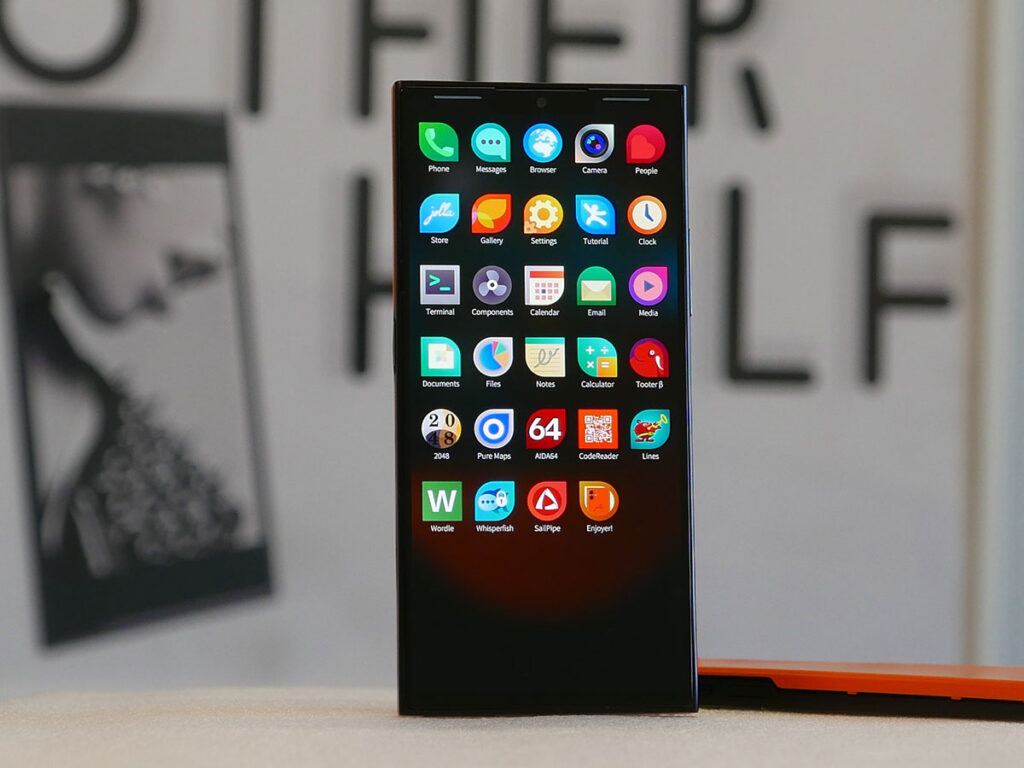
Notwithstanding the lack of complete specifications, the company has already taken over 1,000 orders for the phone, which initially had a special price of €579 (~US$666).
At the time of this post, Jolla is accepting orders for €649(~US$746), with delivery expected in September 2026. You can upgrade the RAM to 12 GB for an additional €50 (~US$57), and a €99 (~US$114) deposit is required.
I believe it is now in its third batch of orders.
Images: Jolla.