


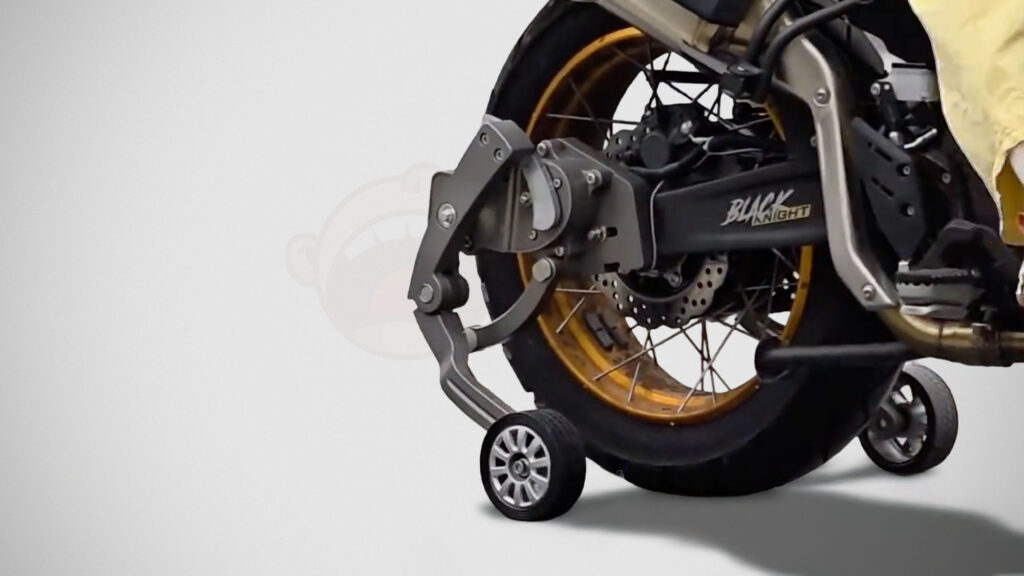
Motorcycles are getting bigger, and being larger, they offer a riding experience that regular-sized bikes cannot replicate. That said, what if big bikes are your cuppa, but you lack the confidence, or are, ermmm, vertically challenged, to handle one safely? This is where motorcycle training wheels come into play. Yes, you heard that right—motorcycle training wheels.

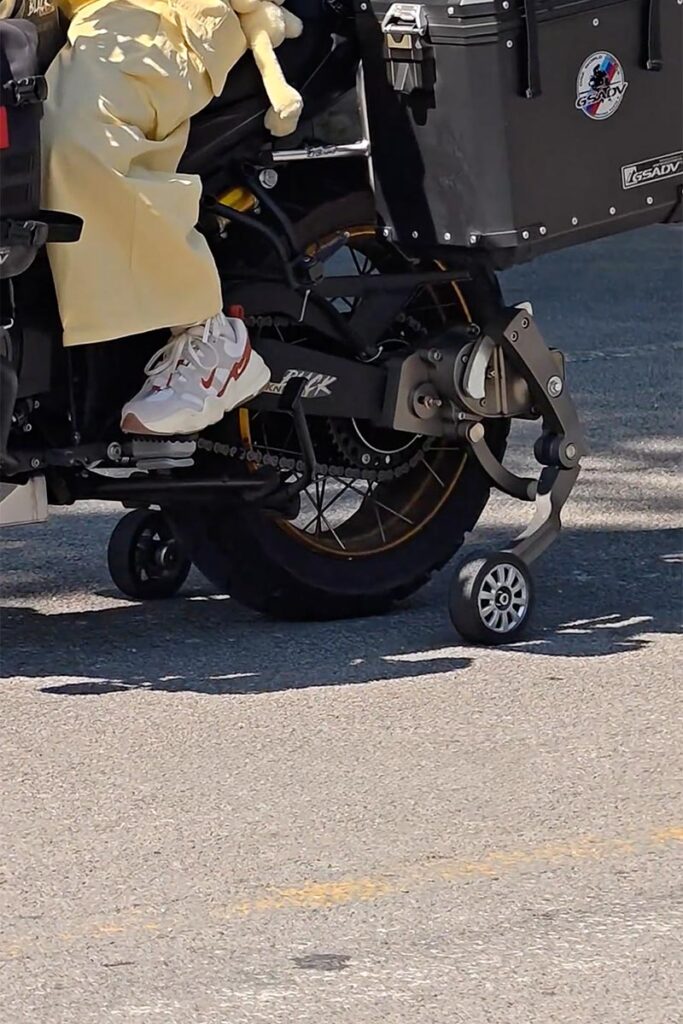
Much like bicycle training wheels that help beginners master balancing, motorcycle training wheels are designed to keep a bike upright, offering riders peace of mind that the machine will not topple over at the worst possible moment. That is where the similarity ends, though. Unlike bicycle training wheels, these systems only deploy when needed and retract once the bike is moving again.
There are currently two notable approaches to motorcycle training wheels. The first comes from LegUp LandingGear, a veteran in this space since the early 2000s. Designed as a stabilization system for heavy touring motorcycles, LegUp uses small retractable outrigger wheels controlled by an onboard computer and pneumatic system. The wheels automatically deploy when the bike slows to around 6 mph (about 10 km/h) and retract once the rider accelerates. It serves as a practical alternative to trikes and is especially useful for aging riders who still want to enjoy large touring bikes.
The second approach comes from Voge, a premium motorcycle sub-brand of Chinese motorcycle maker Loncin. Voge’s system targets riders who are simply too short for taller motorcycles. In this case, “large” is relative. The system allows riders as short as 1.5 m (4.92 feet) to handle tall bikes with confidence. It automatically deploys at speeds of 5 km/h (3.1 mph) or below and retracts at around 3 to 4 km/h (1.86-2.49 mph).
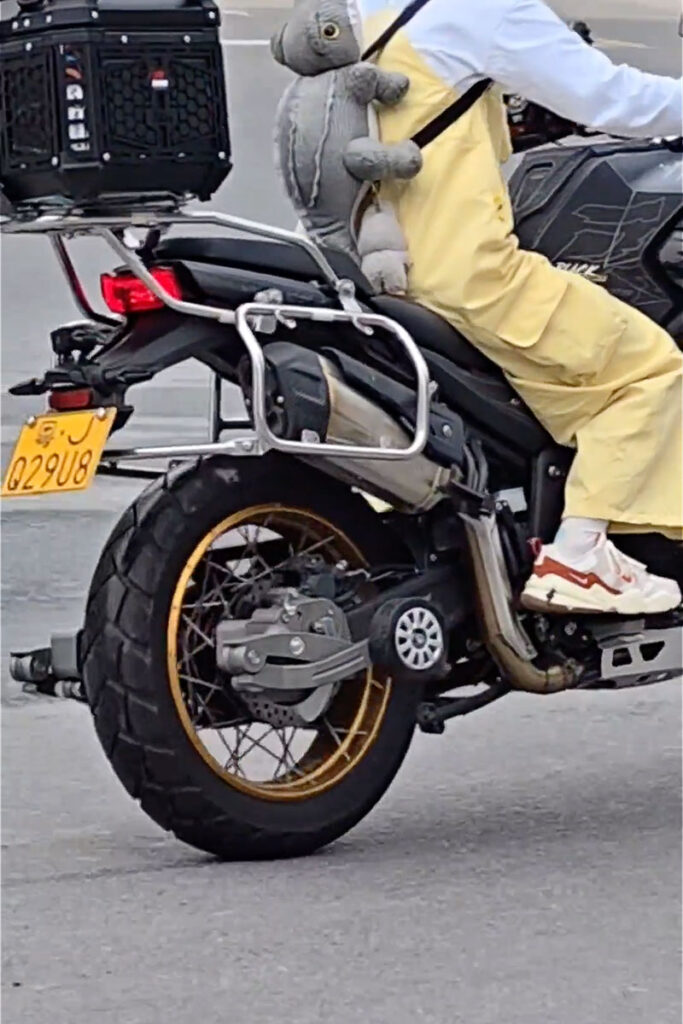
An accelerometer and built-in GPS determine when the system should deploy or retract based on speed. Once deployed, a gyroscope detects tilt and surface conditions, adjusting the wheels to keep the motorcycle upright on uneven ground or slight inclines. The setup is also designed to be dust-resistant, water-resistant, and tolerant of extreme temperatures.
Pricing-wise, the second-generation LegUp LandingGear system starts at US$3,650 for select motorcycles. Voge’s system appears to be available only in China at the moment, priced at around 8,000 yuan, which works out to approximately US$1,156. We have no information on how to purchase it, though. We understand that folks buying Voge motorcycles [CH] can select this as an optional equipment.
Note: As far as China’s market is concerned, Voge isn’t the only one that has this outrigger system. There are others, but it is the only model from a reputable brand.
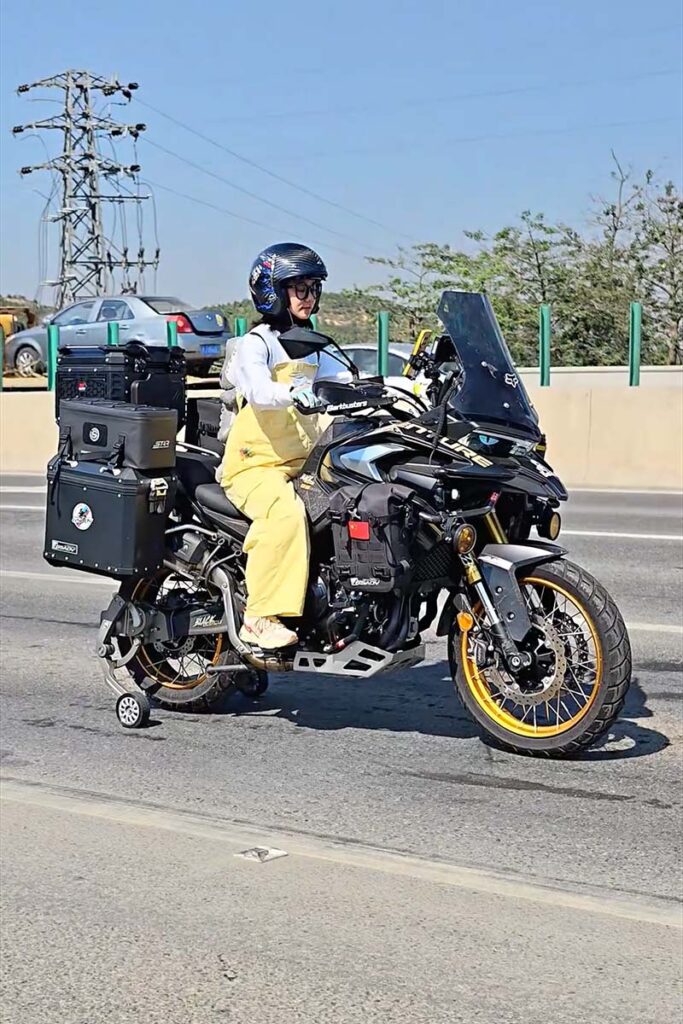
Images: Douyin [北北机车头].