


One of the most ridiculous things about modern architecture is that we still need to turn on artificial lighting when indoors during the day. It is hard not to because light cannot reach deep inside buildings or underground.

Over a decade ago, a California company attempted to solve this by collecting sunlight and redirecting it indoors. Alas, it did not make headway. A search on the internet shows that hardly anyone is exploring this potential energy-saving solution, save for a research project and this: the Hexi Smart Sunlight Fiber Optic Redirection System from Suzhou-based Laifu New Energy Technology Limited. Both brand and company names are my own translation, btw. There are no official English names for them.
The difference between Hexi and Light Bandit is obvious: the former has seen adoption in China, while the latter appears to be defunct. It is unfortunate. It was a good system that businesses, consumers, and the Earth could benefit from.
Anyhoo, the Hexi Smart Sunlight Fiber Optic Redirection System is a sophisticated system that uses precise solar tracking, high-tech lenses, fiber-optic transmission, and indoor projection units to deliver 8–10 hours of real sunlight to spaces that normally lack it—such as basements, deep building interiors, north-facing rooms, and enclosed areas.
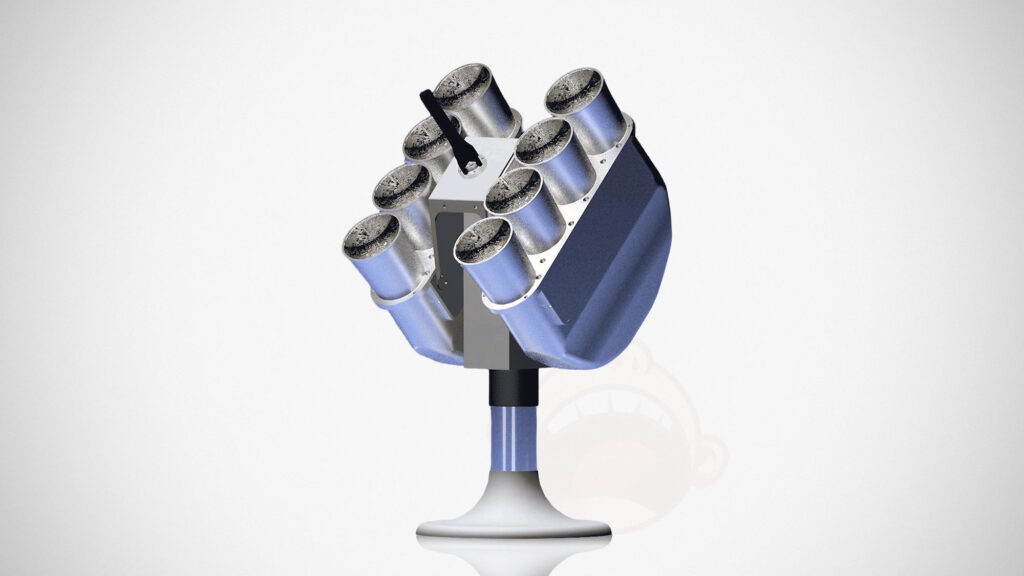
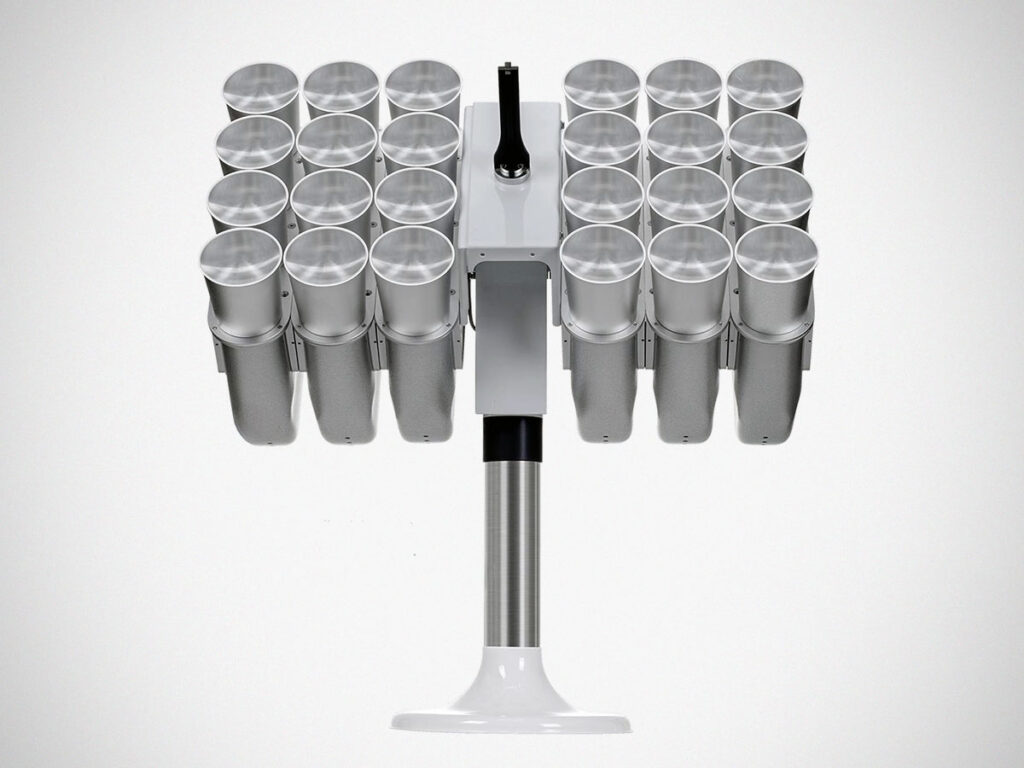
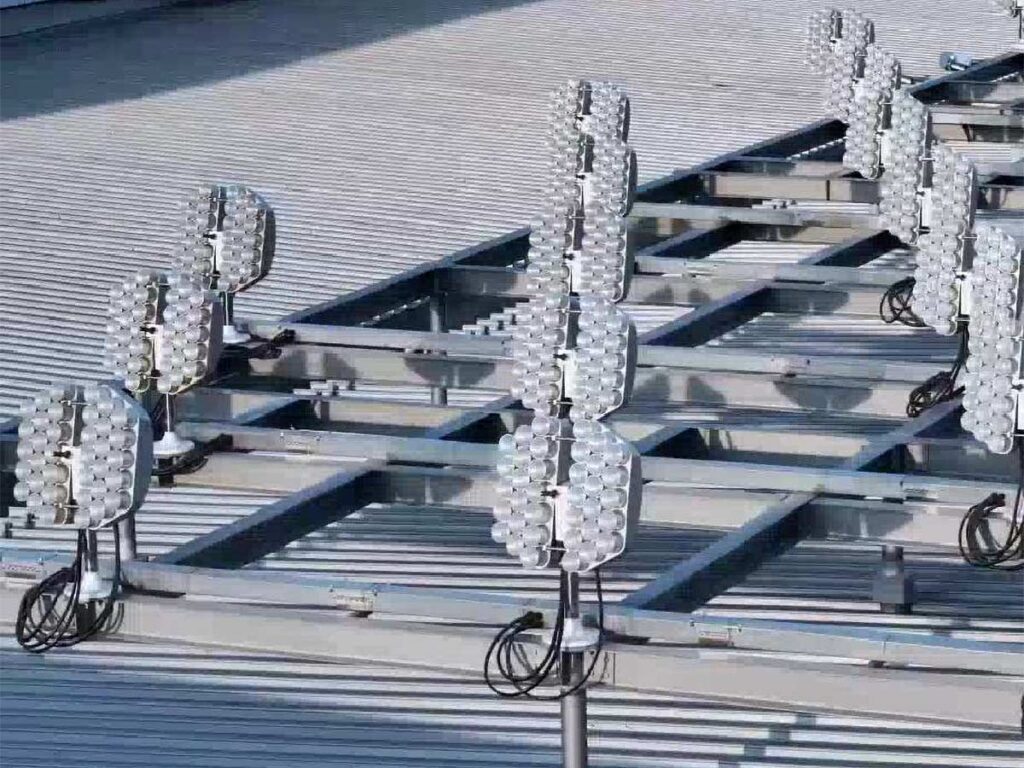
And yes, that rocket launcher-like contraption is the sunlight collector. Each tube is an optic that “collects” sunlight. The smallest of them all is an 8-lens system, good for up to 20 square meters (215 square feet).
Automatic tracking of the sun’s trajectory ensures that the sunlight collector is always perpendicular to the sun, thereby achieving higher capture efficiency compared to fixed openings like windows and skylights.

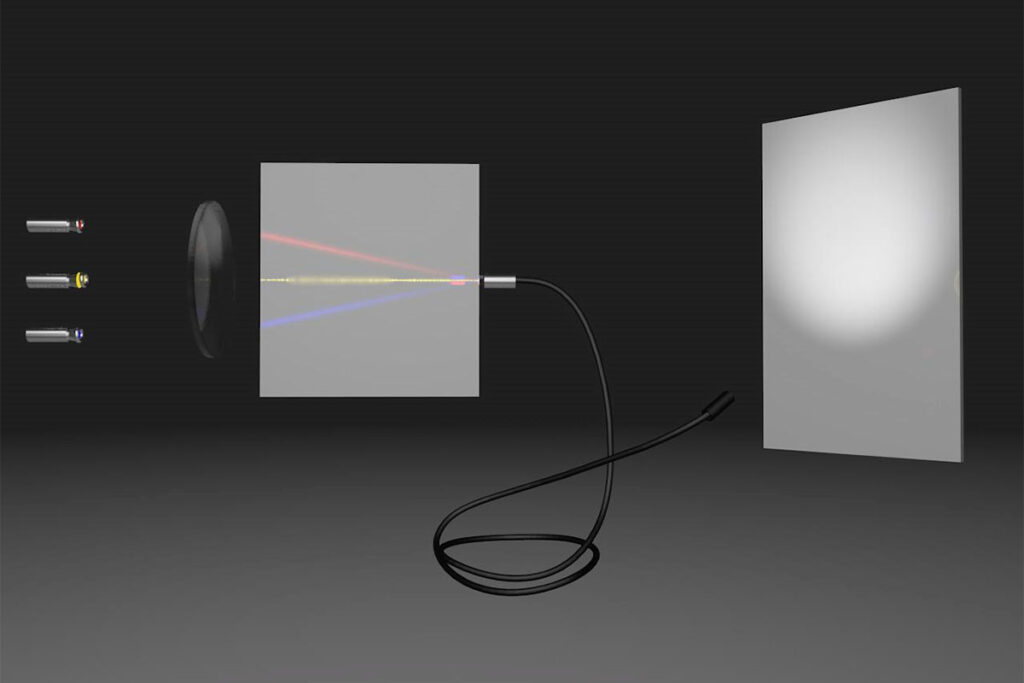
The system further boasts adjustable fiber bundles, allowing control of sunlight intensity. Makes sense because it would be ridiculous to get sunburned indoors or have to wear sunglasses inside. Being adjustable ensures comfort without overheating, which would be counterintuitive since the air conditioning system would have to work harder to keep the environment cool.
Speaking of fibers, they are thin and bendable, allowing light to be transmitted over long distances deep into buildings.
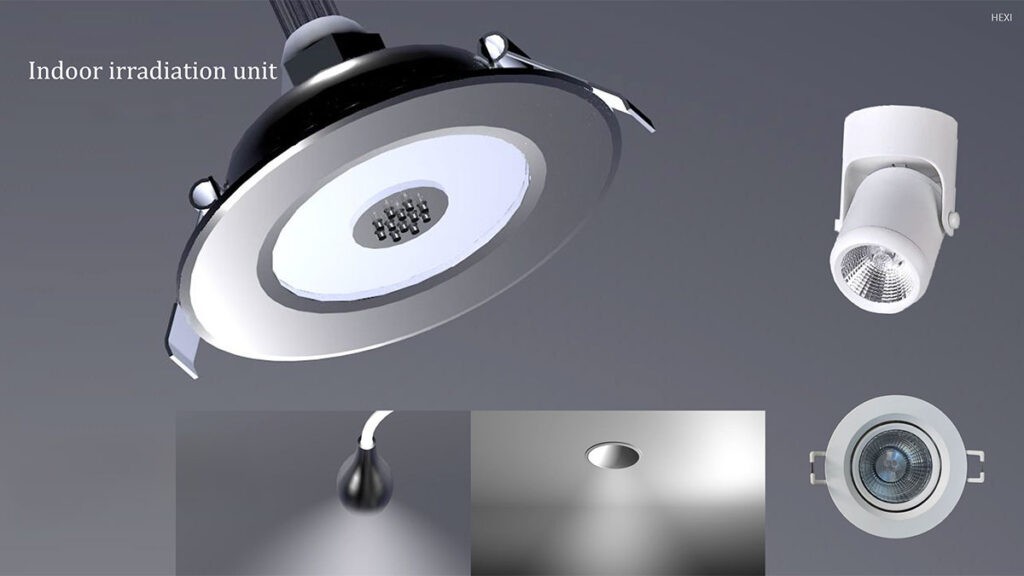
The Hexi Smart Sunlight Fiber Optic Redirection System includes an outdoor sunlight tracking unit, a fiber optic transmission system (large-core quartz fibers with extremely high flux capacity), and indoor irradiation units. The latter are “light” fixtures, which can include spotlights, downlights, decorative lights, and whatnot.
Hexi Smart Sunlight Fiber Optic Redirection System is apparently on its 6th generation, which delivers 120% higher brightness under the same conditions. Hexi says a single fiber bundle can deliver several thousand lux indoors.
The system is suitable for lobbies, living rooms, bedrooms, kitchens, bathrooms, cloakrooms, yoga rooms, basements, and more. Basically, it can be implemented as long as you have a roof with no obstructions, and it is perfect for places that are dark or have low light penetration during the day.
I would imagine it will save a bunch on utilities, especially for businesses. But it is not all about dollars and cents. It has obvious advantages for the environment. For starters, since it is direct sunlight transmission, there are zero conversion losses. That is a win in itself.

In addition, Hexi claims solar utilization efficiency of up to 80%, which is superior compared to 3–18% for conventional energy-to-light systems. Hexi says that each unit can reduce hundreds of kilograms of CO₂ emissions annually.
Unlike artificial lighting, Hexi transmits the full solar spectrum without energy conversion or distortion. Because it is full-spectrum sunlight, it also supports vitamin D synthesis, circadian rhythm, and overall well-being. I mean, natural sunlight definitely beats artificial lighting, right? Though I am not sure about less-friendly UV exposure. There is no mention of that.
Natural sunlight brings with it natural antibacterial and antifungal effects. Who knows? It may be good for our eyes, too. But that is purely my speculation.
Apparently, Hexi is not the only sunlight system, but to be honest, it is hard to locate its competitors online. I guess Hexi wins in this aspect since we managed to find it and not its competitors, and also, we found their system intriguing enough, engineering-wise, scientifically, and sustainability-wise.
Anyhoo, though we said it is good for the environment and may save you money, you have to consider the initial investment, which starts at 30,000 yuan [CH] (about US$4,342). How much it will cost eventually depends on the coverage, where the lights will be installed, the amount of fiber optic used, and the complexity of reaching the target location. So there is math to be done before one can say if it is worth it.
Images: Hexi [CH].