


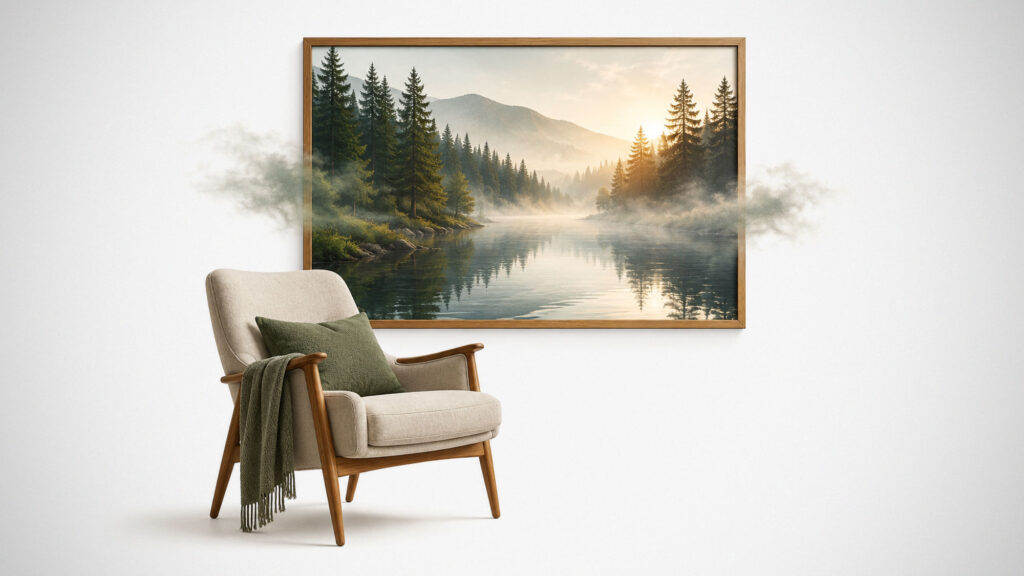
There is a particular kind of exhale that happens when you step into a room that feels settled. The lighting can be perfect, and the furniture can be expensive, yet the space may still not soften your shoulders. Calm is not strictly a function of square footage or minimalism. It is often the result of cues that tell the mind it is safe to slow down, and those cues can be surprisingly visual.
Nature-themed wall art works because it draws on environments our brains have been trained to find restorative. A grove of trees, a shoreline, a field at dusk, even a close-up of leaves can signal quiet in a way a purely abstract composition may not. The goal is not to recreate the outdoors in a literal sense. It is to introduce a gentle rhythm of color, pattern, and implied depth that interrupts the churn of daily noise.
What makes this approach appealing is that it is both immediate and flexible. You do not need to renovate or replace a sofa to change a room’s emotional temperature. Hanging one strong piece can redirect attention, anchor a seating area, and set a more tranquil tone. With a bit of intent, the right image can function like a visual pause button.

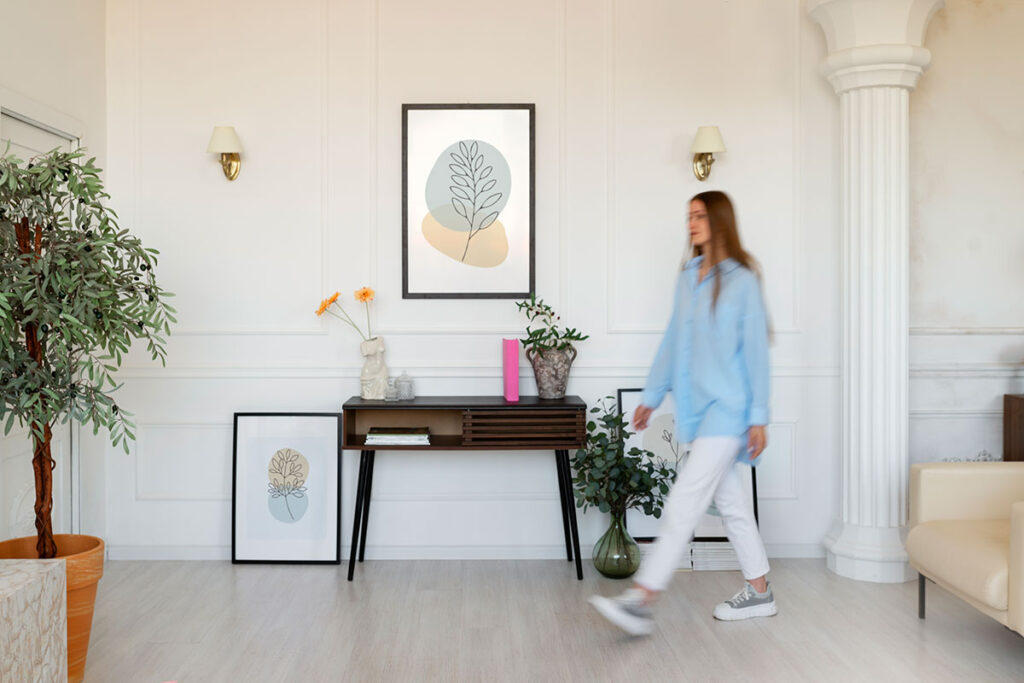
Why the Brain Relaxes Around Natural Imagery
A calming room is often one that asks less of your attention. Nature scenes tend to offer “soft fascination,” meaning they are interesting enough to hold the gaze but not so demanding that they pull you into problem-solving. Think of the way you can stare at ripples on water or the branching structure of a tree without feeling pressured to interpret it. The mind gets a small reward of engagement without the spike of urgency.
Natural imagery also tends to be more legible at a glance. You can recognize sky, horizon, and foliage quickly, which reduces the subtle tension that comes from visual ambiguity. That does not mean all abstract art is stressful, but many people experience immediate ease when a scene provides spatial logic. A path leading into a forest or clouds receding into distance can give the eye a simple, restful route.
There is also an emotional memory component at play. For many people, landscapes recall vacations, childhood walks, or moments of solitude that felt uncomplicated. Even if you have never visited a specific mountain range, the vocabulary of nature implies space and breathing room. When that vocabulary enters a room, it can counter the compressed feeling of screens, schedules, and constant alerts.
Choosing Scenes That Lower the Volume of a Space
Not all nature imagery calms in the same way, and the distinction matters. A stormy sea with churning waves may be beautiful but energizing, especially in a room where you want to wind down. Calm often comes from cues of stability: still water, gentle gradients in the sky, and compositions with clear balance. A simple horizon line can act like a visual leveling tool for a space that otherwise feels busy.
Scale and perspective also change the emotional effect. Wide landscapes with open sky can make a small room feel less contained, which is useful in tight apartments or home offices. Close-up botanicals can be soothing in a different way, more intimate and cocooning, which suits bedrooms or reading nooks. Forest imagery sits in the middle, offering depth while still feeling enclosed enough to be cozy.
In the early stages of planning, it helps to decide whether the room needs expansion or hush. A dining room used for hosting may benefit from a bright meadow that feels social and light. A bedroom may need an image that slows the eye, such as foggy trees or a muted shoreline. The best choice is less about what is popular and more about what the room is asking for emotionally.

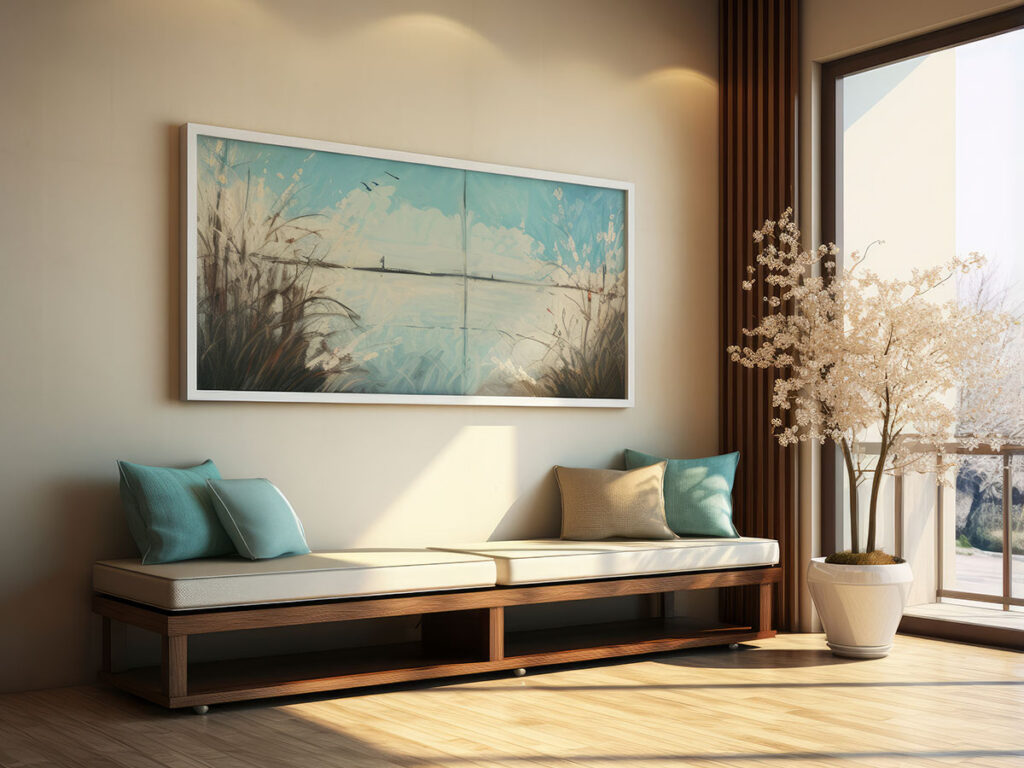
Materials, Finish, and Framing as Part of the Calm
The medium influences how the image behaves in the room, especially under changing light. Matte finishes tend to reduce glare, which can be surprisingly important for restfulness. If a piece catches harsh reflections from a window or overhead fixture, your eye is repeatedly yanked toward bright spots. A calmer room usually benefits from surfaces that absorb light rather than bounce it.
Texture can either soothe or stimulate depending on how it is used. Canvas often brings a soft, tactile quality that reads as warm and domestic, while acrylic glass can feel crisp and contemporary. Metal prints can look striking, though they may reflect light more aggressively in certain settings. The right choice depends on the room’s job, the amount of sunlight, and whether you want the art to whisper or announce itself.
Framing is not merely a finishing touch; it is a boundary that shapes perception. A thin natural-wood frame can reinforce the organic theme without feeling rustic. A white frame can lighten the visual weight and keep the room airy. A black frame can add structure and sophistication, though it may increase contrast and visual intensity if the image is already dramatic.
A Practical Way to Source Nature Art Without Turning It Into a Project
When you start looking for nature-themed wall art, the calming effect can get lost in the shopping itself. Endless scrolling, uncertainty about size, and questions about finish can turn a simple idea into a project. A better approach is to define what “calm” means for your room first. Then choose a subject that reliably delivers it, like trees, shoreline, or open sky. That decision acts as a filter, so you stop saving options and start narrowing. It also keeps you from buying something pretty that does not actually soothe the space.
Next, reduce friction so you can focus on the image, not the logistics. That is where a wall art company and online marketplace like iCanvas can help, offering ready-to-hang work from independent artists, licensed estates, and cultural institutions. You can browse on iCanvas by subject, then choose a material that suits your room’s light and the way you live in it. If you want a steadier visual rhythm, trees are a smart starting point because they feel structured without feeling sharp, and the brand’s dedicated tree-themed canvas prints collection keeps comparisons tight, helping reduce decision fatigue.
Once you choose a lead piece, let it set the tone for the rest of the room. Pull one or two colors from the artwork and echo them subtly in a pillow, a throw, or a single ceramic. Give the piece breathing room, since calm depends on negative space as much as on the subject. If the room already has bold patterns, pick nature art with a softer contrast to smooth the mix. If the space feels flat, choose a scene with one controlled accent, like warm light on a horizon. The point is progress, because calm arrives when the art is on the wall.
Color Psychology and the Case for Quiet Palettes
Color is one of the fastest ways to shift a room’s emotional register. Nature art tends to rely on greens, blues, earth tones, and neutrals, which many people experience as stabilizing. The calming effect often comes from lower saturation and gentle transitions, like misty gradients or sun-faded fields. When a piece is too vivid, it can energize the room, which is not always what you want at the end of the day.
Green has an obvious association with growth and renewal, but its real power indoors is its versatility. Sage and olive can act like sophisticated neutrals that flatter wood, brass, and cream upholstery. Blue, especially when it leans soft rather than electric, can create a sense of distance and coolness that eases mental heat. Warm earth tones, such as sand and clay, can make a room feel grounded without making it heavy.
The smartest approach is to use the art as a color governor. If your room already contains bold elements, pick nature imagery with a quieter palette to smooth the overall effect. If the room feels flat and lifeless, choose a landscape with one controlled accent, like a warm sunrise or a strip of wildflowers. The goal is to keep the eye moving gently, not jumping.
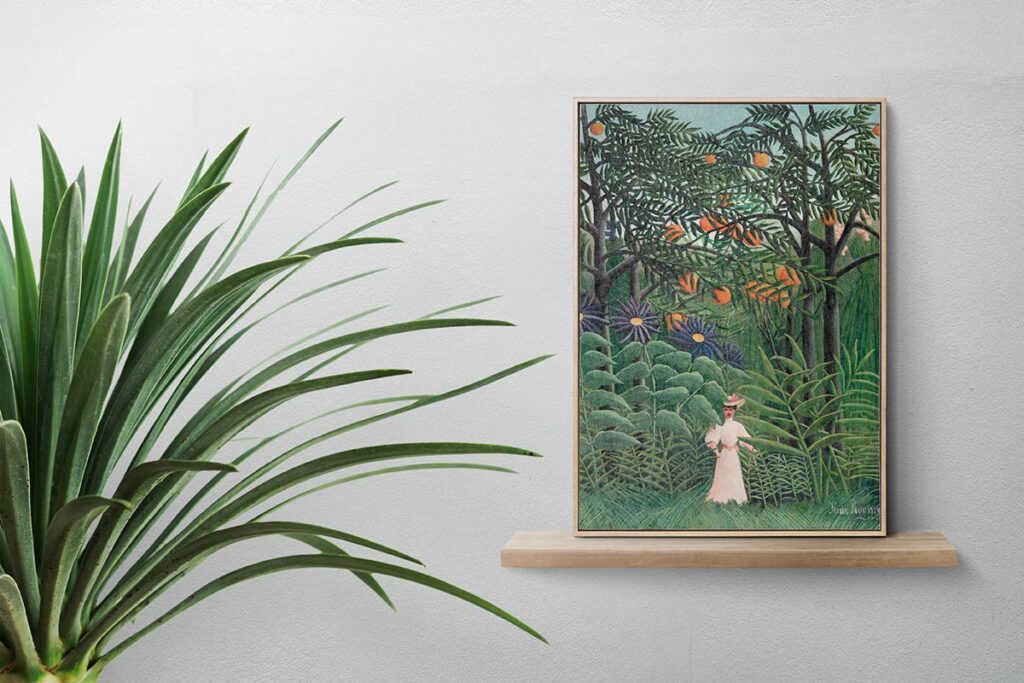
Scale, Placement, and the Art of Visual Breathing Room
Calm is often a function of proportion. A small piece floating on a large wall can make the room feel unresolved, which subtly increases tension. A piece that is too large can overwhelm the space and create the feeling that the walls are closing in. Nature art works best when it gives the eye enough surface area to wander without forcing it to negotiate clutter.
Placement matters as much as size. Hanging a landscape too high can make it feel like a decoration rather than a destination for the gaze. In living rooms, art typically feels most natural when the center of the piece sits roughly at eye level, adjusted for seating height. Over a sofa, a good rule is to keep the width of the art or grouping to about two-thirds of the furniture’s width, which tends to look balanced.
Equally important is what surrounds the piece. If you crowd nature art with shelves, busy textiles, and sharp lighting, you undermine its calming promise. Give it margin and let it be the quietest thing in the conversation. A room often feels calmer not because it has more items, but because it has clearer focal points and fewer visual interruptions.
Pairing Nature Art With Lighting, Texture, and Sound
Nature imagery sets the tone, but the room has to support it. Lighting is the most common saboteur, especially cool, overly bright bulbs that make even a serene landscape feel clinical. Warmer light tends to flatter earth tones and soften contrasts, which helps the art do its work. Consider a picture light or a directional lamp that highlights the piece gently without creating glare.
Texture is the second partner in calm. If the art suggests trees and water but the room is filled with hard, shiny surfaces, the message becomes mixed. Bringing in linen curtains, a wool rug, or a textured throw can echo the organic theme without turning the room into a cabin. Even a ceramic vase or a wood tray can reinforce the sense that the space is meant for unwinding.
Sound is the final layer people forget, yet it is closely tied to how visual calm is experienced. A room with soothing wall art can still feel edgy if the acoustics are sharp and echoing. Soft textiles help, but so do practical choices like a thick rug pad and curtains that actually have weight. When the room looks quiet and also sounds quiet, the brain accepts the cue more fully.
Keeping It Fresh Without Breaking the Spell
Calm rooms are not static; they are maintained. Nature art can fade into the background over time, which is not necessarily bad since it means it has become part of the room’s baseline. Still, subtle changes can keep the space feeling intentional without disrupting its serenity. Swapping a frame from black to light wood, or rotating a print seasonally, can refresh the mood while keeping the overall theme consistent.
Try to resist the urge to overcollect within the same wall. Adding too many pieces can turn a calming subject into visual chatter, especially if each work competes in scale or color. If you want variety, consider a small set of related works that share a palette and similar horizon lines. A cohesive triptych of shore scenes, for instance, can feel expansive without being loud.
Finally, pay attention to the room’s real purpose rather than an idealized version of it. If you work in the space, choose imagery that steadies you during busy hours, not just something that looks good in the evening. If it is a bedroom, prioritize softness in tone and reduce high contrast. The best nature-themed wall art does not just decorate a room; it quietly edits your experience of being in it.