


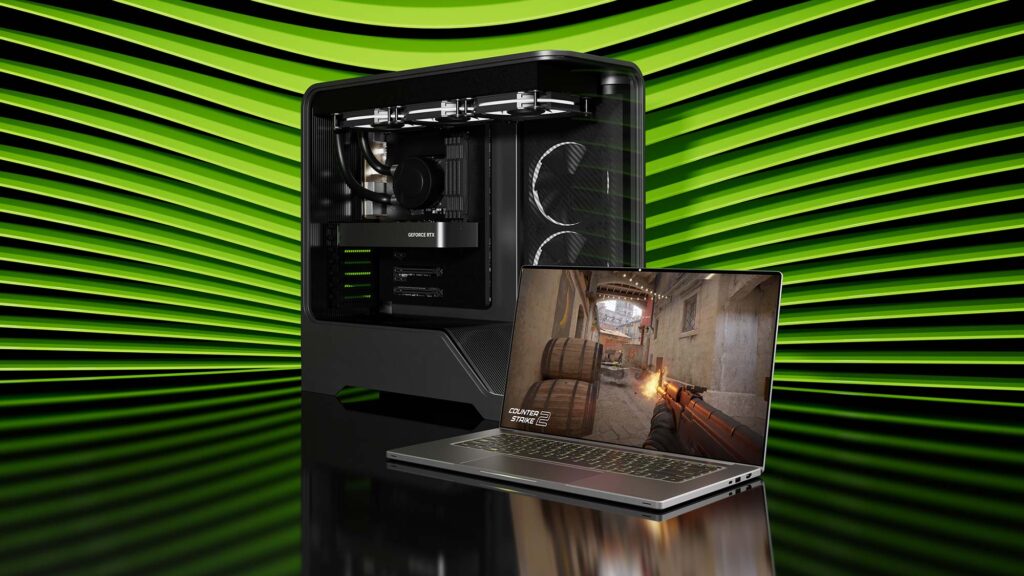
The idea of an entry-level anything is to have a product that is (maybe) watered down and easier on the wallet. The latter is the key. But the new entry-level RTX 50 series, the RTX 5050, doesn’t quite seem to be the case, at least not to my not-so-pathetic financial situation.
According to NVIDIA, the new 5050 serves as the successor to the 3050. It offers significant performance gains and modern features courtesy of the Blackwell architecture, without breaking the bank.
But at US$249, it’s only about 50 bucks cheaper than the mainstream “entry-level” 5060. It makes you wonder what NVIDIA’s understanding of “not bank-breaking” really is.
Anyways, price aside, this little big guy is rocking 2,560 CUDA Cores and a whopping 8 GB of GDDR6 memory (or GDDR7 for the laptop version). Like its higher-powered siblings, it boasts 4th-generation Ray Tracing Cores, 5th-gen Tensor Cores with DLSS 4 support (of course), and a clock speed of up to 2.57 GHz.
It’s also worth noting that the RTX 5050 is the first xx50-class card to feature DLSS 4, neural rendering, and ray tracing enhancements. It further packs NVIDIA Reflex for ultra-low latency in competitive games.
The laptop variant is priced at US$999, by the way.
The new NVIDIA RTX 5050 will hit shelves in late July from brands including ASUS, MSI, Gigabyte, and more. Honestly, I don’t see much savings. But if you’re coming from relics like the GTX 1650—or even the RTX 3050 (which reportedly outperforms by 10–15%)—and you’re on a build where every cent counts, then maybe this is your go-to card.
Seriously, though, it’s just a 50-dollar difference. You might as well bite the bullet and hit up a 5060. But that’s just me.
Images: NVIDIA.
Story via Hardwarezone.