


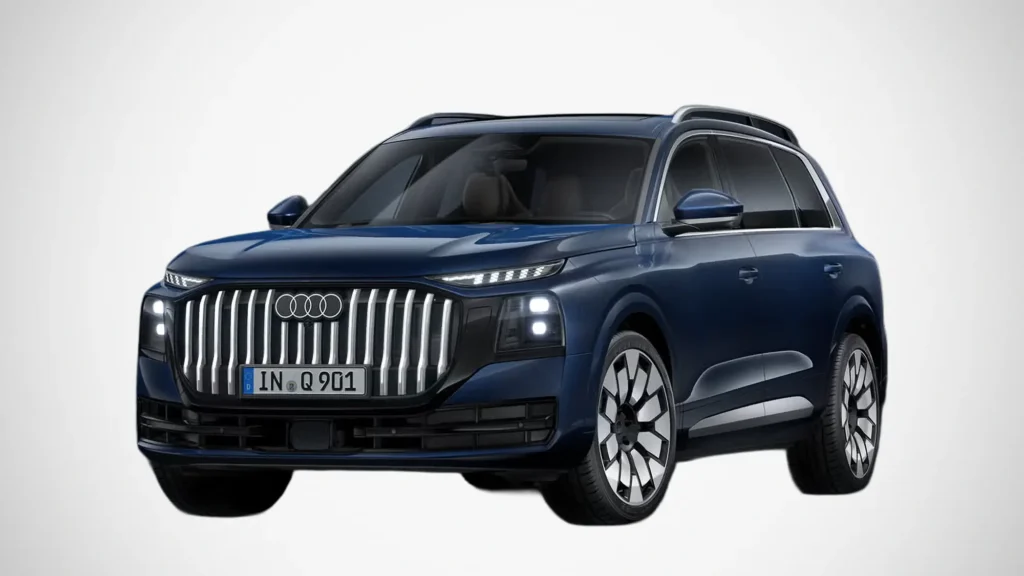
The term “SUV” has been stretched thinner than some of the vehicles wearing the badge. These days, even cars with barely more room than a regular hatchback are calling themselves Sport Utility Vehicles. In my book, an SUV should at least ride high and have enough space to haul people, luggage, and whatever else life throws into the cargo area. Never mind what the other automakers are doing, though, as Audi appears to have remembered the “utility” part with the all-new Q9. It may not return the SUV to its rugged, mud-plugging roots, but it certainly returns the space.

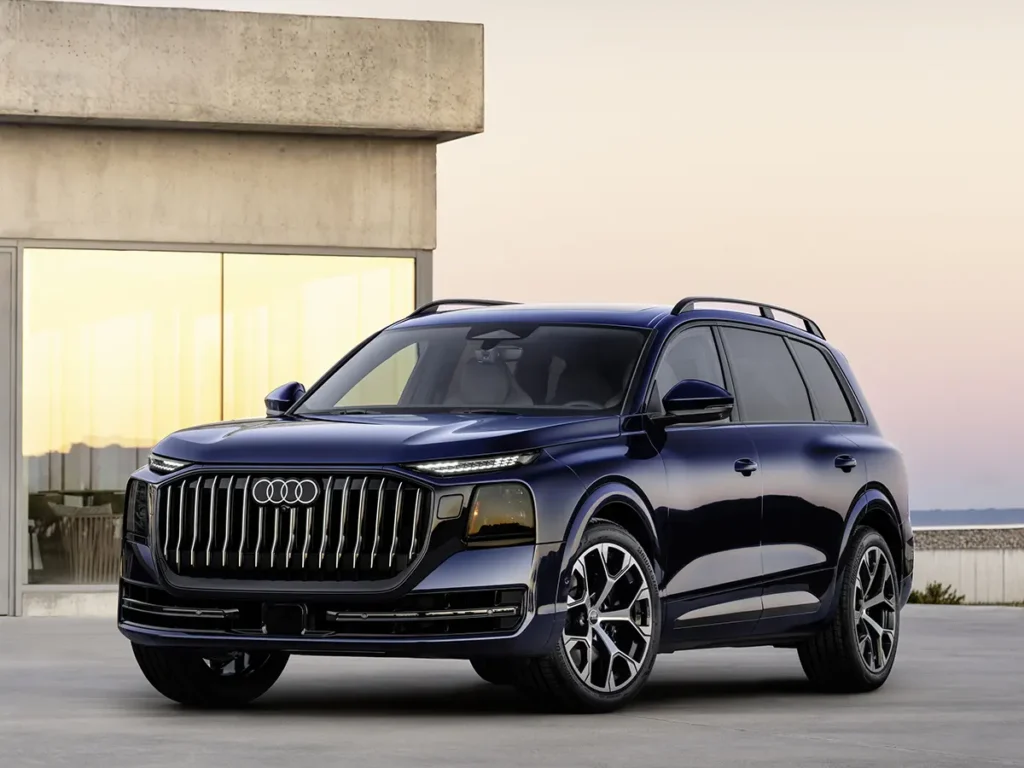
The all-new 2027 Audi Q9 is Audi’s largest SUV yet and comfortably sits above the Q7 and Q8. This is not a two-row vehicle trying to pretend it is an SUV. It is a full-size, three-row luxury SUV designed to go head-to-head with the BMW X7 and Mercedes-Benz GLS.
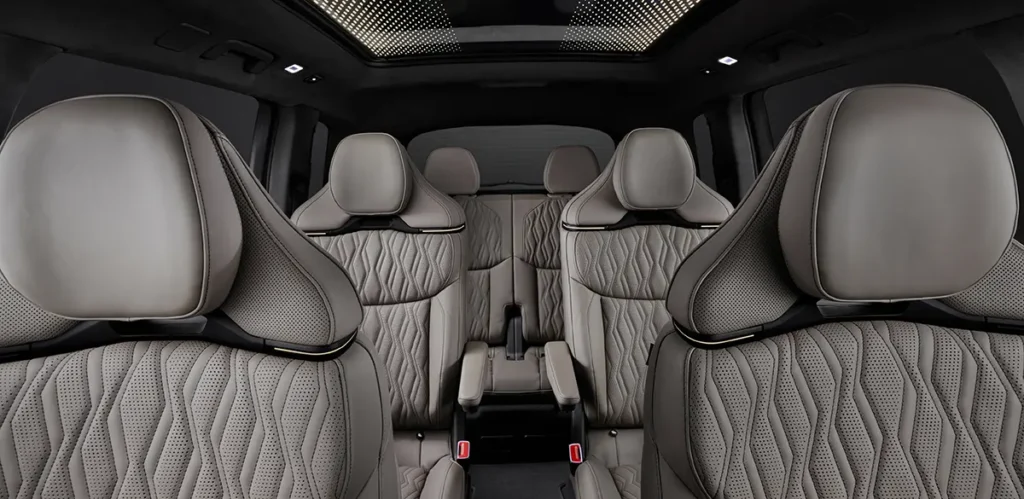
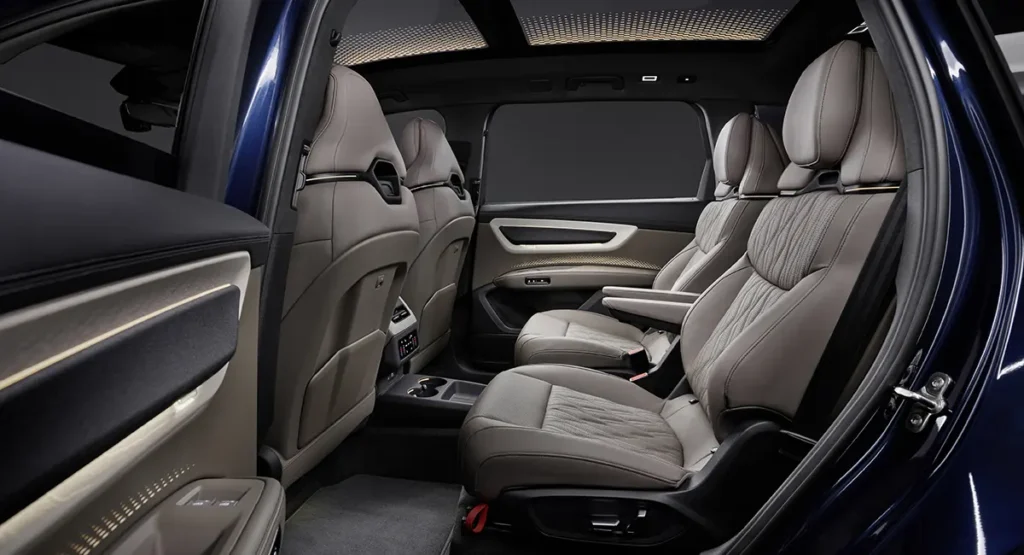
So, exactly how big is it? Well, it measures 5.31 m (17.4 feet) long, 2.21 m (7.3 feet) wide, and 1.81 m (5.9 feet) tall, making it the largest Audi ever made. Unlike some SUVs that are 5+2, it seats seven as standard, with ISOFIX mounting points on all three second-row seats. The third row is fully capable of accommodating adults—not just kids. For those who choose space over capacity, an optional six-seat configuration replaces the middle bench with two electrically adjustable individual seats.
Speaking of seats, every seat is electrically adjustable. The second-row seats can slide forward and tilt without requiring you to remove an installed child seat, while the third-row seatbacks fold individually at the push of a button. The front Sports Seats Plus can also be specified with heating, ventilation, and massage functions. Even the front and rear armrests can be heated, in case warm hands are no longer luxurious enough.
The Q9 is also the first Audi to offer automatic doors. Sensors stop them from opening into people or nearby objects, while an electric soft-close mechanism saves passengers from the indignity of slamming doors. They can be operated from several points inside the vehicle or remotely through the myAudi app.
Overhead is the largest panoramic sunroof ever installed in an Audi. Its glass area spans more than 1.5 square meters (16.1 square feet), and it can open or tilt. An optional version divides the glass into nine electronically controlled segments, letting occupants adjust its transparency without a conventional blind. There is even an illuminated version with 84 LEDs and 30 colors. It is a roof, sunshade, and mood lamp rolled into one.
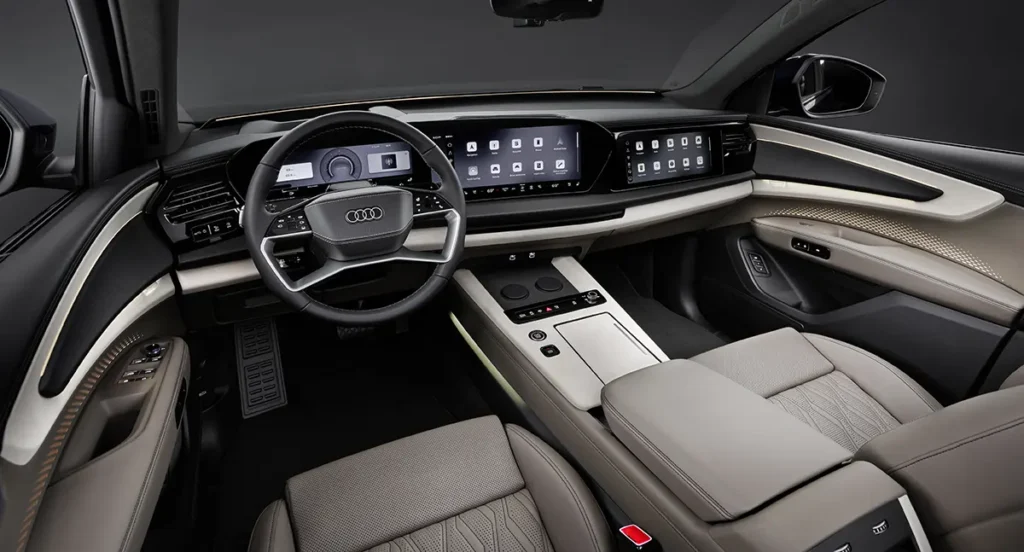
The dashboard consists of a 12.3-inch Audi virtual cockpit, a 14.5-inch central touchscreen, and a standard 12.3-inch passenger display. Android Automotive OS powers the infotainment system, while Audi’s voice assistant includes ChatGPT integration. A factory-fitted dashcam is optional, and there are two Qi2.2 wireless charging pads, plus USB-C charging at up to 100 W in the second row.
Audi has not forgotten the ears—or the backside. The available Bang & Olufsen Premium Sound System fills the cabin with 22 speakers and 1,360 W of output. Seat-mounted actuators vibrate in time with the music, producing what Audi calls 4D sound. In other words, the bass can now physically bother you.
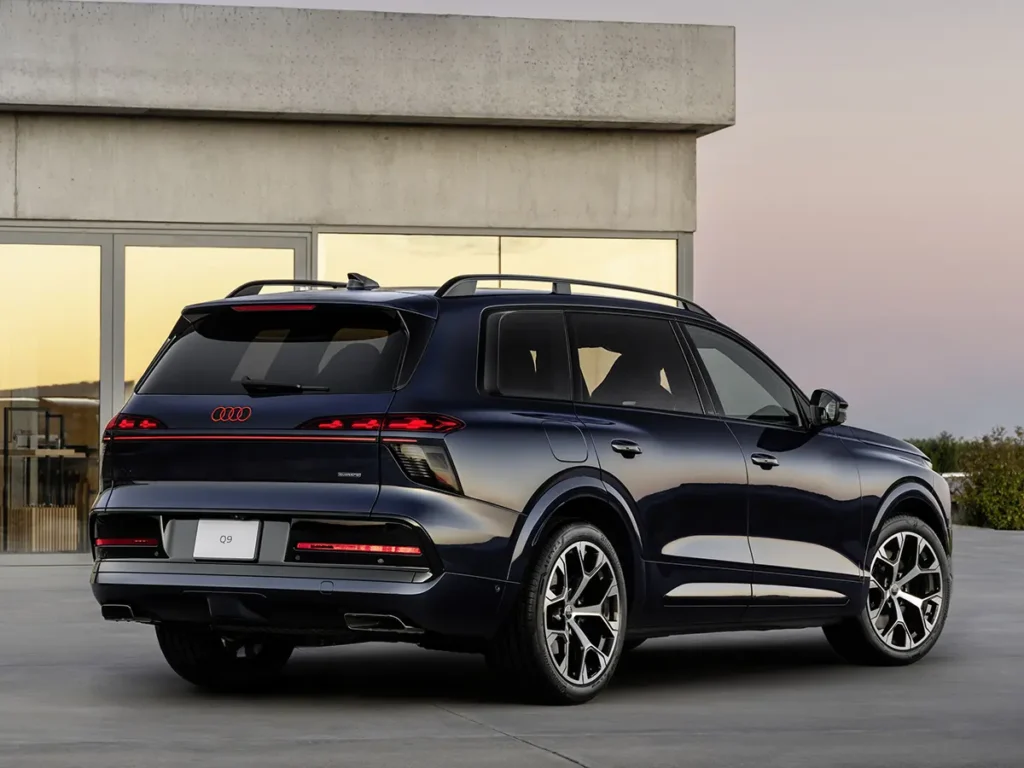
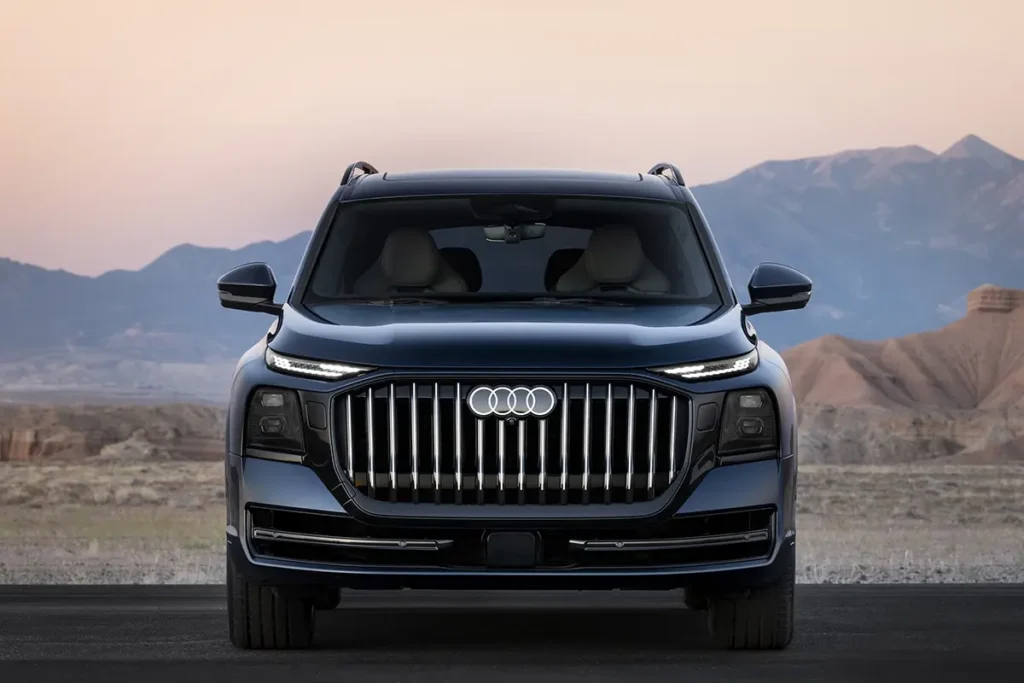
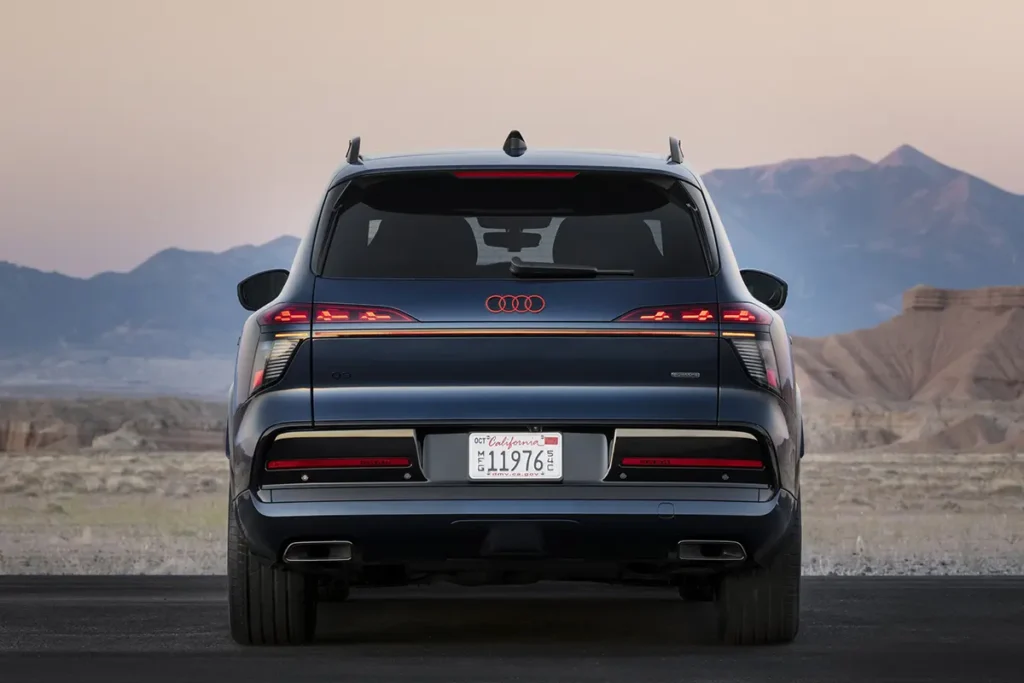
On the outside, the Q9 introduces the world’s first curved digital OLED rear-light panels on a production vehicle. The six panels contain 512 individually controlled segments and wrap around the body for better visibility from the sides. Available advanced turn signals also project animated indicators onto the ground, while an illuminated Singleframe grille and illuminated Audi rings ensure nobody mistakes this enormous SUV for anything else at night.
For something measuring more than five meters long, maneuverability may be a concern. Audi addresses that with standard adaptive air suspension and optional all-wheel steering. The rear wheels can turn by up to five degrees, reducing the turning circle at low speeds and improving stability at higher speeds. The suspension also offers 90 mm (3.5 inches) of height adjustment.
The driver-assistance package includes automated parking, trailer maneuvering assistance, a 360-degree camera, and an exit-warning system that can prevent a door from opening into an approaching cyclist. If the driver becomes unresponsive, the emergency assistance system can slow the Q9, steer it onto an available highway shoulder, stop the vehicle, and place an emergency call.
Audi’s Adaptive Driving Assistant Plus permits hands-free driving on approved roads in Germany, the United States, and Canada. It handles steering, braking, acceleration, and assisted lane changes at speeds of up to 130 km/h (81 mph) in Germany and 85 mph stateside. It remains an SAE Level 2 system, so eyes on the road, hands near the wheel, and no climbing into the third row for a nap.
In Germany, the Q9 initially launches with a 3.0-liter V6 TDI producing 220 kW (299 PS/295 hp) and 630 Nm (465 lb-ft) of torque. It pairs an eight-speed Tiptronic transmission with permanent quattro all-wheel drive and a mild-hybrid system capable of contributing up to 18 kW (24 PS/24 hp). A less powerful 180 kW (245 PS/241 hp) version will be offered in selected European markets.
The 2027 Audi Q9 is built in Bratislava and is available to order in Germany from the end of July 2026, with deliveries beginning in November. The Q9 TDI 220 kW starts at €108,400 [DE]. North American specifications, configurations, and pricing vary by market.




Images: Audi.