


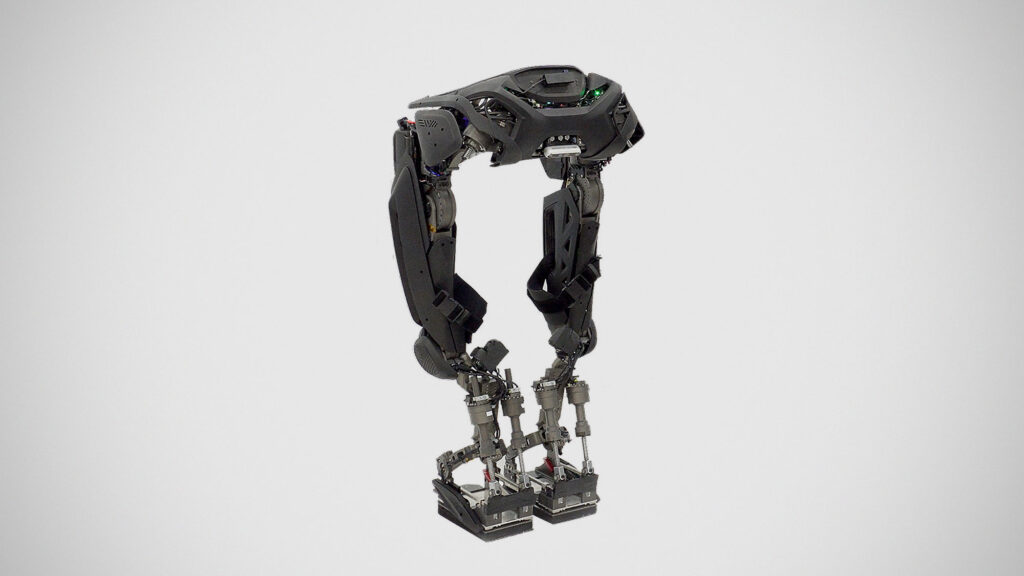
Folks, we are at an age where different tech merges. While Toyota has proposed a walking chair for people with walking difficulties, the researchers at the Korea Advanced Institute of Science and Technology (KAIST) Exoskeleton Lab, and Angel Robotics, envisioned giving complete paraplegia the ability to walk again.

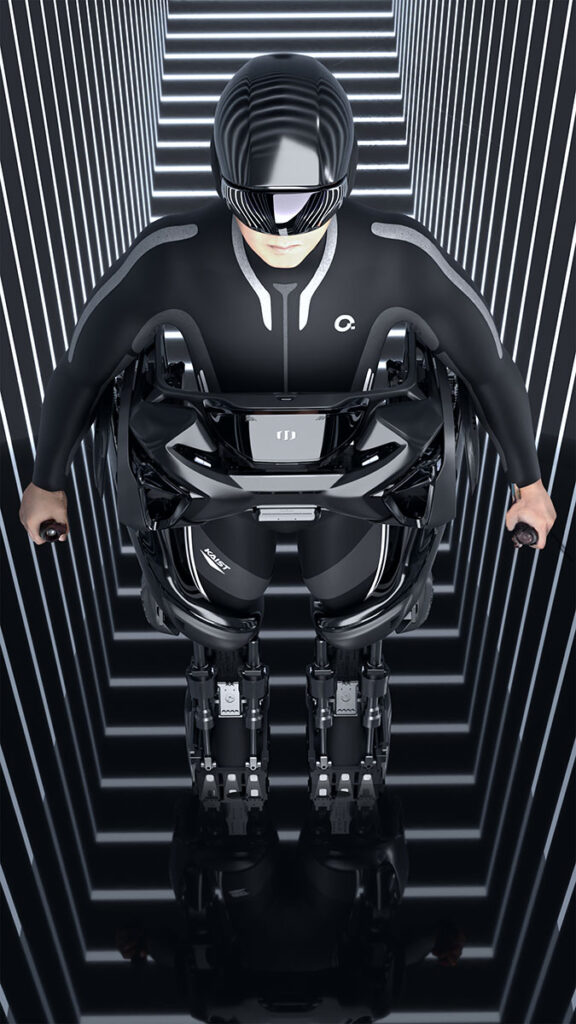
The WalkON Suit F1, as it is called, is not the first. The University of Grenoble is working on a similar exoskeleton. However, the latter is brain-controlled, enabling tetraplegic patients to walk again, while the WalkON Suit F1 is a powered exoskeleton designed for individuals with complete paraplegia.
Now, if you think “powered exoskeleton” means strapping on some sci-fi robot legs and hoping for the best, KAIST politely says no. WalkON Suit F1 is built with one mission in mind: independent daily life. Not “independent with three assistants hovering nearby”. Actual independence. The team designed the system to approach the user on its own, wrap itself around the pilot directly from a wheelchair, and then let the pilot walk under their own control. It is equal parts robotics, biomechanics, and “let’s make life easier, not harder.”
The self-donning concept alone deserves applause. Traditional exoskeletons make users transfer from wheelchair to chair to device, stressing wrists that have already taken enough abuse. WalkON Suit F1 avoids all that by opening from the front, connecting to the user’s boot-like foot modules and upper-body harness using docking units. Clip in, secure, rise. Zero wrestling required.

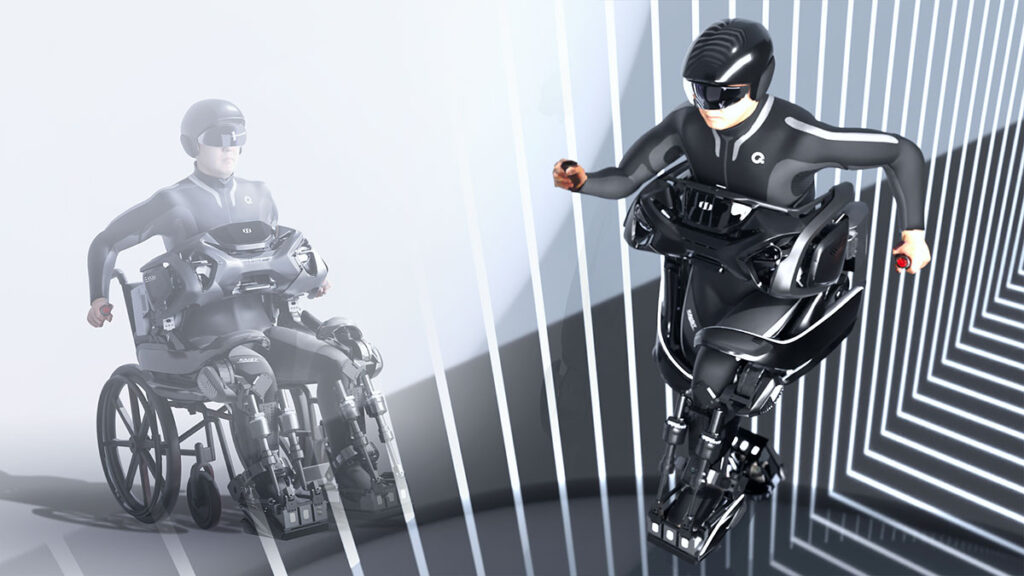
But the part that truly bends the brain is the dual-mode design. WalkON Suit F1 acts both as a powered exoskeleton and as a humanoid robot. When not worn, it can autonomously walk over to the user, position itself, and prepare for the donning process. Once worn, it becomes a mobility system capable of upright posture and gait support. It is, essentially, a wearable humanoid robot that moonlights as your mobility partner.
As a research platform, it integrates KAIST’s latest actuators, motor drivers, sensors, and whole-body control algorithms. Everything can be tested and refined together, ensuring that improvements scale smoothly from individual components to a fully functional system.
If this is where exoskeleton technology is heading, the future looks bright for mobility innovation—and slightly intimidating for office chairs everywhere. As for the price… well, it is still in development. My guess is that it will not materialize anytime soon. But here’s to hoping.

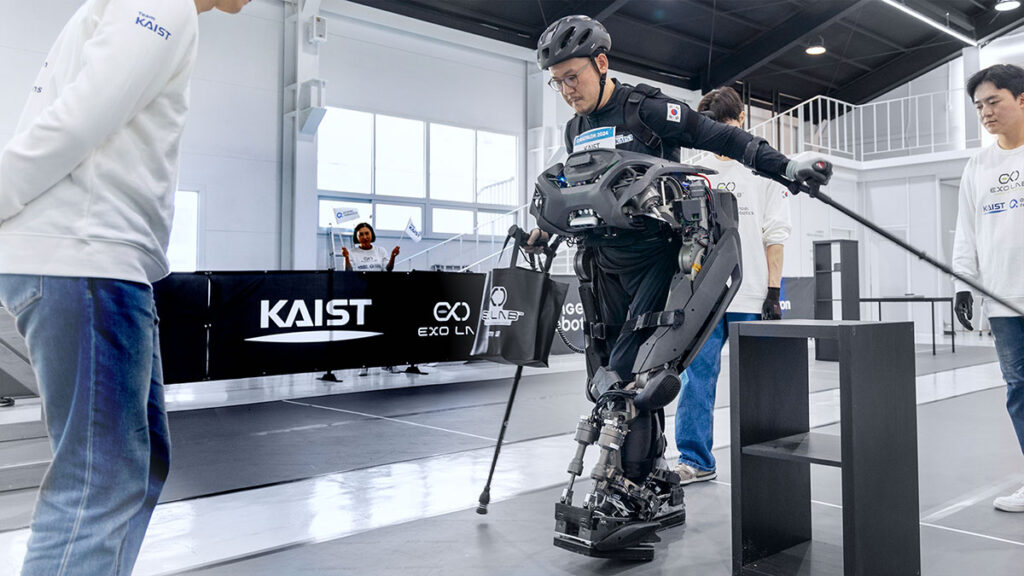
Images: KAIST Exoskeleton Laboratory.