


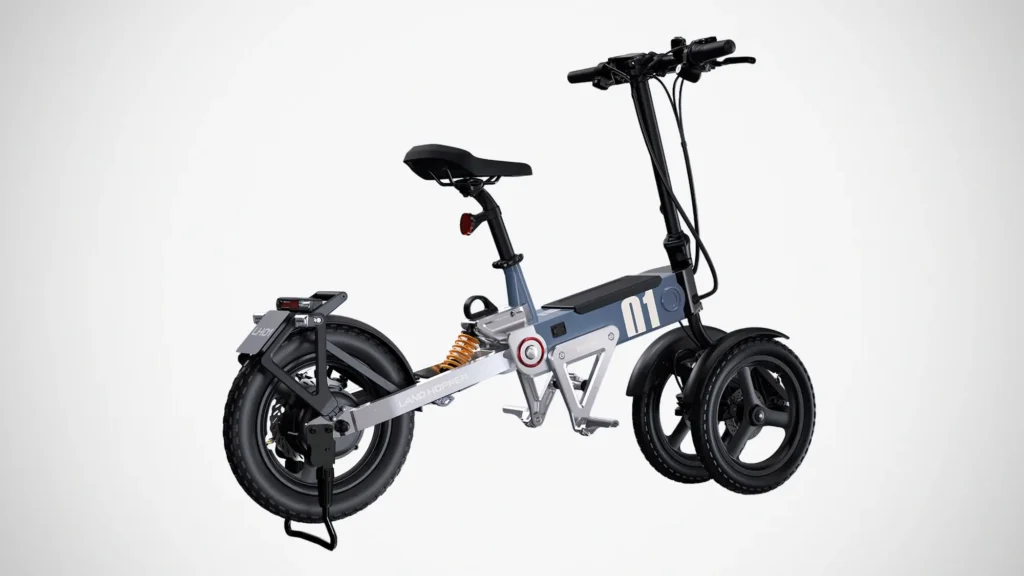
Toyota Land Hopper, the three-wheeled, electric personal mobility concept that first debuted at Japan Mobility Show 2023, is no longer a concept. If you don’t already know, Land Hopper is a companion ride—if you will—to a Land Cruiser, though, obviously, you do not need to be a Land Cruiser owner to own and operate one.

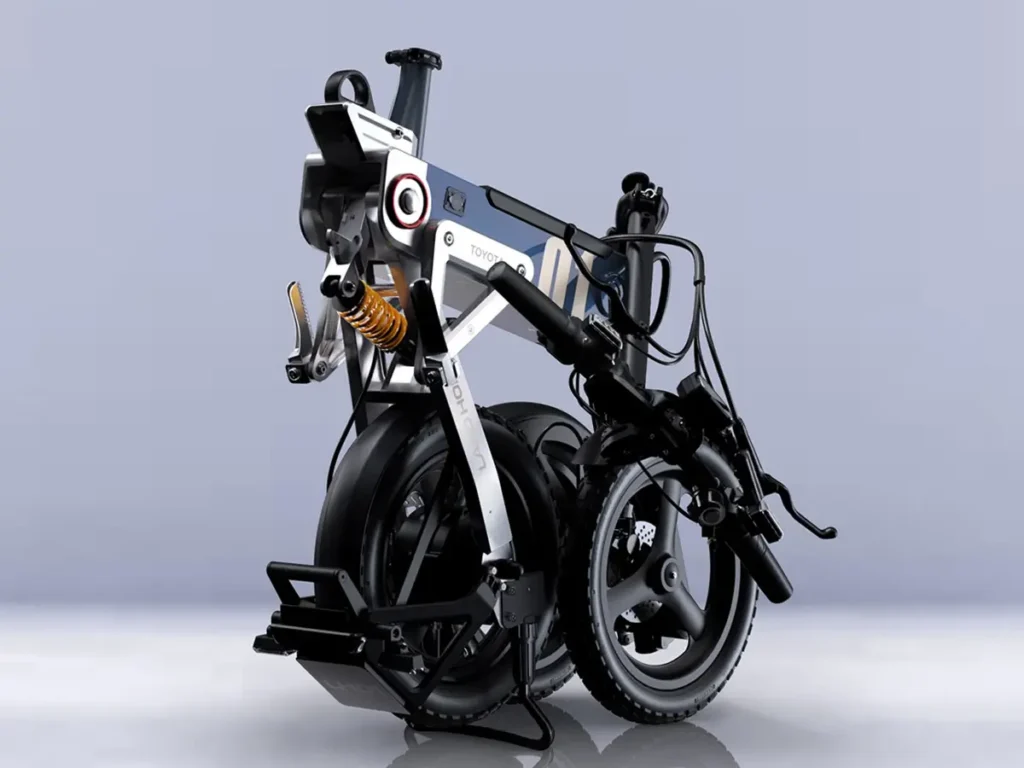
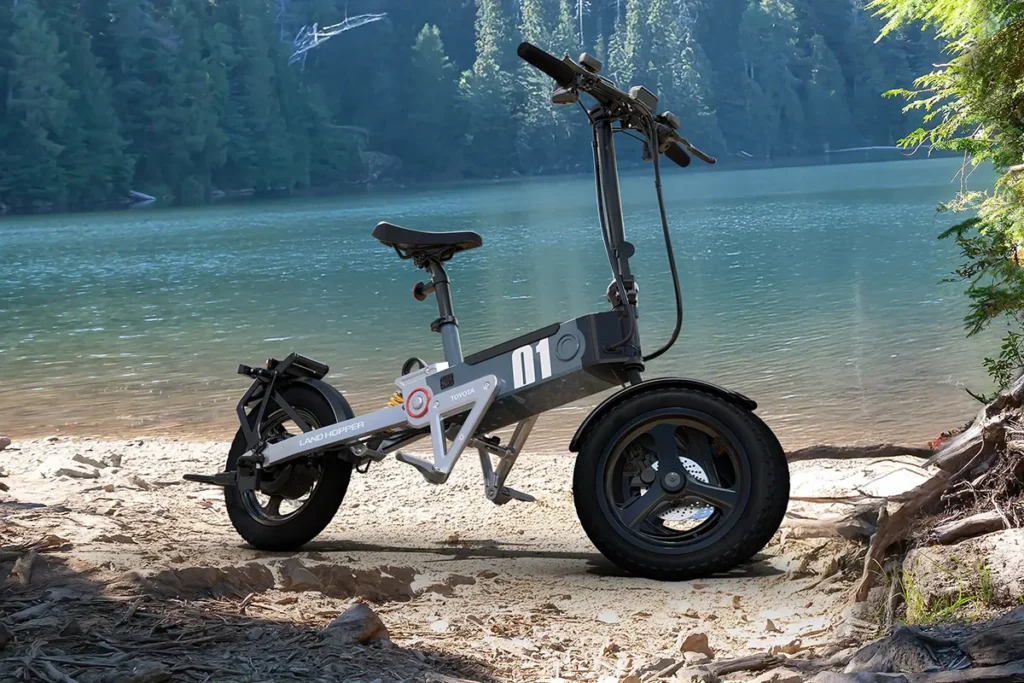
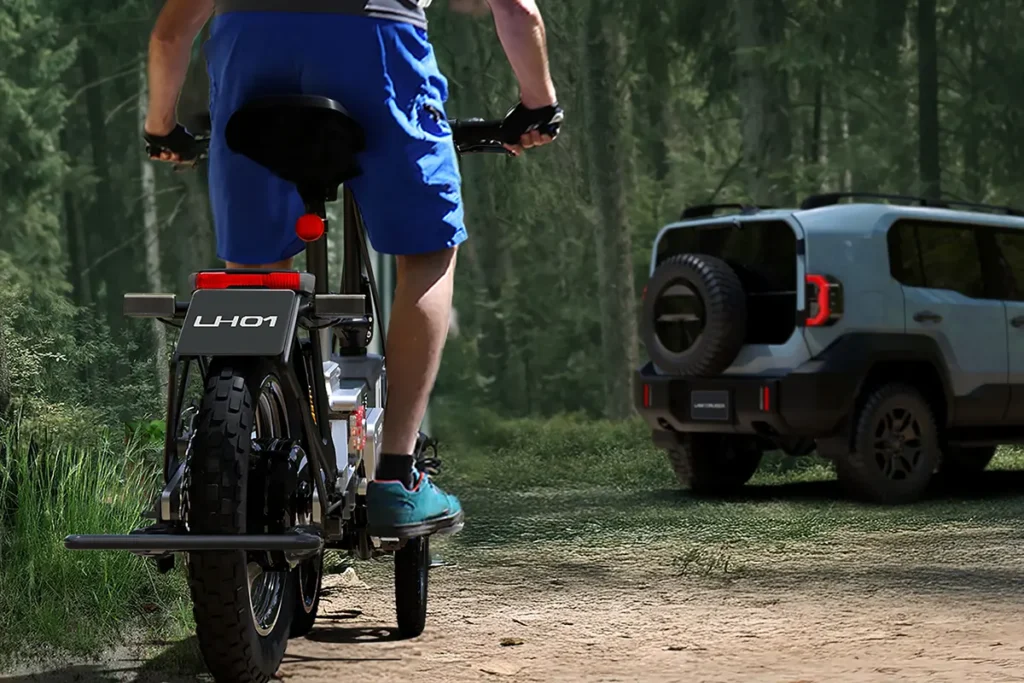
Think of it as a last-mile ride when your dear old Land Cruiser cannot proceed further, or perhaps as an off-road-capable ride to explore the area surrounding your Land Cruiser campsite.
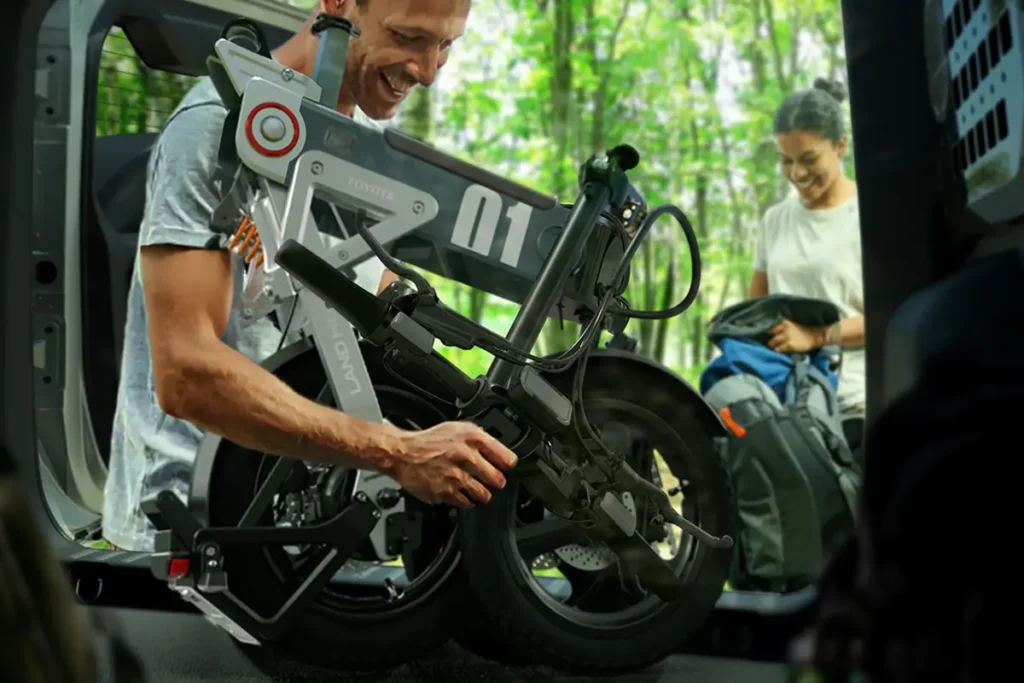
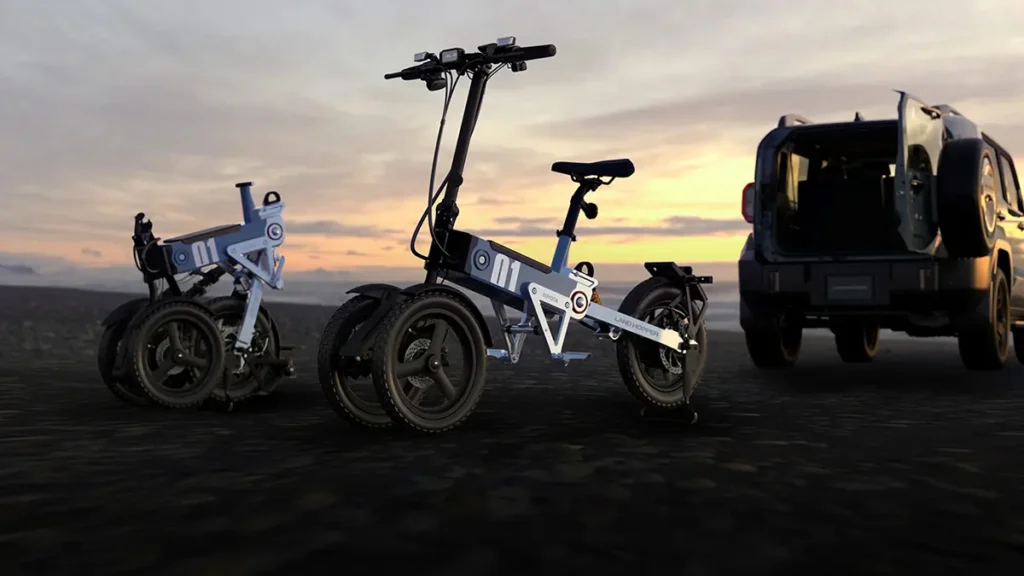
Of course, it is not limited to being a last-mile ride. It is suitable for everyday use too, such as getting around the city. It is set up with two wheels at the front and a single wheel at the rear, much like a leaning multi-wheeler. It folds like a Brompton into a compact form, allowing it to be loaded into a vehicle.
The Land Hopper is known in Japan as a specified small motorized vehicle. It sits in an odd category. It does not require a driver’s license to operate, yet it is a registered vehicle complete with a license plate. Also, you need to be at least 16 years old to ride one. It is not an e-bike. It is a full-fledged electric vehicle that, with a twist of the throttle, propels itself forward.
Toyota developed the Land Hopper around a practical observation: even after a Land Cruiser has taken you deep into the wilderness, there are still places beyond where even the mighty Land Cruiser can comfortably go. The Land Hopper is designed to bridge that gap, extending the adventure beyond the parking spot.
Its most interesting feature has to be the front suspension setup. While many personal mobility devices rely on a single front wheel, the Land Hopper uses two independently articulating front wheels. The setup allows both wheels to maintain contact with uneven surfaces, much like the wheel articulation that off-road enthusiasts love about the Land Cruiser itself. If one wheel climbs over an obstacle, the other can drop down to maintain grip and stability.

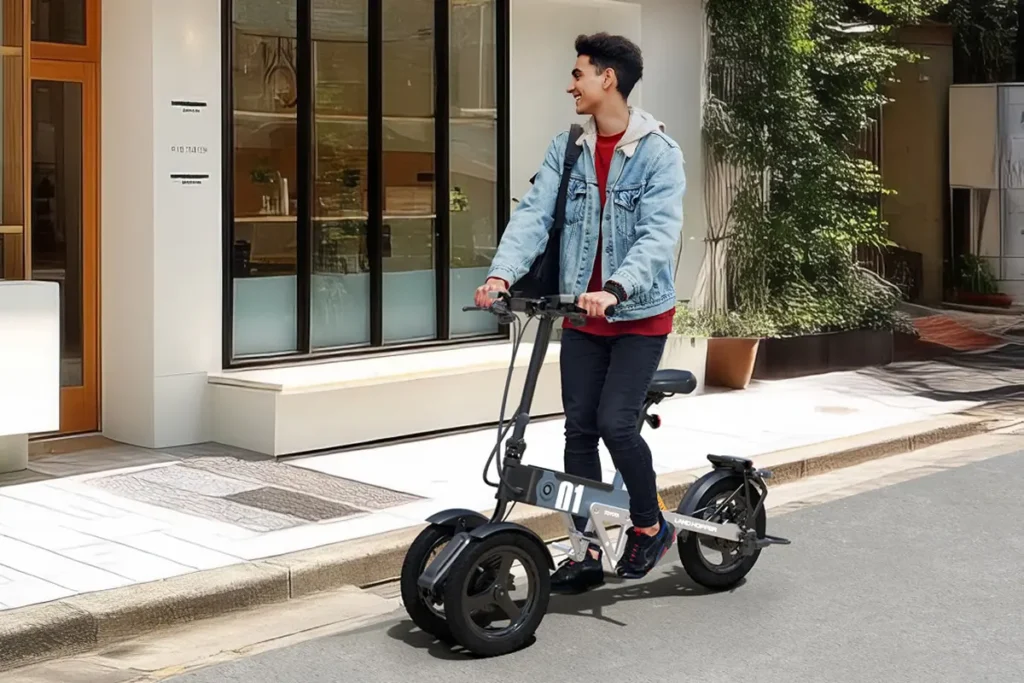
That makes it particularly useful on trails, gravel paths, curbs, road joints, and all the random bumps that seem to appear exactly where you do not want them. Toyota also fitted a rear suspension similar to what you would find on a mountain bike, helping smooth out rough surfaces while improving comfort.
The controls are intentionally straightforward. Turn the key, twist the throttle, and off you go. Bicycle-style brake levers handle stopping duties, while turn signals make it road-friendly. There are two speed modes, a built-in speedometer, and even cruise control for longer stretches where constantly holding the throttle gets old.
Power comes from a battery integrated into the frame, which can be charged using a standard household outlet. The charging port remains accessible while the battery is installed, making charging as simple as plugging in and walking away.
Perhaps the cleverest part is how compact it becomes when folded. The frame collapses, the handlebar folds down, and the seat can be removed, allowing the entire thing to shrink into a package small enough to fit inside a Land Cruiser. Toyota even demonstrated that it fits neatly inside the upcoming Land Cruiser FJ.
Interestingly, Toyota developed the Land Hopper on actual Land Cruiser test courses. Engineers brought prototypes to the same off-road environments used to evaluate the Land Cruiser itself, repeatedly testing whether the little three-wheeler could safely navigate obstacles and uneven terrain. That trial-and-error process ultimately shaped what the Land Hopper became.
So no, the Land Hopper is not the compact Land Cruiser many people thought it would be when the name first surfaced. Instead, it is something arguably more unexpected: a tiny electric sidekick designed to keep the adventure going after the Land Cruiser’s job is done. That may be the most Toyota thing ever.
The Toyota Land Hopper [JP] is slated for release in spring 2027 or later. Pricing remains under wraps, and Toyota has yet to say which markets will get it.
Images: Toyota [JP].