


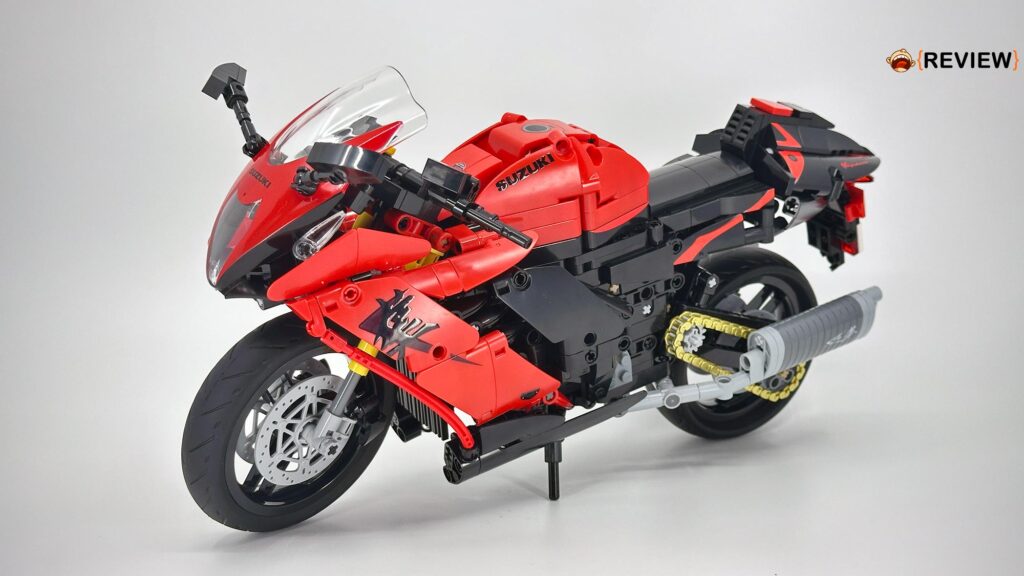
When the news of a CaDA Suzuki Hayabusa building set broke, I knew I had to check it out in person because Hayabusa is not just any motorcycle. It single-handedly redefined what a production motorcycle could be with advanced engineering, including a massive 1,299cc inline-four engine, and it was the fastest production motorcycle of that time (I believe the latest gen is still one of the fastest street legal production bikes today). Anyhoo, check it out, I have, but before I offer my 2 cents, here are the basics of the set:
- Product name: CaDA Suzuki Hayabusa
- Product number: C64051
- Number of pieces: 1,043
- Scale: 1:6
- Completed model size: 33.6 x 14.4 x 20.8 cm (~13.23 x 5.67 x 8.19 inches)
The Overview

CaDA is on a roll with officially licensed products, and we welcome that, especially when it comes to vehicles. The C64051 is the equivalent of LEGO UCS, but it is not targeted at adults specifically. According to CaDA, it is for ages 8 and up. But trust me. It will not be easy for typical 8-year-olds. I would say kids of 14 with experience will be a better fit.
I wouldn’t say it is a difficult build, but it definitely has some quirks that require some experience to fully grasp the build logic. I noticed some steps that require the section to be turned 180° have not been indicated in the instructions. It happened a couple of times, and it did take me a while to realize. I guess that is a “bug” in the print.
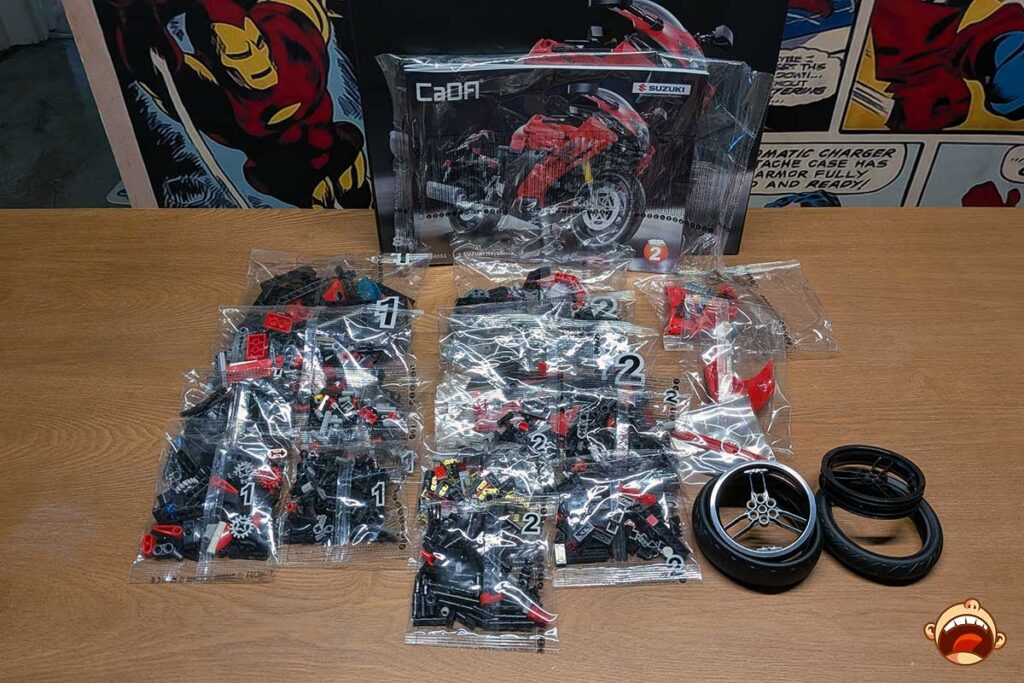
More interestingly, it is how the designer(s) decided to split the build. You would think Book 1 is all about all the bags numbered “1”. Nope. It actually spills over to Book 2. However, it is not made known. Again, it took me a while to realize the “spare” elements from #1 aren’t all spares. They were used in Book 2. Strange. But hey, I made it, didn’t I?
The Package
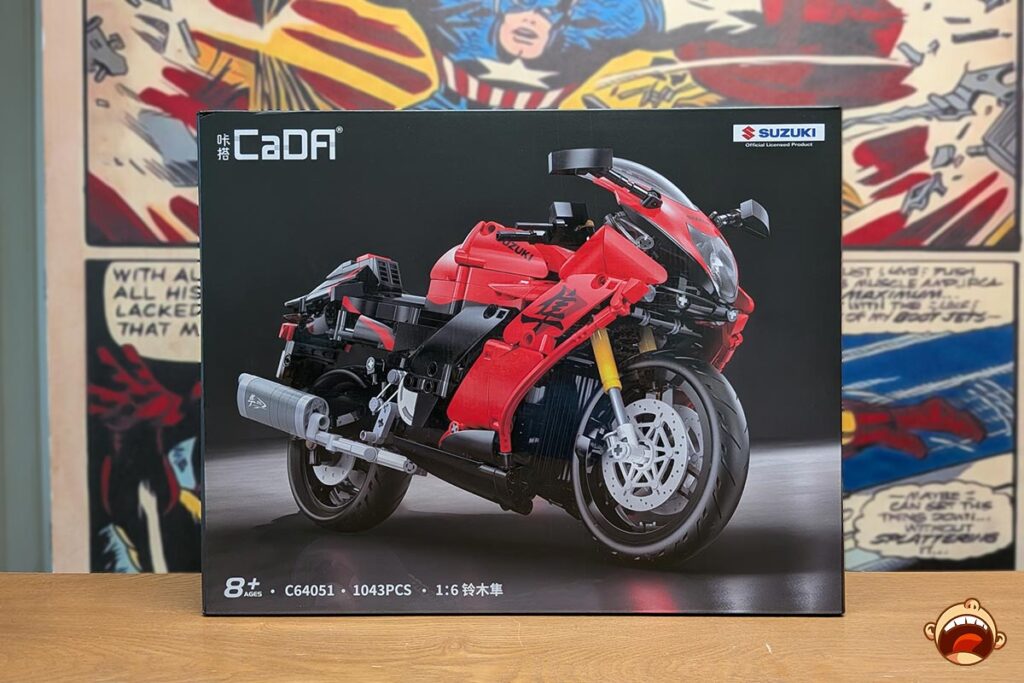
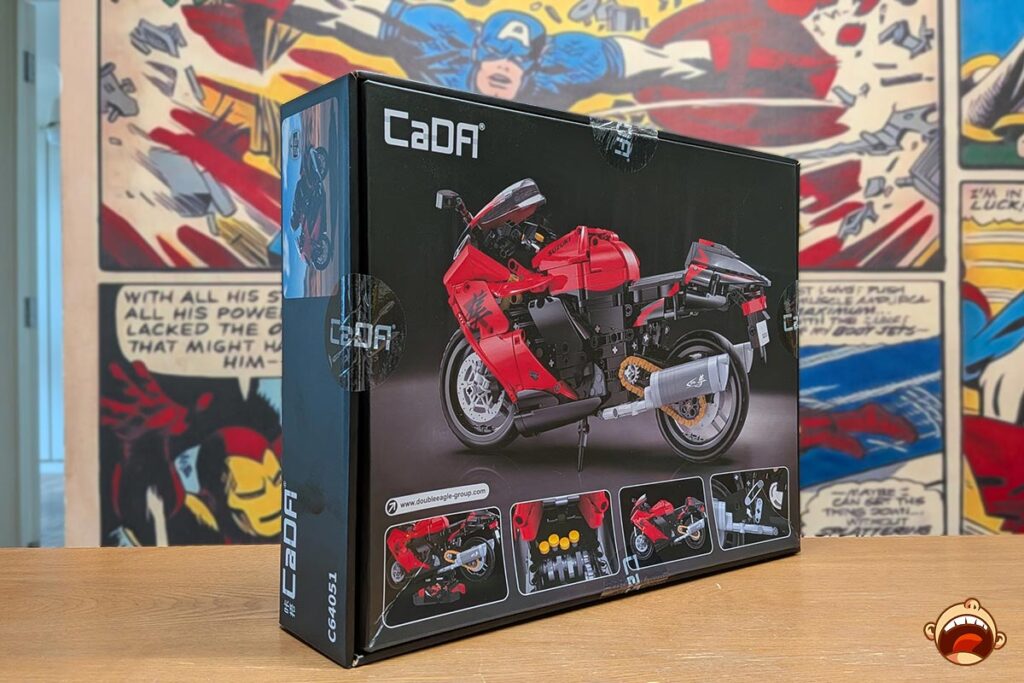
Like CaDA’s Master series, it comes in a lift-top box featuring a beautiful, glossy print of the Hayabusa model, along with the requisite information, the official Suzuki logo, an image of the actual motorcycle, a couple of images of the complete model, the key features of the set, and the obligatory product info in English.
Opening the lid, you will be greeted with bags with the elements, the wheels and tires (which weren’t bagged, btw), and a bag with two saddle-stitched books with 103 pages between them. As before, at the end of the second book, there is a glossary of components used in the build, complete with part SKU.
The 1,043 pieces are separated into 16 baggies and spread across two numbers, namely 1 and 2. In addition, there are two unnumbered bags: one for a special molded part (the nose cone with windshield and headlight unit), and one for flexible rods and a rubber band. There are 6 bags of 1, and 8 bags of 2, and this being a motorcycle, expect a lot of small elements.
The Design
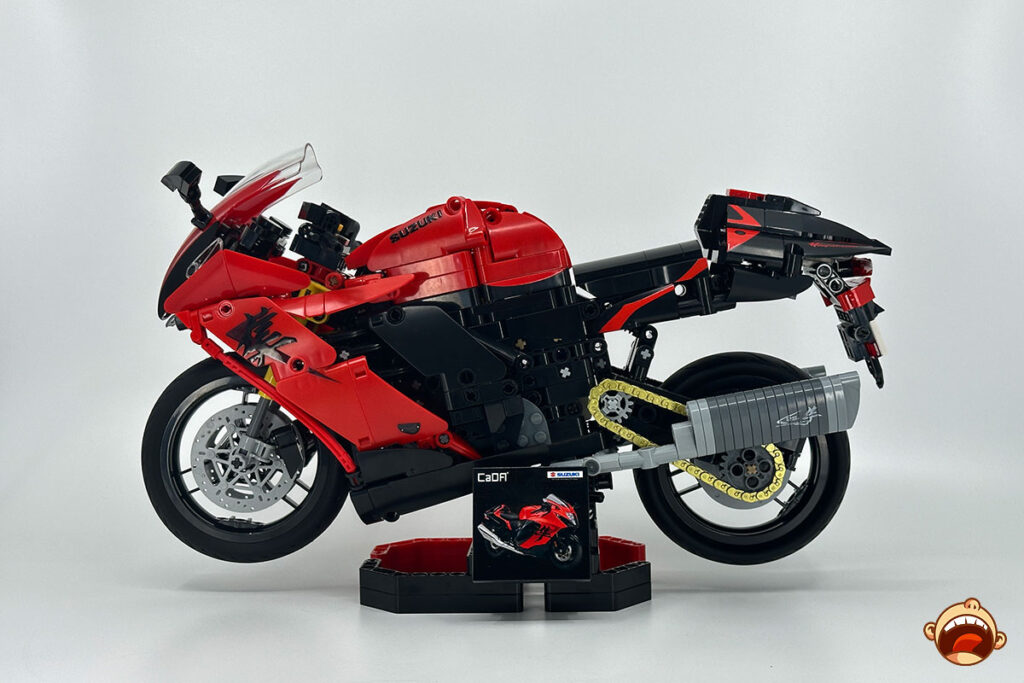
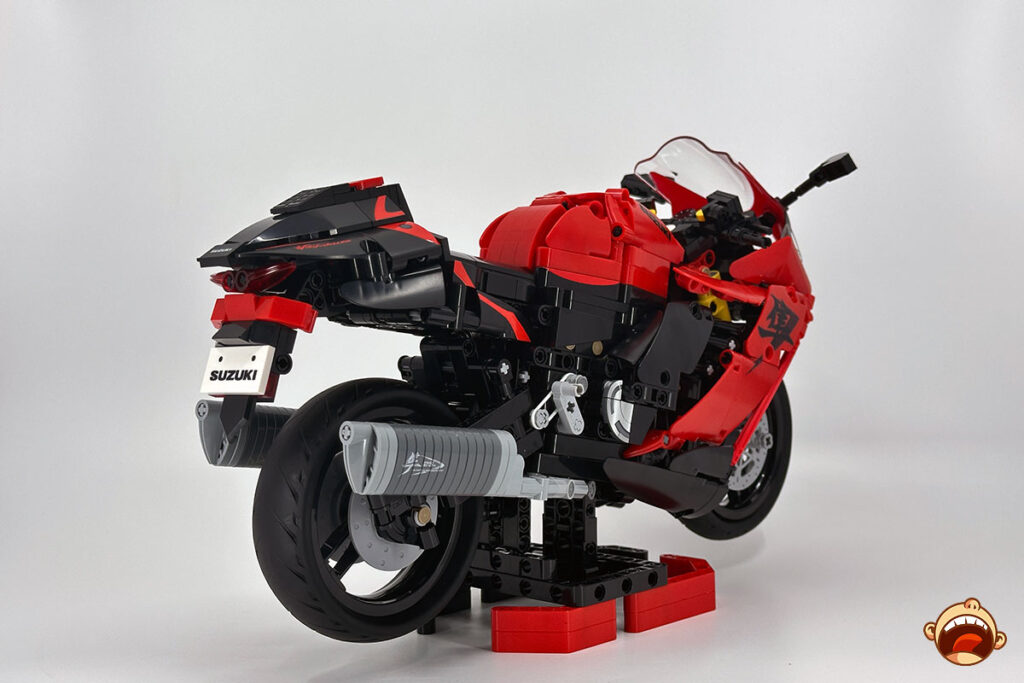
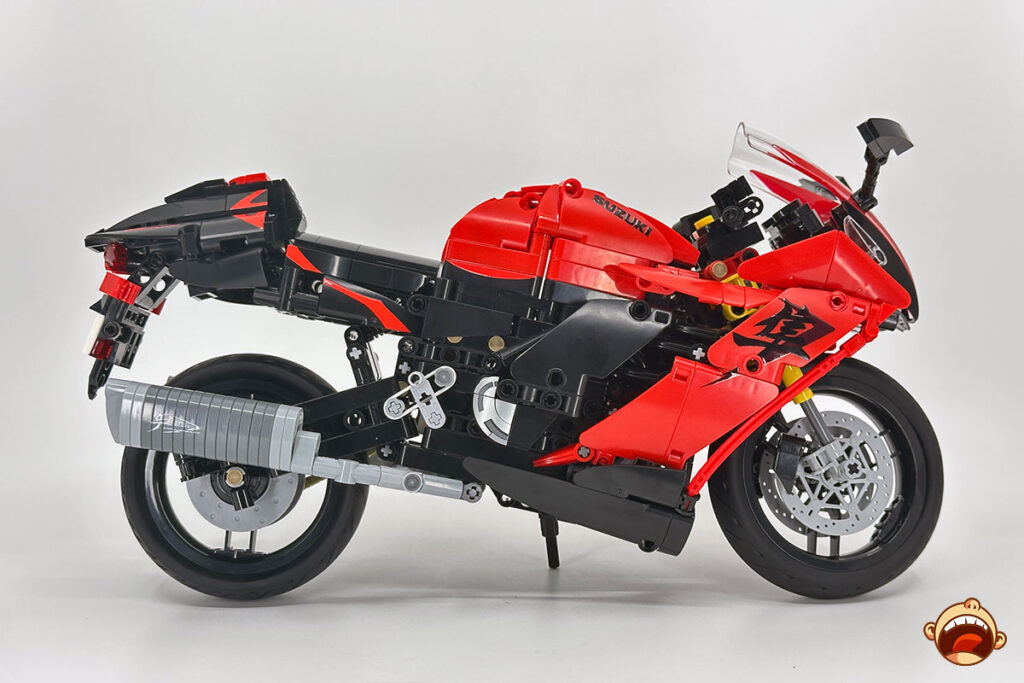
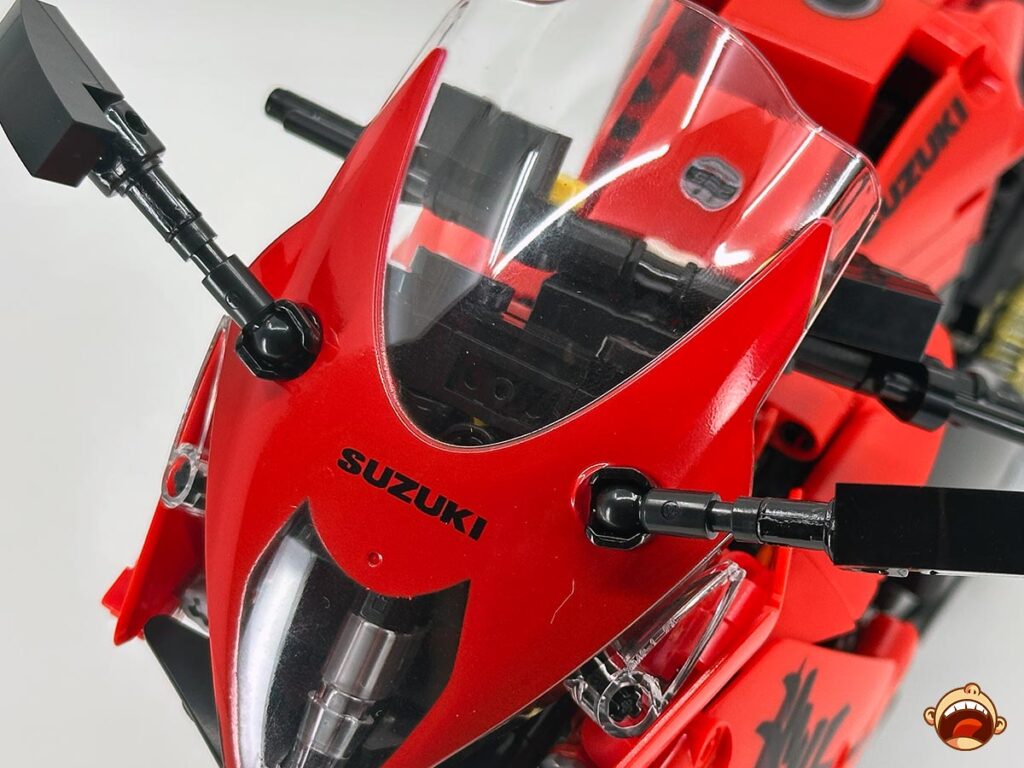
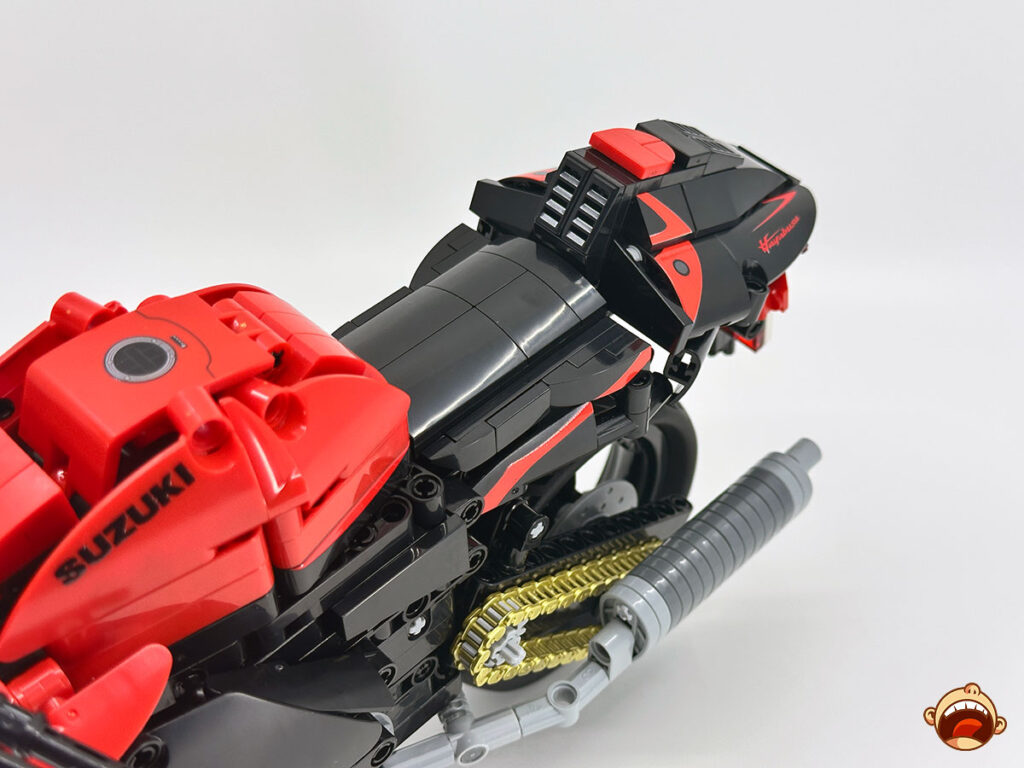
The set is supposed to model after the 25th Anniversary Edition, which is powered by a longitudinally mounted 1,340cc inline engine, and has a striking Glass Blaze Orange and Glass Sparkle Black. But in reality, the set’s color is closer to red. OK. IT IS just red. It would be awesome if it were coded to Glass Orange. The exhaust is in typical light and dark gray; it would be nice if it could have chrome and chrome burnt elements for that.
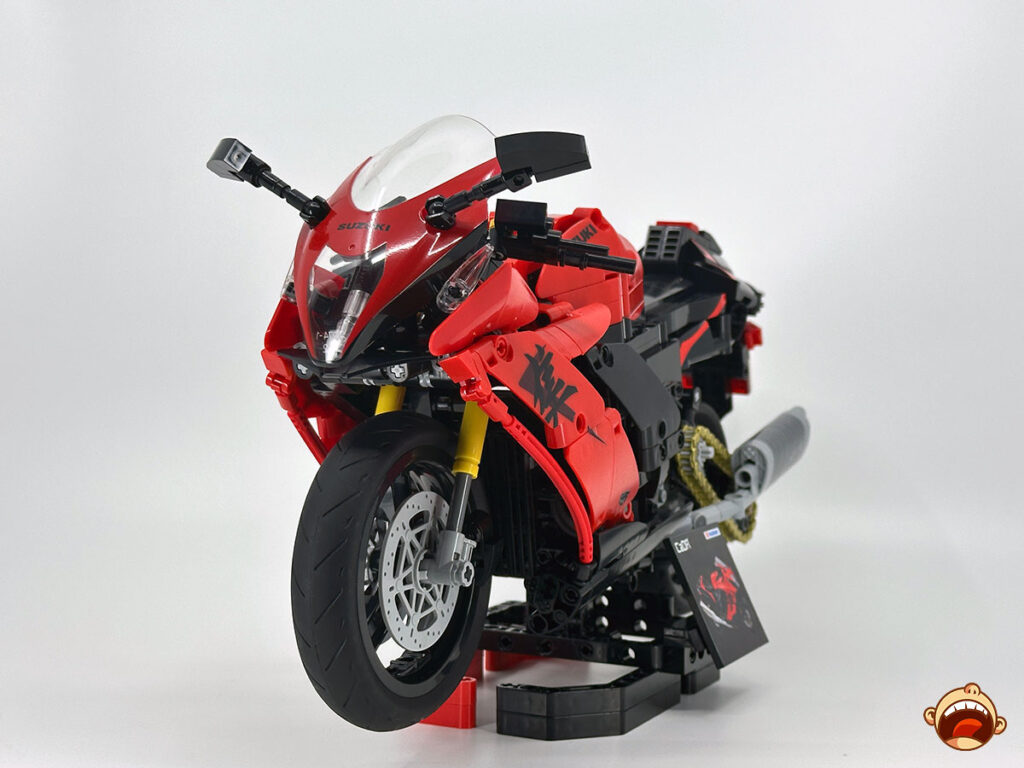
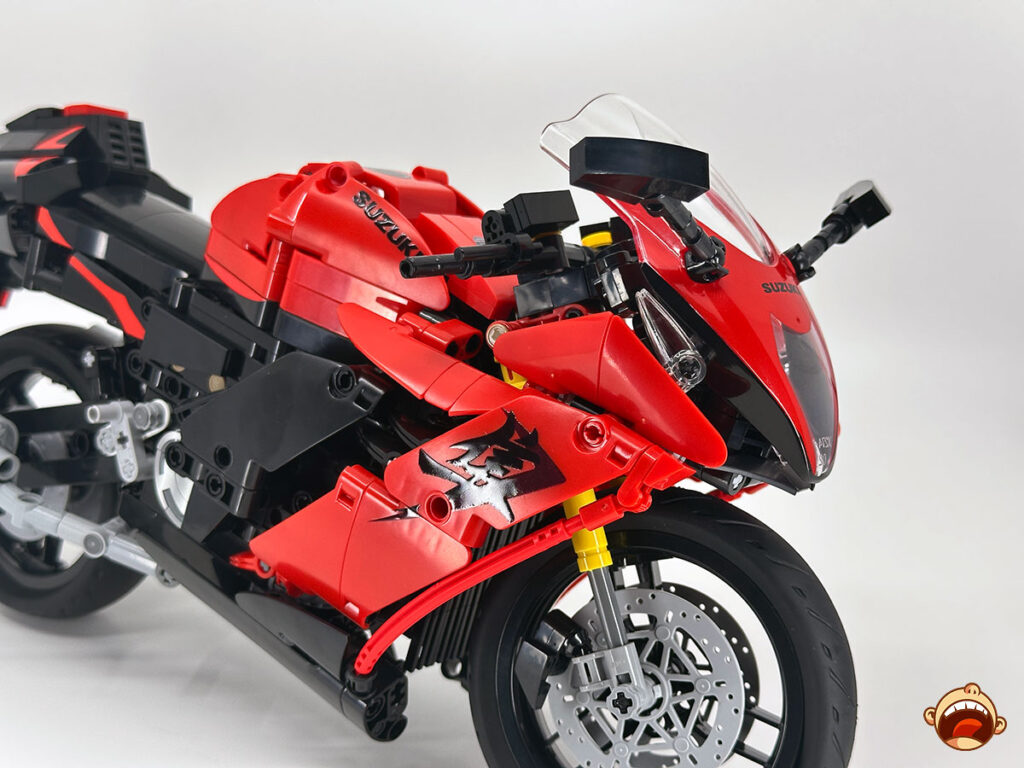
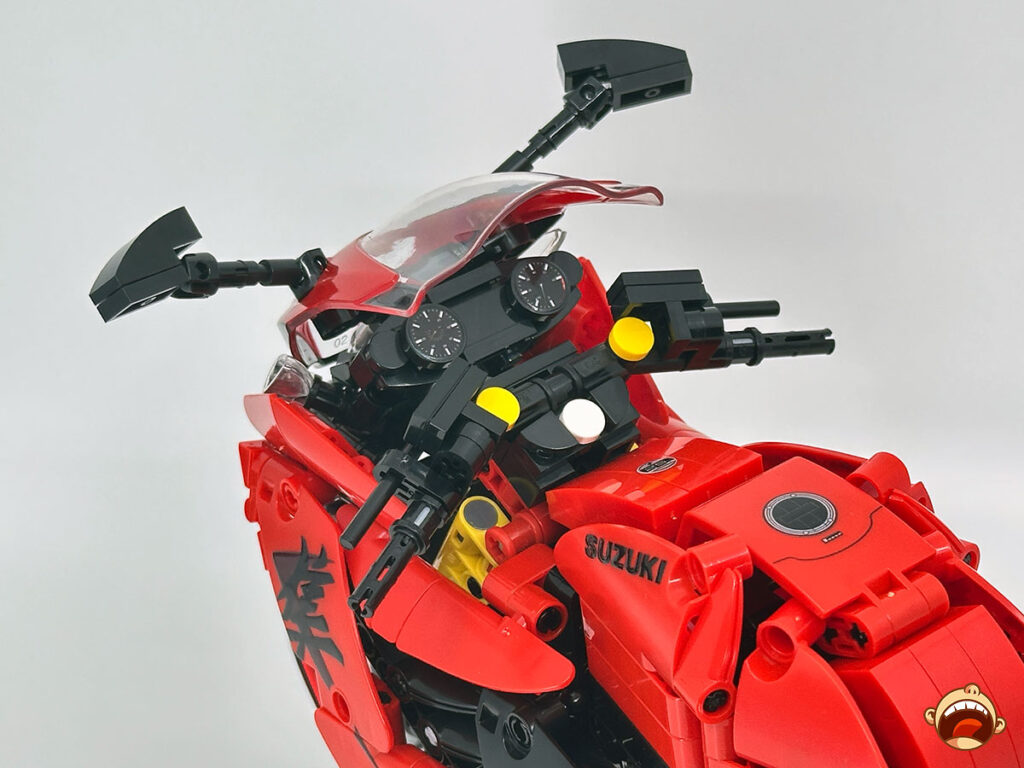
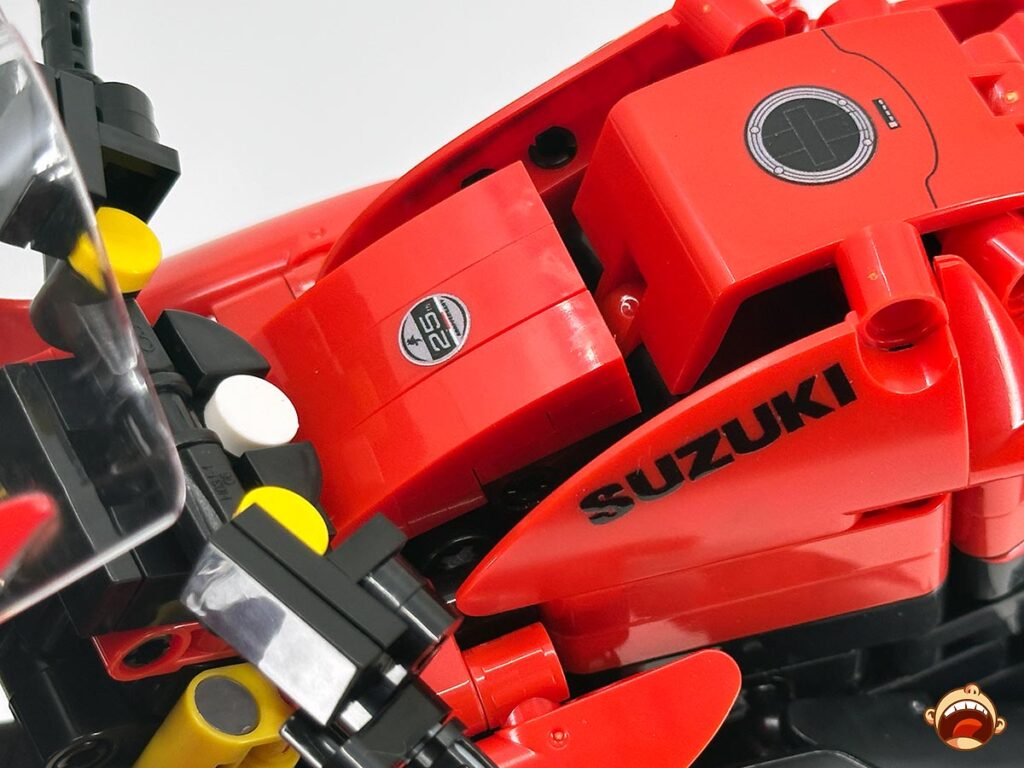
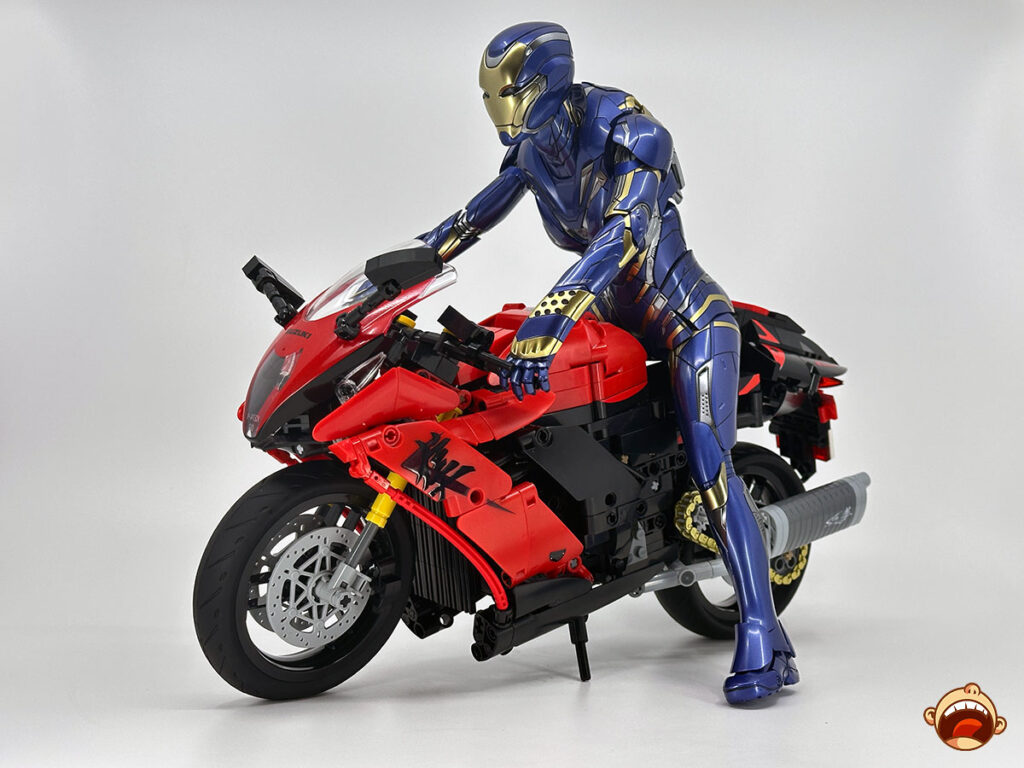
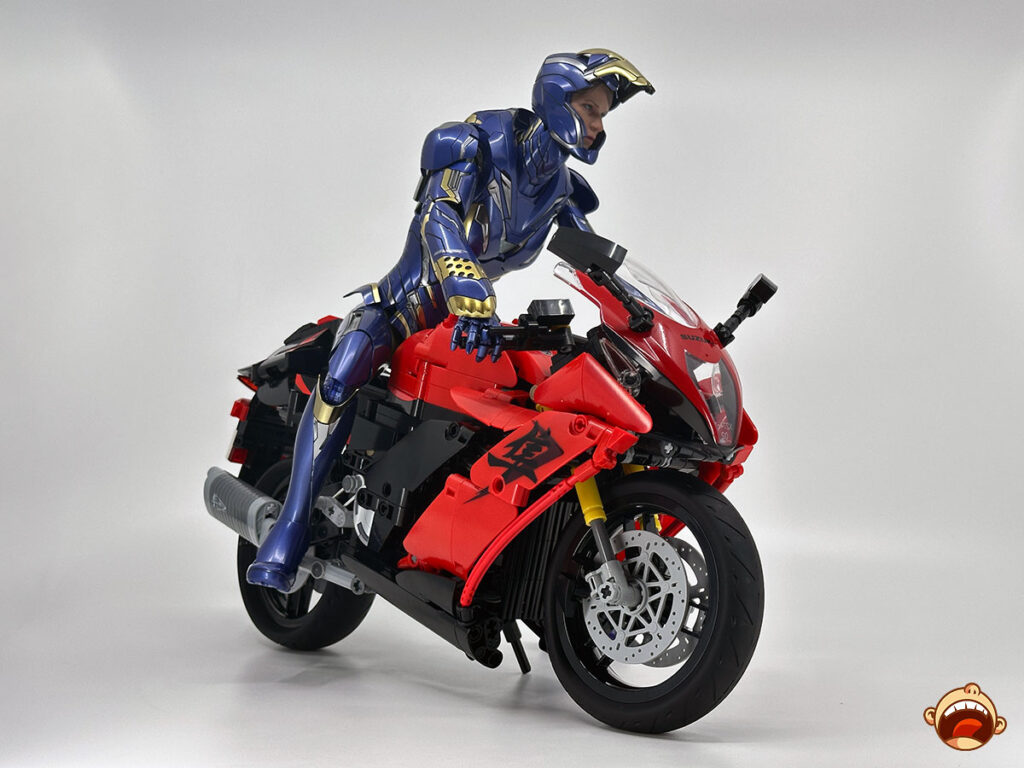
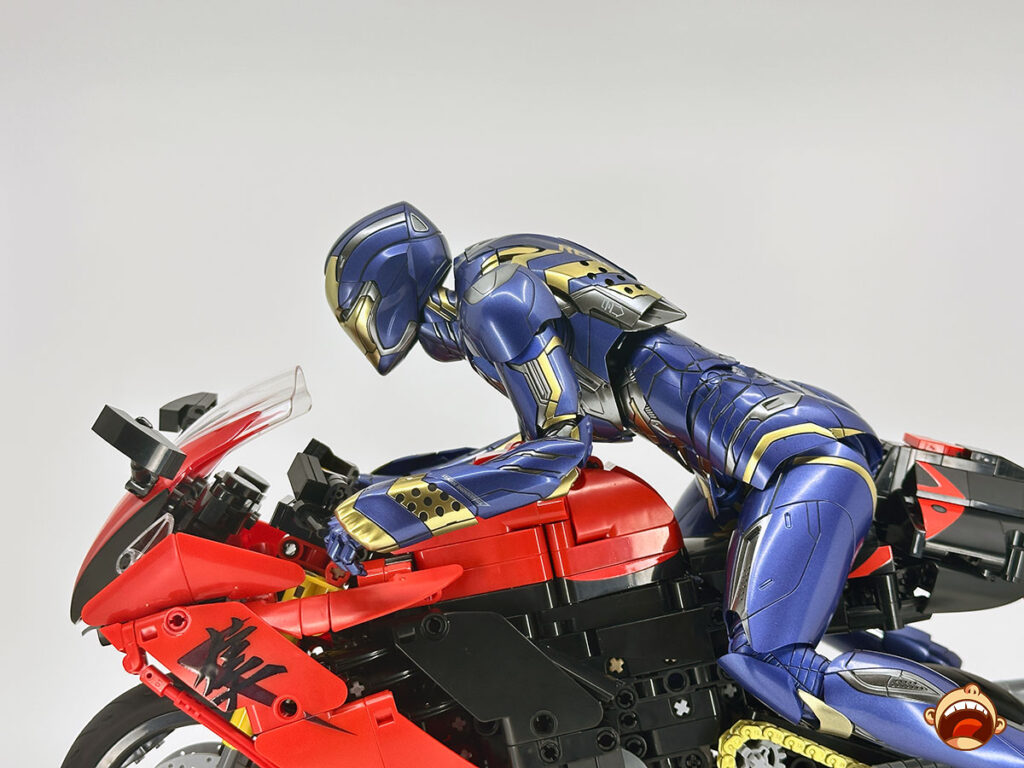
The core of the build is super solid. The design does not skimp on support, and most elements serve to interlock with one another to result in solidity. The curves of the fairings have been meticulously replicated with individual Technic-style elements, with the main pieces bearing the signature Hayabusa character. Sweet.
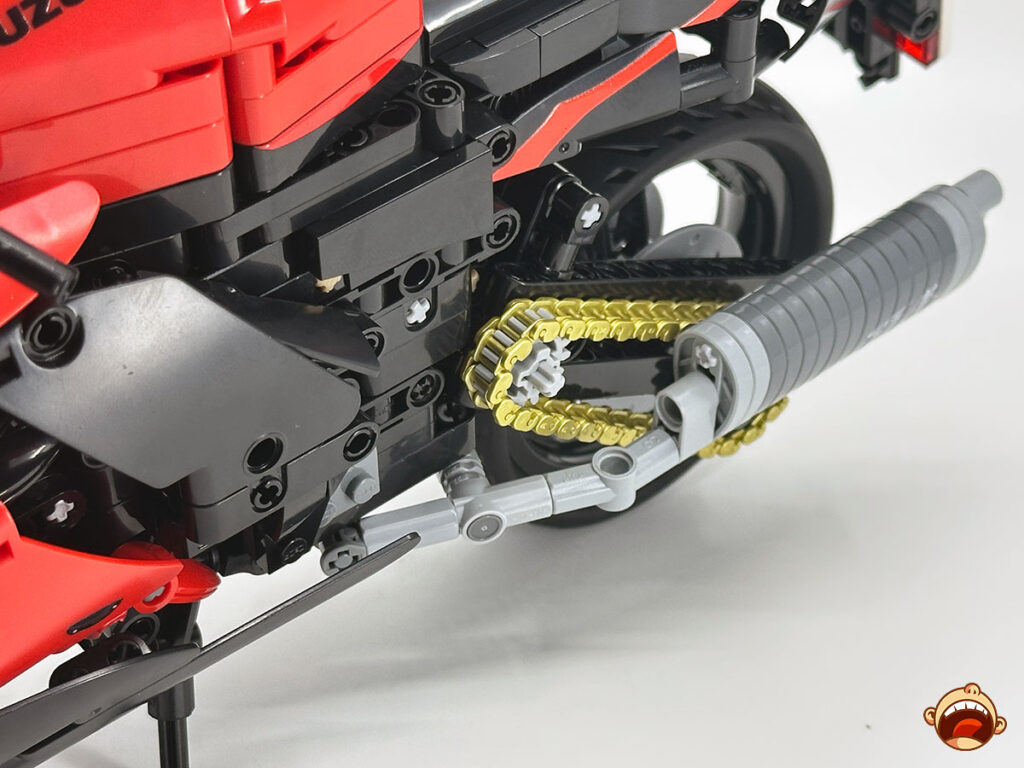
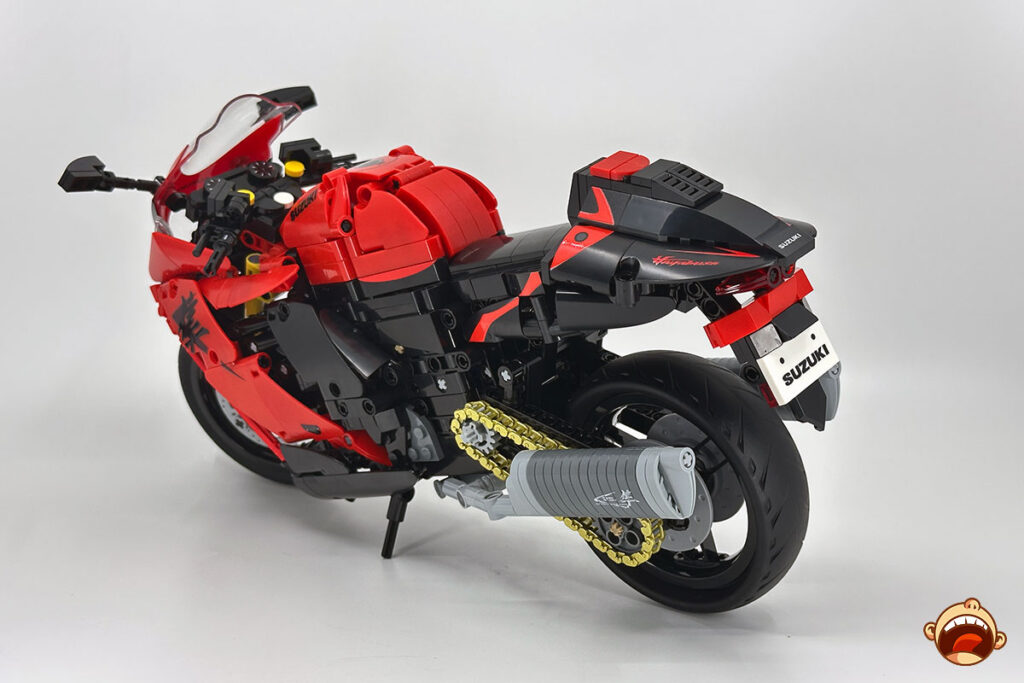
A series of gears, along with the bike chain—which is formed by gold links to replicate the anniversary edition’s gold-colored drive chain—enable the piston movements as the rear wheel turns. The engine part and perimeter frame are perhaps the most fun to build. Unfortunately, though, the fuel tank cannot be removed (at least not easily) for me to take another look at the beautiful engine. The build comes with a manually selectable 3-speed gear shifter (fast, slow, neutral), and it works as intended.
The gold chain has a tight tolerance, so don’t be alarmed if you take some effort to get it to connect. The front has real working forks, but they are not perfect. They do have some free play and felt a little wobbly when I pressed them down to “activate” them. Not going to lie. This does irk me a little. The link-type mono-shock at the rear has also been replicated, as has the kickstand and the steering.
As far as the design goes, it is spot on, well, save for the exhaust, which I wish could somehow replicate the geometric exhaust and maybe even the chrome finish. Again, there is nothing to fault, but damn, how nice would it be if the fairings were in Glass Orange? Just saying… Completing the set is a buildable stand and an exclusive collab nameplate. No information on this plaque as before. It would be nice if it had the specs of the motorcycle.
The Build

It took me 5 hours and 30 minutes to complete the set. It is not a difficult build, but every step has to be careful because there are way too many similar parts, which can be confusing, and if you get the wrong parts, you may have to retrace the steps, which bumps up the build and mars the experience. Overall, it is a fun build. Nothing that will make you tear your hair out—not unless you are perfection with a tinge of OCD who has a thing for uniformity.
The Quality
Let’s talk about quality. I have built a fair number of LEGO sets, and if I can be honest, while the quality of the parts is almost in par with LEGO’s—which has strict QC over the parts, it is not nearly there, yet. It bothers me that there are gate marks that can be seen on colored plastic elements. This is especially eye-jabbing on the red plastic of this model. Another thing to note is the length of a couple of axles used. They are not the perfect length for the build, and so they do protrude—sticking out like a sore thumb. You can find the protruding cross axle on the chassis, as well as the muffler.
Finally, where the axles are perfectly flush, they managed to stick out because of the color. Light gray cross axles do stick out a lot against a black chassis. It’s nitpicking, but hey, if I see something, I should say something, am I right? Oh, right. One more thing. While it is as detailed as it can get, I wish the foot controls could be more realistic. It should have at least a proportional shifter and maybe even footpegs.
The Thoughts
The set is fun to build. It is not what I would brand as a challenging build. It is just a regular Technic-style build with almost no finicky build process.
Overall, the quality of the pieces is mostly great, except for the aforementioned gate marks and the misaligned cross-axle on the buildable stand, which I have also encountered with the steampunk train station bookend build from another brand. But it is not a deal breaker, IMHO.
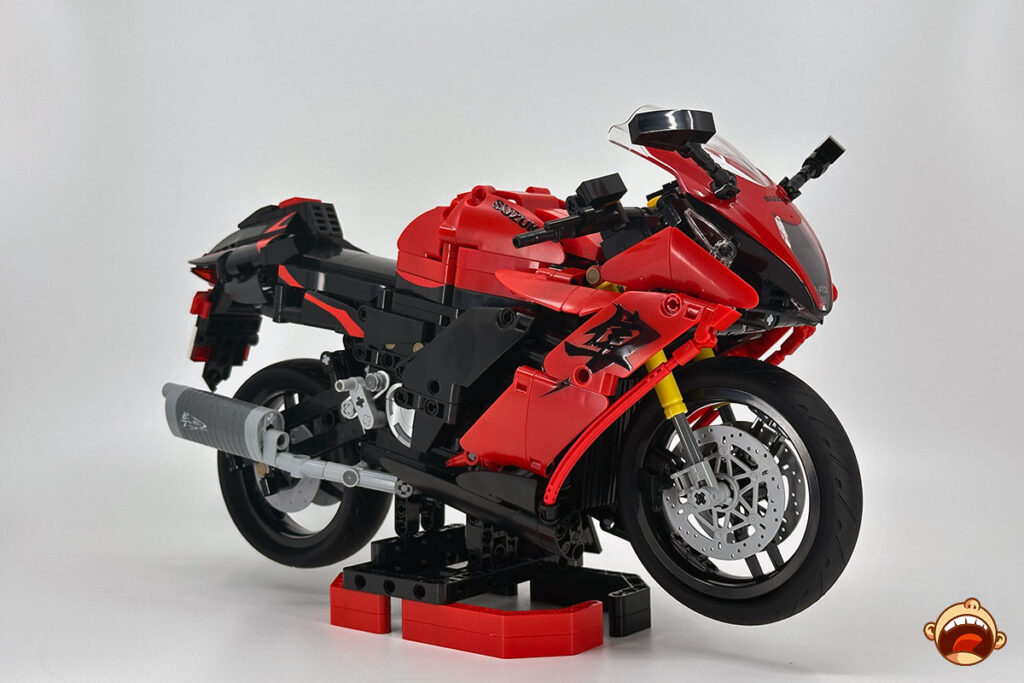
The model is beautiful as a sports bike is. It does have the silhouette of the celebratory ride. Though it is still a teeny weeny bit off from the hulking machine that the Hayabusa is. Hayabusa owners will know exactly what I mean. Hayabusa has a unique silhouette that makes it immediately recognizable on the road. Nevertheless, I think it is a must-have if you are huge on Japanese sports bikes.
The Verdict
For:
- Highly detailed recreation of the 25th Anniversary Edition Hayabusa
- Printed elements (no decals!)
- Functional steering
- Detailed movable in-line 4 engine connected to the rear wheel motion
- Fun, functional gear shift with manually selectable 3 levels (fast, neutral, slow)
Against:
- No removable fuel tank to view the inline 4 engine
- Front forks have some free play
The CaDA Suzuki Hayabusa Building Set is available on the international market through CaDA’s official store for US$59.99. Meanwhile, hit the jump for a copious amount of images.
Images: Mike for Mikeshouts.com.