


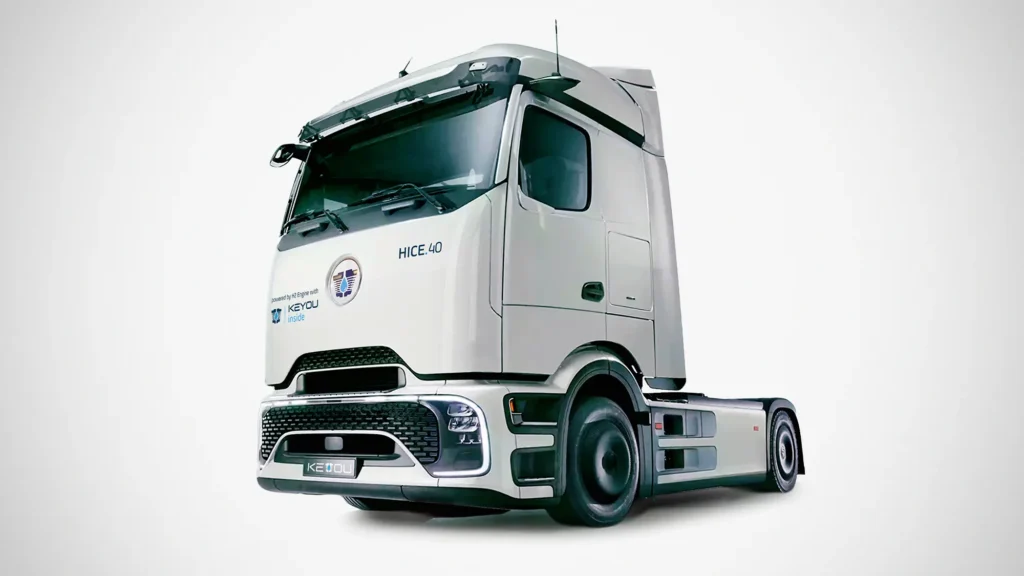
Daimler Truck is determined to play nice with the planet. Its latest move toward cutting carbon emissions comes in the form of another low-emission drivetrain: the hydrogen-powered internal combustion engine (HICE). Developed together with German hydrogen specialist KEYOU GmbH, the technology joins the company’s battery-electric and hydrogen fuel cell offerings, with the first production truck, the KEYOU HICE.40, due to arrive in 2027.

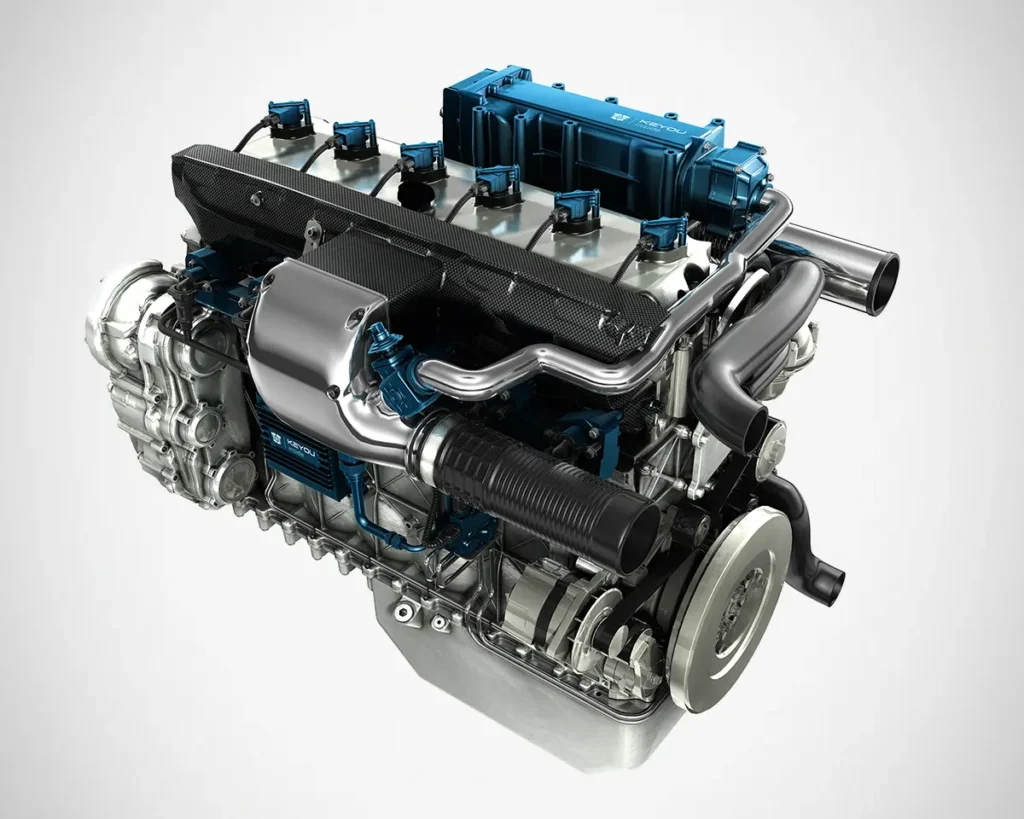
That’s right. Hydrogen Internal Combustion Engine. HICE isn’t new, btw. Alpine has already proposed a concept car powered by one, Mercedes-Benz floated the idea as far back as 2014, the world’s first zero-emission concept aircraft runs on one—albeit a hydrogen-burning turbine—and JCB already has construction machines powered by HICE. Instead of starting from scratch, Daimler Truck will supply Mercedes-Benz Actros L 1848 tractor units and its tried-and-tested 12.8-liter engine platform, while KEYOU handles the hydrogen conversion.
The resulting KEYOU HICE.40 is designed as a 40-ton tractor unit capable of producing up to 350 kW (469 hp) while offering a driving range of up to 650 kilometers (404 miles) using 350-bar compressed hydrogen. On paper, it sounds like a serious workhorse.
If you’re wondering why Daimler Truck isn’t going all in on hydrogen fuel cells instead, the answer is simple: it doesn’t believe there’s a one-size-fits-all solution for decarbonizing freight transport.

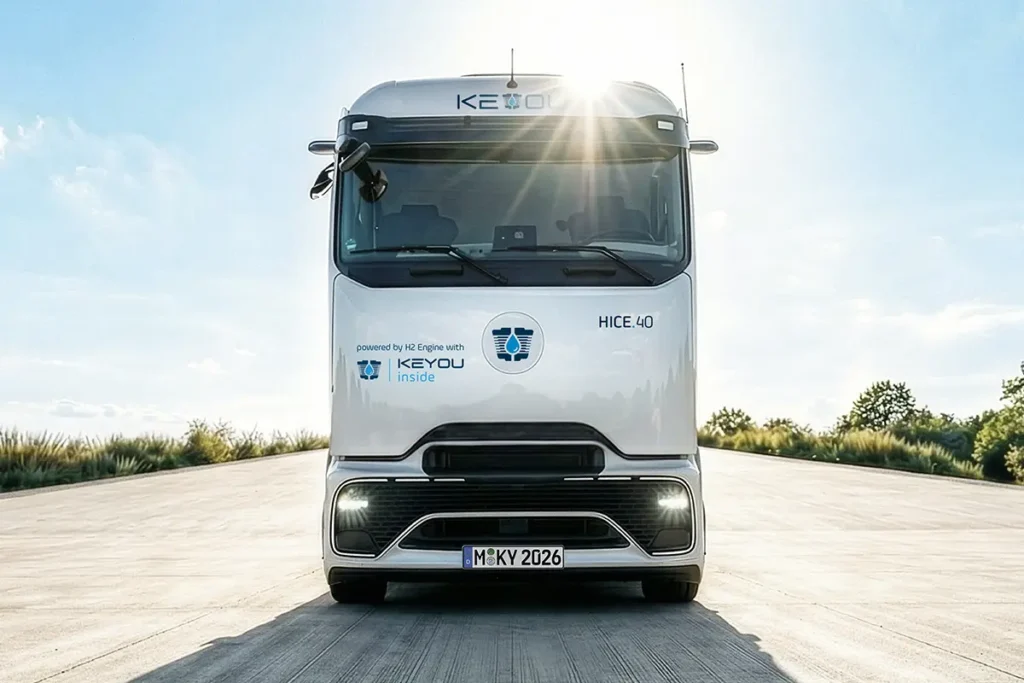
The company continues to push battery-electric trucks for predictable routes, while fuel cell trucks remain its preferred option for long-haul operations requiring ranges of over 1,000 kilometers (621 miles) and rapid refueling. Hydrogen combustion engines, meanwhile, slot neatly in between. They retain much of the familiarity of conventional diesel engines, are mechanically less complex than fuel cells, and can be built using existing manufacturing facilities with relatively few changes.
That also means fleet operators won’t have to learn an entirely new technology overnight. Daimler Truck and KEYOU are already exploring ways to tap into Mercedes-Benz’s existing service network, making ownership and maintenance feel much like today’s commercial vehicles.
Of course, there’s still one rather large elephant in the room: hydrogen refueling infrastructure. Without enough stations, even the most capable hydrogen truck won’t get very far. Fortunately, both companies see the rollout of hydrogen fueling networks happening alongside these new trucks, supported by government initiatives and industry investment.
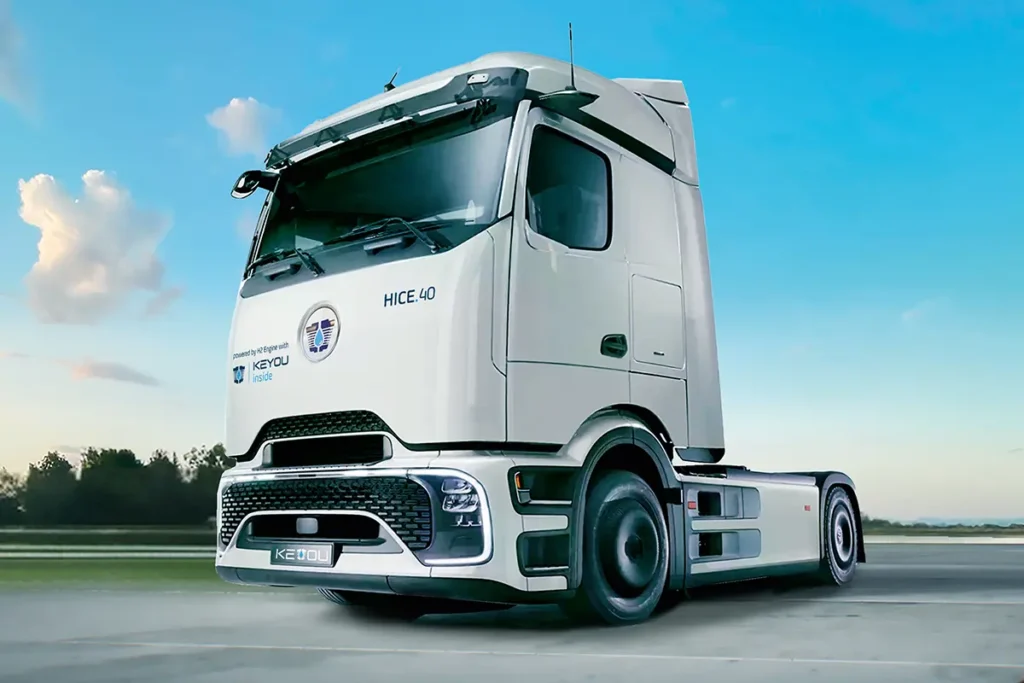
Whether hydrogen combustion ultimately becomes a mainstream solution remains to be seen. And seen it will be because, as mentioned earlier, the KEYOU HICE.40 is expected to enter production in Q4 2027. Not only do we have a production date, but we have the price, too. Pricing starts at €250,000 (about US$285,000), with leasing options available upon request.
Images: Daimler Truck.