


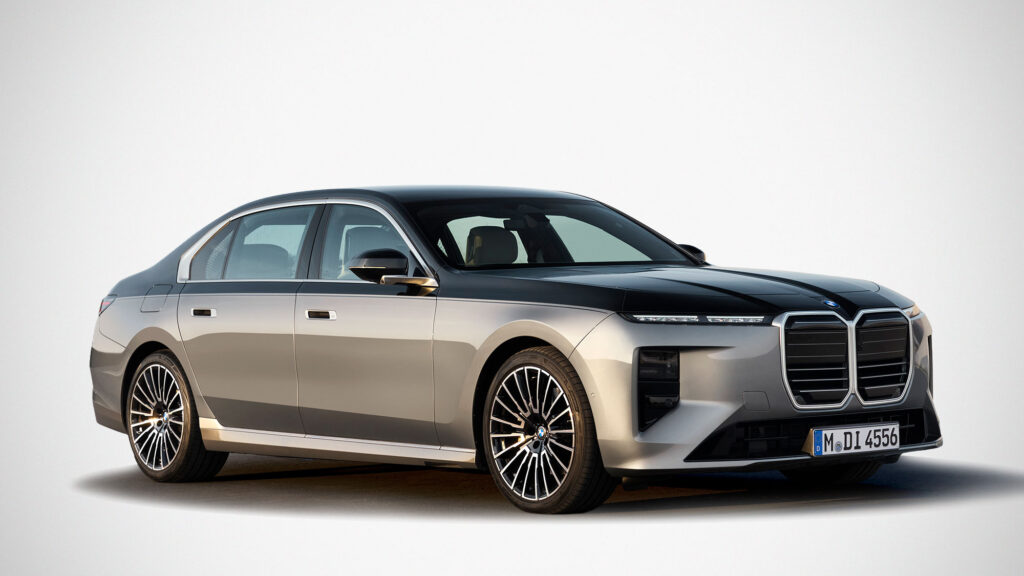
Following the i3 and iX3, the Neue Klasse movement continues with BMW’s most established model line, the 7 Series. This time, it brings along an all-electric twin called the BMW i7—redefining the flagship sedan for the electric era. And boy, the duo looks ready to give Rolls-Royce a run for its money. Better yet, it has both camps—petrolheads and EV-angelists—covered.
With Neue Klasse, BMW signals a major shift toward deeper digital integration, electrification, and personalization across the flagship lineup. You may question: 7 Series? Electrification? Isn’t the i7 already covering that? Well, electric drives also exist in the regular 7 by way of hybrid drive systems.
As far as looks go, the new 7 is guaranteed to turn heads—thanks in part to the reprofiled kidney grille that, to me, somehow resembles a pig nose. Sorry for being brutal. But how much the nose stands out also depends on the color of the automobile and the angle from which you are looking at it. In addition to the slightly distracting nose, it has ultra-slim daytime running lights, full-width rear light graphics, and new crystal lighting options.
2027 BMW 7 Series Sedan
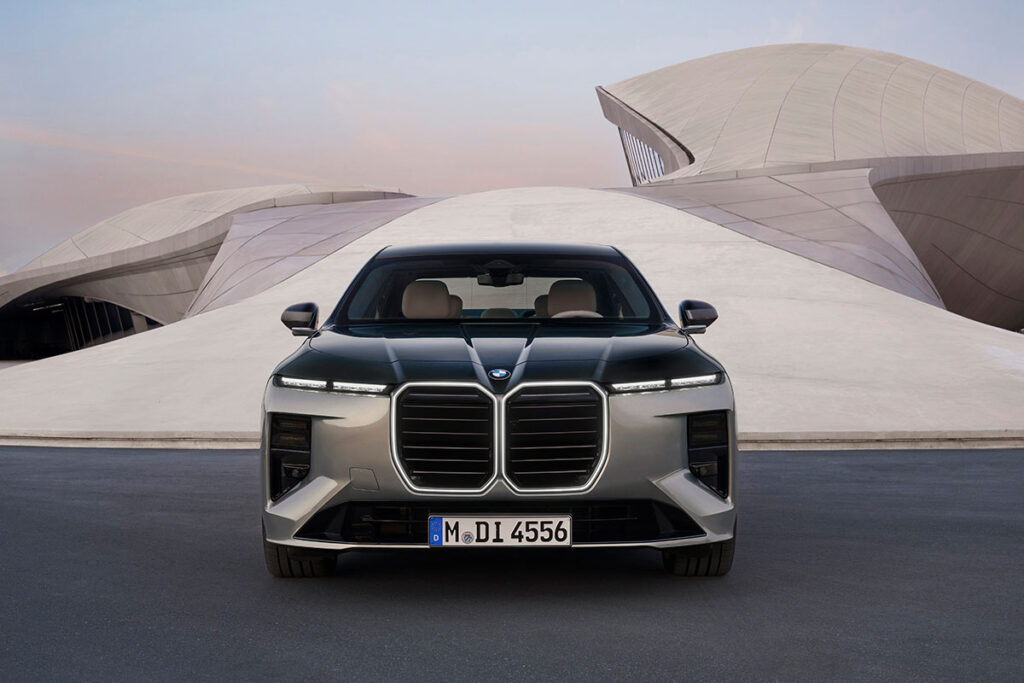
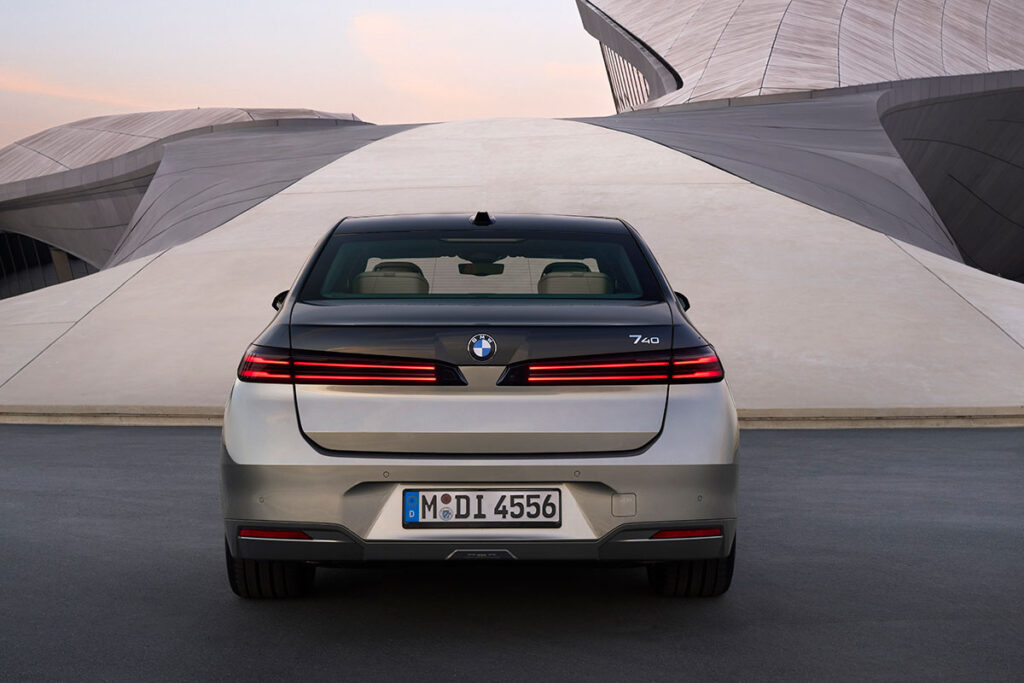
At the time of the announcement, there were three models of the new 7 Series: the BMW 740 xDrive Limousine, the BMW 740e xDrive Limousine, and the BMW 740d xDrive Limousine. A V8 M Performance variant is also in the pipeline. Before we get into the specs, here’s a little more about the 7 in general.
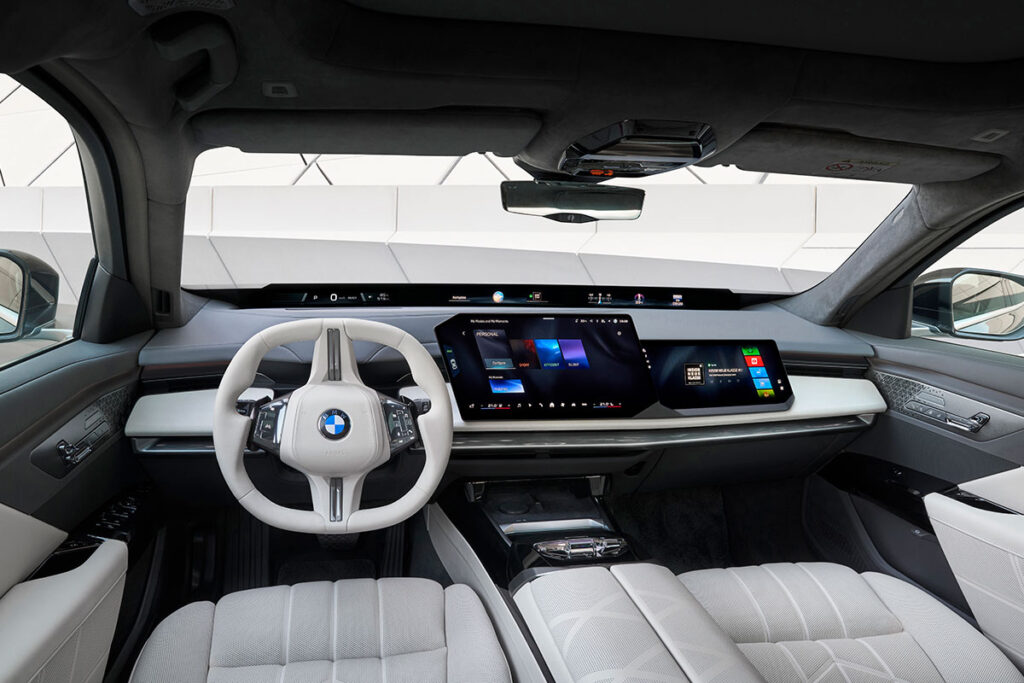
It is very digital. It serves as a preview of how future models will function digitally. How “digital,” you ask? Well, how about a panoramic display that replaces the traditional instrument cluster, AI-supported driver assistance and interaction, over-the-air (OTA) software capability (yes, even for fossil fuel-powered vehicles!), and a completely redesigned user-interface ecosystem? That’s how digital it is now.
That said, the biggest update to the latest BMW 7 Series is not visible from the outside. It happens the moment you sit behind the wheel.
Digitalization
BMW is introducing its new Panoramic iDrive interaction concept to the flagship sedan, bringing a display band that stretches across the base of the windshield and works together with a central control screen and head-up display. The system forms part of the digital architecture that will define upcoming Neue Klasse vehicles, making the 7 Series one of the first production models to carry this next-generation interface strategy.
Interior
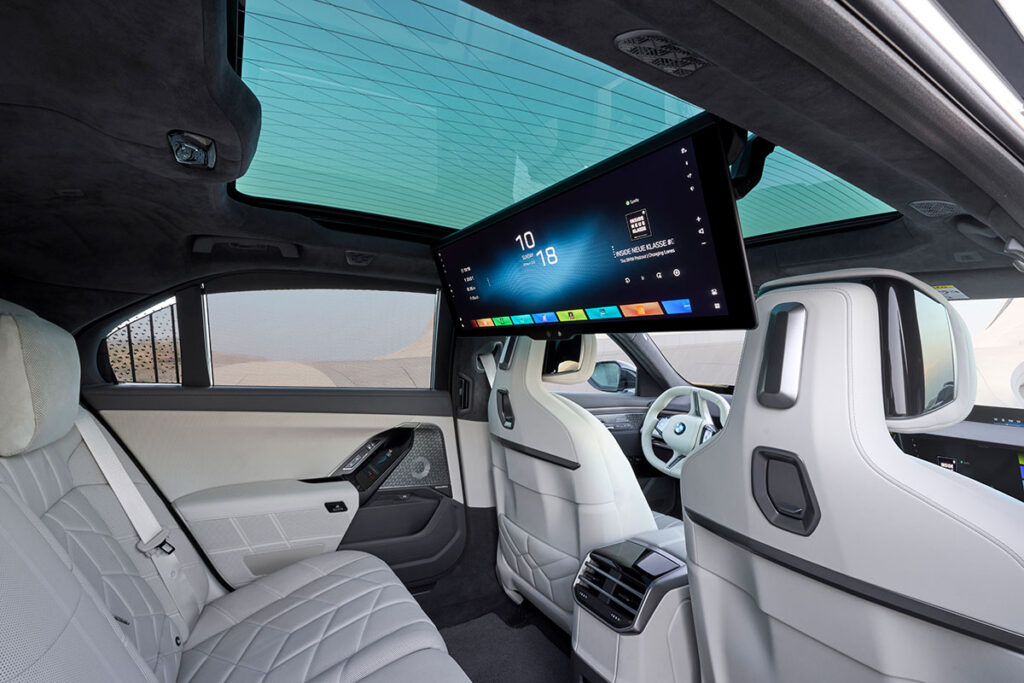
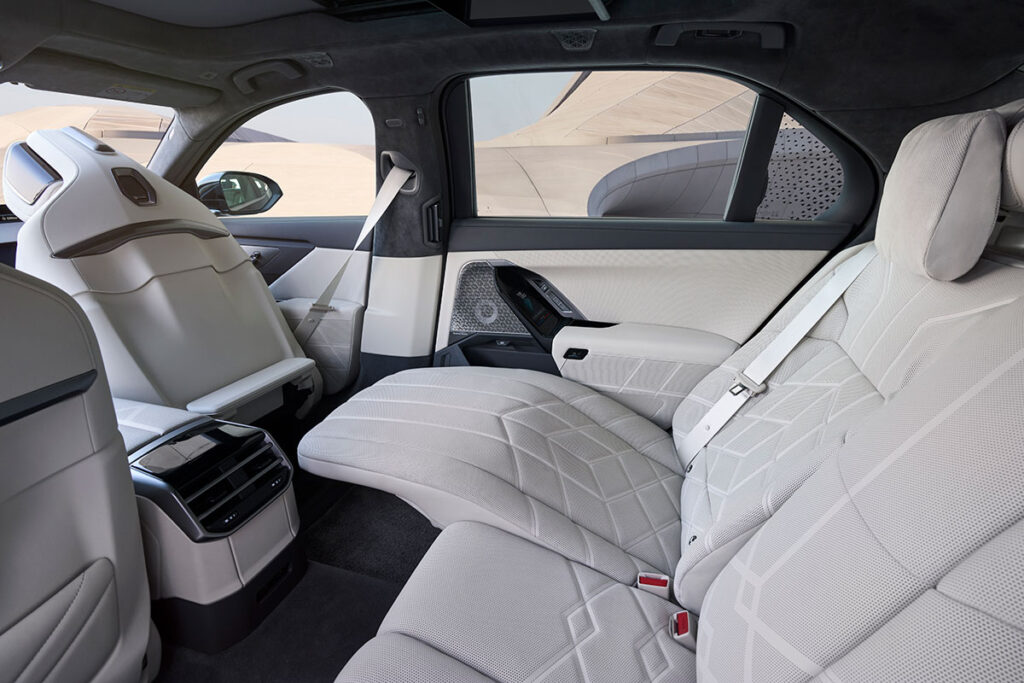
The cabin continues to revolve around passenger comfort as much as driver engagement. The 31.3-inch (!) 8K Theatre Screen (optional) remains a centerpiece of the rear-compartment experience, transforming the second row into something closer to a private cinema lounge than a traditional limousine bench. Combined with Executive Lounge seating and an immersive digital environment, the 7 Series keeps its reputation as a car designed to be experienced from either seat.
As mentioned earlier, under the skin, the model offers multiple drivetrain choices, including combustion engines and plug-in hybrid variants. Adaptive air suspension remains standard equipment, supporting the model’s role as a long-distance luxury cruiser while preserving the dynamic character expected from the brand’s flagship sedan.
BMW 740 xDrive
In the performance department, the 740 xDrive’s 2,998 cc inline-6 TwinPower Turbo engine delivers a healthy 400 PS with an impressive 580 Nm of torque—available from 1,980 to 5,000 rpm—which are put to good use on all four wheels via an 8-speed automatic transmission. That’s not all. The 740 is also a mild hybrid, featuring 48V mild hybrid technology.
This tiny motor is not enough to drive the automobile, though. It produces a very modest 18 PS but generates a hefty 200 Nm of torque. This electric motor can provide a brief torque boost (though just 40 Nm) during acceleration and supports start-stop smoothing, energy recuperation, and more.

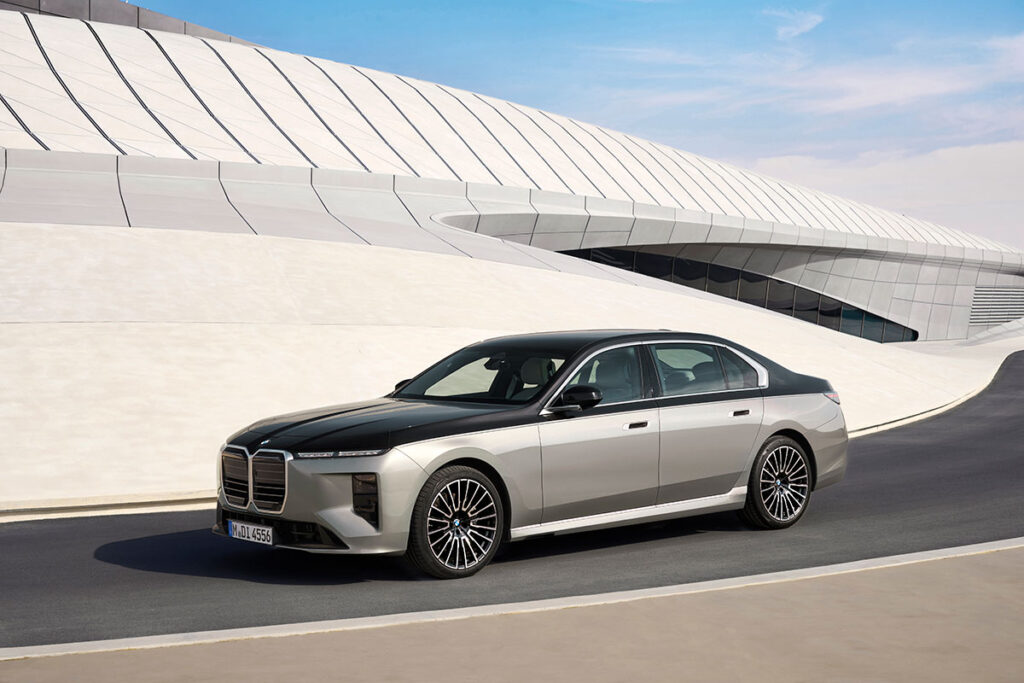
Befitting its limousine namesake, the new 7 Series is huge. It stretches 5,395 mm long, is 1,950 mm wide, and 1,550 mm tall. It has a wheelbase of 3,215 mm and weighs in at 2,235 kilograms. Notwithstanding the size and weight, the 740 still wipes the century sprint in 5.1 seconds and has a top speed of 250 km/h. Plus, fuel consumption is frugal for a large luxury sedan at 9.3–8.3 L/100 km.
BMW 740e xDrive
Meanwhile, the 740e xDrive is a plug-in hybrid drive limo that combines a 2,998 cc inline-6 TwinPower Turbo engine with 310 PS and 450 Nm on tap with a 145 kW (197 PS)/280 Nm electric motor. The result is a 489 PS luxury land yacht producing a grand 700 Nm of torque. It is mated to an 8-speed automatic gearbox and is, of course, all-wheel drive.
The hybrid drivetrain is capable of taking this 2,495-kilogram luxury automobile from 0–100 km/h in just 4.8 seconds, with the same 250 km/h top speed. However, the top speed for electric drive alone is just 140 km/h—in case you’re down for an electric-only driving experience. Fuel consumption is even more frugal on this one, achieving an impressive 6.1–5.0 L/100 km. Electric consumption is 17.5–16 kWh/100 km.
The electric motor is hooked up to an 18.7 kWh battery and supports 11 kW AC charging that would take it from 0 to 100% charge in around 2 hours.
BMW 740d xDrive
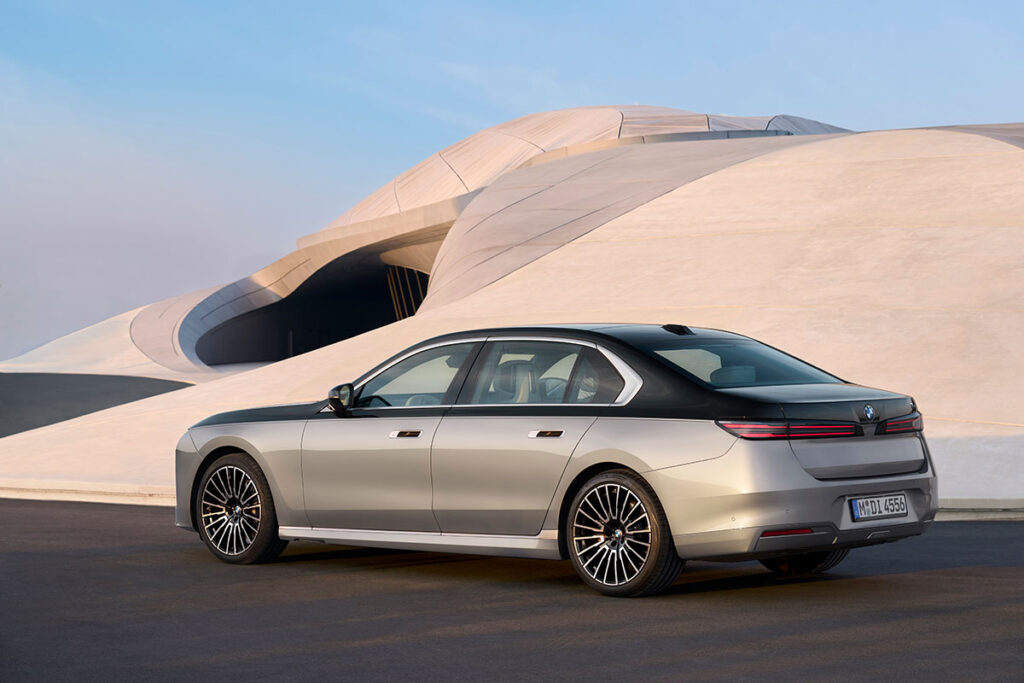
Finally, for the 7 Series, there’s the diesel model, the 740d xDrive. The 2,993 cc inline-6 TwinPower Turbo diesel motor produces 313 PS and turns out a beefy 610 Nm of torque. It is paired with an 8-speed automatic transmission and rolls on all four wheels. Max torque is available from just 1,500 through 2,500 rpm, while peak power arrives at 4,000 rpm. You know, diesel engines are just doing what diesel engines do.
The diesel model is also a mild hybrid, featuring the same 48V electric motor producing 18 PS and 200 Nm of torque. Performance-wise, it is no slouch. The 2,300-kilogram luxury beast rockets from 0–100 km/h in 5.7 seconds. Keep it going, and you’d be maxing out at 250 km/h.
Consumption here is no surprise. I mean, diesel and mild hybrid? It just reads like frugal. We are talking about 7.2–6.5 L/100 km.
Oh, did I mention that when the time comes, it can be ordered in a two-tone finish? I mean, you cannot get more limousine than a two-tone paint job, right?
2027 BMW i7 Sedan
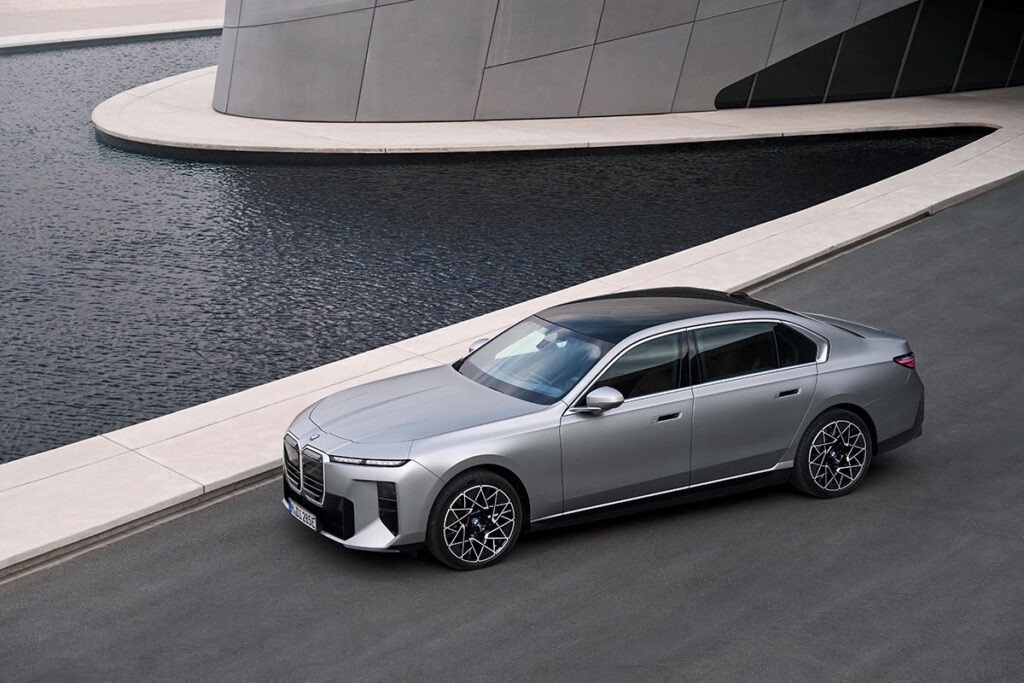
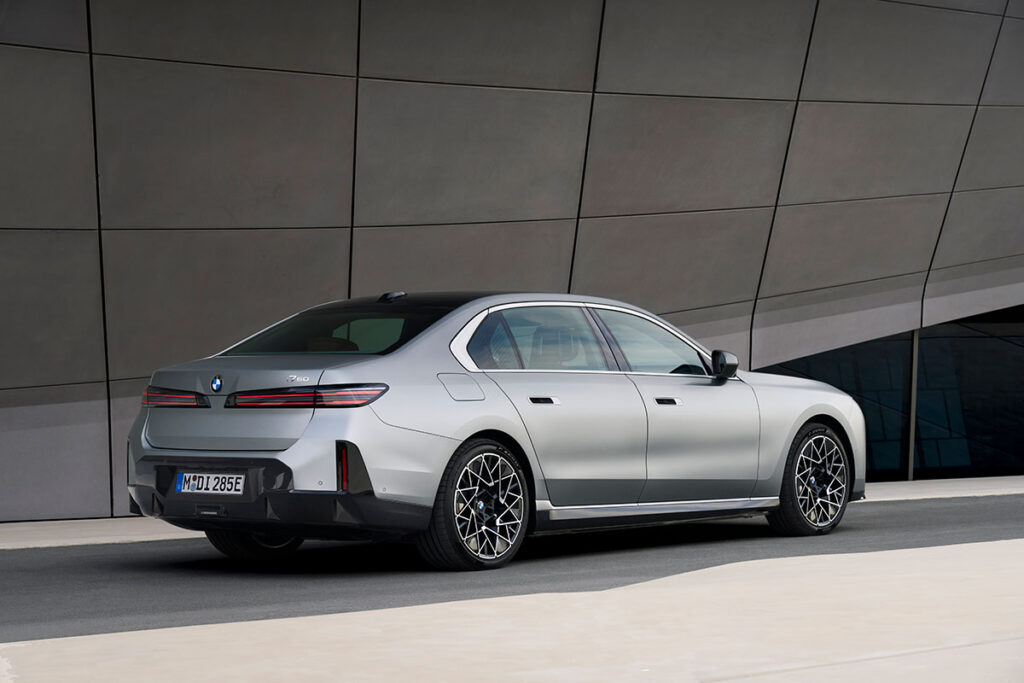
Alongside the combustion and plug-in hybrid variants sits the fully electric BMW i7, which now also benefits from BMW’s sixth-generation eDrive technology. It is almost identical to the fossil-powered models, except for some distinctions in the front fascia and the rear bumper region. As far as Germany is concerned, there are two models: i7 60 xDrive and i7 50 xDrive at the time of the announcement. However, details of the motors of the 50 have not been published, so we are just going to look at the 60.
One of the biggest upgrades comes from the introduction of new cylindrical battery cells. These significantly improve energy density and help extend the electric driving range of the latest i7 models to more than 720 km (447 miles) under WLTP testing. This is good news because it can now actually tour rather than just be relegated to urban shuttle duty.
The i7 shares the same chassis technologies as the combustion models, including adaptive two-axle air suspension and electronically controlled dampers, ensuring the electric drivetrain does not change the limousine character expected from the 7 Series platform. Like its combustion counterpart, the i7 also benefits from BMW’s expanded driver-assistance portfolio, including Motorway Assistant hands-off capability and navigation-guided City Assistant support.
BMW i7 60 xDrive
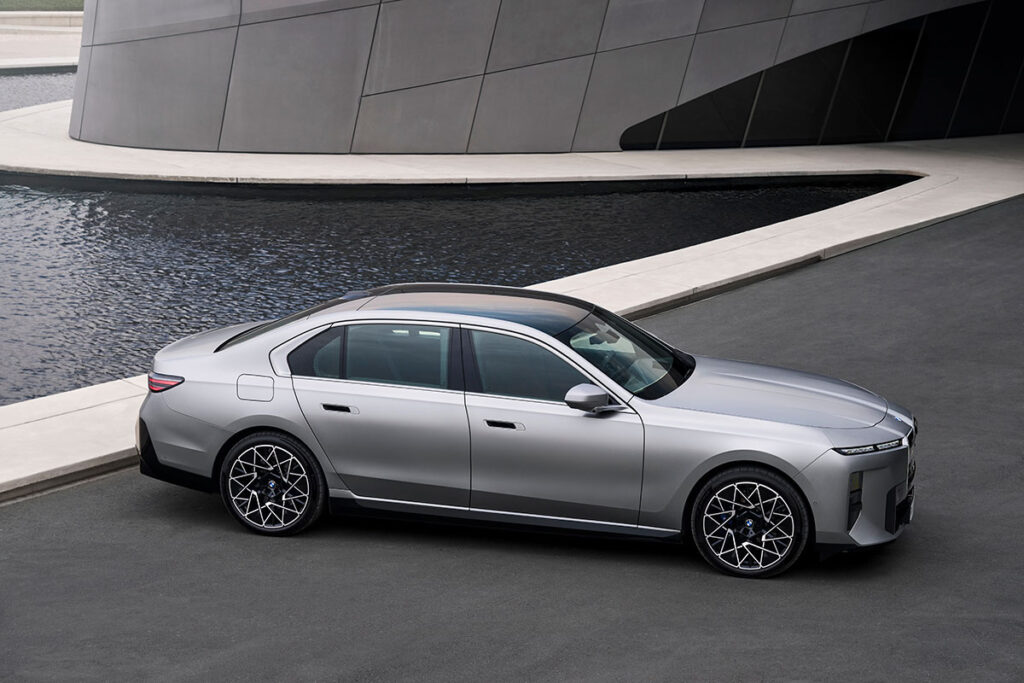
The BMW i7 60 xDrive is powered by a 400 kW (544 PS) electric motor producing 745 Nm of torque. It’s an electric vehicle, so there’s not much transmission to speak of in the traditional sense. It is basically paired with a single-speed automatic “gearbox,” and it also rolls on all four wheels.
While it maintains the same dimensions, being an electric vehicle with a large battery pack makes it obviously heavier. Its unladen weight tops 2,770 kilograms. But despite the heft, it is still the fastest of the lot, rocking to 100 km/h from standstill in just 4.8 seconds. It also has a top speed of 240 km/h.
It is equipped with a 112.5 kWh battery—one of the biggest in the luxury sedan class—which affords the i7 60 xDrive a range of 581–727 km. Consumption (combined WLTP) is 21.9–18.2 kWh/100 km, which is pretty decent for a car of this size. The battery system supports 250 kW DC charging, which, in ideal conditions, is able to charge from 10 to 80% in 28 minutes. Maximum AC charging is 22 kW. Minimum AC charging time for 0–100% is 5 hours 45 minutes.
Pricing and availability
As far as Germany goes, the new BMW 7 Series will be available to order from May 28, 2026. Prices have not been announced. Meanwhile, you can get all the lowdowns of the 2027 BMW 7 Series Sedan here.
The new BMW i7 Sedan will also be available to order from May 28, 2026, in Germany. Pricing is to be announced. You can learn more about the new BMW i7 Sedan here.
As for the rest of the world, the pricing and availability vary from region to region.
Images: BMW.