


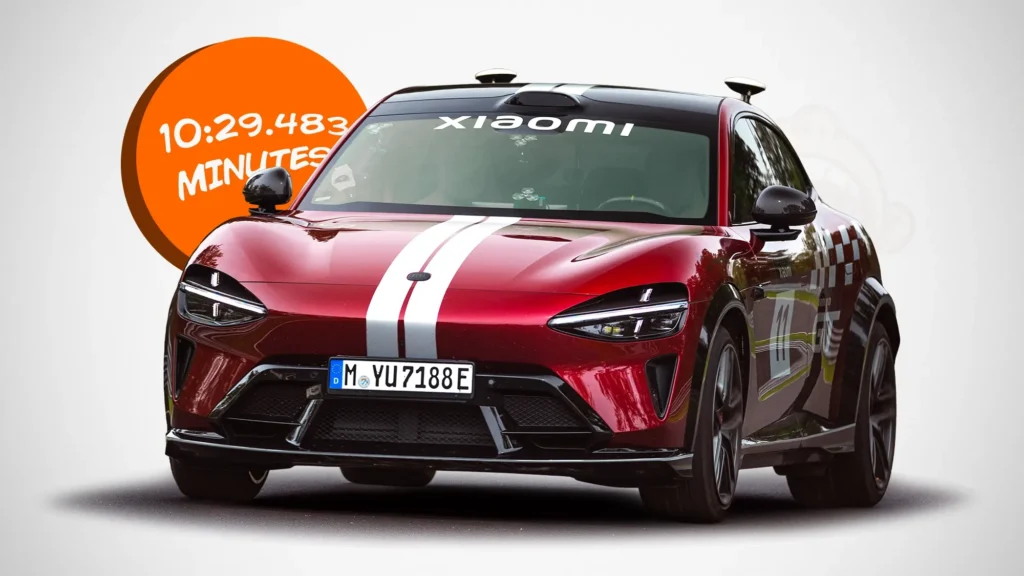
Xiaomi’s Nürburgring obsession shows no signs of slowing down. It is no secret that the Chinese EV maker has set its sights on Tesla, but aesthetically, it often finds itself compared to Porsche. The resemblance does not stop at styling either. Like the German sports car marque, Xiaomi has made the Nürburgring a proving ground for its ambitions.

It started with the SU7 Ultra prototype, which claimed the title of the fastest four-door prototype around the Nordschleife. Xiaomi returned in April 2025 with the production-ready SU7 Ultra to set another benchmark, and this year, the company was back once again with the YU7 GT.
This latest trip was arguably its most interesting yet.
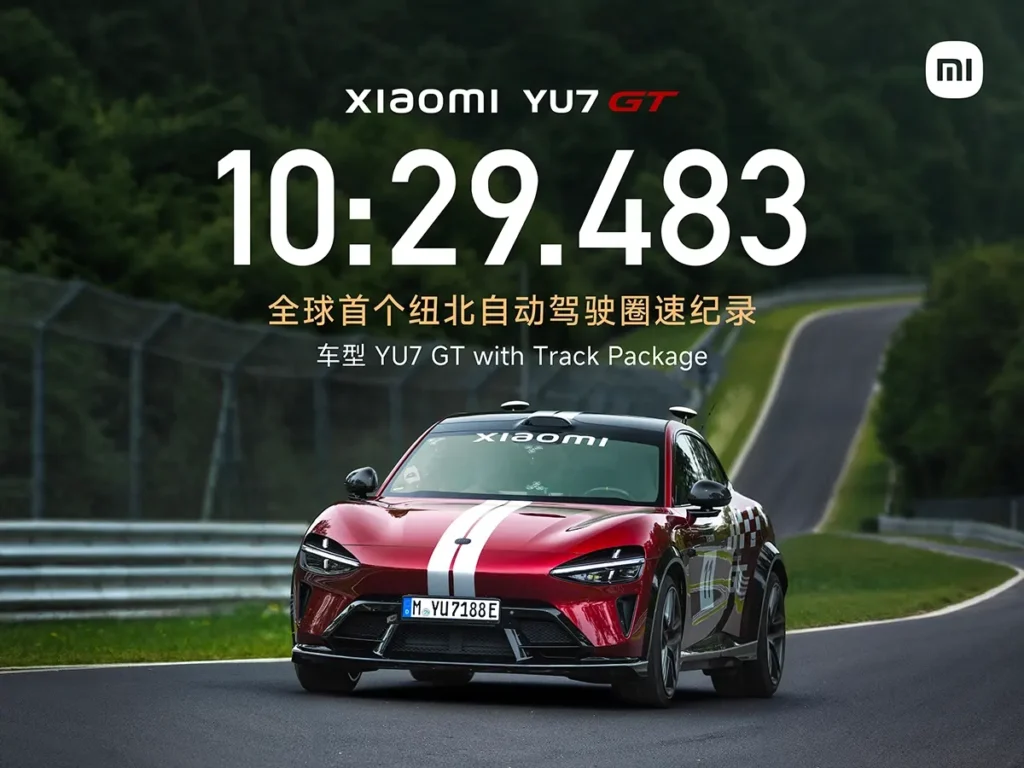
The YU7 GT not only set a new Nürburgring SUV lap record with a human driver behind the wheel, but also recorded a fully autonomous lap in 10 minutes 29.483 seconds (10:29.483), earning the first officially recognised autonomous driving lap record at the Nürburgring.
Autonomous racing and autonomous track driving are hardly new concepts. Universities, research institutes, and technology companies have been experimenting with them for years. What makes Xiaomi’s achievement stand out is that the YU7 GT appears to be the first production-car-based autonomous driving system to establish a Nürburgring autonomous lap record while serving as validation for technology intended for future customer vehicles instead of a research prototype.
The obvious question is: why would anyone want a self-driving car to tackle one of the world’s toughest race circuits?
According to Xiaomi, the answer lies in physics.
Every car has a finite amount of grip. The four tyres must share that grip between accelerating, braking, and cornering. Push beyond the available traction, and the car either understeers towards the outside of the corner or oversteers into a slide. Finding the limit is difficult enough for a racing driver. Teaching a computer to live at that limit is an entirely different challenge.

Simply replaying a professional driver’s steering and throttle inputs would never work. Every lap is different. Wind direction changes. Track temperatures rise and fall. Tyres wear. Grip levels fluctuate. A tiny variation that goes unnoticed on a public road can become the difference between making a corner and spinning into the barriers when operating at the limit.
Instead, Xiaomi says [CH] its autonomous driving system continuously calculates the optimum racing line while estimating available grip in real time. It builds a constantly updated mathematical model based on tyre behaviour, vehicle motion, motor torque, and road conditions, then adjusts steering, braking, and power delivery every few milliseconds.
One of the more impressive demonstrations involved recovering from a loss of control. Rather than reacting like a human driver, the system rapidly applied counter-steering while momentarily reducing and redistributing motor torque, stabilising the vehicle before the slide developed into a spin.
To achieve this, Xiaomi developed a real-time friction map that estimates how much grip the road offers at any given moment. The dual-motor drivetrain also allows the system to shift torque between the front and rear axles at a frequency far beyond what a human driver could manage using only the accelerator pedal.
Of course, what Xiaomi has demonstrated is only one piece of the autonomous driving puzzle. The Nürburgring provides a controlled environment with no pedestrians, cyclists, distracted motorists, or unpredictable traffic. Real-world autonomous driving demands far more than mastering vehicle dynamics. It also requires understanding human behaviour, interpreting countless road situations, and making safe decisions in an environment where surprises are the norm.
Even so, the engineering behind this record should not be dismissed. The same vehicle dynamics models, grip estimation, torque management, and loss-of-control recovery developed on the Nürburgring could eventually make their way into production vehicles, helping drivers maintain control on wet roads, icy surfaces, or during sudden emergency manoeuvres.
Whether Xiaomi’s intelligent driving technology eventually fulfils that promise remains to be seen. One thing is certain: the company is no longer visiting the Nürburgring for publicity alone. It is building a habit of turning the Green Hell into its engineering laboratory.
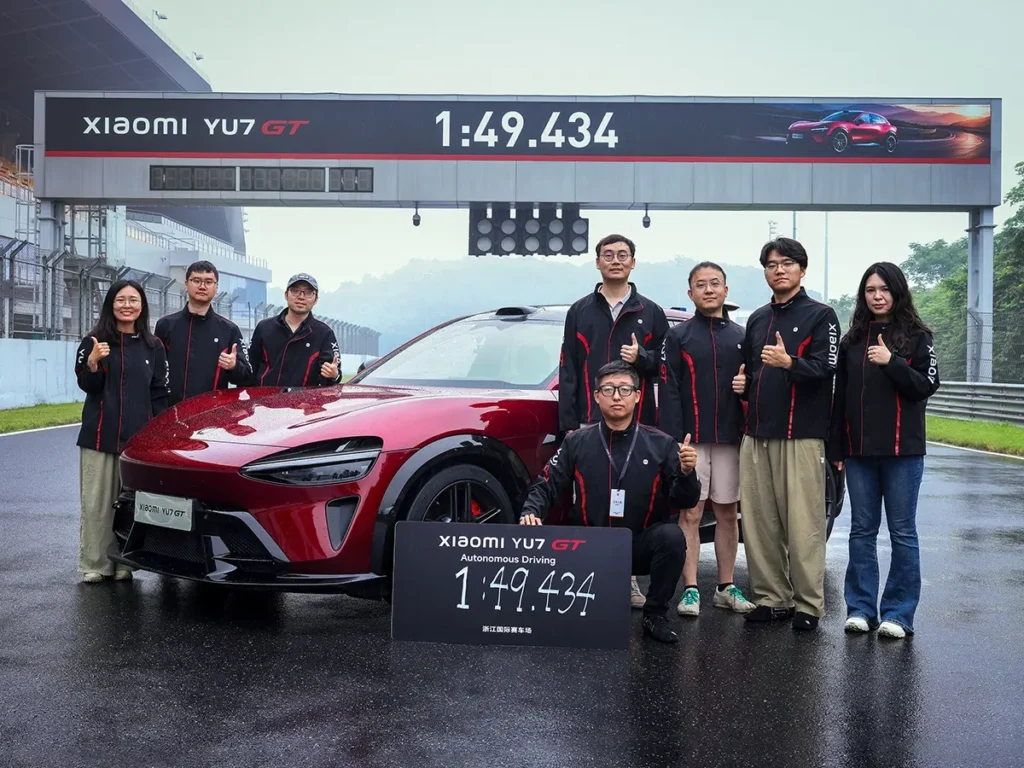
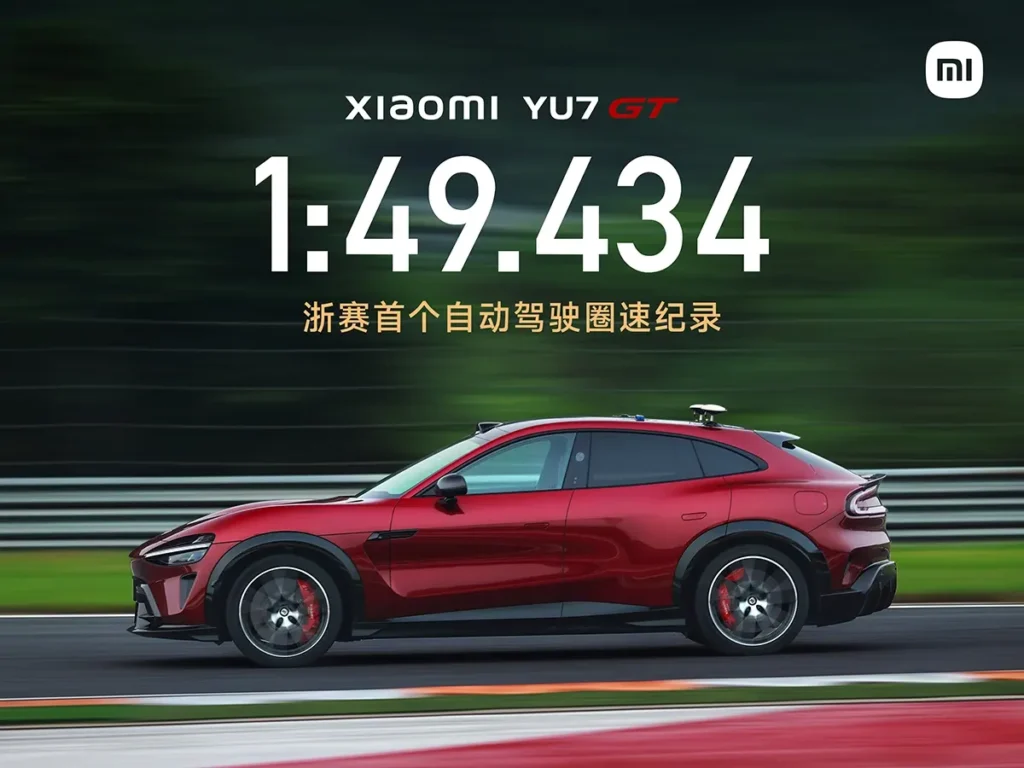
In addition, Xiaomi YU7 also set its first autonomous driving lap record in Zhejiang with 1:49.434.
Xiaomi is really, really, really invested in the automobile business.
Images: Xiaomi [CH].