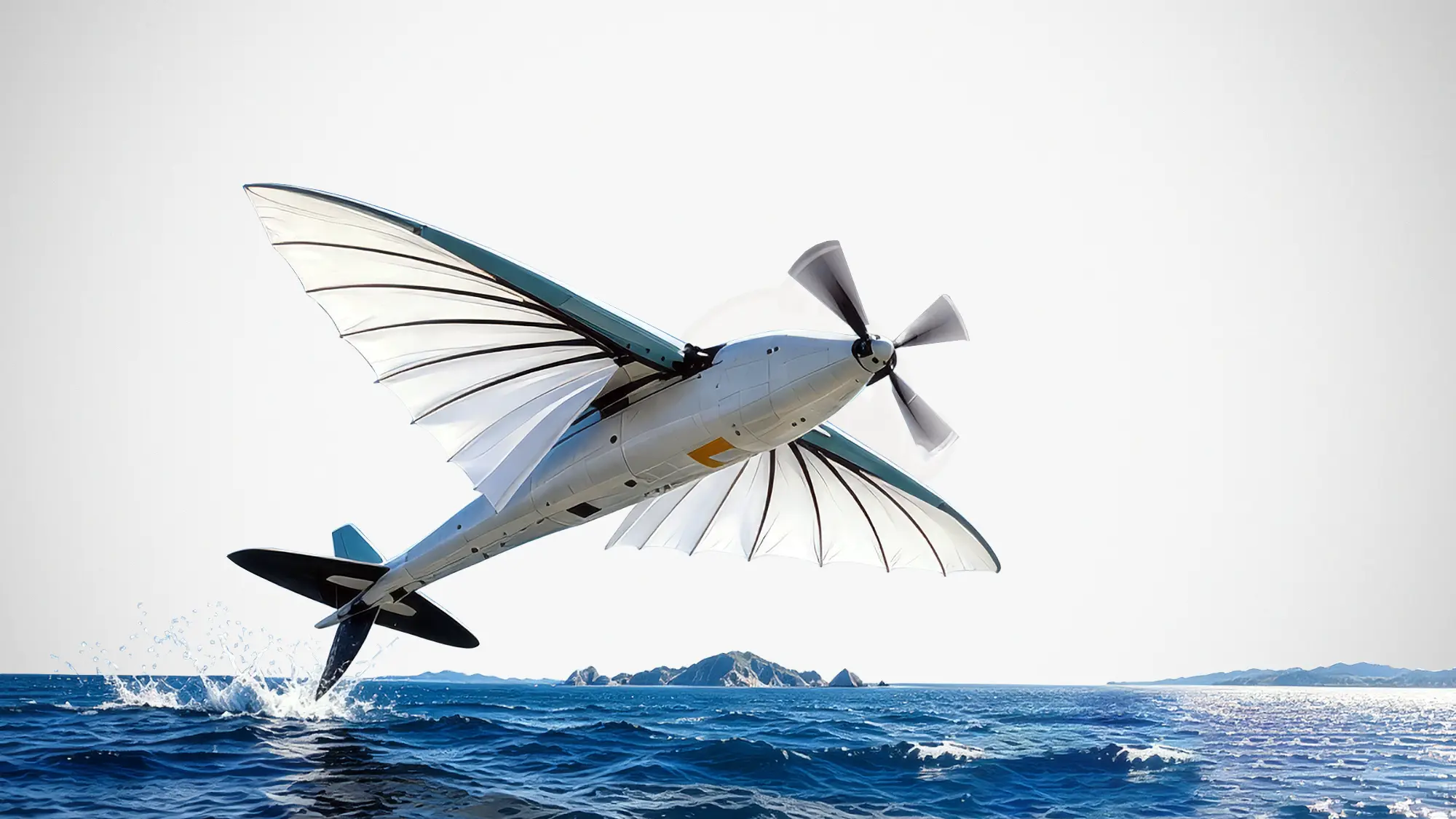
Well, it looks like MIT and EPFL aren’t alone in developing an aerial-aquatic vehicle. Over in Changsha, China, a young team of engineers has been working on something similar, except their inspiration comes from another creature: the flying fish.
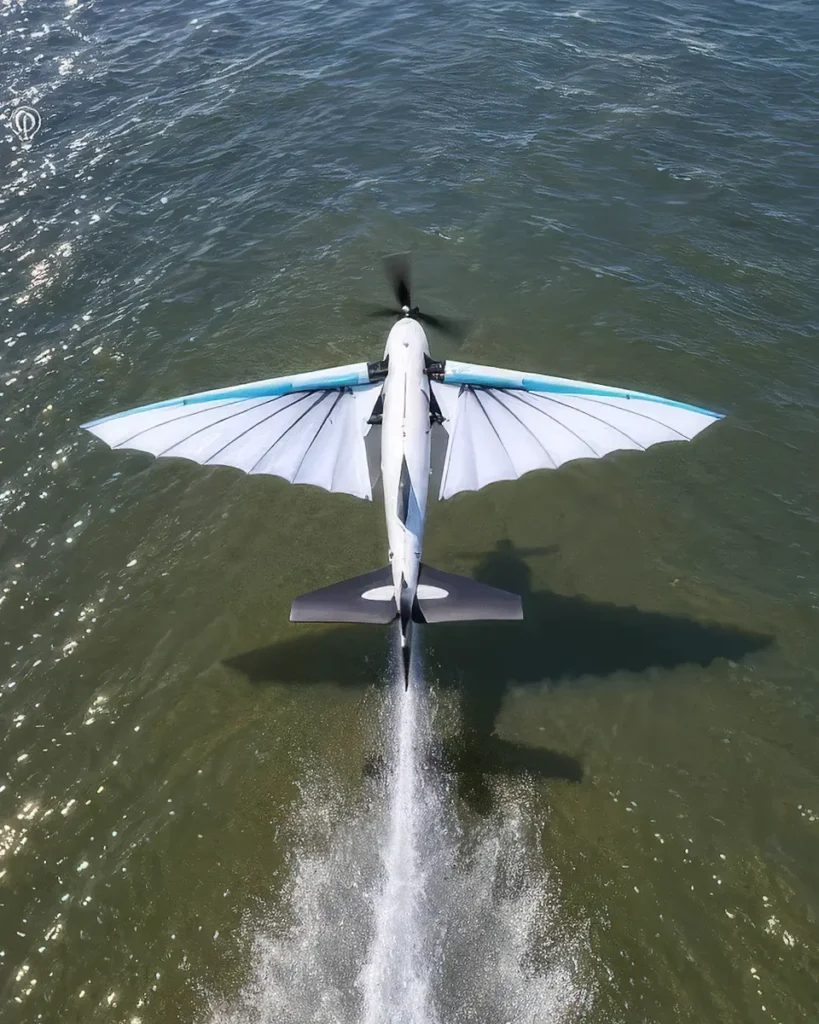
Folks, meet the SkyX Bionic Flying Fish (SkyX 仿生飞鱼), developed by Changsha Nighthawk Intelligent Technology (长沙夜鹰智能科技). And unlike the MIT robot, which flaps its wings like a bird, this contraption has wings that fold away underwater and spread open when it’s time to fly. Basically, a mechanical flying fish with ambitions beyond occasionally escaping hungry predators.
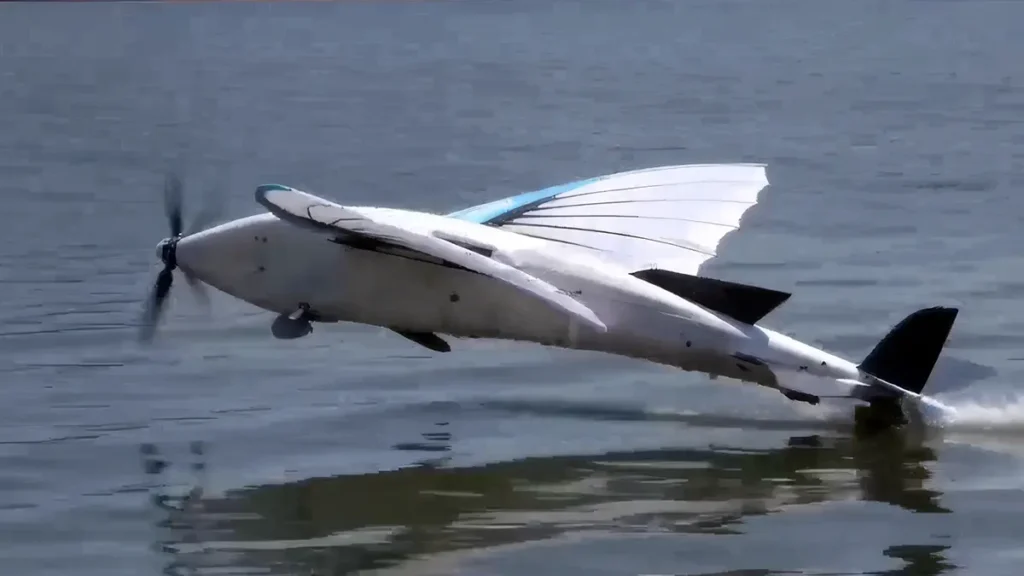
The idea is straightforward, but pulling it off is anything but. Water is roughly 800 times denser than air, so a wing that’s great for flying can become a serious liability underwater. SkyX tackles this with a morphing fixed-wing design, folding its flexible wings against the fuselage to reduce drag while submerged.
And here’s where things get interesting. According to the developers, SkyX can reach 96 km/h (59.7 mph) in the air with around an hour of endurance. Underwater, the claimed speed is an astonishing 57.6 km/h (35.8 mph), with up to 30 minutes of operating time. It can also reportedly deploy its wings and take off from the water’s surface in as little as two seconds.
Behind this ambitious machine is an eight-person team with an average age of just 25, led by founder Qu Guangxi (瞿光檄), born in 1999. What began as a university drone club in 2021 has evolved into a startup developing its sixth-generation prototype. The project even caught the attention of Chinese Foreign Ministry spokesperson Lin Jian, who promoted it internationally.
But SkyX isn’t quite ready to become the flying fish of every oceanographer’s dreams. The team is still working on the most challenging part: maintaining stability while transitioning from underwater travel to flight. Currently, the craft needs to travel along the water’s surface before taking off, rather than bursting straight out of the water like its biological inspiration.
Once perfected, the technology could find applications in emergency rescue, waterway inspections, and environmental monitoring.
For now, SkyX remains an engineering project undergoing further testing, with no confirmed commercial release. Still, considering the team’s age and what it has achieved so far, I’d say these youngsters are giving the flying fish a pretty good run for its money.
Images: 长沙夜鹰智能科技.


