From our smartphones and TVs to laptops and tablets, it is not unusual for most of us to spend at least half of our waking hours in front of a screen. Of course, the types of screens and the amazing ways they work have definitely evolved over the decades — whether you are old enough to remember watching Lawrence Welk on your grandma’s massive black and white TV console, or young enough that your first smartphone was an Apple iPhone 5S.
The Birth of TV Karl Ferdinand Braun’s ‘Braun Tube’, 1987. Credit: Science Museum.
In 1897 a Nobel-prize-winning physicist and inventor named Karl Ferdinand Braun built the first Cathode-Ray-Tube (CRT). This technology was later used to display images on some of the first TVs and computer monitors. By the early 1950s, televisions are able to show color, using technology called luminance and chrominance. TV models varied quite a bit back then in terms of their technology, so what viewers could actually see in terms of color was determined by what type of television they owned.
Touchscreen Tech E.A. Johnson’s touchscreen, 1967. Credit: Johnson, 1967.
In 1965, E. A. Johnson invented the first touchscreen technology. Back then, this innovative method was used primarily for air traffic control jobs, but over time it has exploded to include the way we use ATM machines, manage the apps on our phones, check in at the doctor’s office and much more.
The First Mac First Apple Macintosh Computer, 1984. Credit: Apple.
Fast-forward almost two decades to 1984 and the first Macintosh computer came along. It featured a 9-inch monochromatic 512 x 342 pixel display that is now dwarfed by today’s Mac with its 5,120 x 2,880 pixels and much larger screen that can show tons of bright colors.
TVs are Getting Bigger Rear-projection TV from mid 2000s. Credit: Wikipedia
By the 1990s, televisions were getting larger, albeit bulkier. Rear projection TVs took up a lot of space in living rooms until digital light processing and other technology led to thinner sets.
The Debut of Retina Display Retina Display on an iPhone 4. Credit: Wikipedia.
In 2014, Apple started to market smartphones and other tech with “retina display” and “retina HD display.” What this means is that the screens have such amazing resolution, your eyes are unable to notice any pixilation. Retina display is making the news again these days with the upcoming release of the iPhone X; the device features an all-new 5.8 inch Super Retina screen that looks incredibly clear and allows the display to precisely follow the curves of the phone’s screen, all the way to the corners. Colors will be more accurate than ever and movies, photos, websites and more will look terrific.
Google Glass Updated Google Glass, 2017. Credit: TechRadar.
Google Glass is essentially a pair of clear frames that do a variety of tech functions like taking photos, accessing programs and more through the sound of your voice. Google Glass was recently upgraded to have more memory and handle more apps, including Shazam and Live Stream. You can use Google Glass to see your upcoming trip info with a Google Now reminder, along with weather updates and more — all of this will show up in the top right corner of the wearer’s field of vision.
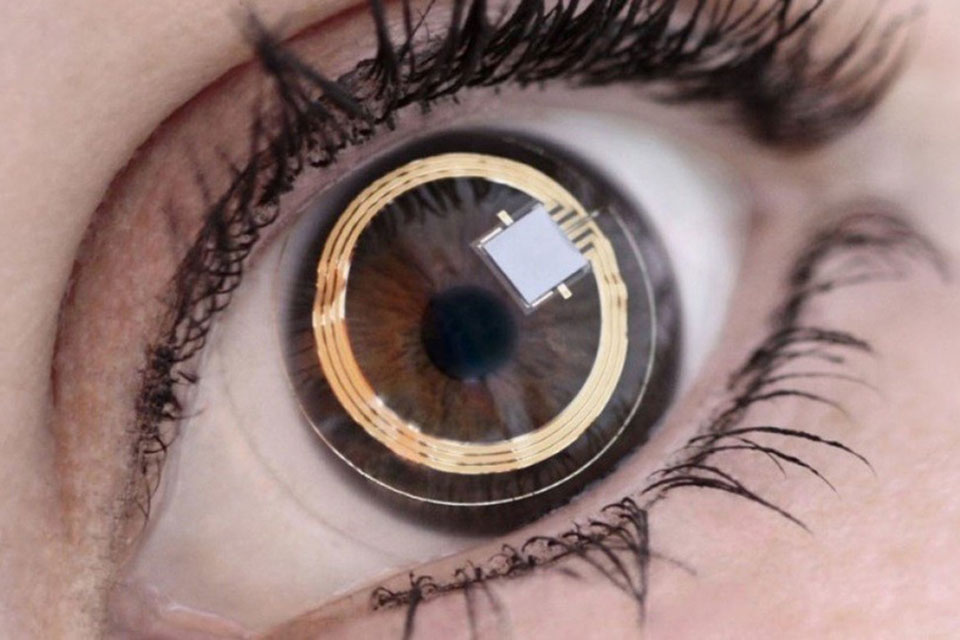
Coming Soon: Contact Lenses That Act as Screens Tiny screens worn on the eyeballs. Credit Pocket-lint.
Speaking of vision, remember when contact lenses merely helped you to see? Now, contact lenses can function as tiny screens worn on the eyeballs. Future contact lenses may feature a camera as well as motion sensors, and wearers will be able to see images and video using the lens. Imagine taking photos by blinking and then seeing the images right away, or driving with the correct route lit up in blue.
We use cookies on our website to give you the most relevant experience by remembering your preferences and repeat visits. By clicking “Accept”, you consent to the use of ALL the cookies.
This website uses cookies to improve your experience while you navigate through the website. Out of these, the cookies that are categorized as necessary are stored on your browser as they are essential for the working of basic functionalities of the website. We also use third-party cookies that help us analyze and understand how you use this website. These cookies will be stored in your browser only with your consent. You also have the option to opt-out of these cookies. But opting out of some of these cookies may affect your browsing experience.
Necessary cookies are absolutely essential for the website to function properly. These cookies ensure basic functionalities and security features of the website, anonymously.
Cookie
Duration
Description
cookielawinfo-checkbox-analytics
11 months
This cookie is set by GDPR Cookie Consent plugin. The cookie is used to store the user consent for the cookies in the category "Analytics".
cookielawinfo-checkbox-functional
11 months
The cookie is set by GDPR cookie consent to record the user consent for the cookies in the category "Functional".
cookielawinfo-checkbox-necessary
11 months
This cookie is set by GDPR Cookie Consent plugin. The cookies is used to store the user consent for the cookies in the category "Necessary".
cookielawinfo-checkbox-others
11 months
This cookie is set by GDPR Cookie Consent plugin. The cookie is used to store the user consent for the cookies in the category "Other.
cookielawinfo-checkbox-performance
11 months
This cookie is set by GDPR Cookie Consent plugin. The cookie is used to store the user consent for the cookies in the category "Performance".
viewed_cookie_policy
11 months
The cookie is set by the GDPR Cookie Consent plugin and is used to store whether or not user has consented to the use of cookies. It does not store any personal data.
Functional cookies help to perform certain functionalities like sharing the content of the website on social media platforms, collect feedbacks, and other third-party features.
Performance cookies are used to understand and analyze the key performance indexes of the website which helps in delivering a better user experience for the visitors.
Analytical cookies are used to understand how visitors interact with the website. These cookies help provide information on metrics the number of visitors, bounce rate, traffic source, etc.
Advertisement cookies are used to provide visitors with relevant ads and marketing campaigns. These cookies track visitors across websites and collect information to provide customized ads.