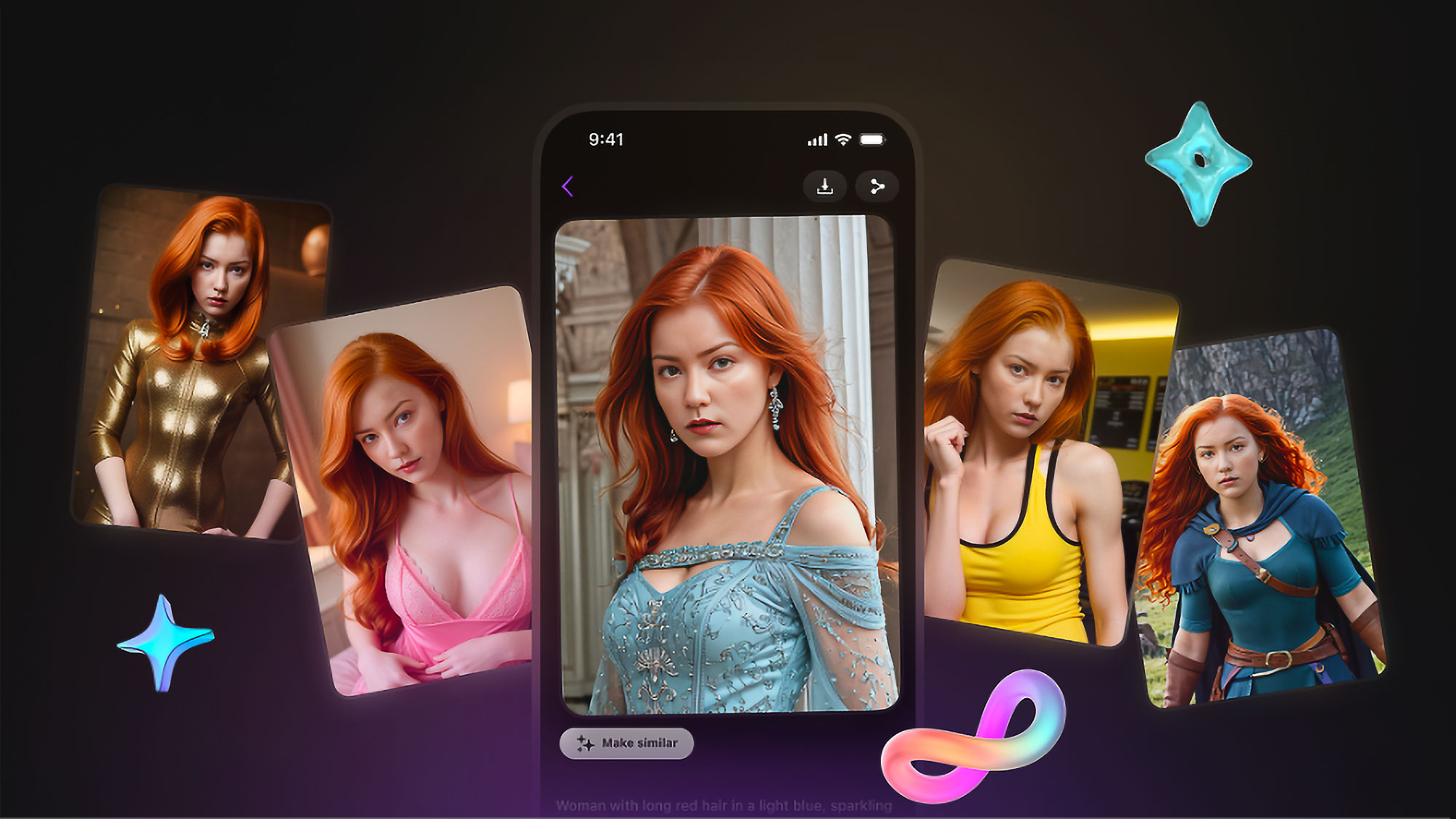
Alright, I need to level with you here. I’ve been drowning in AI image generation tools for over five years now, and honestly? Most of them are pure hot garbage. Overhyped nonsense that promises the moon and delivers a soggy sandwich. But GenYOU from Generated Photos? It’s legit. Not because it’s some mind-blowing innovation—it’s not—but because it solves actual problems that real businesses struggle with every damn day.
What GenYOU Accomplishes (Minus the Marketing Fluff)
Here’s what makes GenYOU genuinely special: it’s mind-numbingly dull, and that’s precisely why it’s brilliant. While every other AI tool is desperately trying to generate flying unicorns or abstract art masterpieces or whatever trending garbage gets clicks, GenYOU focuses on one single thing: creating realistic human portraits. That’s it. Nothing else.
The underlying technology uses generative adversarial networks. Sounds fancy as hell, but it’s essentially two AI systems beating the crap out of each other digitally. One generates fake faces, while the other tries to catch them. After countless millions of rounds, you end up with a system that’s surprisingly excellent at creating believable human faces.
You can manipulate age, ethnicity, gender expression, hair color, facial hair, accessories—everything you’d control during a traditional photo shoot. However, what actually impressed me was that the controls genuinely work. I’ve tested probably fifty AI tools where the settings function more like wishful thinking than actual commands. GenYOU delivers what you request. Usually, anyway.
Real Companies Getting Real Value
Marketing Departments Are Secretly Hooked
I grabbed lunch with a marketing VP from a tech company in Chicago three weeks ago. Her team was burning through $25,000 quarterly on stock photography and custom shoots. That’s $100,000 annually for images that look identical to those of literally every other company’s marketing materials.
“We needed authentic, diverse faces for our customer success stories,” she explained between bites of her salad. “Stock photos made our testimonials look completely manufactured. Worse, we kept spotting the same models on competitor websites. Builds confidence in potential customers, right?”
GenYOU completely revolutionized their process. Instead of organizing expensive, complicated photo shoots, they generate portraits instantly. Need a testimonial from a 44-year-old IT director in Tampa? Generate it immediately. Writing about productivity software for remote teams? Create the perfect representative in seconds.
The cost savings are ridiculous, but the creative freedom is what sold her. Her team can now experiment with different demographic representations without obliterating their entire budget.
“Two months ago, we tested seven different age groups across our social media campaigns,” she said. “Traditional photography would’ve cost $21,000. With GenYOU, it cost us $41.”
UX Designers Found Their Magic Solution
A lead UX designer at a healthcare tech startup in Boston shared his biggest recurring nightmare: creating believable user personas without accidentally using real people’s photographs.
“I used to waste entire weeks hunting through stock photo libraries,” he told me during our video chat. “Desperately searching for faces that matched our extensive user research data. Then I’d panic about accidentally using identical photos that appeared in competitor presentations.”
GenYOU solved this problem instantly. He generates precisely the person he needs for each persona—exact age ranges, professional styling, diverse backgrounds. The faces feel authentic enough for executive presentations, but avoid the legal complications of real people’s likenesses.
His design team now builds consistent character representations across every project deliverable. When presenting user experience journeys, identically generated faces appear throughout entire presentations, creating narrative consistency that generic stock photos never achieved.
“My creative director used to complain that our personas resembled a random assortment of dating app profiles,” he laughed. “Now they function as coherent characters.”
Content Creators Are Succeeding
A health and wellness blogger with 340K monthly subscribers explained her biggest ongoing challenge: finding authentic imagery that genuinely represents her diverse readership.
“Stock photos in the health space are horrendous,” she said bluntly during our phone interview. “Either they’re manufactured gym poses featuring people who look like fitness influencers, or they’re identical recycled faces appearing across every health website online.”
She discovered GenYOU through a content creators’ Discord server. Now she generates custom portraits that perfectly align with her article subjects—writing about nutrition for busy professionals? Generate that exact demographic. Discussing mental health for working parents? Create precisely that audience.
The authenticity response completely shocked her. “My subscribers started commenting that they could recognize themselves in my article imagery. That never, ever happened with stock photography.”
She shared comparison examples during our conversation. The contrast was dramatic. Her previous articles featured obvious stock photos that screamed “GENERIC PLACEHOLDER IMAGE.” Her current content displays portraits that appear like genuine community members.
What grabbed my attention was her mention of experimenting with their sexy AI feature for more sophisticated visual approaches. “It maintains identical quality standards while providing different aesthetic options,” she explained. “Ideal for certain wellness content requiring more polished, editorial-style visuals.”
E-commerce Teams Are Measuring Real Impact
A digital marketing coordinator at an online home goods retailer described his situation. Nothing revolutionary about the business, but they serve customers aged 26-75. The challenge was that their product photography overwhelmingly featured younger demographics.
“We were systematically alienating older customers because they couldn’t see themselves reflected in our brand imagery,” he explained. “But organizing photo shoots covering all demographic segments was logistically insane and prohibitively expensive.”
GenYOU enabled his team to generate representative models spanning their complete customer base. They created portraits across different ages, ethnicities, and lifestyle preferences, and then integrated these into product demonstrations and marketing materials.
The results were measurable and significant: conversion rates increased 38% among customers over 52, and support tickets about “age-appropriate products” dropped substantially.
“For the first time in seven years, our mature customer segment felt authentically represented in our visual branding,” he said. “You can’t quantify that emotional resonance in analytics dashboards, but it manifests in quarterly revenue.”
The Technical Truth (Zero Marketing Spin)
GenYOU performs excellently within defined parameters. The portraits appear convincing, resolution meets professional requirements, and generation speed is acceptable. But let’s be completely realistic about genuine limitations.
The platform excels at standard portrait formats—business headshots, customer testimonials, and fundamental character illustrations. It struggles noticeably with complex positioning, dramatic lighting scenarios, or highly artistic photography styles. Need editorial fashion shots or artistic portraits? You still require human photographers. Period.
The faces are completely synthetic, which raises interesting authenticity considerations. Legally, you’re entirely safe (these people don’t exist), but specific audiences might respond negatively if they discover the imagery is AI-generated. Context matters tremendously.
I spent six weeks extensively testing, generating over 1,500 portraits across various demographics and applications. Quality remains consistently high, but you’ll occasionally encounter images that feel slightly “wrong,” typically in facial expressions or eye contact. Not disqualifying, but requires careful selection.
Strange discovery: the system sometimes produces faces that appear too flawless. Like, unsettling uncanny valley territory. I started deliberately selecting slightly imperfect results because they felt more authentically human.
Integration Experience (From Someone Using This)
GenYOU’s API capabilities impressed me far more than the standard user interface. Organizations can integrate portrait generation directly into existing content management workflows or marketing automation systems. This functionality genuinely transforms how companies approach visual content development.
The web interface is practical but completely unremarkable. Accomplishes the task without being particularly elegant or inspiring. For teams regularly generating portraits, the straightforward controls are superior to unnecessarily complex creative tools.
I watched the Chicago marketing team utilize it during a live strategy session. They generated 27 different portrait variations in roughly 40 minutes. Try matching that timeline with traditional photography coordination.
The Ethics Complexity (Yeah, It’s Genuinely Messy)
Implementing AI-generated imagery isn’t merely a technical choice—it’s fundamentally an ethical decision. While GenYOU produces entirely synthetic faces, transparency regarding content origins is becoming increasingly important in public conversations.
I’ve observed various companies handle disclosure requirements differently. Some clearly label all AI-generated content, while others seamlessly integrate it without explicit disclosure. The strategy usually depends on industry standards, audience expectations, and fundamental brand principles.
The platform’s terms address commercial usage scenarios, but organizations should establish comprehensive internal guidelines for AI-generated content implementation. What seems socially acceptable currently might not in four years as public awareness continues to develop.
My honest perspective? Be transparent when it genuinely matters, but avoid overthinking every application. These faces don’t represent actual people, so you’re not exploiting real individuals’ likenesses. However, if your brand emphasizes authenticity above all else, seriously reconsider.
Where This Technology is Genuinely Heading
GenYOU represents early phases of a fundamental shift in visual content creation approaches. The core technology will undoubtedly improve, with enhanced resolution capabilities, more realistic facial characteristics, and expanded customization features. But the more significant change is entirely cultural.
We’re rapidly transitioning toward a reality where synthetic imagery becomes standard across industries. GenYOU serves as a crucial component of that evolution, providing professional-grade solutions for organizations prepared to adopt AI-generated visual content.
The question isn’t whether this technology will achieve mainstream adoption—it’s already achieving mainstream adoption. The actual question is how rapidly individual businesses will modify their established workflows to utilize these emerging capabilities effectively.
My Honest Evaluation
GenYOU addresses specific business challenges exceptionally well. It’s not revolutionary or groundbreaking, but it’s professionally reliable and commercially practical for real-world implementations. For marketing departments, UX design teams, content creators, and e-commerce operations, it provides genuine value through substantial cost reductions, enhanced creative flexibility, and improved demographic representation.
The platform certainly won’t replace all traditional photography applications, but it doesn’t need to achieve that goal. It effectively fills a particular niche—professional portrait generation—with sufficient quality and convenience to warrant widespread implementation.
If you’re currently evaluating AI portrait generation solutions for your organization, GenYOU merits serious consideration. Not because it’s flawless or perfect, but because it operates reliably within its established parameters. In the rapidly evolving environment of AI-generated content, operational dependability is worth significantly more than flashy features.
The future of visual content creation is undeniably synthetic. GenYOU provides a practical, reliable entry point into that emerging reality, with both advantages and limitations clearly understood. Whether that technological future energizes or worries you is ultimately a strategic decision each organization must resolve independently.
But honestly? After five years of testing overhyped AI tools that promise everything and consistently underdeliver, discovering one that performs precisely as advertised feels genuinely refreshing.
Disclaimer: This article reflects the author’s independent opinion based on personal testing and industry observations. GenYOU and any companies mentioned are referenced for illustrative purposes only and do not constitute endorsements or commercial relationships. Readers should evaluate tools like GenYOU based on their own organizational needs, compliance policies, and ethical considerations regarding AI-generated content.


