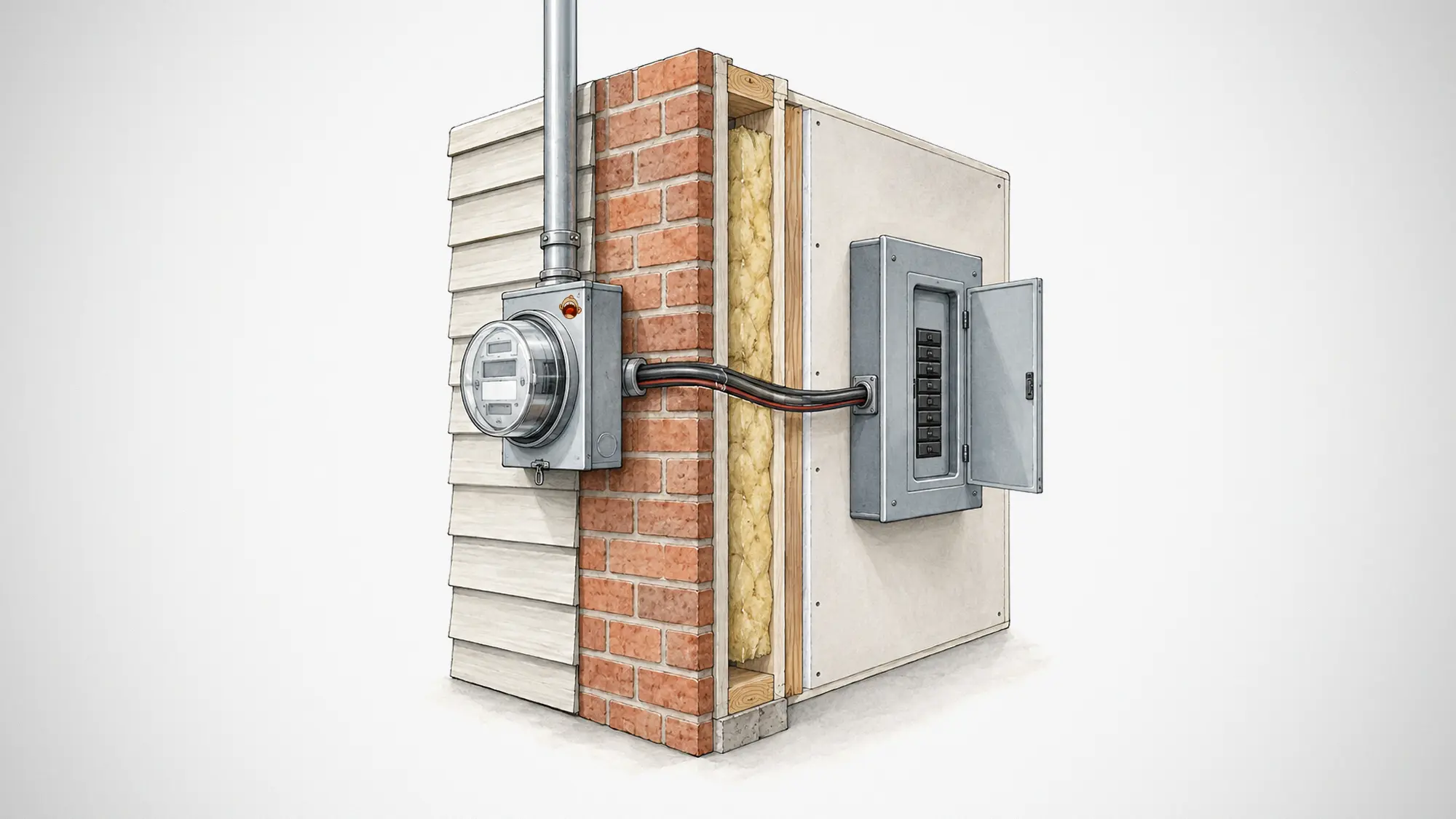
Electrical metering is easy to treat as a small part of a larger power system, but that view misses how much responsibility sits at the service entrance. The meter socket, service conductors, disconnecting equipment, and downstream distribution all meet at a point that must satisfy both utility rules and building requirements. In residential work, that may involve a single service feeding one panel. In commercial or multifamily work, the arrangement can include multiple meters, tenant feeds, grouped equipment, and larger service ratings. Siemens metering equipment matters because designers need products that fit these different configurations without complicating the broader electrical plan. A well-chosen metering assembly supports safe installation, utility acceptance, maintainability, and future changes to the building’s electrical demand.
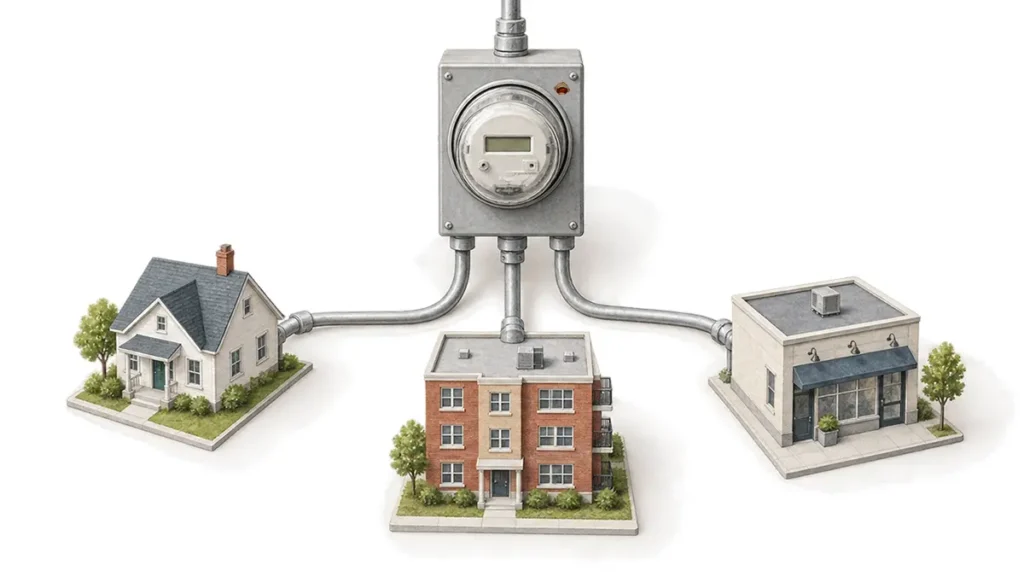
The importance of that choice has grown as buildings become more electrically intensive. Homes now commonly support high-capacity air conditioning, electric cooking, heat pumps, workshops, and electric vehicle charging. At the same time, commercial properties add refrigeration, data equipment, security systems, automation, and specialized tenant loads. Each new load increases the pressure on service equipment to be correctly sized and sensibly arranged. Metering hardware does not determine total service capacity on its own; it must align with the service design and the utility’s metering method. If that coordination is weak, a project can face redesigns, delayed inspections, or expensive changes late in construction. For engineers and contractors, selecting metering equipment is therefore part of system planning, not simply a purchasing decision.
This is where established equipment platforms can create practical value. Designers often prefer to work with manufacturers that offer multiple service ratings, meter positions, enclosure styles, and configurations because real projects rarely follow a single template. A detached residence, duplex, retail strip, and apartment building may all require very different arrangements even when the underlying objective is the same: deliver utility power safely to the customer side. Siemens participates across many of these applications, giving project teams a broader set of options. The benefit is not brand recognition alone. It is the ability to align a specific electrical requirement with equipment built for that use. When service entrance planning is handled early, metering becomes a coordinated part of the architecture rather than an afterthought.
Service Entrance Configuration Links Design to Procurement
Service entrance design begins with a chain of technical decisions that must agree with one another. Engineers and contractors need to know the service voltage, phase, ampere rating, number of meter positions, utility requirements, available fault current, and the relationship between metering and main disconnecting equipment. Physical details matter as well, including enclosure type, ringed or ringless construction, jaw arrangement, mounting location, and working clearances. A mismatch in any one of these areas can turn an otherwise workable design into a field problem. Because manufacturers offer metering equipment in many configurations, designers can match hardware more closely to the intended service arrangement. Siemens, for example, provides options for varied service requirements. The goal is to choose the correct equipment before construction limits available choices.
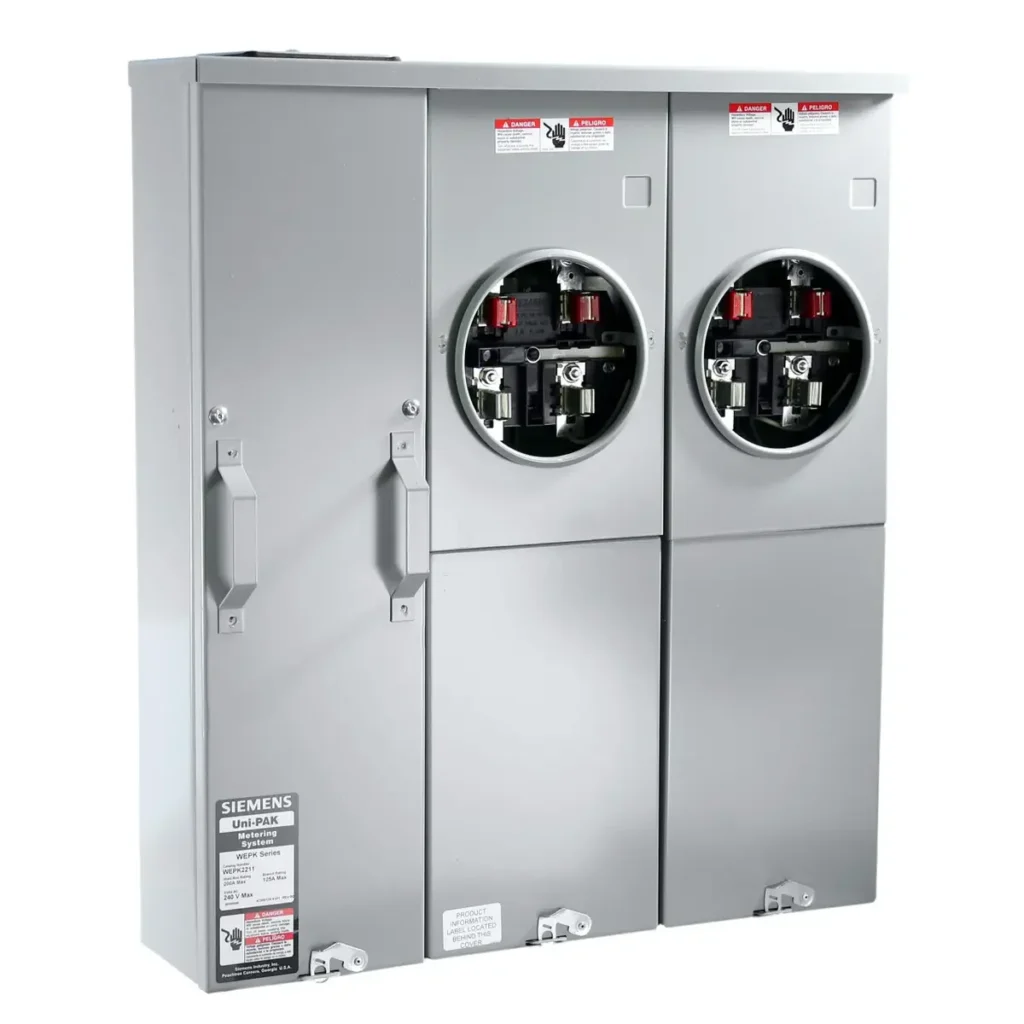
Once the service configuration is defined, the next step is confirming that suitable equipment is available in the required format. Small differences in meter-stack construction can affect whether a unit fits the utility standard, available space, or project drawings. Contractors may review manufacturer offerings that meet those criteria, including Siemens equipment available through suppliers such as BuyRite Electric. Where two metered positions are required, a Siemens WEPK2211 200 Amp 2-gang meter Uni-Pak may be evaluated alongside service rating, jaw configuration, and utility acceptance. Looking at equipment this way keeps product selection tied to the design rather than treating procurement as a separate step. Final selection should still be verified against manufacturer documentation and local utility requirements.
The physical organization of metering equipment can also shape the rest of the electrical layout. Architects may want to minimize wall area devoted to service equipment, utilities need reliable access to meters, and electricians require enough room to terminate conductors and perform maintenance safely. These competing needs become more complicated when several occupancies must be metered separately. Grouped or stackable metering can help organize those services in a compact and repeatable arrangement when the utility permits it. Siemens meter stacks are one option for duplexes, apartment buildings, mixed-use properties, and small commercial developments where multiple customer feeds share a common service location. Good layout planning reduces clutter, simplifies conductor routing, and makes each meter position easier to identify during installation, inspection, and later service work.
Residential Electrification Raises the Bar
Residential electrical systems are carrying more varied loads than they did even a decade ago, which changes the way service equipment should be planned. A modern house may include heat-pump HVAC, electric water heating, induction cooking, laundry equipment, a pool, a workshop, solar equipment, battery storage, and one or more electric vehicle chargers. Not every home needs an oversized service, because proper demand calculations still govern the design. Yet the metering equipment must support the chosen service rating and fit the serving utility’s requirements. Siemens meter sockets and related equipment can matter in this context because residential projects increasingly need more than a basic enclosure. Designers must consider present demand, likely additions, equipment location, and how readily the service can accommodate changes without major reconstruction.
Electric vehicle charging is a useful example of why residential metering decisions now have a longer planning horizon. A homeowner may build a house without a charger, install one a few years later, and eventually add a second vehicle with different charging requirements. Similar changes occur when gas appliances are replaced by electric alternatives or when a detached garage, accessory dwelling unit, or workshop is added. These upgrades can place new demands on panels, feeders, service conductors, and energy-management systems. The meter socket must remain compatible with the service arrangement that supports those loads. Choosing Siemens equipment with the correct rating and configuration does not eliminate the need for future engineering review, but it can give the original design a more coherent foundation for expansion.
Residential metering also becomes more complicated when a property contains multiple occupancies or is likely to be divided later. Duplexes, accessory dwelling units, live-work spaces, and converted homes can raise questions about separate utility accounts, individual disconnects, and how common loads should be handled. Those choices affect far more than the meter itself because they influence service conductor routing, panel locations, equipment grouping, and ownership responsibilities. A grouped metering approach may be appropriate where the utility allows separate customer meters from a common service area. Siemens multi-position solutions can give designers a practical way to organize those arrangements. The important point is to decide the metering strategy before walls, feeders, and service locations are fixed, since later changes can be disruptive and expensive.
Commercial and Multifamily Projects Raise the Stakes
Commercial buildings raise the stakes because service equipment often supports multiple tenants, different load profiles, and spaces that may change use over time. A retail property can contain restaurants, offices, stores, and service businesses within the same structure, each with distinct electrical requirements. Multifamily projects add another layer because dwelling units may be standardized while elevators, pumps, garages, amenity areas, and common lighting create separate loads. The metering system must distinguish customer usage while fitting into the building’s overall distribution plan. Siemens metering equipment can support this kind of organization when its ratings and configurations align with the utility service. For designers, the challenge is to create an arrangement that works on opening day without making future tenant changes unnecessarily difficult or expensive.
Standardization has particular value in commercial and multifamily properties because maintenance teams may work across dozens or hundreds of similar service points. When equipment follows a consistent pattern, electricians can identify meter positions, trace downstream feeds, interpret labeling, and plan replacement work more efficiently. Property owners also benefit from clearer documentation and fewer unfamiliar arrangements across a portfolio. Siemens can fit into this strategy by providing metering products that can be coordinated with other service and distribution equipment from the same broader manufacturer ecosystem. That does not mean every project should specify one brand without comparison. It means consistency can become a legitimate design criterion alongside price, ratings, utility acceptance, and availability. Over a building’s life, reduced maintenance complexity can carry meaningful operational value.
Commercial development also rewards modular thinking because landlords do not always know the final electrical needs of every future tenant. A shell retail space might become a boutique, medical office, restaurant, or fitness studio, and those uses can produce very different load requirements. Metering infrastructure should therefore be planned with realistic flexibility rather than with the narrowest possible assumptions. Multi-position Siemens meter stacks can help organize tenant services in projects where the utility accepts that arrangement, but they cannot compensate for an undersized main service or poor load forecasting. Engineers still need to estimate likely tenant demand, common-area loads, and expansion scenarios. The best design balances present economics with future adaptability, giving owners room to change occupancy without rebuilding the entire service entrance.
Utility Rules and Code Compliance Shape Equipment Choice
A metering assembly can be electrically capable and still be unusable if the serving utility will not approve its configuration. Utilities often publish detailed requirements for meter sockets, bypass provisions, enclosure construction, mounting heights, service conductor arrangements, access, labeling, and approved equipment types. Those rules can vary across territories, even when neighboring projects use similar voltages and service ratings. Some utilities follow EUSERC-related practices, while others maintain their own specifications and approved-product lists. Siemens offers metering equipment in numerous configurations, but the designer must still match the exact product to local requirements. Assuming that a meter stack accepted on one project will be approved elsewhere is risky. Early utility review remains one of the most effective ways to prevent expensive service-entrance changes.
Electrical-code compliance adds another layer because metering equipment does not operate in isolation from the rest of the service. Grounding and bonding, service disconnecting means, conductor sizing, overcurrent protection, equipment ratings, working space, and enclosure requirements all influence the final installation. Local jurisdictions may also adopt amendments or interpretations that change how national model-code provisions are applied. For that reason, a product data sheet should never be treated as a substitute for code analysis. Siemens equipment must be evaluated as part of the complete service arrangement, including connections to upstream utility conductors and downstream distribution equipment. Engineers and contractors should verify listings, ratings, environmental suitability, and installation instructions before approval. Correct equipment selection is ultimately a compliance exercise as much as a procurement exercise.
Utility coordination is most valuable when it occurs before architectural and electrical layouts become difficult to change. The project team should confirm the service characteristics, meter location, point of connection, access requirements, and any utility-specific construction details early in design. That information can affect exterior elevations, equipment pads, electrical rooms, feeder routes, and even the amount of wall space reserved for service equipment. On larger developments, written utility comments should be incorporated into project records so later design revisions do not revive assumptions that were already rejected. Siemens metering equipment can then be selected against a known set of constraints rather than broad expectations. Treating the meter location as a formal interface between utility infrastructure and customer-owned distribution produces a more reliable design process.
Reliability and Lifecycle Cost Extend Beyond Purchase Price
Initial equipment price is only one part of the cost of a metering installation. Service entrance work can involve utility scheduling, permits, inspections, specialized labor, temporary outages, and coordination with occupants or tenants. If major metering equipment must be replaced prematurely, those secondary costs can exceed the price of the hardware itself. That is why reliability and maintainability deserve attention during design rather than only after a problem occurs. Siemens metering equipment can contribute to a sound lifecycle strategy when the selected products are correctly rated, properly installed, and suitable for the environment. The economic question is not simply which meter socket or stack costs less today. It is which complete arrangement is likely to remain serviceable, understandable, and adaptable over years of building operation.
Maintainability becomes especially important when several meters are grouped in one service location. Electricians need to identify each customer position quickly, understand conductor routing, isolate work appropriately, and access equipment without disturbing unrelated services. Clear labeling, orderly layouts, adequate working space, and consistent equipment configurations can reduce diagnostic time and make future modifications easier to plan. Siemens meter stacks can support that approach by giving designers standardized arrangements for multiple positions, subject to the requirements of the specific installation. Product selection alone, however, cannot create a maintainable electrical room. Contractors must preserve access, follow installation instructions, terminate conductors correctly, and document the completed system. A good metering design anticipates the technician who may need to understand the installation many years after construction.
Lifecycle planning also requires designers to consider how a property may change. A small commercial building might be divided into additional suites, an apartment complex may add electric vehicle charging, or a residence may gain an accessory unit. Each change can affect service capacity, tenant metering, feeder sizes, and distribution equipment. No designer can predict every future load, and installing excessive unused capacity can waste money. Still, plausible expansion scenarios should influence the original metering strategy. Siemens products can be useful where their modular or multi-position configurations provide room for an orderly service layout. The objective is not to future-proof a building against every possibility. It is to avoid creating unnecessary barriers to changes that owners can reasonably expect during the property’s useful life.
Better Specifications Reduce Construction and Procurement Risk
A strong metering specification should communicate far more than a manufacturer name and an ampere rating. It should identify the service voltage, phase, number of meter positions, socket configuration, enclosure requirements, utility standards, and any features that materially affect acceptance or installation. Depending on the project, the specification may also need to address ringed or ringless construction, jaw arrangement, bypass provisions, environmental ratings, and compatibility with adjacent service equipment. Siemens offers numerous metering configurations, which makes precise specification especially important. Two products from the same manufacturer can look similar while serving different applications. Clear technical criteria also improve bid comparisons because contractors are less likely to price equipment that only appears equivalent. Better specifications reduce uncertainty before it reaches the jobsite.
Submittal review is where those written requirements are tested against the actual equipment proposed for installation. Engineers should compare manufacturer documentation with the drawings, utility requirements, and project specifications instead of relying only on distributor descriptions or familiar model names. Contractors should confirm dimensions, ratings, accessories, and installation details before equipment is released for purchase. For Siemens meter stacks and sockets, small differences in catalog numbers can reflect meaningful changes in configuration. Catching an incorrect selection during submittal review is far less disruptive than discovering it after the service area has been built. Utility approval should also be secured when required before permanent installation. A disciplined review process turns the specification from a purchasing document into a practical quality-control tool for the entire service entrance.
Procurement timing has become another design concern because permanent power often sits on a project’s critical path. A delayed meter stack can hold up utility energization, HVAC startup, elevator commissioning, tenant improvements, testing, and occupancy activities. Engineers should not select equipment solely because it is available quickly, but they should understand the schedule consequences of highly specialized configurations. Contractors can reduce risk by identifying long-lead service equipment early and releasing approved products as soon as project requirements are settled. Siemens’ broad metering portfolio can provide multiple design options, yet utility rules may narrow the acceptable choices to a small number of models. Good procurement planning therefore begins with technical certainty. Ordering early helps only when the team has first confirmed that the equipment is correct.
Metering Is Becoming Long-Term Power Infrastructure
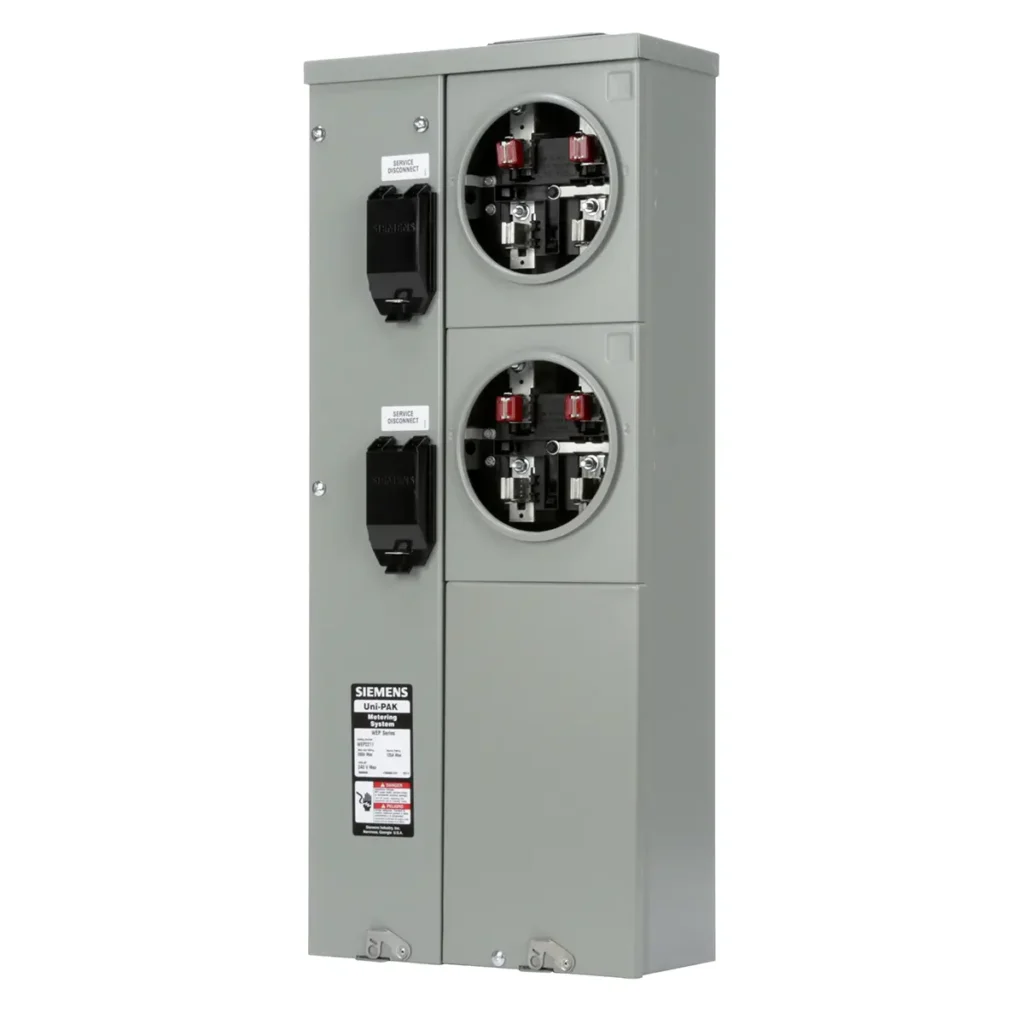
The larger reason metering matters is that buildings are becoming more dependent on electricity while owners expect greater flexibility from their infrastructure. Electrification is moving heating, transportation, cooking, and other loads onto electrical services that were once designed around different assumptions. Commercial properties face similar pressure from changing tenants, automation, communications systems, and vehicle charging. Metering sits at a strategic point in this transition because it connects utility service with customer-owned distribution. Siemens equipment matters when it helps designers create that connection in a configuration suited to the building, utility, and expected load. The meter assembly may occupy relatively little physical space, but decisions made there can influence service capacity, expansion options, maintenance access, and the cost of future electrical modifications.
That perspective also explains why manufacturer selection should follow engineering requirements rather than precede them. Siemens can offer useful breadth across residential, multifamily, and commercial metering applications, but no brand removes the need for load calculations, code review, utility coordination, or competent installation. The correct product is the one whose electrical characteristics, construction, approvals, and physical arrangement fit the project. Engineers should begin by defining those requirements, then evaluate which equipment satisfies them with the least unnecessary complexity. Contractors should carry the same discipline through submittals and procurement. When everyone works from the same technical criteria, brand selection becomes part of a coherent system decision. That approach is more defensible than relying on familiarity, price alone, or assumptions carried over from previous projects.
For residential and commercial owners, the payoff from good metering design is often invisible, which is precisely the point. A well-designed service entrance is energized without delay, gives utilities appropriate access, provides electricians with a logical layout, and supports the building’s electrical demands without attracting attention. It also leaves fewer surprises when future upgrades require changes to loads or tenant arrangements. Siemens metering equipment can play an important role in achieving that result when it is matched carefully to the application. The strongest installations combine suitable products with accurate calculations, precise specifications, early utility coordination, thoughtful physical planning, and workmanship. As electrical demand continues to evolve, treating metering as core infrastructure rather than a minor enclosure decision will become increasingly important to successful power design.
Disclaimer: This article is intended for general informational purposes only and should not be considered professional electrical, engineering, or installation advice. Electrical codes, utility requirements, equipment specifications, and installation requirements may vary by location and application. Always consult qualified electrical professionals, applicable codes, local authorities, and the serving utility before selecting or installing electrical equipment. Any companies, products, or services mentioned are provided for informational purposes only and do not constitute endorsement.