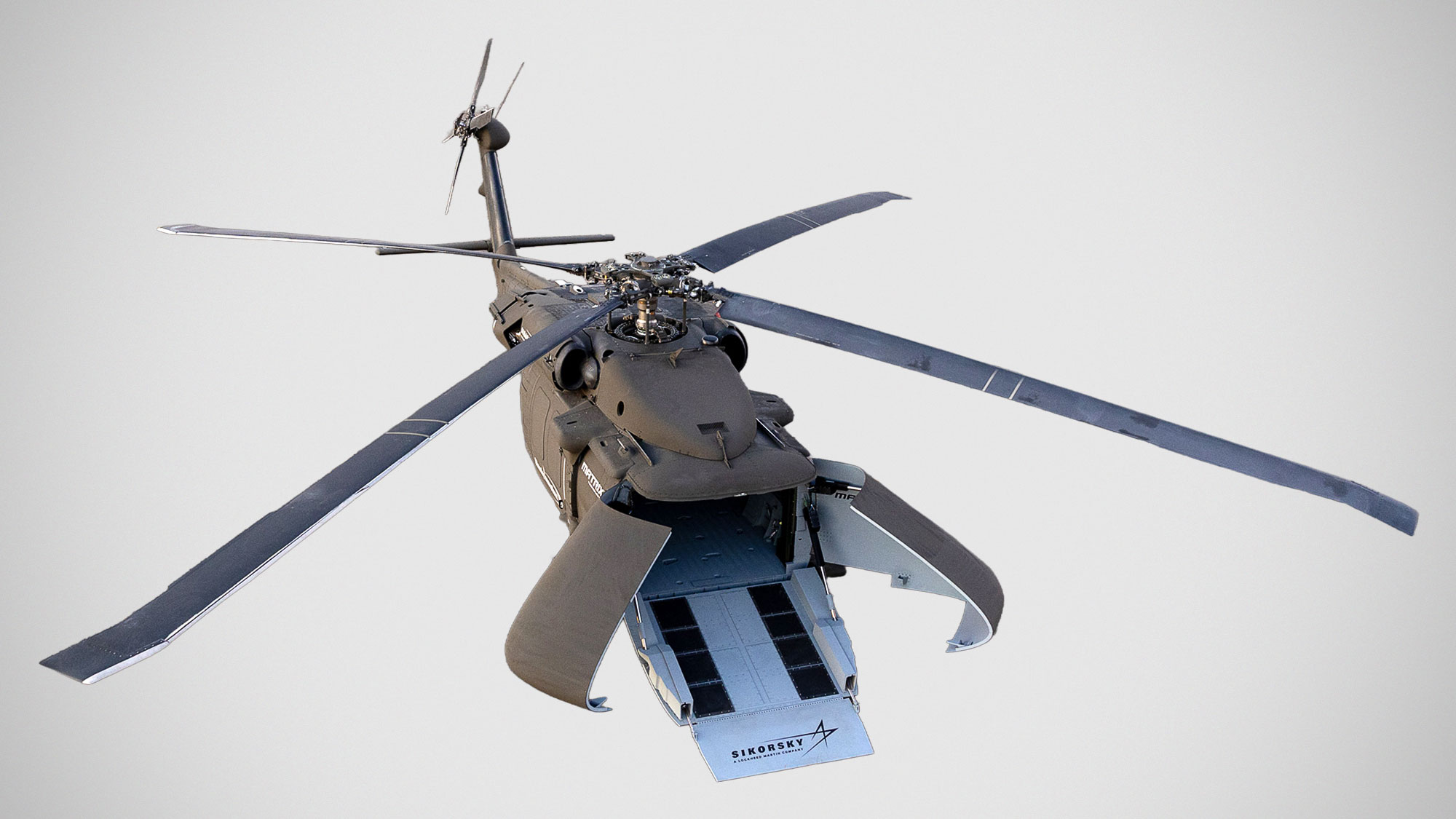
It is well known that US defense contractors have long turnaround times. However, that’s not the case with the Sikorsky S-70UAS U-Hawk Fully Autonomous Helicopter, which Lockheed Martin says took only 10 months to go from concept to reality. How did the helicopter maker manage to pull this off? Well, they kind of cheated a little. It wasn’t designed from scratch. The clue is in the familiar silhouette—it’s the UH-60L Black Hawk minus the human bits.
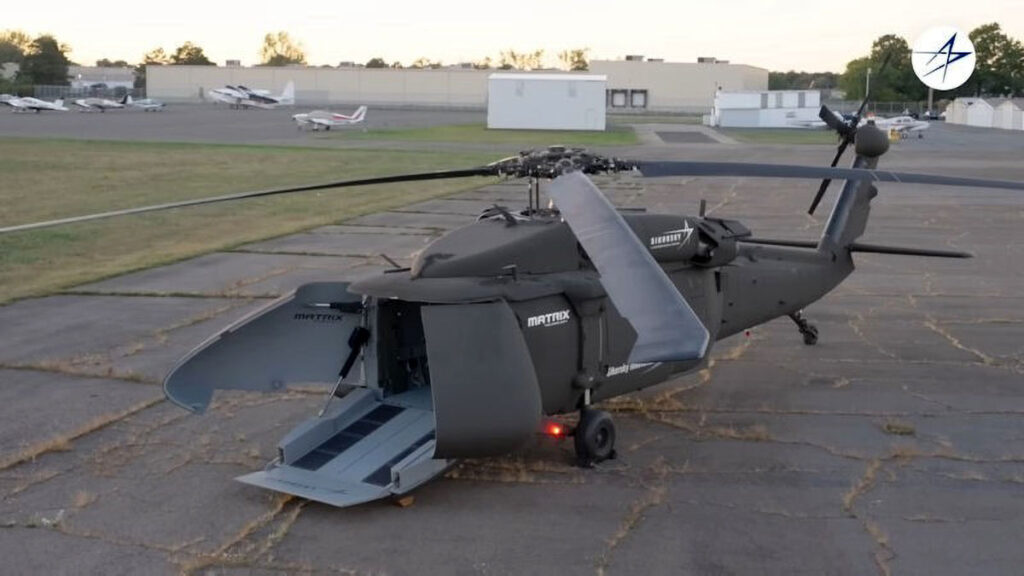
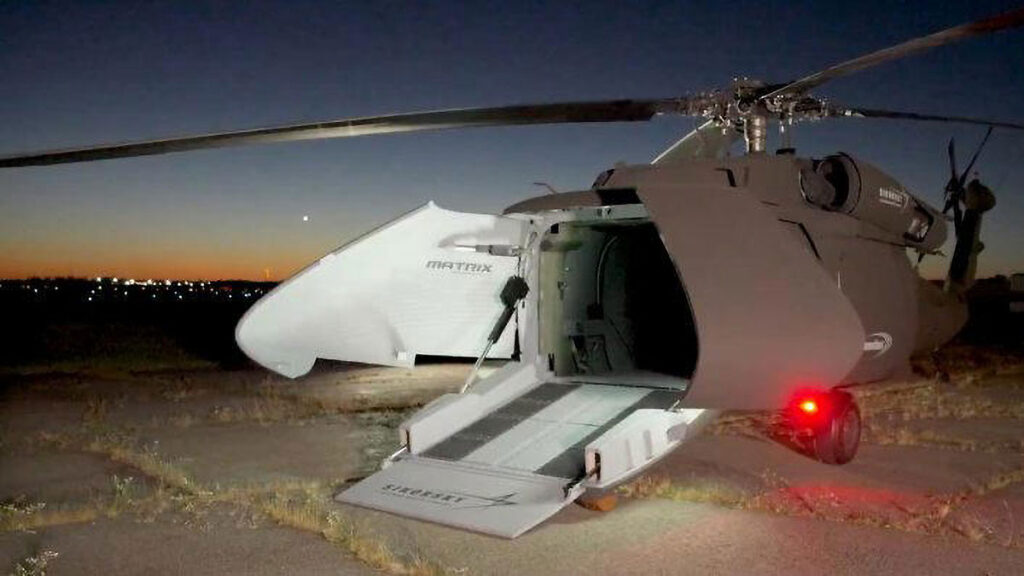
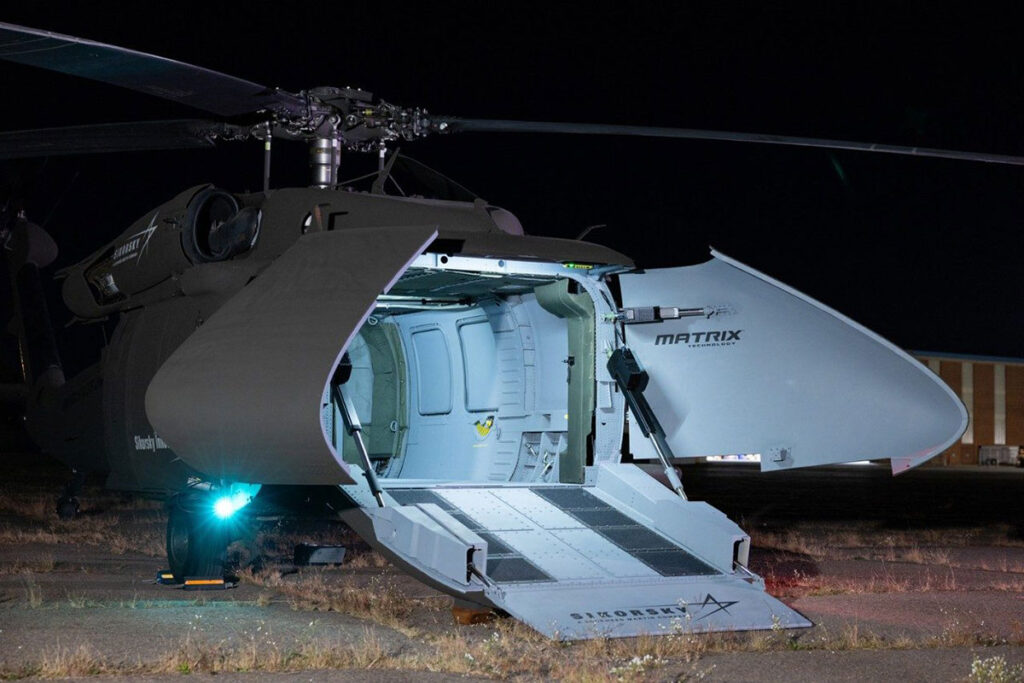
This big guy is literally a Black Hawk that has fired its pilots. No cockpit. No seats. No windows. No controls. In their place sits a clamshell nose that opens into a retractable cargo ramp, providing 25% more cargo space than a standard Black Hawk. With forward loading and extra usable cabin area, the U-Hawk can accommodate oversized cargo up to the same maximum gross weight as its crewed sibling.
Where once sat pilots now stands pure autonomy. The S-70UAS U-Hawk is powered by Sikorsky’s MATRIX autonomy system and a third-generation fly-by-wire system, letting it fly itself from start-up to shutdown. Operators don’t pilot it; they just tell it what to do via a tablet. One tap opens the clamshell doors, lowers the ramp, and loads the cargo. Another tap closes it up, and the U-Hawk does the rest — generating its own flight plan using onboard cameras, sensors, and algorithms.
Despite its robotic nature, it’s not just a cargo mule. The U-Hawk can fly solo, in pairs, or alongside piloted Black Hawks, forming an air-ground team capable of carrying up to 10,000 pounds (4,540 kg) internally or externally. It can haul HIMARS rocket pods, missiles, Joint Modular Intermodal Containers, or even drive on/off uncrewed ground vehicles like the HDT Hunter Wolf 6×6. It can also deploy drone swarms straight from its cargo bay, loiter in the air for up to 14 hours, or self-deploy over 1,600 nautical miles (2,960 km).
Best of all, the U-Hawk retains 95% commonality with the UH-60 fleet, which means it’s affordable (by defense standards), easy to maintain, and built for quick retrofits. Sikorsky says these modifications — led by the Sikorsky Innovations rapid prototyping group—can be replicated at scale, turning mothballed Black Hawks into a fleet of next-gen autonomous air lifters.
This fully autonomous bird is expected to take its first flight in 2026.
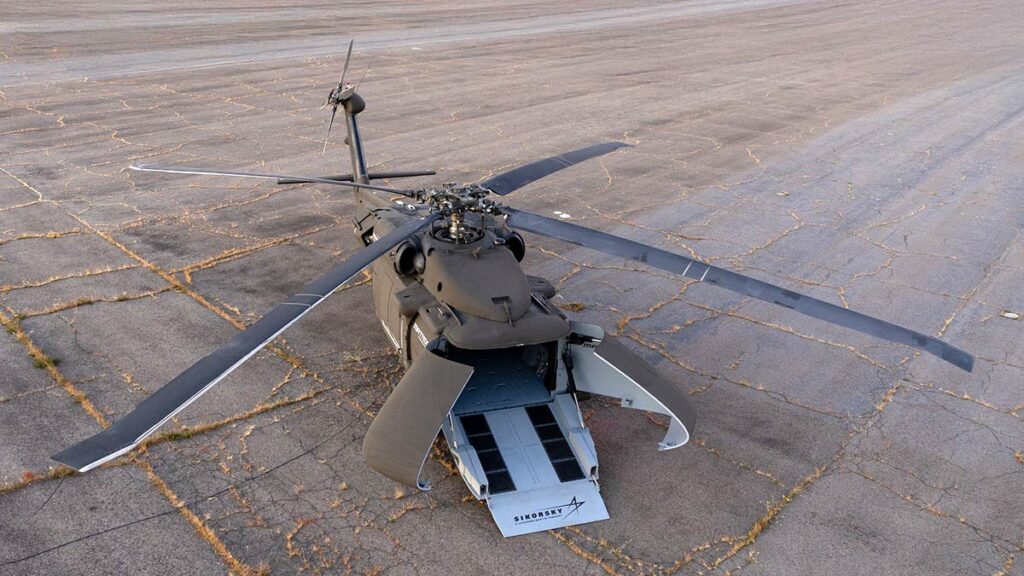
Images: Lockheed Martin.


