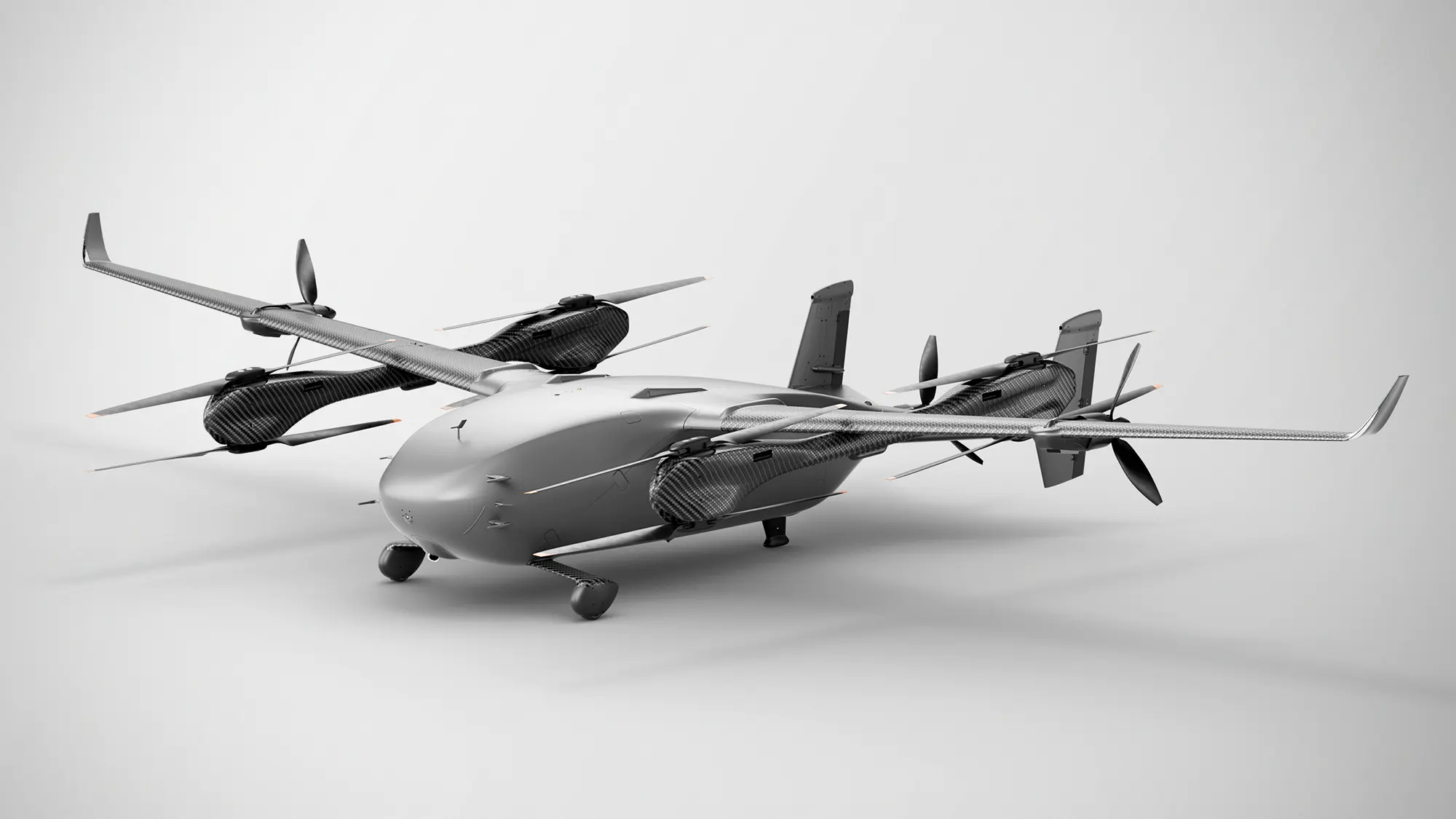
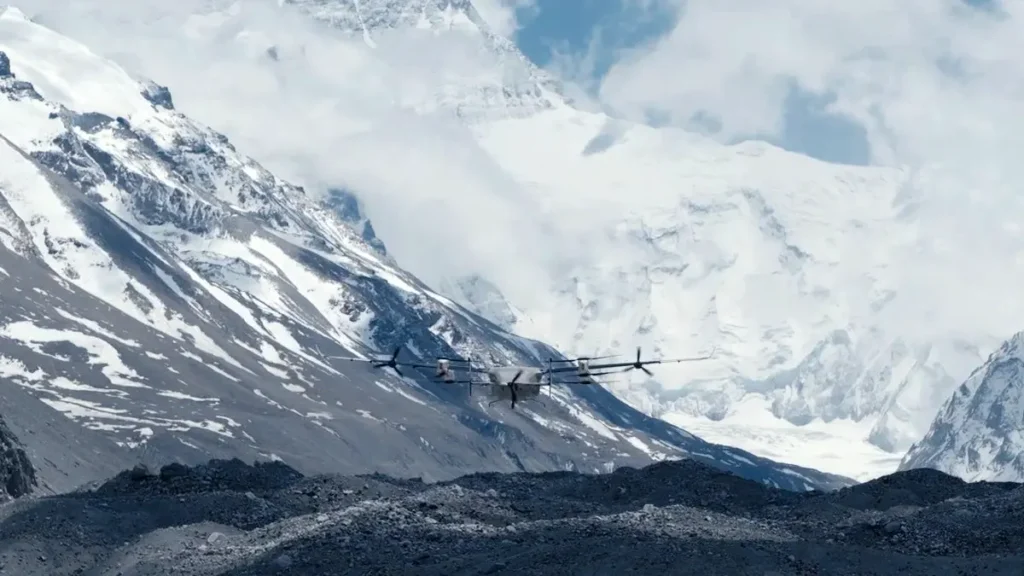
DJI’s latest trip to Mount Everest wasn’t just about hauling supplies or mapping glaciers. Hidden in the announcement was something arguably much bigger: the company’s first-ever eVTOL delivery drone, the EV50.
At first glance, you might wonder why DJI even bothered. It already has the FlyCart 30, and now the newer FlyCart 100, which is capable of carrying up to 100 kg (220 lb) at sea level and is already available for enterprise users. So why create an entirely new aircraft?
Well, because physics is a bitch.
Traditional multirotor drones, including the FlyCart series, spend the entire flight fighting gravity. Every propeller is constantly generating lift, and the thinner the air gets, the harder they have to work. That’s hardly ideal when your destination is nearly 9,000 m (29,500 ft) above sea level.
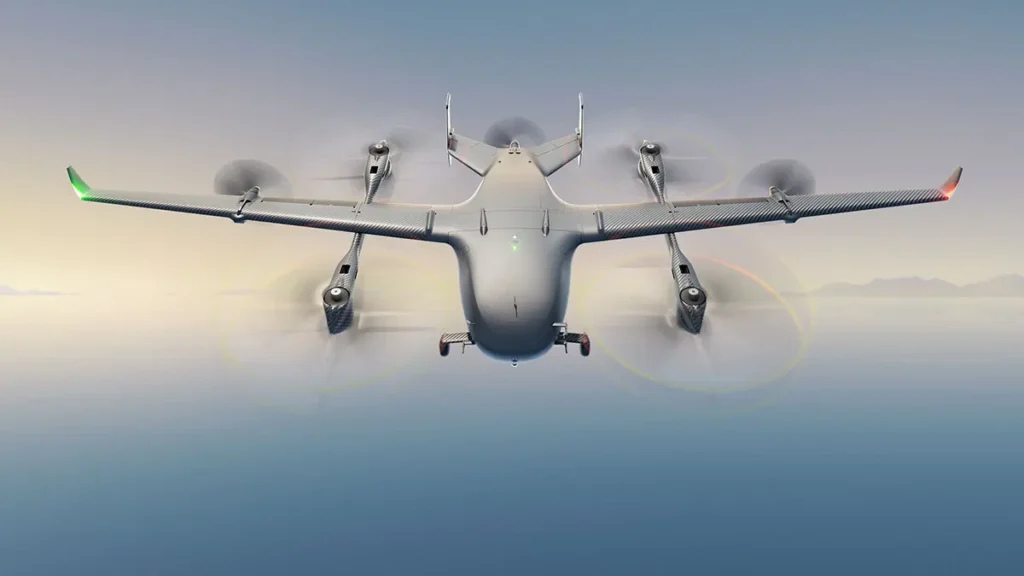
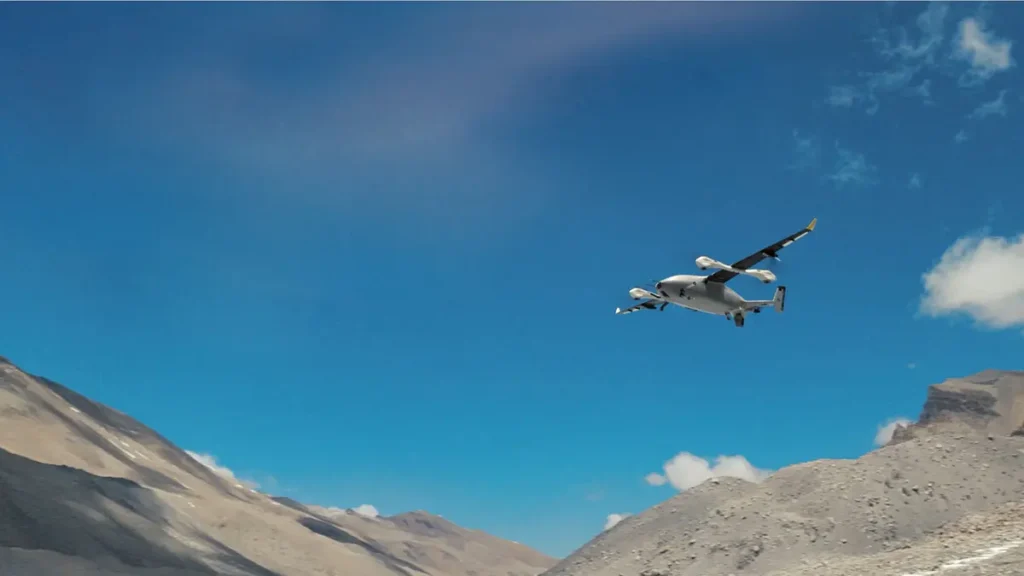
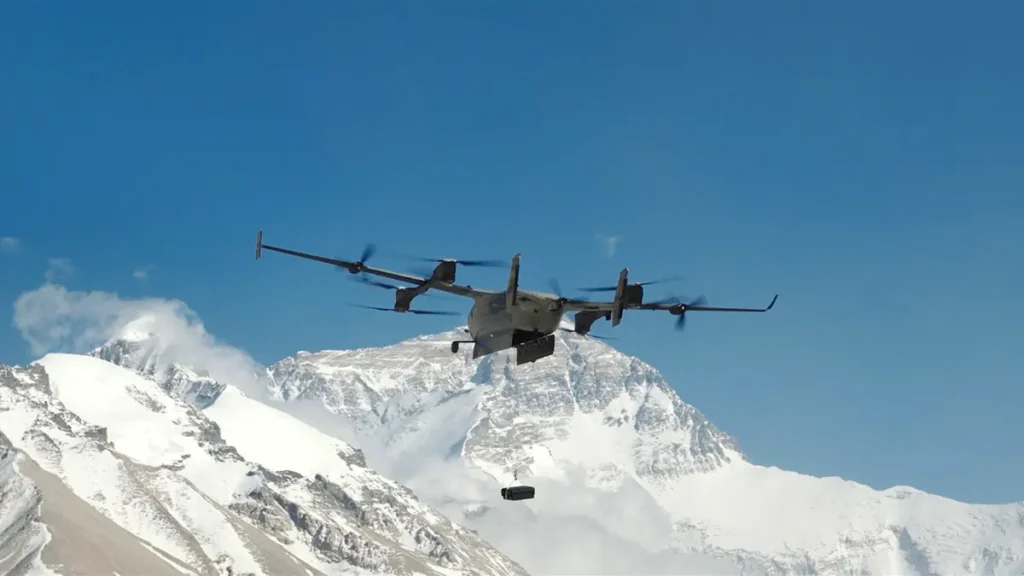
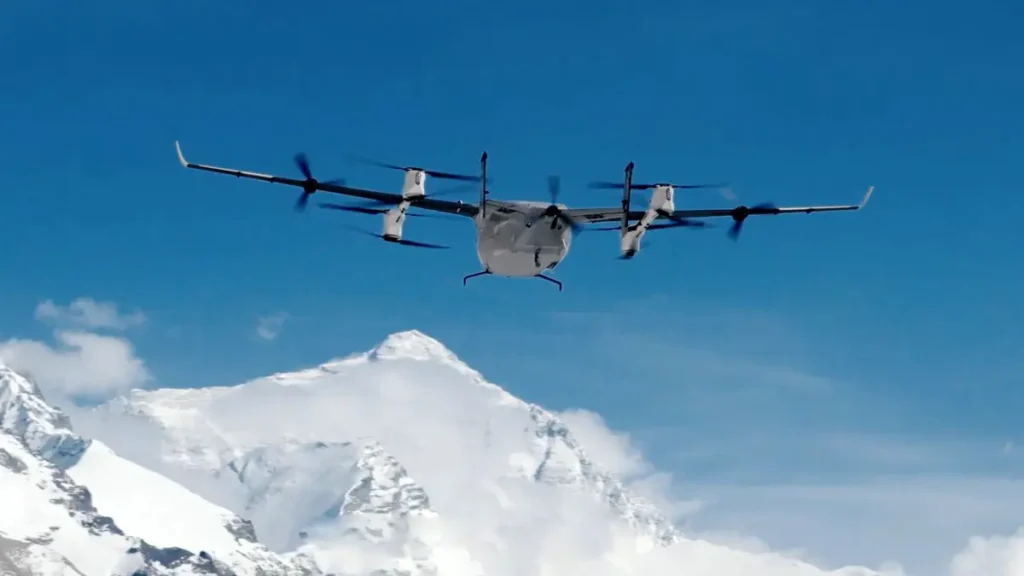
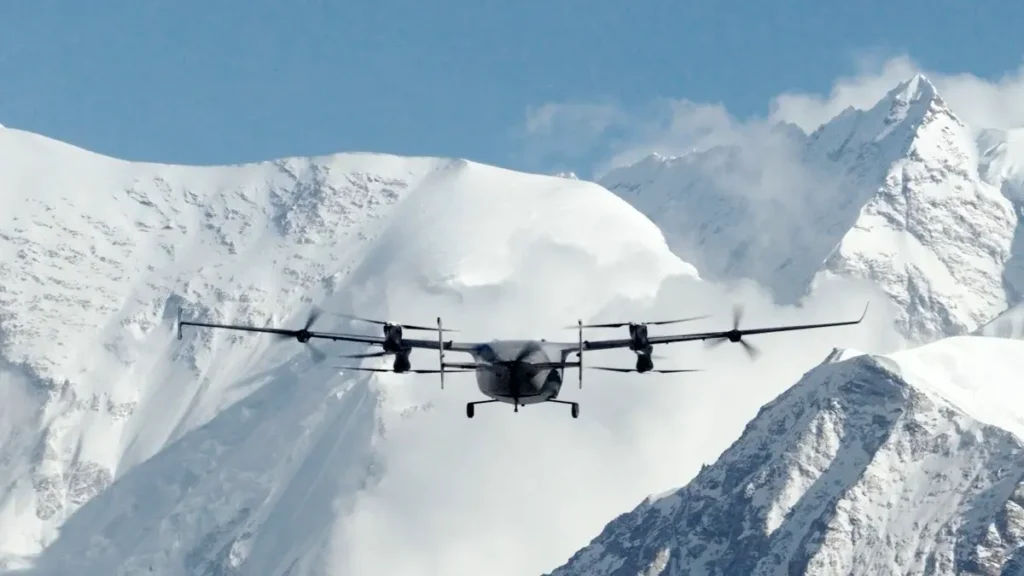
The EV50 takes a completely different approach. It lifts off like a drone using eight vertical-lift rotors, but once airborne, it transitions into forward flight, letting its fixed wings do most of the heavy lifting. Think of it as a cargo plane that doesn’t need a runway. That makes it far more efficient for long-distance flights, especially where the air is thin, and every watt counts.
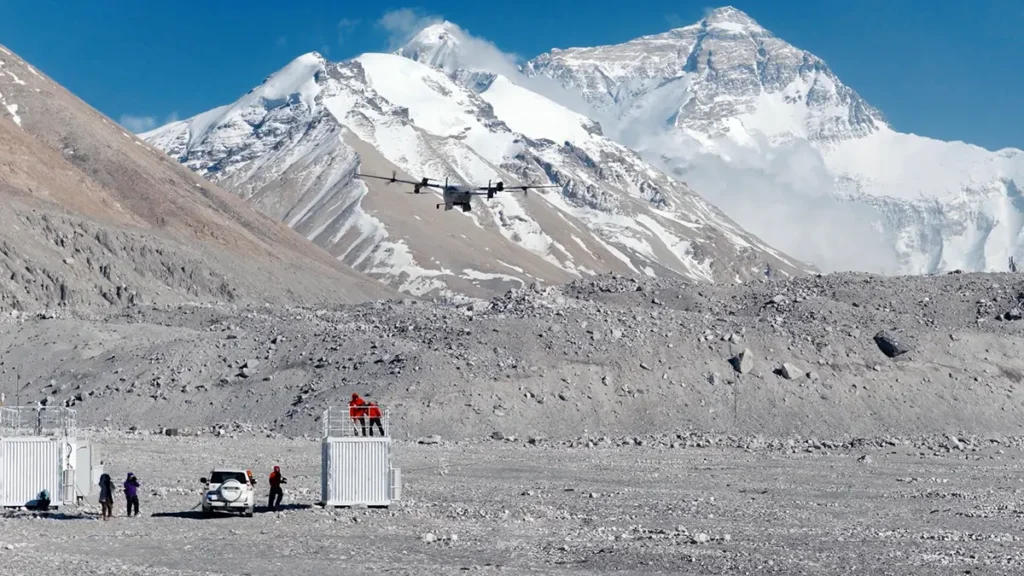
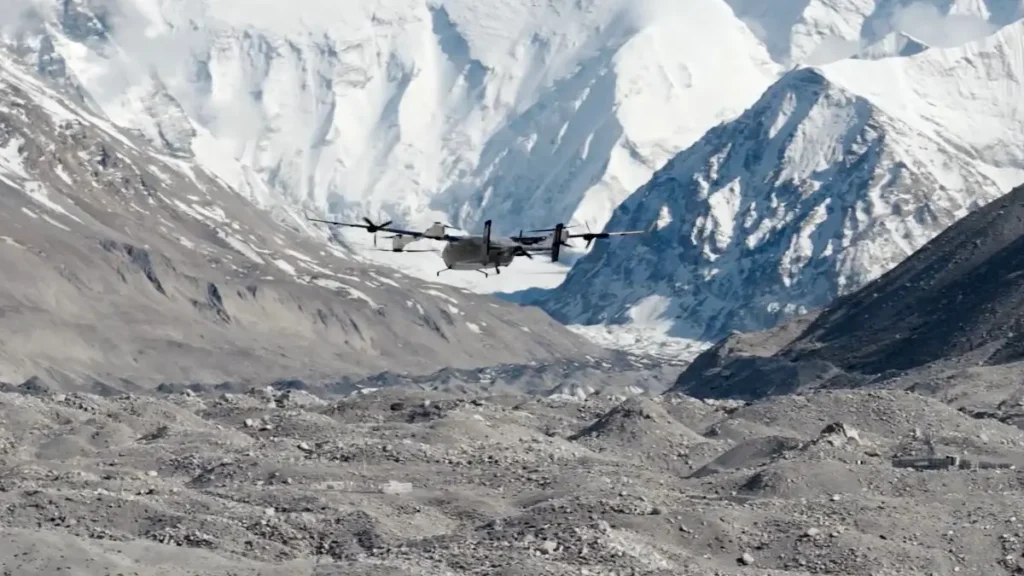
DJI didn’t build it just to prove a point either. The EV50 spent 12 days supporting atmospheric research on Everest’s northern slope alongside Peking University‘s College of Environmental Sciences and Engineering. Carrying ozone-monitoring equipment, it completed 12 scientific missions, climbing as high as 8,861 m (29,072 ft)—just 12 m (39 ft) shy of Everest’s summit. Better still, being fully electric means it produces no exhaust, making it a much cleaner platform for collecting atmospheric data than conventional aircraft.
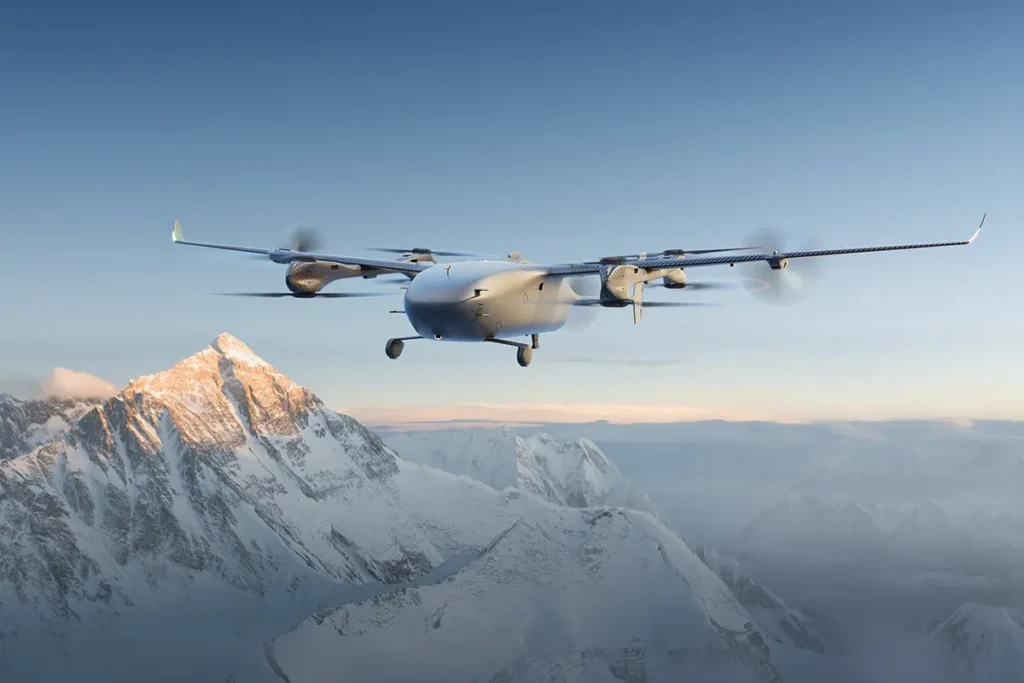
DJI has kept surprisingly quiet about the EV50 itself. We know it can carry up to 50 kg (110 lb), cruise at speeds of up to 160 km/h (99 mph), and cover as much as 150 km (93 miles) without a payload, but there is no product page, no launch event, and no indication of when—or even if—it will become a commercial product.
Perhaps DJI simply wanted the EV50 to prove itself first. If so, flying almost to the top of the world’s highest mountain is certainly one way to make an introduction.
The EV50 also says a lot about DJI as a company. IMHO, what has always set DJI apart is its willingness to recognize a problem and engineer a solution specifically for it, instead of trying to make an existing product do everything.
Images: DJI.