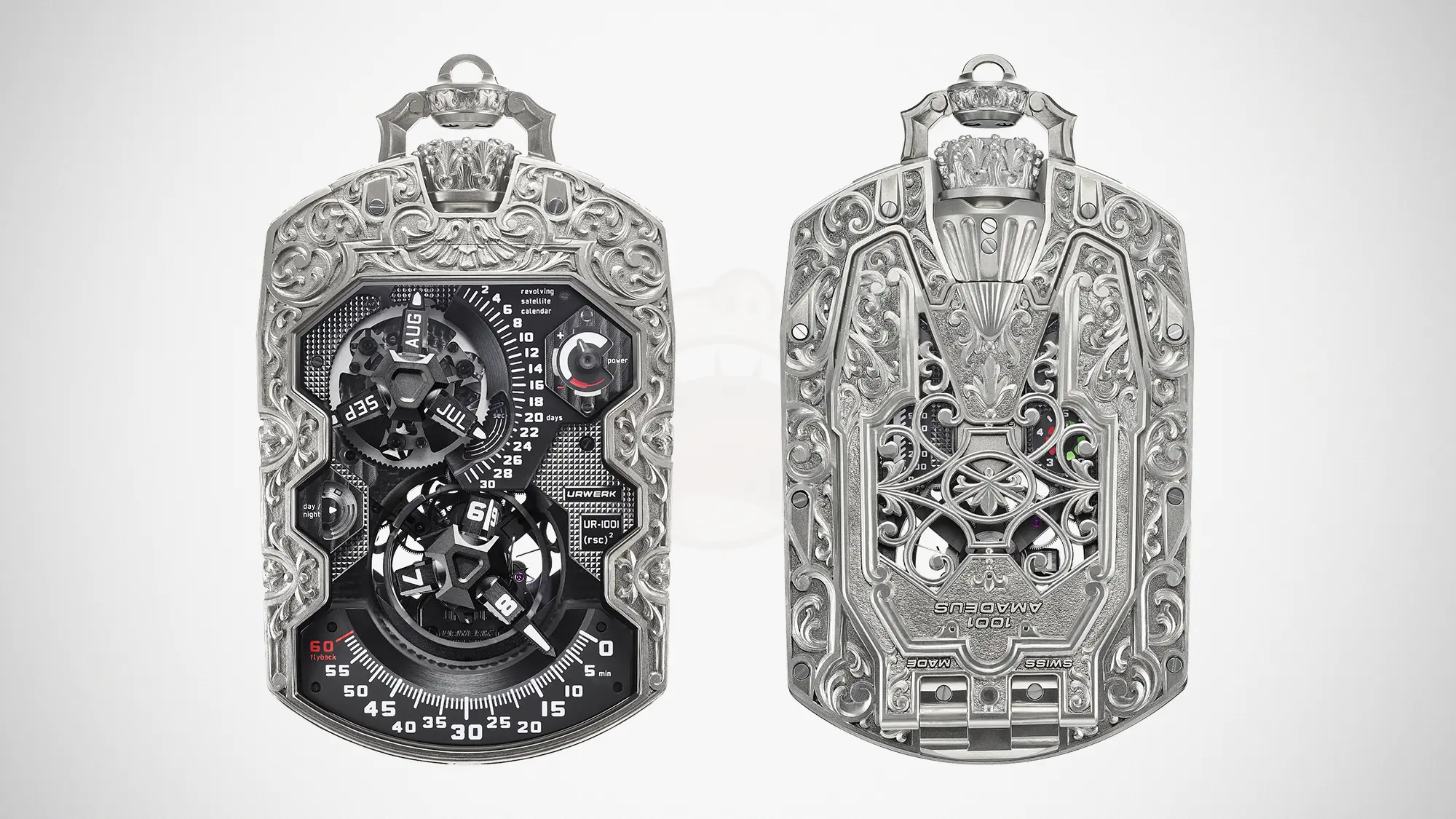
Most watches are content to tell you whether you are late for lunch. The URWERK UR-1001 Amadeus would also like to keep track of how late your descendants are for lunch in the year 3026. I am not even kidding.
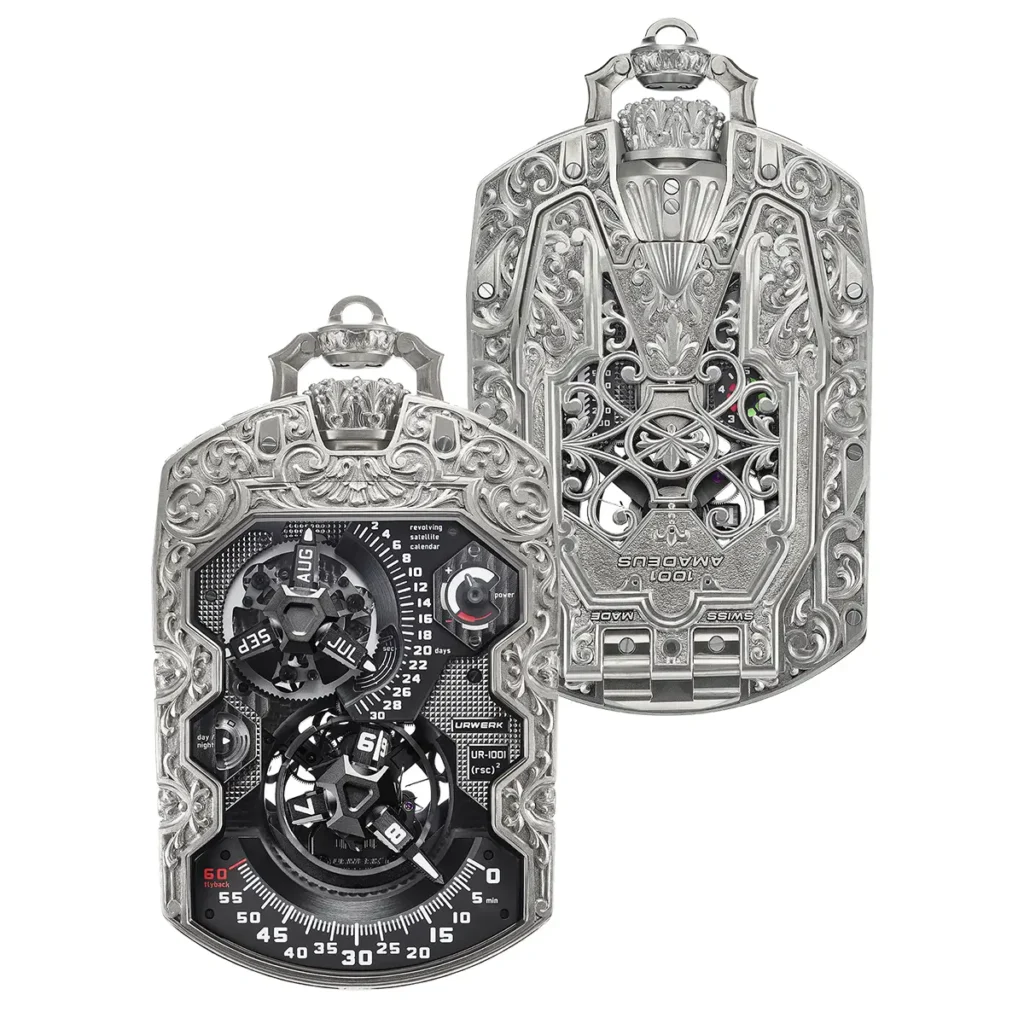
Described as a “Zeit Device,” the UR-1001 Amadeus is a unique titanium pocket watch that measures time across an almost unreasonable spectrum, from seconds and minutes to months, centuries, and an entire millennium.
It measures 106 × 62 × 23 mm (4.17 × 2.44 × 0.91 inches), making it considerably less pocketable than traditional pocket watches that popularised the format. In today’s world, however, our clothing is expected to swallow enormous smartphones, so this palm-sized time machine should fit into modern apparel just fine—assuming your outfit has actual pockets and not those decorative lies.
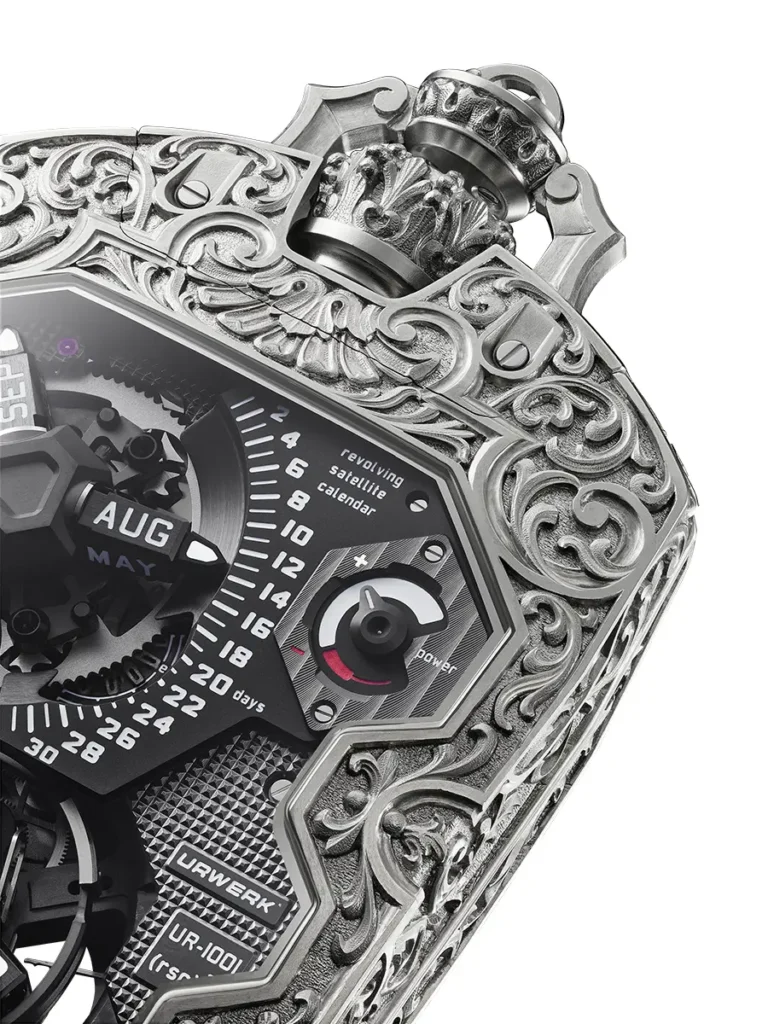
On the front, a flying satellite display handles the hours, accompanied by retrograde minutes and three-second hands covering successive 20-second sections. At 12 o’clock sits a satellite annual calendar whose three orbiting arms display the months and dates while accounting for months containing 28, 30, or 31 days.
A hand-painted day/night disc occupies 9 o’clock, combining black Super-LumiNova for night, brushed white ruthenium for day, and striped sections for dawn and dusk. There is also a 39-hour power-reserve indicator, which feels hilariously modest for a machine prepared to monitor the next 1,000 years.
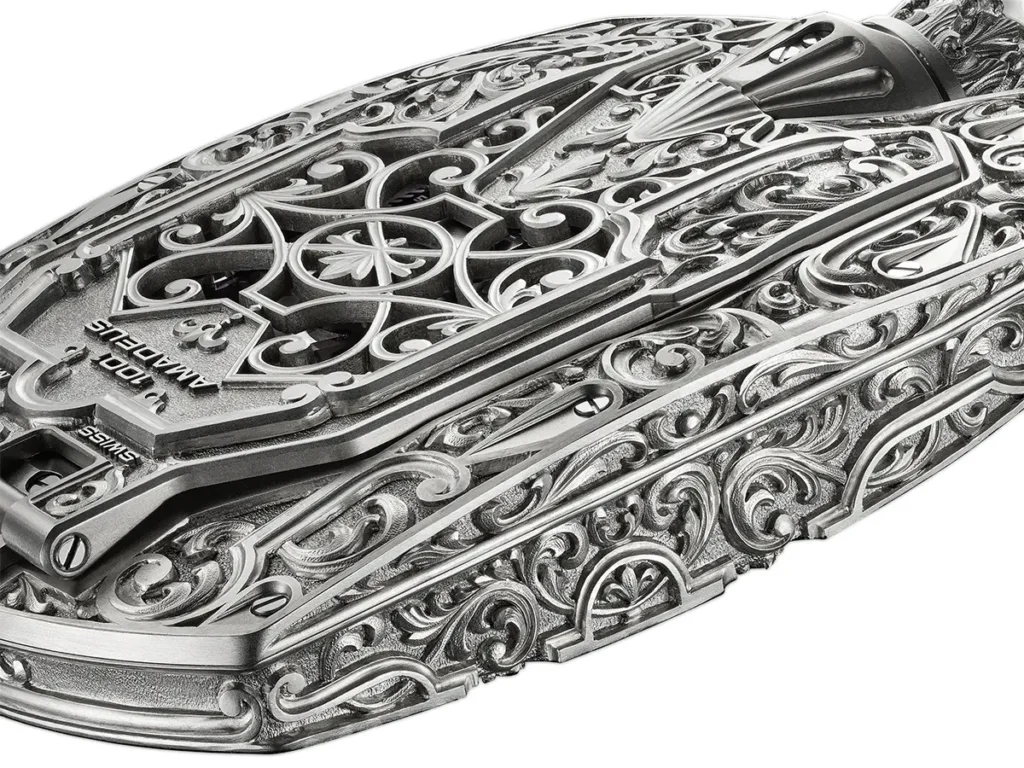
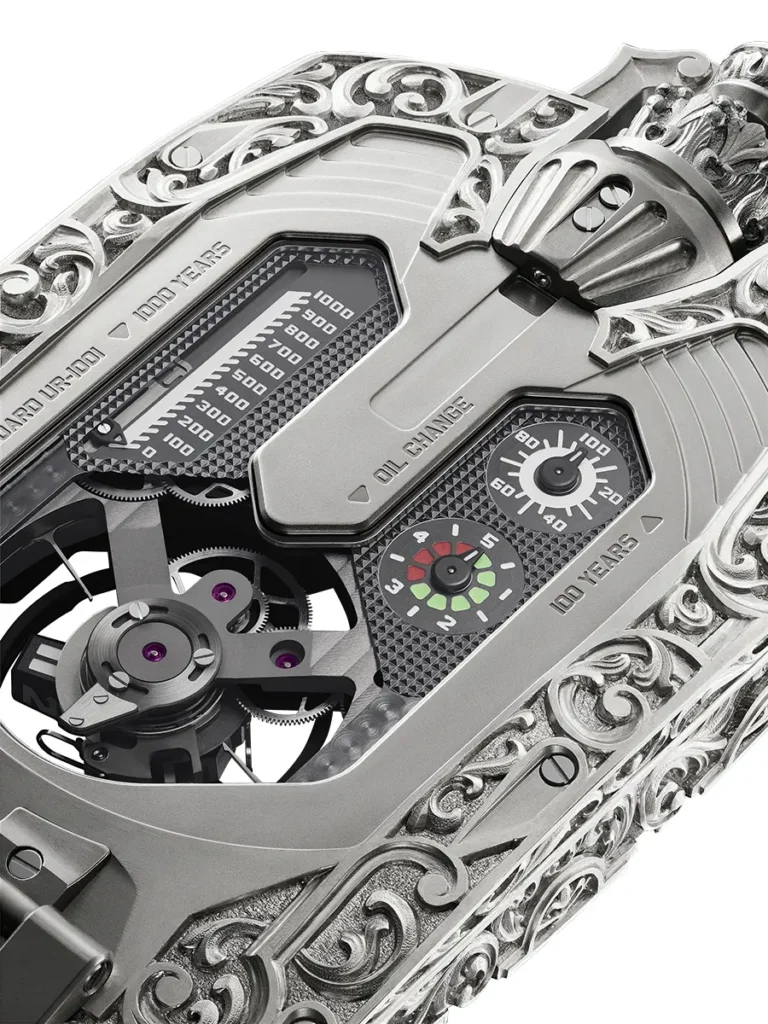
Flip it over, and the long-term planning begins. An “Oil Change” indicator tracks five-year servicing intervals, remaining white for three years before turning red during years four and five. Another mechanical counter tracks active operation in five-year increments up to 100 years. At the end of each century, it sends a pulse to the 1,000-year linear indicator. Presumably, whoever witnesses that event should notify URWERK and the nearest museum.
Powering this temporal bureaucracy is the automatic UR-10.01 calibre, featuring 51 jewels, a 4 Hz frequency, and the aforementioned 39-hour reserve.
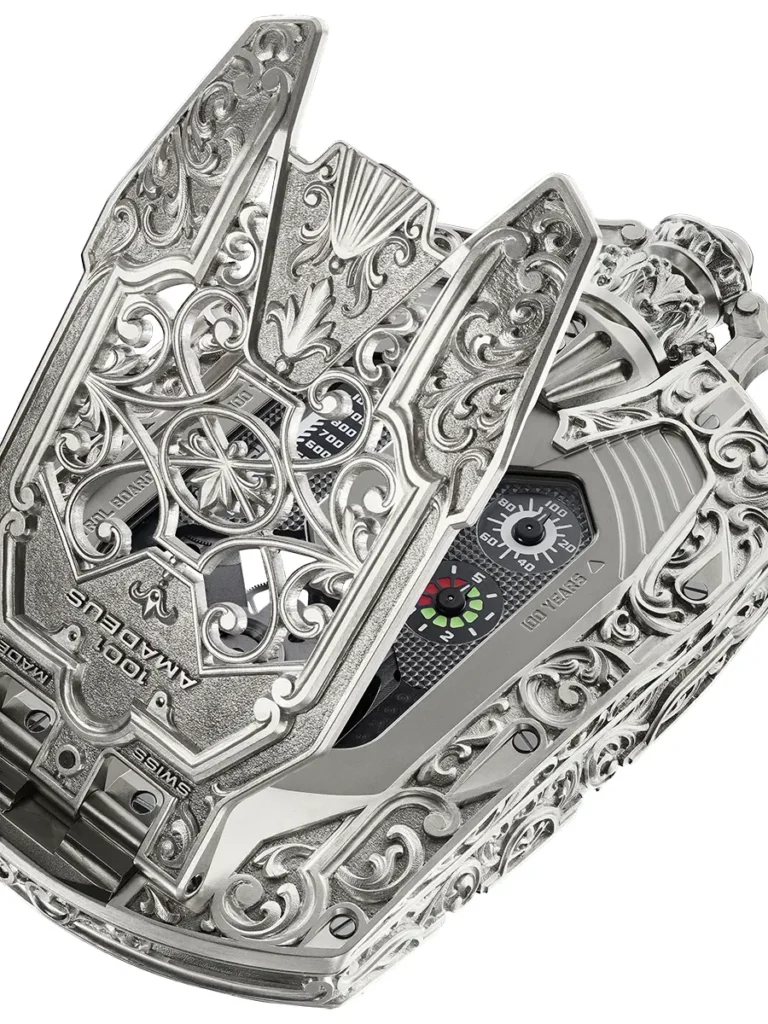
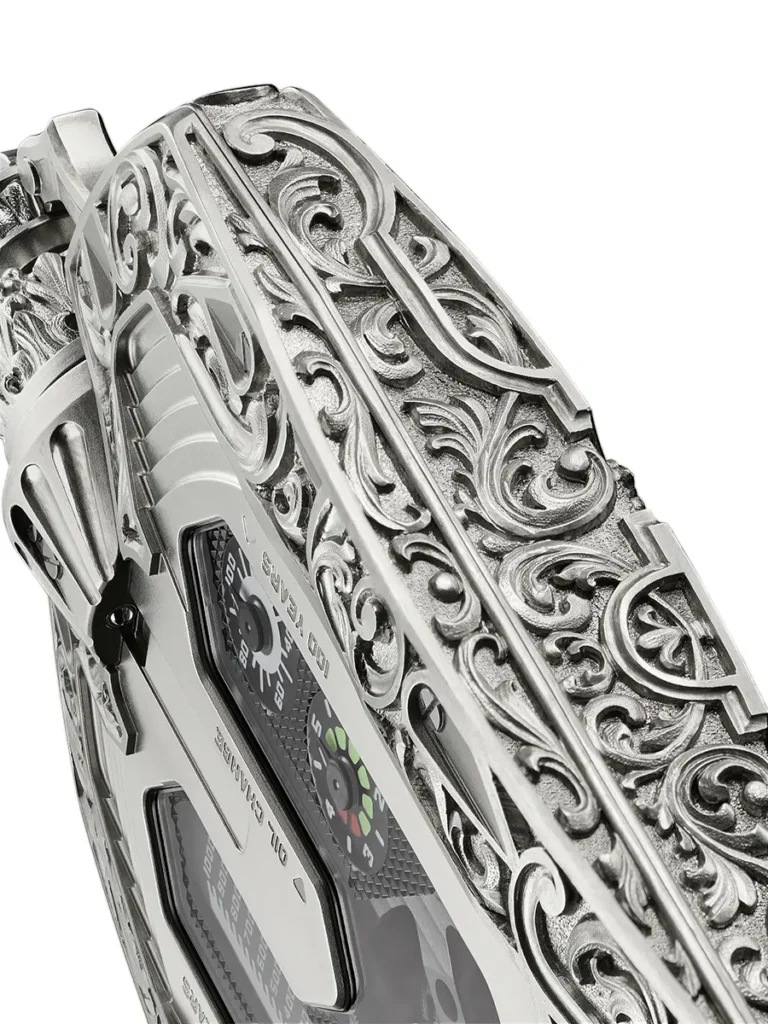
The movement is only half the spectacle. Master engraver Florian Güllert rough-cut the raw titanium case with a laser before spending nearly three months—or around 500 hours—chiselling, texturing, filing, and finishing its details by hand. The deeply carved Baroque ornamentation inspired the “Amadeus” nickname, referencing Mozart’s extravagant brilliance rather than suggesting that the composer required satellite timekeeping.
URWERK has not disclosed a price. It describes the unique Amadeus as something its buyer will merely safeguard before passing it to another generation as a custodian (kind of like an heirloom). Ownership is temporary; the service reminders are eternal.
Images: URWERK.