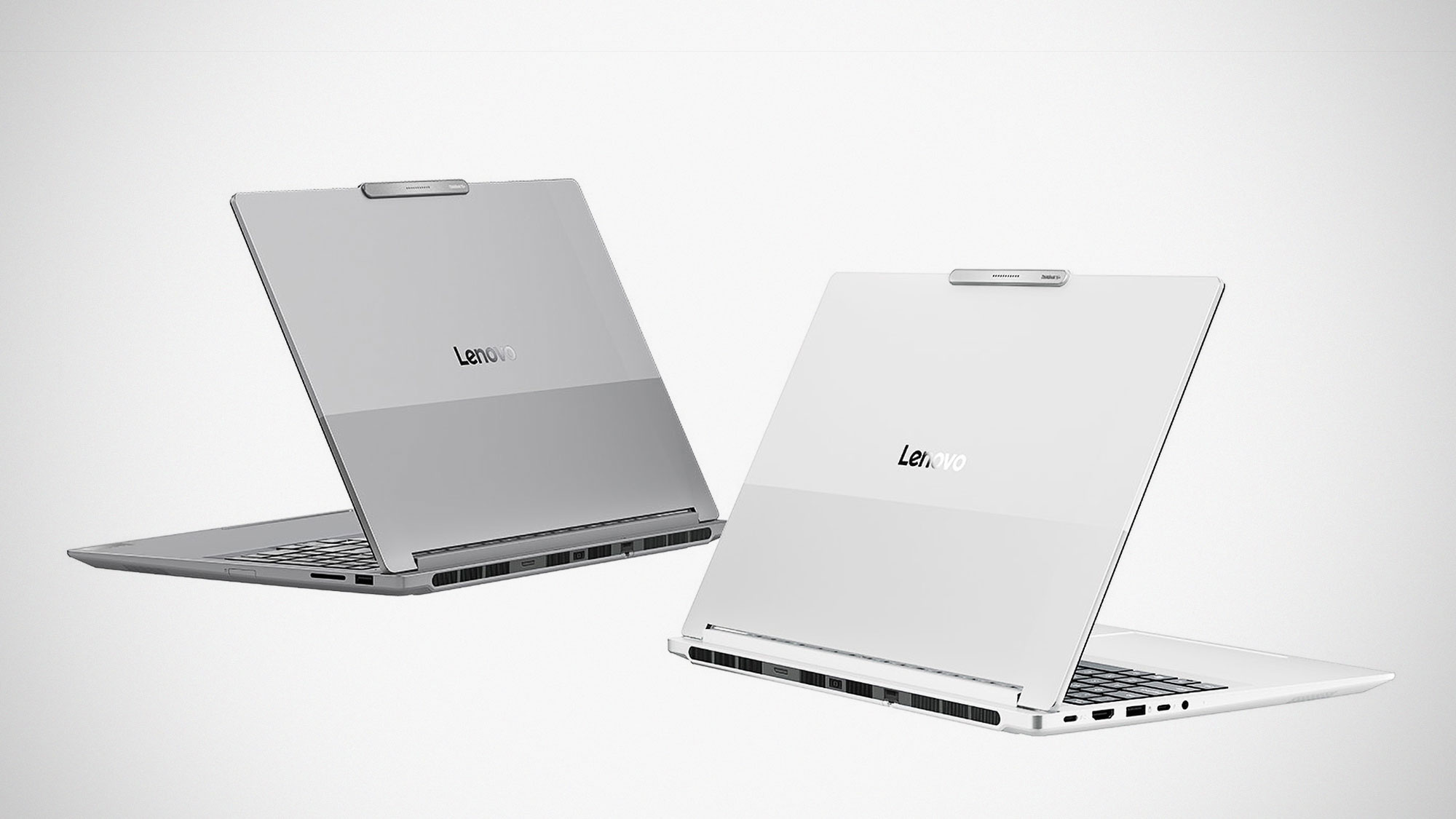
Given the options in the market, choosing a laptop becomes a gargantuan task. You can narrow it down to business, casual, or gaming. Even then, the choices are wide and varied. I can’t help you beyond asking the obvious, but if you find yourself constantly losing the mouse dongle for an RF-connected mouse, the Lenovo ThinkBook 16+ 2026 might be worthy of your consideration.
Before we detail why, let’s address the elephant in the room: why wireless via radio frequency and not Bluetooth? The first thing that comes to mind is that it is less prone to Bluetooth corruption, which happens to Windows, as I have experienced quite a lot. RF has a stronger, more stable connection and often lower latency, which is better for gaming. It is plug-and-play, has a longer range, and is less OS-dependent. And if you depend on an RF-connected mouse, you should face issues like the dongle snagging on things or losing it.
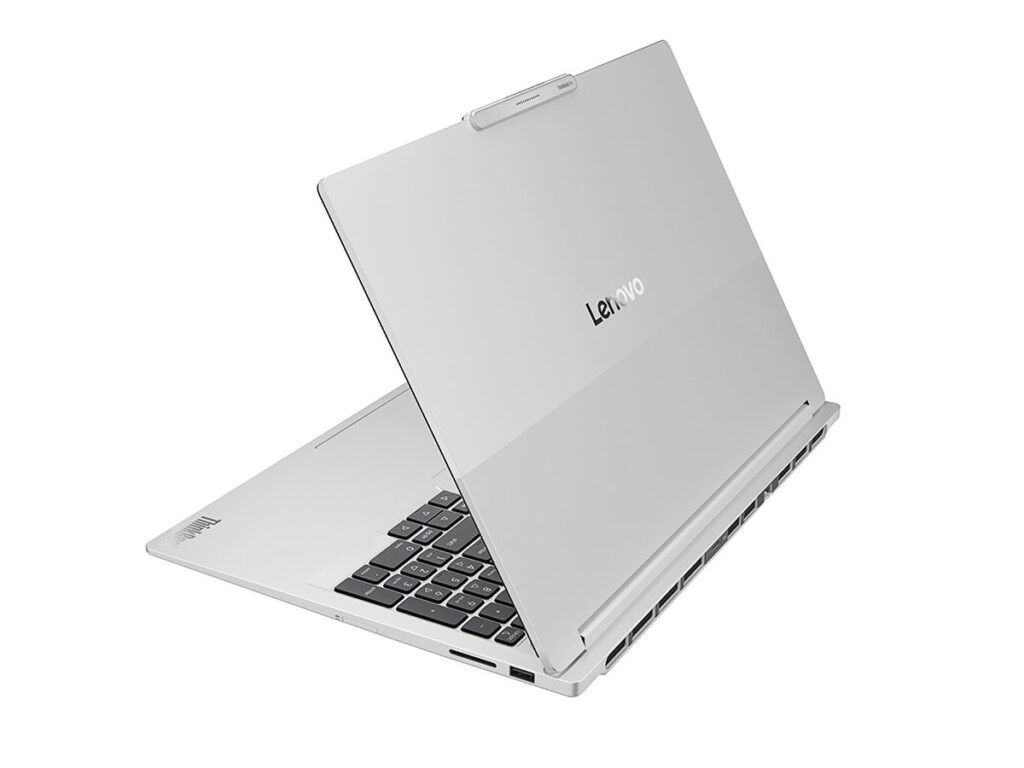
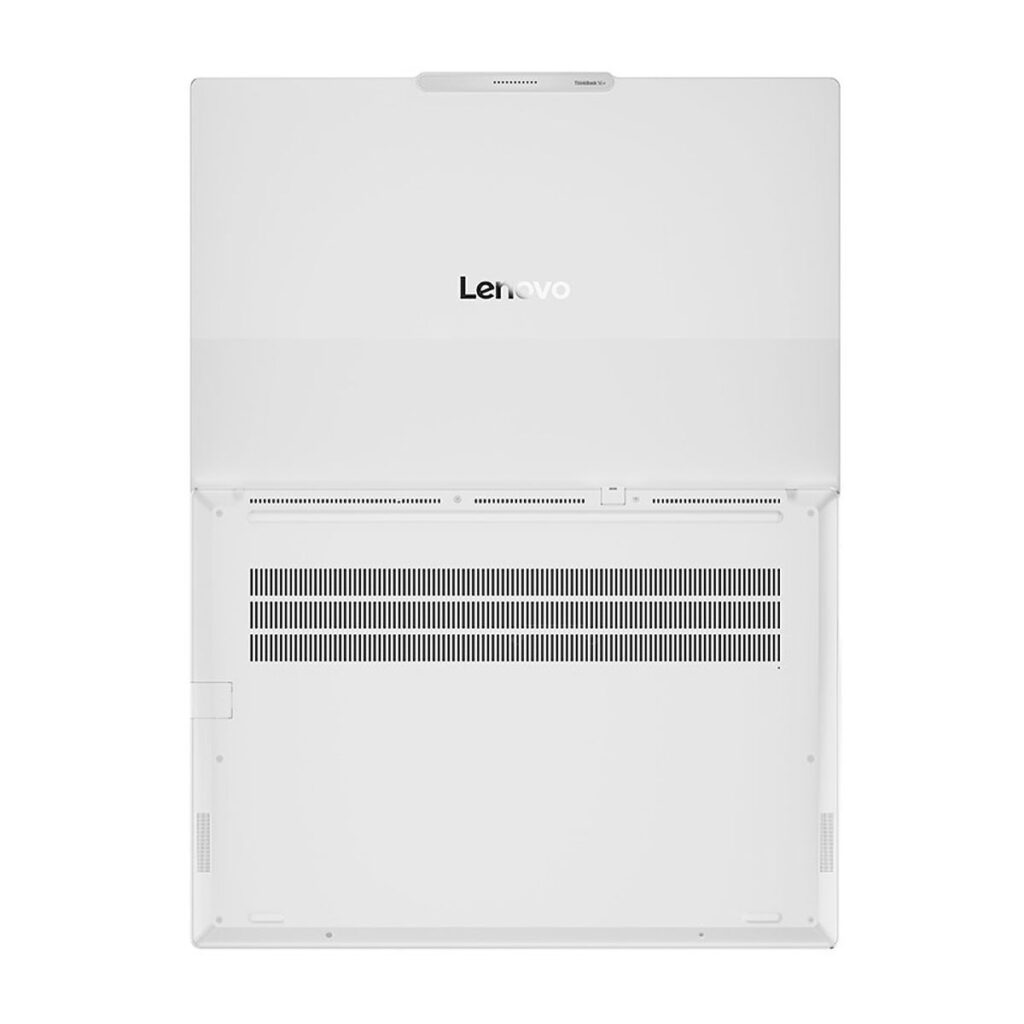
The Lenovo ThinkBook 16+ 2026 quietly addresses this issue with a simple design: a hidden USB-A port. Flip open a discreet cover on the left side of the laptop, and recessed inside is a USB-A port, which is perfect for keeping the dongle plugged in, so you will not lose it, and doing so without causing obstruction. It is a simple innovation that solves an age-old problem.
Not only that, the Intel edition Lenovo ThinkBook 16+ 2026 is Lenovo’s first LPCAMM2-based laptop. For folks who aren’t in the know, LPCAMM2 is a new modular laptop memory standard that combines the speed and efficiency of LPDDR5X with the upgradability of traditional RAM (SO-DIMM). Instead of being soldered to the mainboard, it offers the upgradeability of SO-DIMM while delivering LPDDR-level performance, as well as lower power consumption. That’s not to mention it is significantly thinner than SO-DIMM. It does not plug into a raised slot. It lies flat against the motherboard, using a compression connector instead. On top of that, it spreads sideways, as opposed to going upward, thereby minimizing internal stacking height.
The Intel edition boasts an Intel Core Ultra X7 358H with integrated graphics (Intel Arc B390) and an NPU with AI performance reaching up to 50 TOPS—which is blazing for a laptop-class device. Further under the hood, it is bolstered by 32 GB LPCAMM2 dual-channel high-speed memory (up to a blazing 8,533 MT/s!) and a 1 TB M.2 2242 PCIe 5.0 SSD (dual M.2 2280 slots).
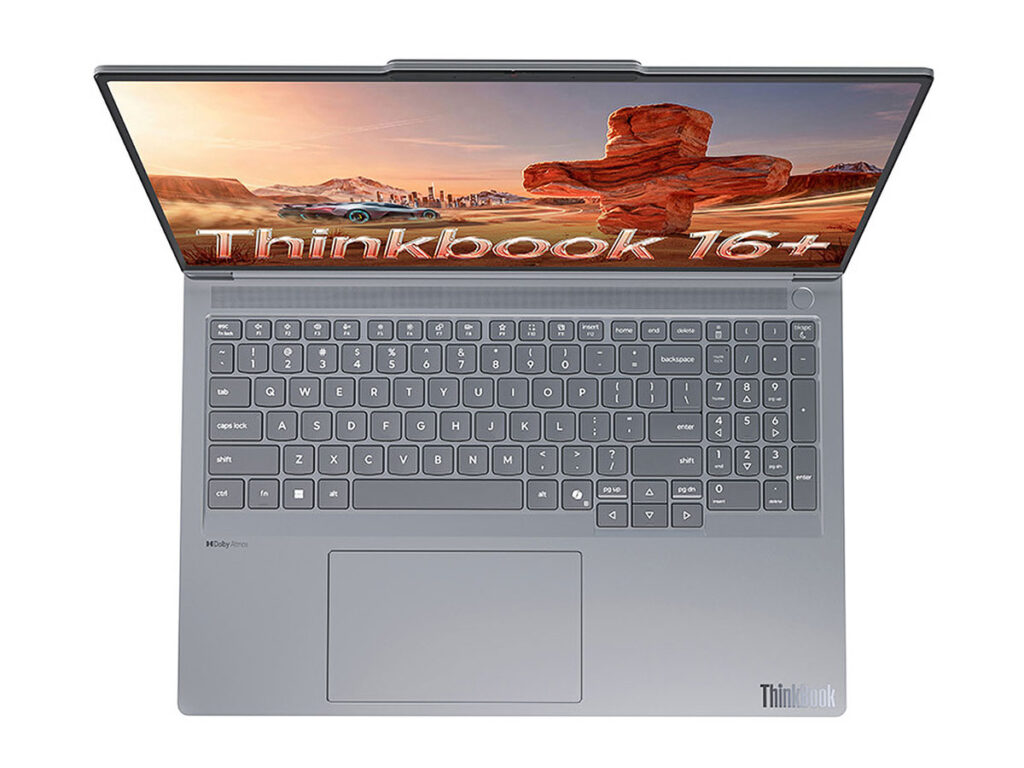
The new ThinkBook 16+ 2026 is equipped with a 16-inch 3.2K (3,200 × 2,000 resolution) wide-viewing-angle LED-backlit display boasting 100% DCI-P3 color gamut and a 165 Hz refresh rate (30–165 Hz VRR, supporting DC dimming). Moreover, the panel reaches up to 500 nits of peak brightness and carries VESA DisplayHDR 400 certification for basic HDR support. The display should be a creative wet dream because it is also Pantone Validated and Pantone SkinTone Validated.
The new ThinkBook 16+ 2026 has a 99.9 Wh large-capacity battery that supports 30-minute quick charging for up to 60% battery capacity (when the device is powered down, that is). Thanks to its not competing to be the thinnest and lightest, it is packed with I/O, including two Thunderbolt 4 ports, two USB 3.2 Gen1 ports, an SD card reader, the aforementioned concealed USB-A, an HDMI 2.1 FRL 48 Gbps port, a TGX graphics expansion dock connector (for a special external graphics dock), an RJ45 Ethernet port, and a 3.5 mm headphone/microphone jack.
It has an all-around aluminum construction, except for the screen, obviously. As it is not in the race for thin and light, it is a manageable 1.8 kilograms (~4 pounds) and about 15.9 mm thick.
The Lenovo ThinkBook 16+ 2026 has been launched in China with an enterprise price of 9,499 yuan [CH] (about US$1,380). I believe Lenovo in China is marketing this as an enterprise machine, and leaving the AMD edition as a consumer-level device. I could be wrong, but the price pretty much says it.
That’s not it. There’s also the ThinkBook 16+ 2026 Intel Core Ultra 7 AI Starter Edition for those who demand more graphics processing power. It features an Intel Core Ultra 7 356H mobile processor, 32 GB LPCAMM2 dual channel high-speed memory, 1 TB M.2 2242 PCIe G5 TLC SSD, and NVIDIA GeForce RTX5060. The latter boasts 8 GB GDDR7 graphics memory (VRAM), which means it is perfect for creative apps like Premiere, Blender, Photoshop, 1080p, and maybe 1440p gaming. This discreet GPU packs 3328 CUDA cores that enable up to 572 TOPS, and 115 W in Dynamic Boost mode. Think of it as a NOS of a drag car. All told, the system touts 170 W of total system power output under peak performance mode.
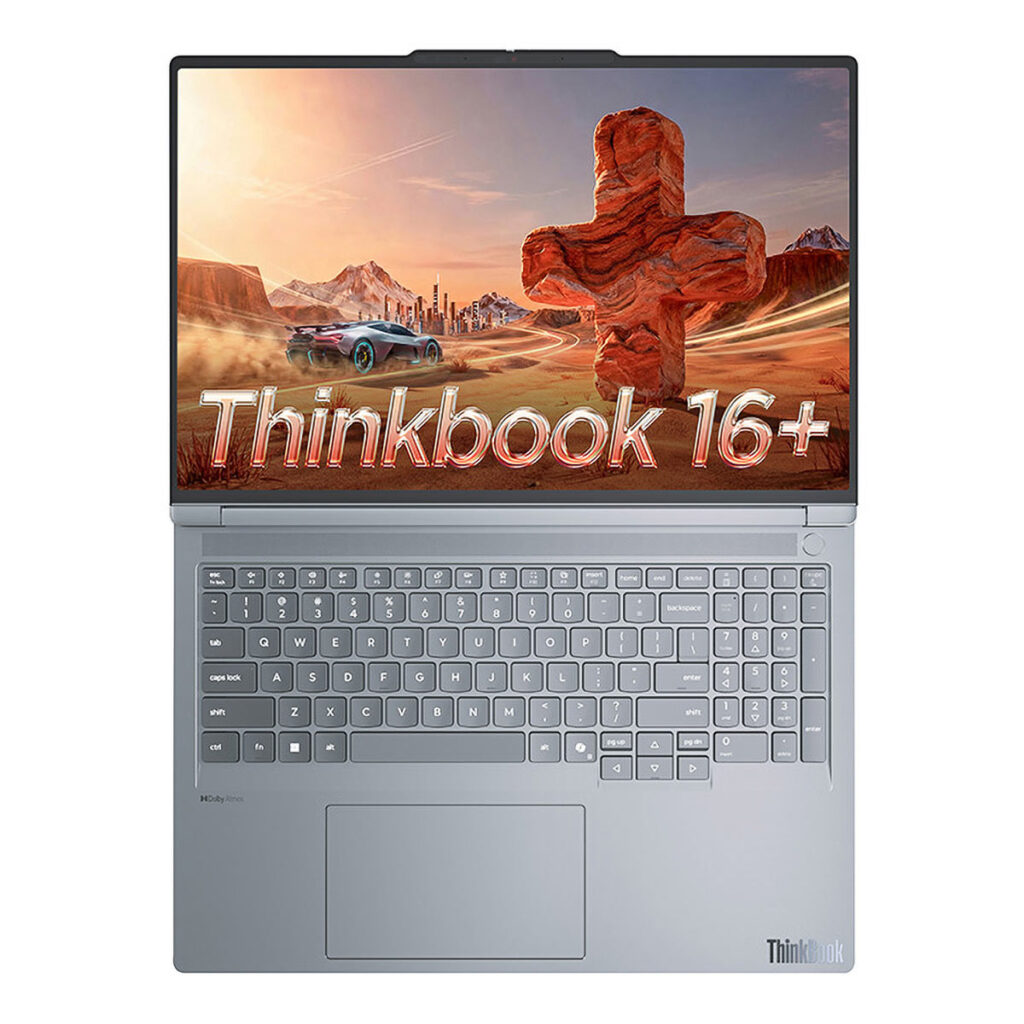
The NVIDIA editions tip the scales at 1.95 kilograms (4.3 pounds) with the same thickness of 15.9 mm.
This edition is offered in Starry White [CH] and Moonlight Gray [CH], with a launch price of 11,999 yuan (~US$1,742)
As for the AMD edition, it benefits from Ryzen 7 H 255 mobile processor (8 cores, 16 threads; 3.8~4.9GHz frequency; 24MB total L2+L3 cache), 32 GB LPDDR5x 7500MT/s memory, 1TB M.2 2242 PCIe G4 TLC SSD, integrated graphics (AMD Radeon 780M), 16-inch 16:10 3.2K IPS LED backlit display (3,200 × 2,000), 165 Hz refresh rate, DCI-P3, 500 nits, and HDR400. It is a tad lighter at 1.75 kilograms (3.9 pounds) while also retaining the same 15.9 mm profile.
The Lenovo ThinkBook 16+ 2026 AMD edition goes for 6,899 yuan [CH] (around US$1,002).
Fingerprint sensor comes standard across these models, and so is a keyboard with 1.5 mm key travel. However, the Intel models boast Ambient Light Sensor (ALS) for the display, backlit keyboard, and Forcepad, a touchpad that detects pressure, and the entire surface is clickable.
In addition, the new ThinkBook 16+ 2026 series features an IR camera that supports Windows Hello and features ThinkShutter to physically turn on/off the camera. And then there is the MagicBay expansion port that allows you to add things like a HUD accessory, a 4G LTE module, or a Studio (4K camera). Across the devices, you get quad speakers with Dolby Surround and a noise-cancelling microphone. There is a so-called 3D “super material” antenna, Wi-Fi 7, and a bunch of AI features to help you in life and work.
The new ThinkBook 16+ 2026 is tough, too. The devices have been put through no less than 26 stringent durability tests. It has passed MIL-STD-810H standards’ 12 key durability tests, ensuring it will survive whatever life (or you) throws at it.
Images: Lenovo [CH].


