The 1970s and ’80s Porsche Slantnose is a holy grail, but let’s be honest: owning one in 2026 makes almost zero practical sense. The original race cars were unregistrable track beasts, while the air-cooled 930 factory Flachbaus are now hyper-priced museum pieces—too valuable to track, too raw for modern roads, and too finicky to maintain without a dedicated Porsche specialist on retainer.
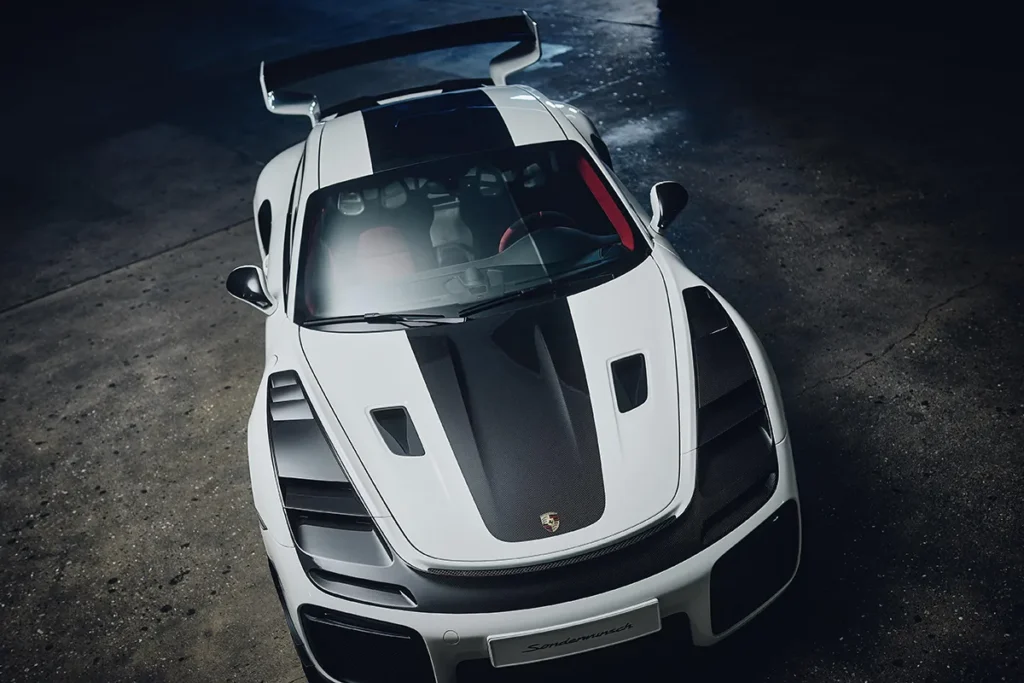
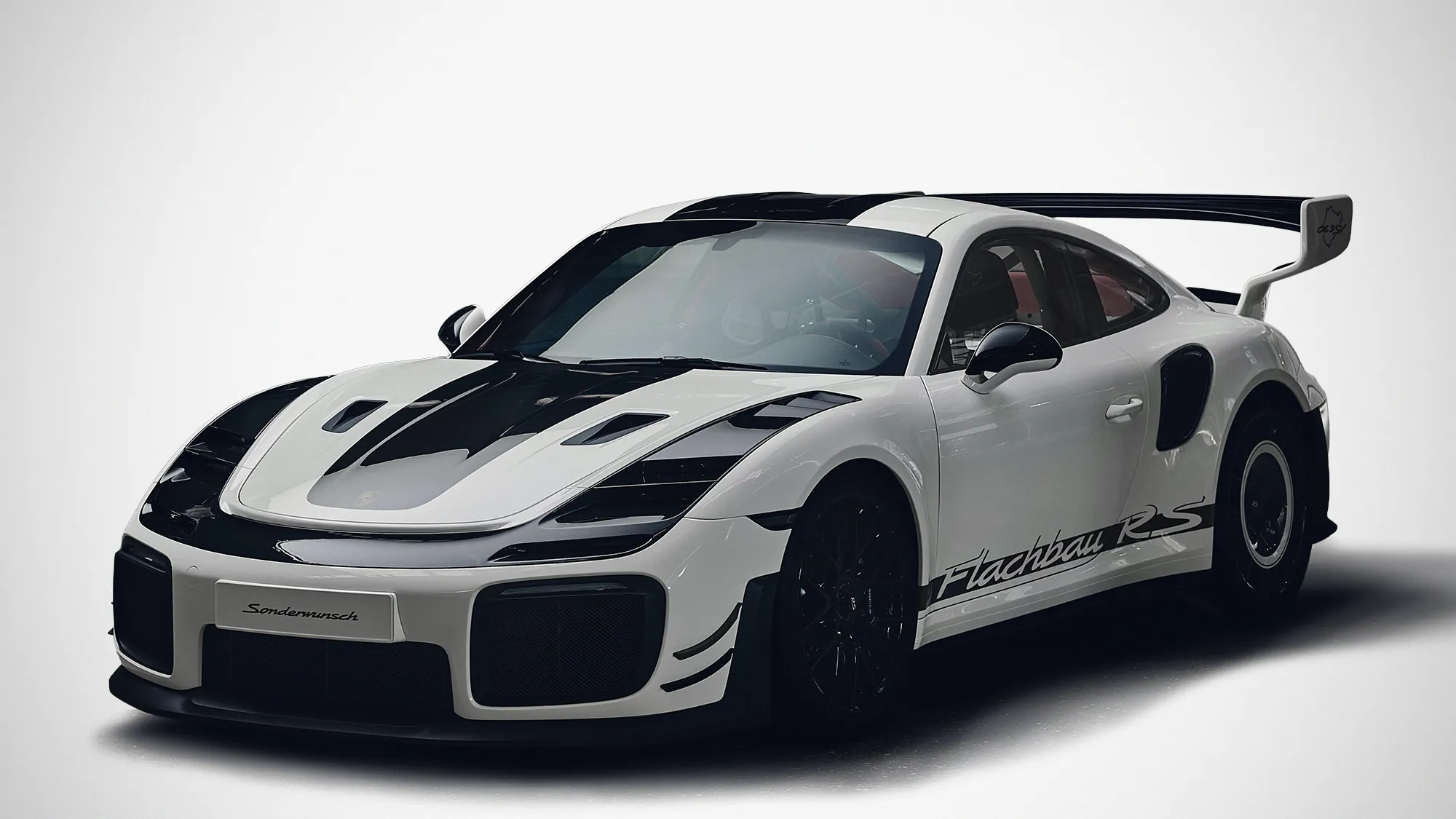
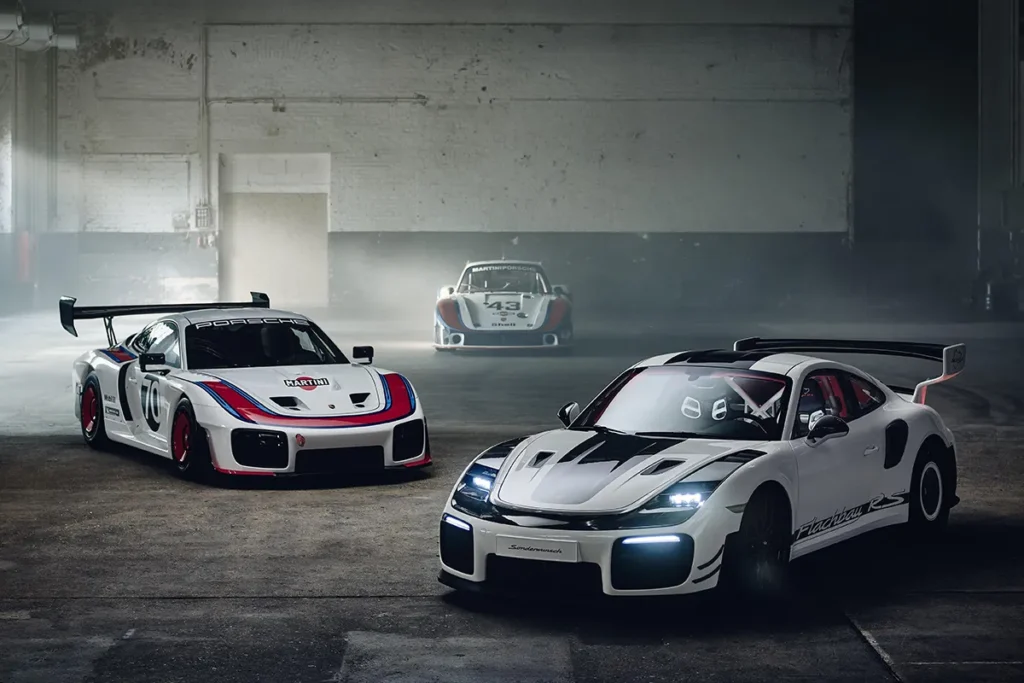
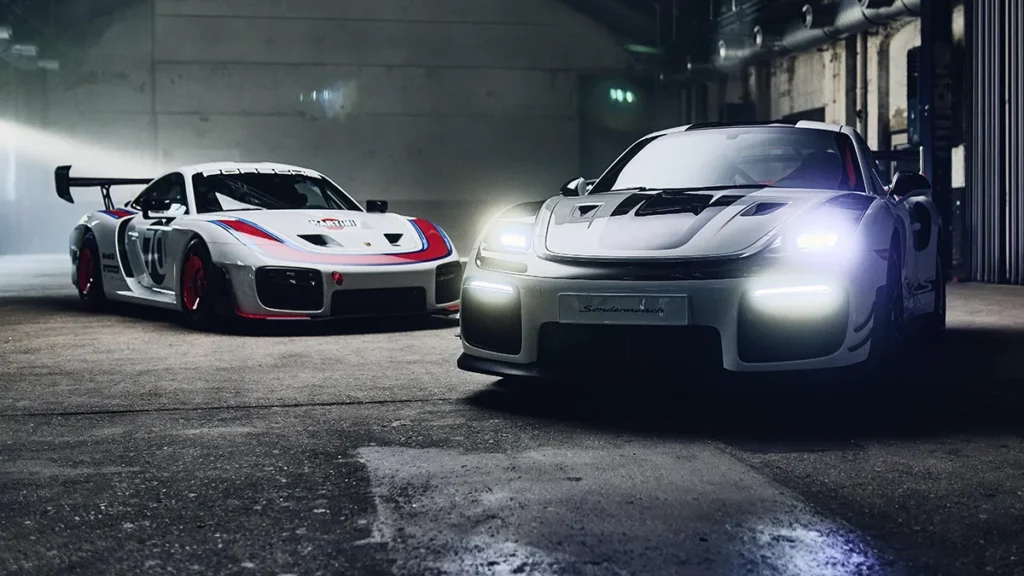
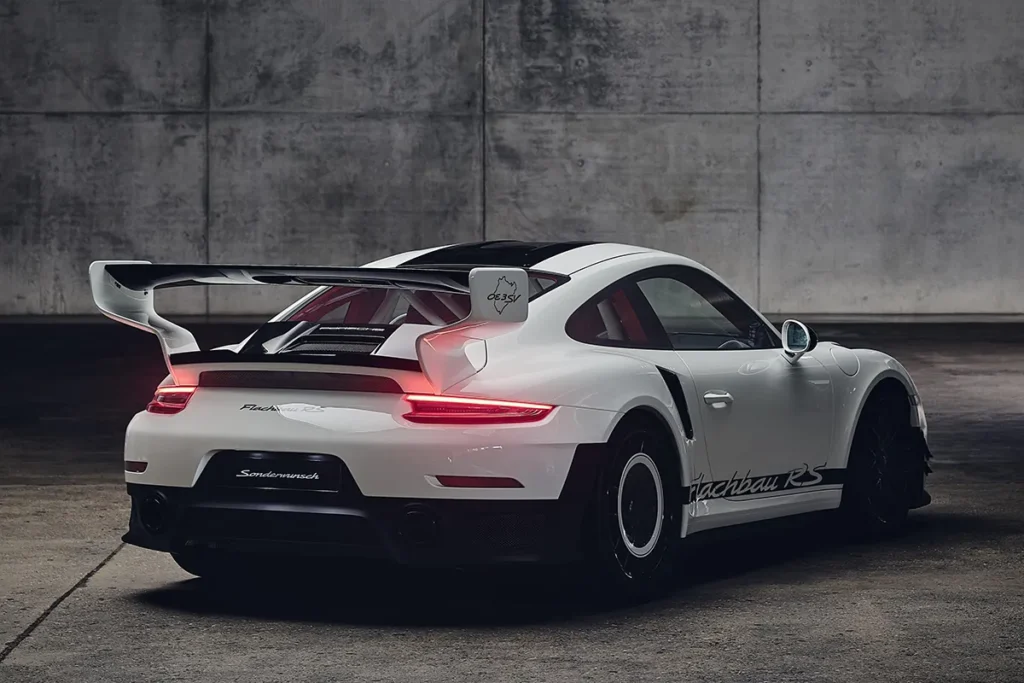
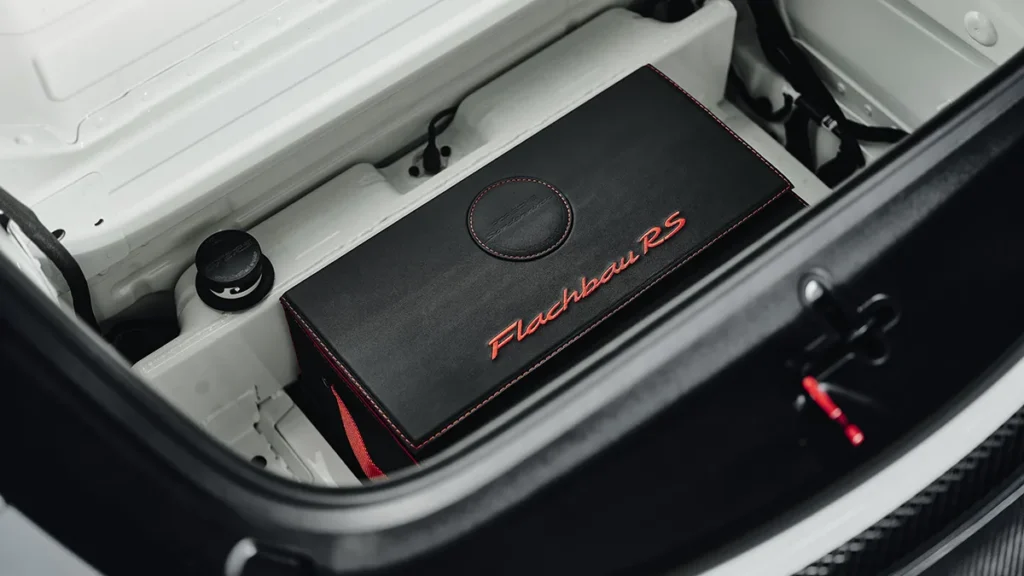
However, one person is not letting those barriers get in the way. One Porsche enthusiast commissioned a Sonderwunsch one-off build. The result is a unique Porsche Flachbau RS that looks like Moby Dick has time-traveled to 2026. Beneath that retro slantnose shell sits a 991.2 GT2 RS with the Weissach Package, retaining its 700-horsepower twin-turbo flat-six beneath extensively reworked bodywork.
The project took almost three years and brought together Porsche Sonderwunsch, Style Porsche, Weissach engineers, Porsche Motorsport, and Manthey. Flattening a modern 911’s nose while retaining safety, lighting performance, and road legality, it turns out, requires slightly more work than attacking the fenders with a belt sander.
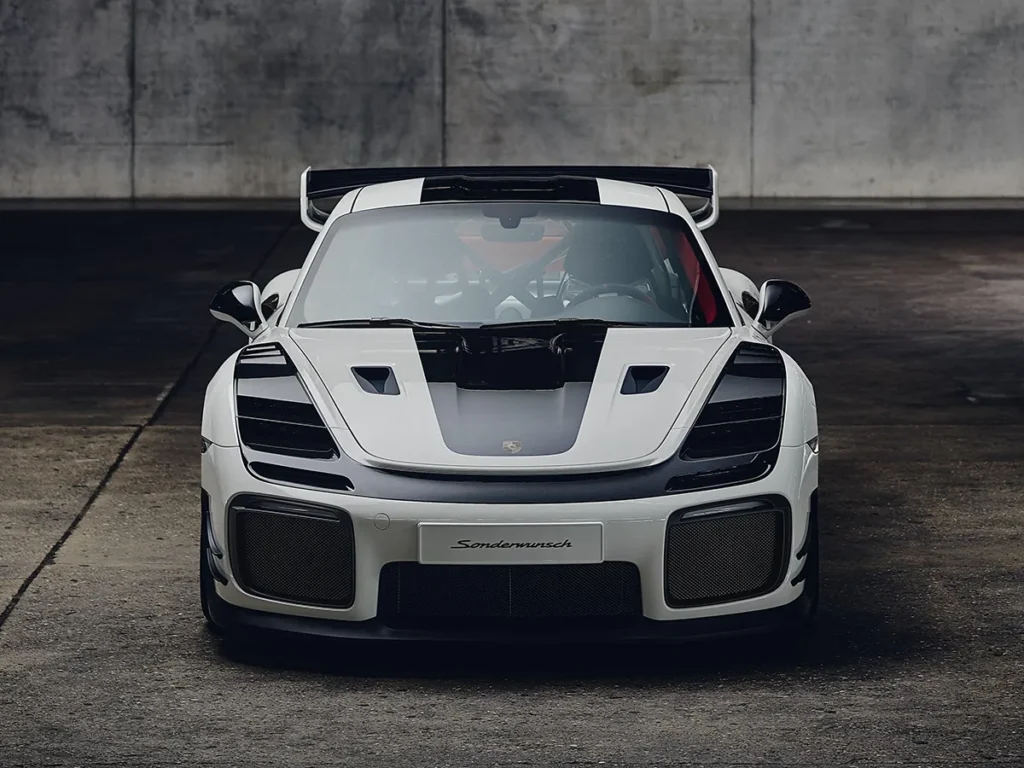
The familiar round headlights have been replaced by three tiers of extremely slim LEDs, allowing lower front fenders with pressure-relieving louvers. Porsche also redesigned the front bumper, splitter, fuel-filler mechanism, and much of the surrounding bodywork. Grand Prix White paint, matte-black accents, exposed carbon fiber, and a U-shaped bonnet graphic reference the Porsche 935/78 “Moby Dick.”
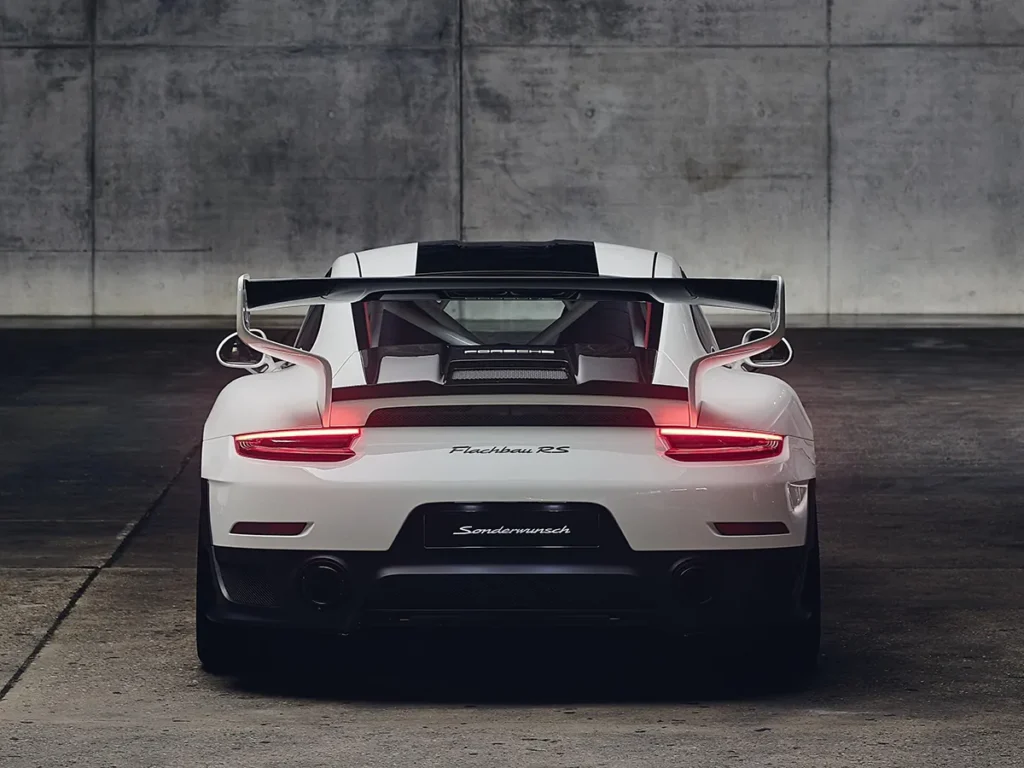
At the rear is an enormous wing inspired by the 911 GT3 R rennsport. Mounted 5 cm (2 inches) higher on S-shaped supports, it can be manually set to three positions. In High Downforce mode, the Flachbau RS generates 554 kg (1,221 lbs) of rear-axle downforce at 340 km/h (211 mph). Carbon-fiber aerodiscs on the rear wheels help reduce drag.
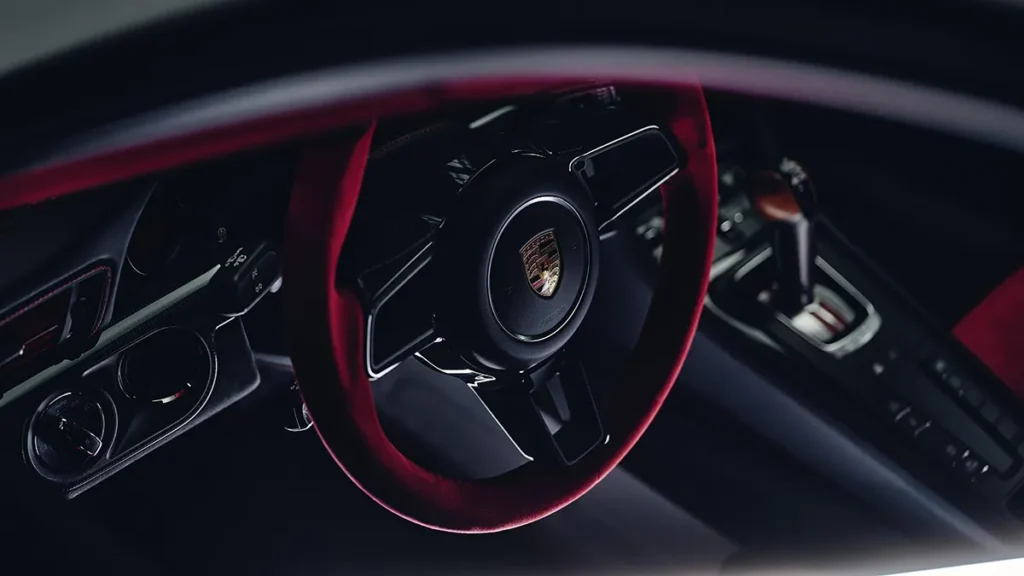
Porsche found another 31.6 kg (69.7 lbs) to remove by deleting the infotainment and audio systems, sound insulation, carpeting, unnecessary wiring, and various comfort components. The exposed wiring and Grand Prix White-painted metal give the cabin an appropriately race-bred appearance.
This was no cosmetic garage experiment. Porsche built three development cars, conducted crash simulations and wind-tunnel tests, completed 50 Nürburgring-Nordschleife laps, and subjected the rear wing to testing equivalent to around 150,000 km (93,200 miles) of use.
The conversion cost remains private. If you must ask, your Porsche specialist probably does not need to remain on retainer after all.
Images: Porsche.