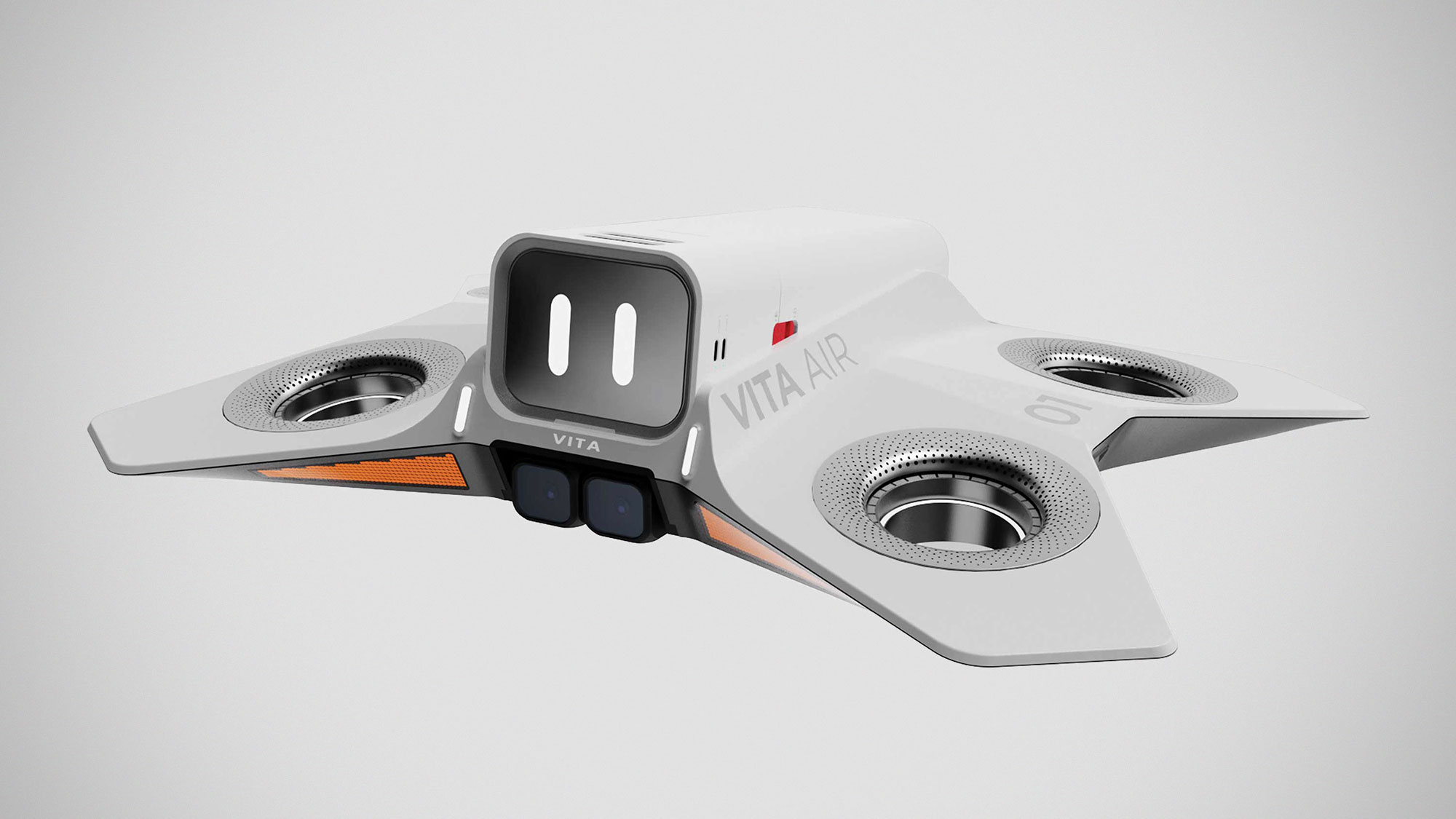
If you think drones are just for Amazon packages and cinematic B-rolls, think again. What you see here is the VITA Autonomous First-responder Drone, a concept dreamed up by a student (Hongyi Sun) from the Savannah College of Art and Design (SCAD). It looks like something that flew straight out of Half-Life 2—minus the creepy head-crab vibes and deadly intents—and more like a potential life-saving drone fit for the Red Cross Land Rover.
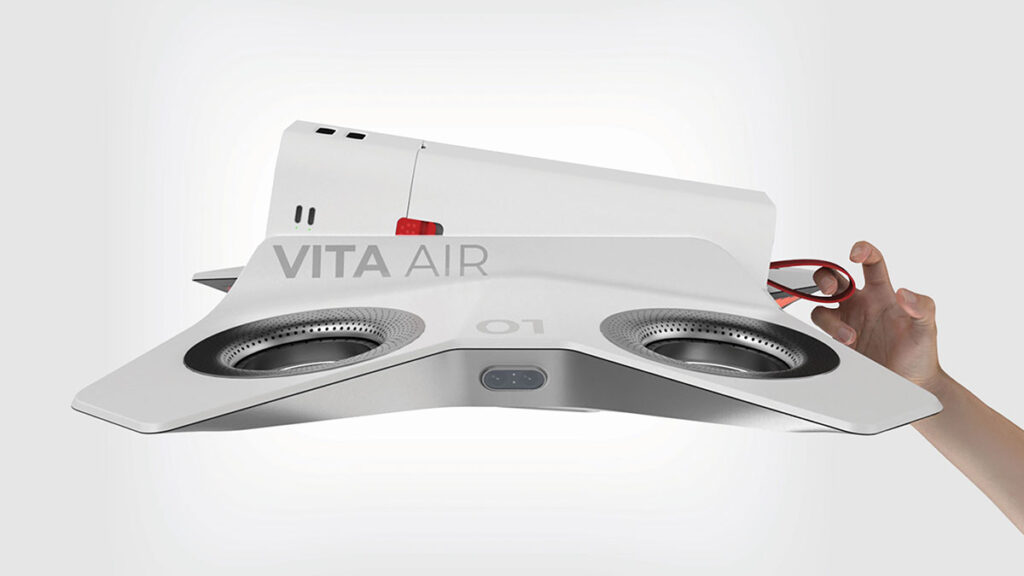
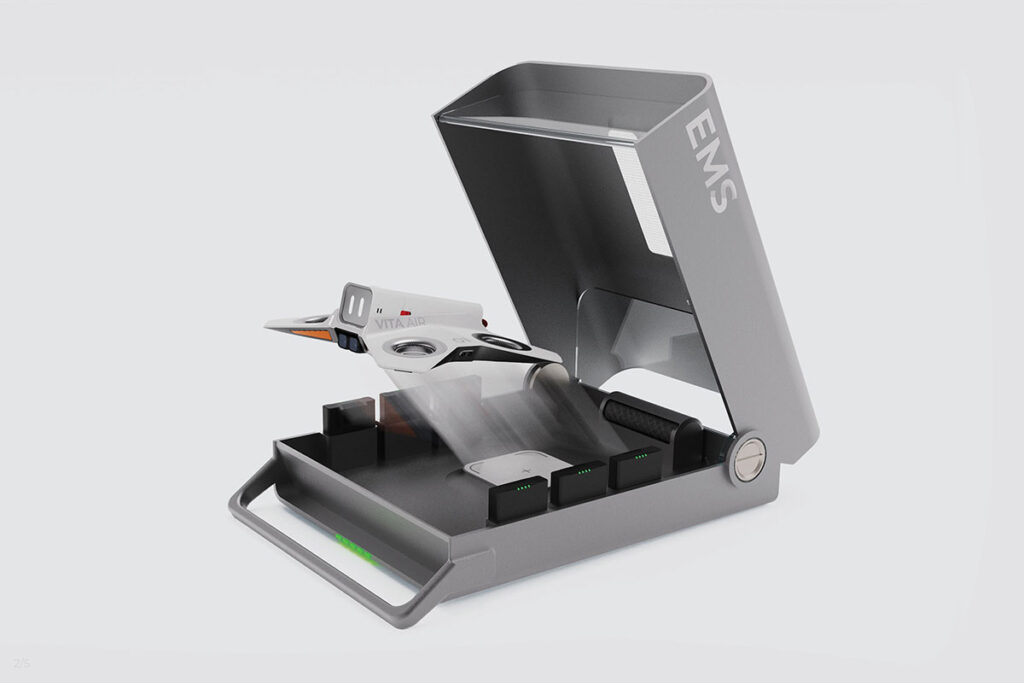
VITA isn’t built to take selfies or spy on your neighbors. This flying lifesaver is designed to fill that nerve-racking time gap between a car crash and the arrival of emergency responders. When dispatched, it zips to the accident scene on its own, bringing along a compact emergency kit with an AED and trauma supplies. Think of it as an EMT drone that doesn’t need lunch breaks or GPS recalculations.
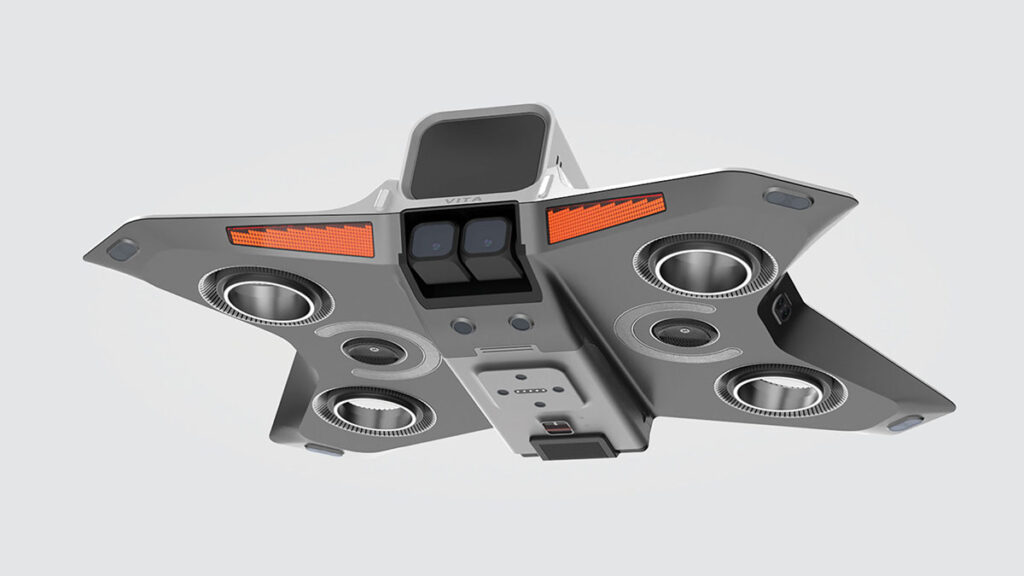
On arrival, it sends live video to EMS dispatchers through its dual-camera system, while onboard AI evaluates the situation, prioritizes actions, and keeps the human medics in the loop. There’s even a digital “face” on a front screen that provides calm visual instructions, emotional reassurance, and AED guidance—like a robotic Florence Nightingale hovering over the chaos.
Safety isn’t overlooked either. VITA uses bladeless rotors, so it won’t give survivors a second emergency, plus it features front and rear signal lights for traffic visibility and a bottom LED for nighttime missions. It can stay airborne for up to 60 minutes before returning to base for a recharge or battery swap.
Winner of the Red Dot: Next Gen Award, VITA proves that the future of first response might just arrive from the sky—and for once, it’s a drone you’ll actually be glad to see hovering above you.
Images: SCAD.


