The concept of magnetic suspension in transportation isn’t new—the most well-known example is magnetic levitation trains, which also use magnetic force for propulsion. However, a system that literally uses magnets for shock absorption without fancy electronics has been nonexistent. Well, nonexistent until now. Enter Colin Furze’s Bespoke Magnet Suspension Bicycle—a magnetic suspension bike that feels like it should be in Back to the Future II.
Now, for the benefit of those who don’t already know… regular bicycles don’t have suspensions. Some high-end mountain bikes do have shock-absorbing front forks, and some even have rear shock absorbers. Anyhoo, whatever the case, magnetic suspension has never been practical, complexity- and cost-wise. Obviously, that is not going to stop Britain’s mad inventor from taking on the challenge.
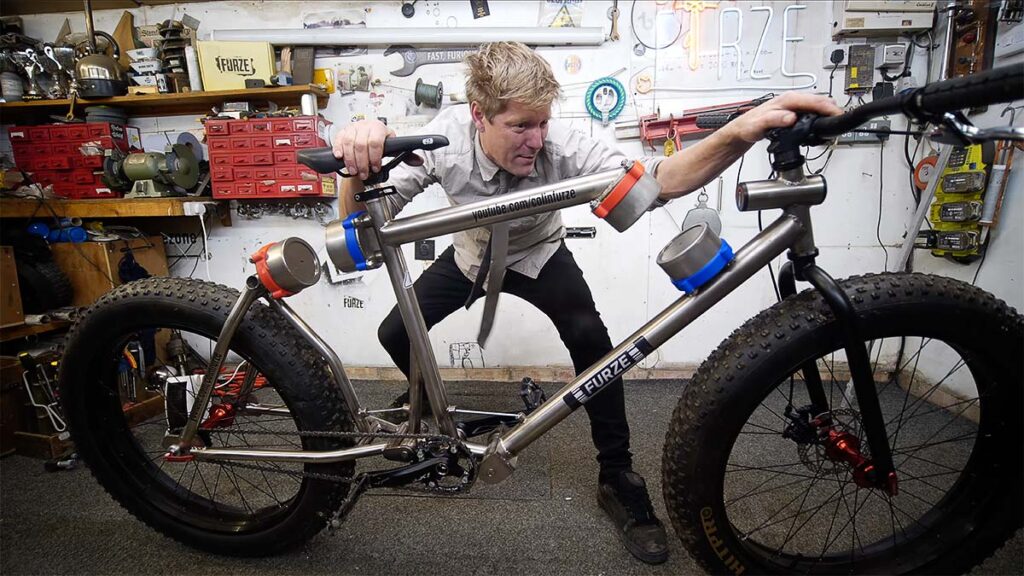
Through bouts of trial and error mixed with engineering ingenuity, Furze did it—but not without practically changing the entire geometry of the bicycle frame. Not going to lie, I kind of like the new geometry. Also, he fabricated the frame out of stainless steel to prevent that 200-kilogram-force magnet from attaching itself to the frame and to prevent flexing, because this bike frame is essentially a disjointed one. Damn. As I have mentioned in the beginning… this feels like a bike that should appear in Back to the Future Part II. Magnetic levitation suspension? That is so 2015. Oh, wait… never mind.
Anyhoo, the one-of-a-kind Bespoke Magnet Suspension Bicycle now has a truncated top tube with a magnet that repels a same-pole magnet mounted to the down tube. Over at the rear, it has a custom three-tube seat stay attached to another super-strong magnet. Opposing this magnet is yet another same-pole unit affixed to the vertical seat tube.
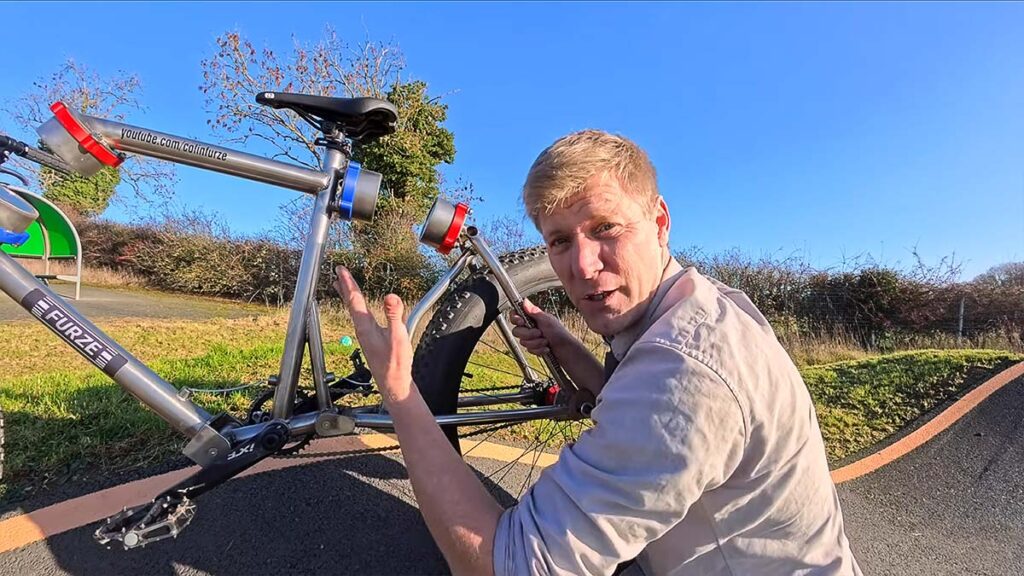
The seat tube has been modified, and so have the chainstays. The latter now pivots on the seat tube, which has an inverted design to ensure vertical integrity—a necessary feature to prevent the now support-less seat tube from moving side to side. The bottom bracket is nonexistent, replaced by the chainstay-to-seat-tube pivot and the seat-tube-to-down-tube pivot.
One final design touch: two small-diameter steel cables—one between the seat stays and the seat tube, and another between the seat tube and the down tube. These cables prevent the front and rear of the bike from drooping when picked up. Without them, it would droop—or as Colin puts it, “fall apart”—since nothing solid exists up top.
The result is a bicycle that looks like it came from the future. And the suspension is functional—well, to an extent. On very uneven terrain, the two magnets can knock into each other. I guess you could call it an almost successful proof of concept. That said, this magnetic suspension bicycle may be a proof of concept now, but if anyone can make it real, it’s Colin Furze. In any case, the man hinted he may refine it. So, keep your eyes peeled for updates on his channel on YouTube.
Keep going for the video. Trust me, it is another Furze creation you don’t want to miss. That man is such an excellent showman.
Images: YouTube (Colin Furze).