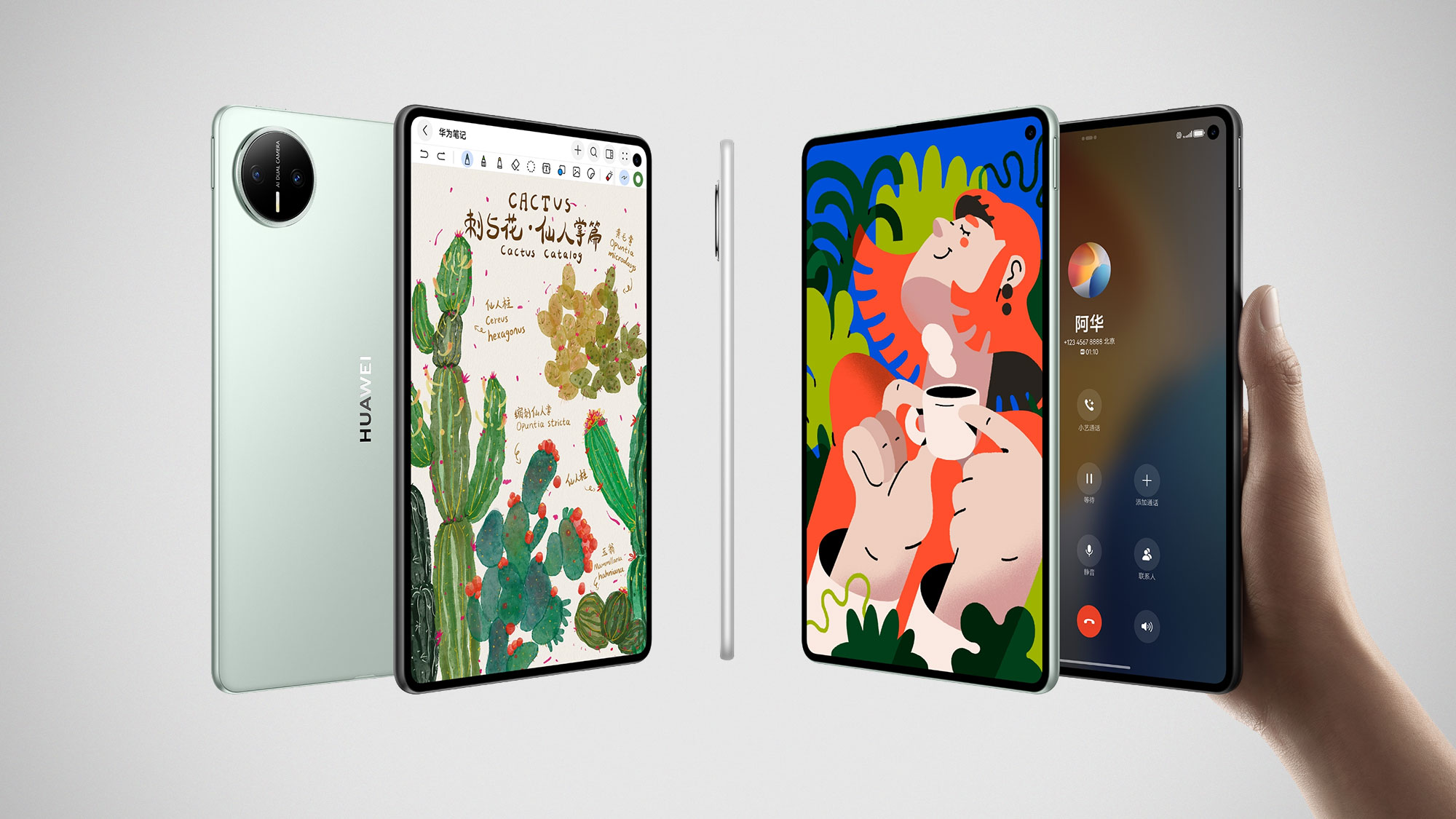
With Huawei, everything is going the smartphone way. It is not just the TV that has adopted the way of the smartphone; the latest iPad mini competitor, the MatePad Mini, is also marketed as a “small tablet, big smartphone.” And smartphone indeed it is because you can make calls on this little big guy.
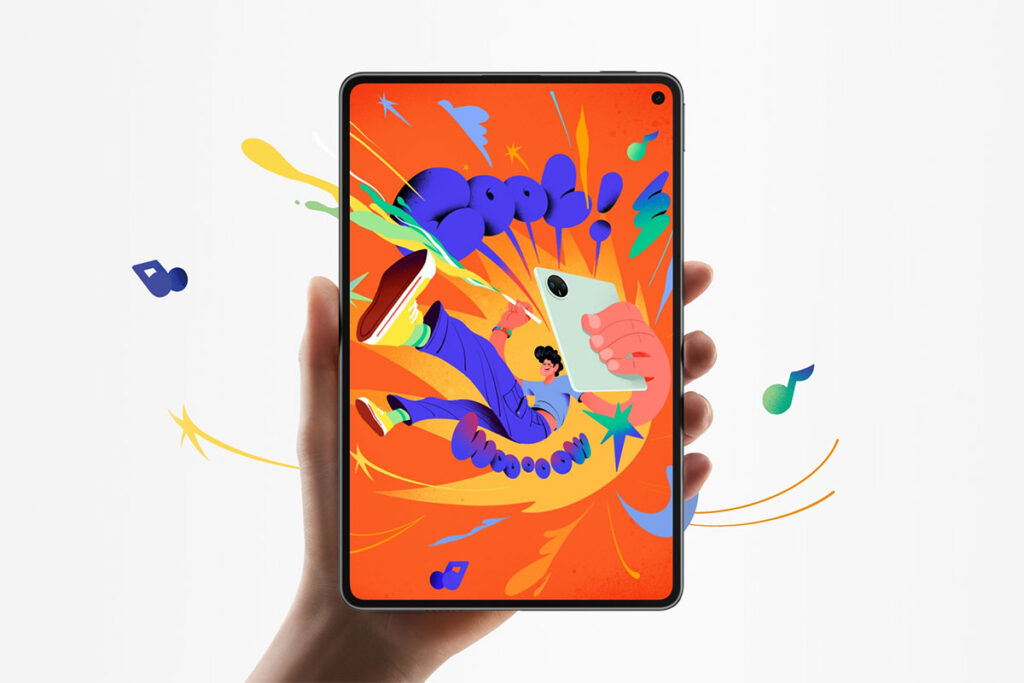
Not only that. Where the cameras on most tablets are nothing more than afterthoughts, Huawei is pushing them as one of its main features on the MatePad Mini [CH]. Moreover, like a phone, it can scan QR codes to make payments. The latest addition to Huawei’s strong tablet family also touts, you guessed it, Harmony AI, and supports Huawei M-Pencil Pro.
If those aren’t clear enough that this is an oversized phone, how about the fact that this little big fellow supports full network connectivity, a.k.a. cellular networks, that allow for calls and staying connected always. Speaking of connectivity, the new MatePad Mini’s Wi-Fi 7 works with onboard smart antennas, promising wall-penetrating reception—even when both hands are gripping firmly on the device.
That’s not all. This device boasts bi-directional Beidou satellite messaging, ensuring communication continues even in the most remote regions.
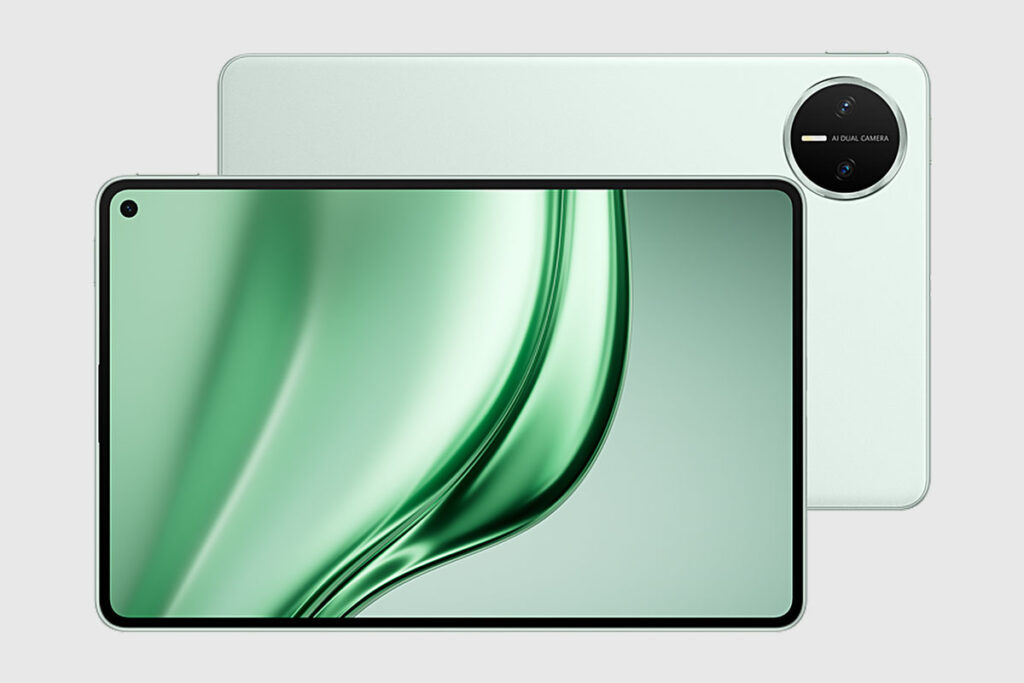
Circling back to imaging, the device rocks a 32 MP high-res, wide-angle front-facing camera and around the back, a camera module with a 50 MP high-res main camera and an 8 MP super wide-angle/macro camera.
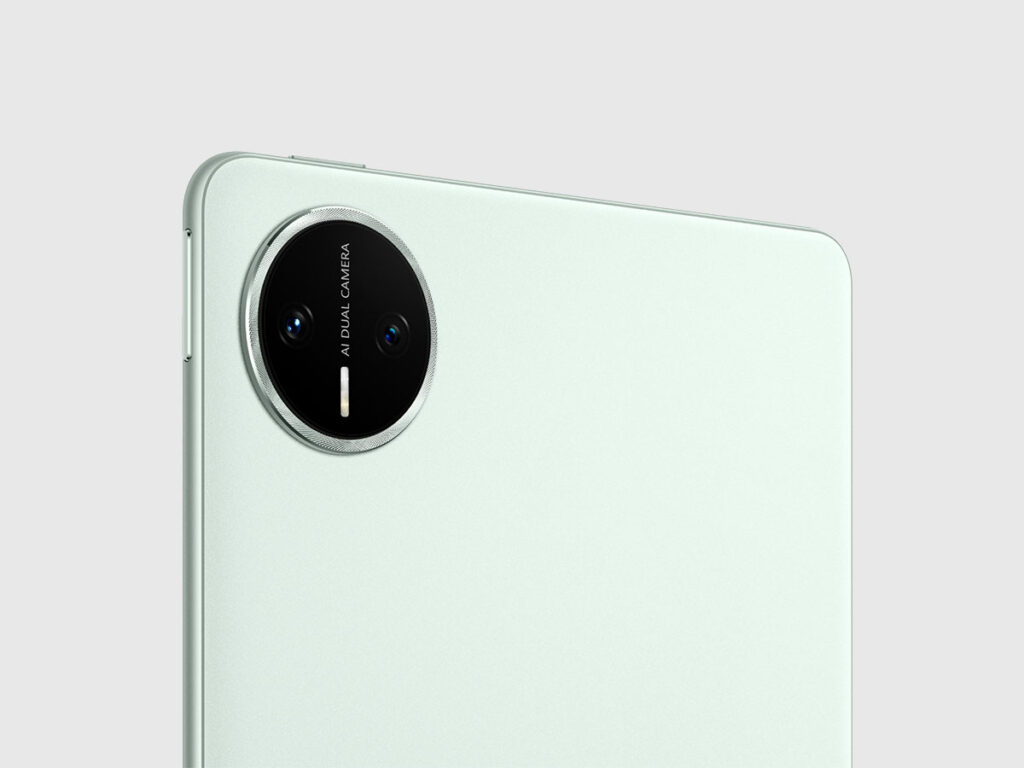
The imaging function is where the AI really flexes its muscles. Using AI, it lets you pick the best expression—for each person in a group photo—and it can, of course, do AI removal of people and/or objects, as well as AI portrait tweaks. Then there’s AI image expand that automatically detects the subjects and makes them the center of the photo by filling out the rest of the image.
All great innovations, courtesy of the power of AI, but to be honest, I am not sure if it is a good thing or a bad thing. With so much AI meddling, it may come to the day when photos may not be strong evidence in court. Just saying.
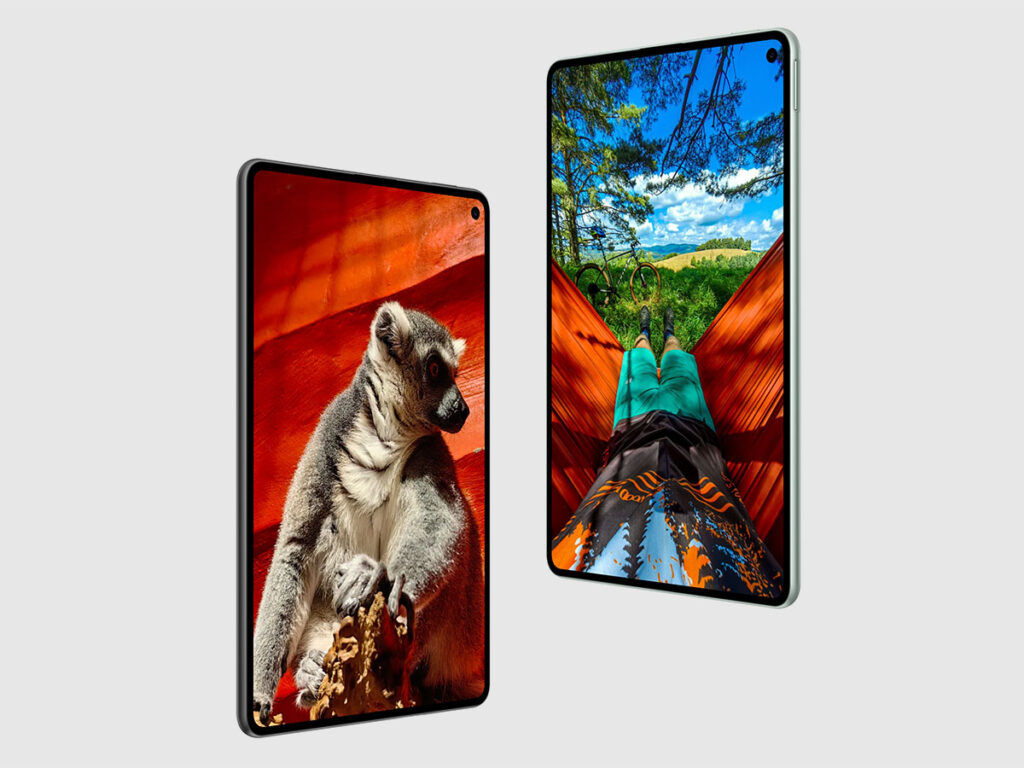
Another key feature is the display. The MatePad Mini has an 8.8-inch flexible OLED “yunxi” (literally means “cloud clear,” btw) gentle light display. It comes standard with a 120 Hz refresh rate and 2.5K resolution (that’s 2560 × 1600 pixels, 343 ppi, for those who really have to know).
The standout qualities of the display do not end there. It has a blinding brightness peaking at 1,800 nits and an exceptionally high 2,000,000:1 contrast ratio. The former makes it suited for outdoor use, and the latter ensures video content has deeper blacks and vivid highlights. In other words, it will make videophiles weep with joy—even under bright daylight.
Oh, did I mention that it supports ΔE < 1 pro-grade color and HDR Vivid? And that the display uses a super high PPI Real RGB Pixel design? As for the colors, it’s the standard 1 billion colors with P3 wide color gamut.
Under the hood, the standard model is powered by Huawei’s very own Kirin 9010 chip as used in the Pura 70 Pro/Ultra. Meanwhile, Premium models run on the new 9020 chip. As for memory, it is offered in 12 or 16 GB RAM, and 256 GB, 512 GB, and 1 TB storage. No mention of the types of RAM and storage, though. The device has stereo speakers, a dual mic setup, and a 6,400 mAh battery that supports 66 W super fast charging.
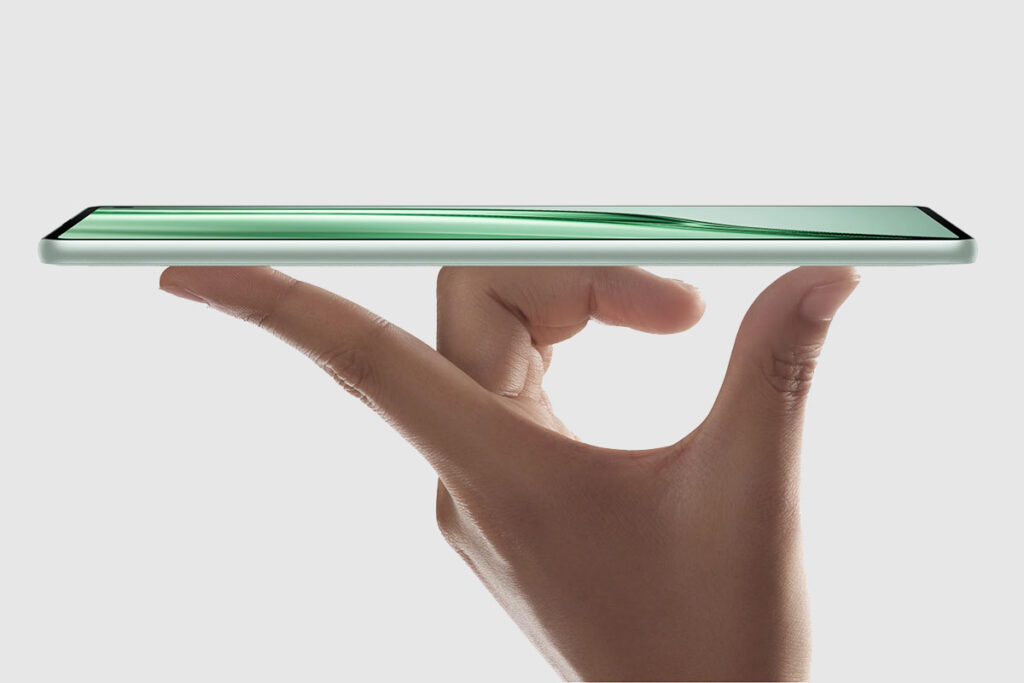
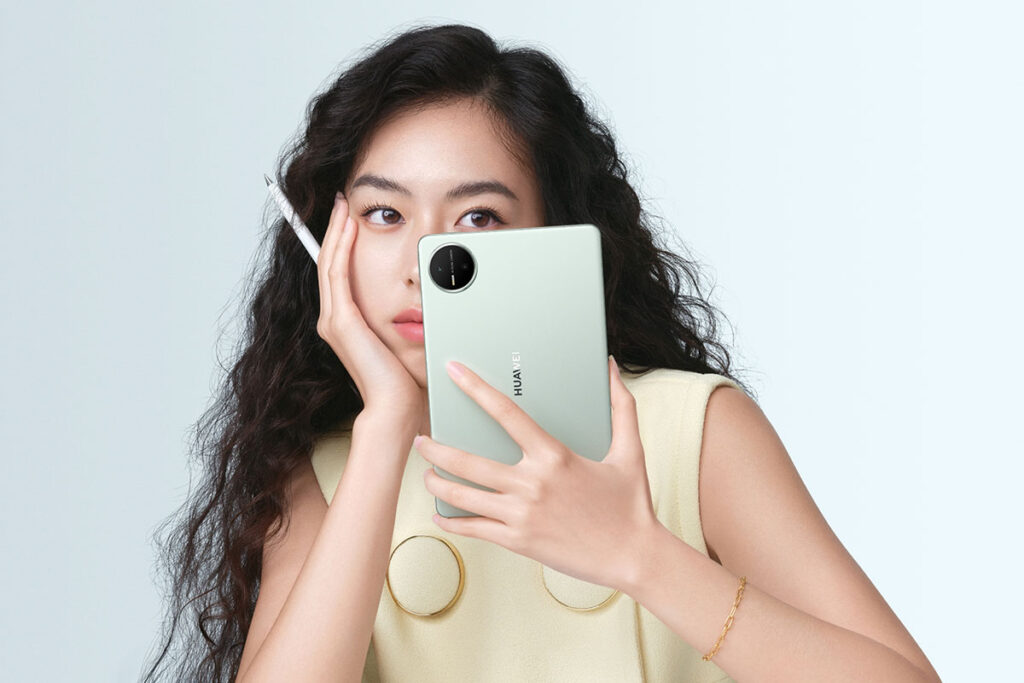
As far as design goes, this thing looks Huawei-sleek. The first thing anyone will notice is that it is full of screen, rocking an ultra-narrow bezel of only 2.99 mm. It has an insanely thin and light design, measuring just 5.1 mm thin and tipping the scales at only 255 g. Aesthetically, it is your typical sleek gadget with a small round camera bump around the back and curved edges.
Another notable feature is that Xiaoyi Assistant can now help you answer calls, too. Yes, believe it. And then there’s, of course, the all-adorable animated pet for your desktop that reacts when you magnetically attach it to the Mini to be charged.
The new Huawei MatePad Mini has been launched in China with a starting price of 3,999 yuan [CH] (~561 USD) for the standard model, and 5,999 yuan (~841 USD) for the Premium model. There is actually another tier: the so-called “Reading” model that goes for a more affordable 3,299 yuan.
Note: It looks like the Premium and Reading models aren’t listed yet.
Images: Huawei [CH].