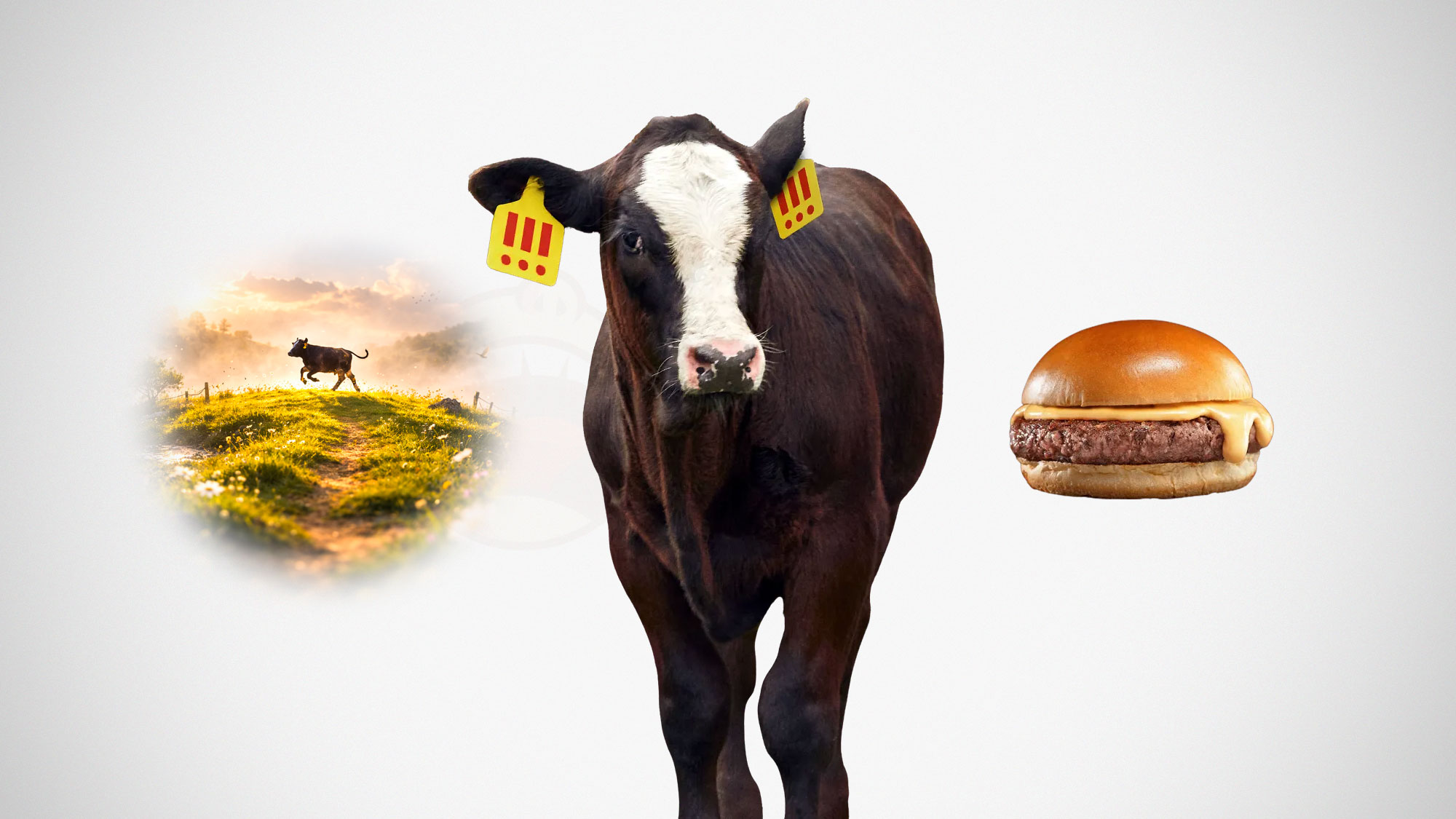
In 2024, MSCHF (pronounced mischief) started a two-year-long provocative conceptual artwork centered on a real cow named Angus. It is one of the most conscience-provoking and profound projects by the Brooklyn-based American art collective.
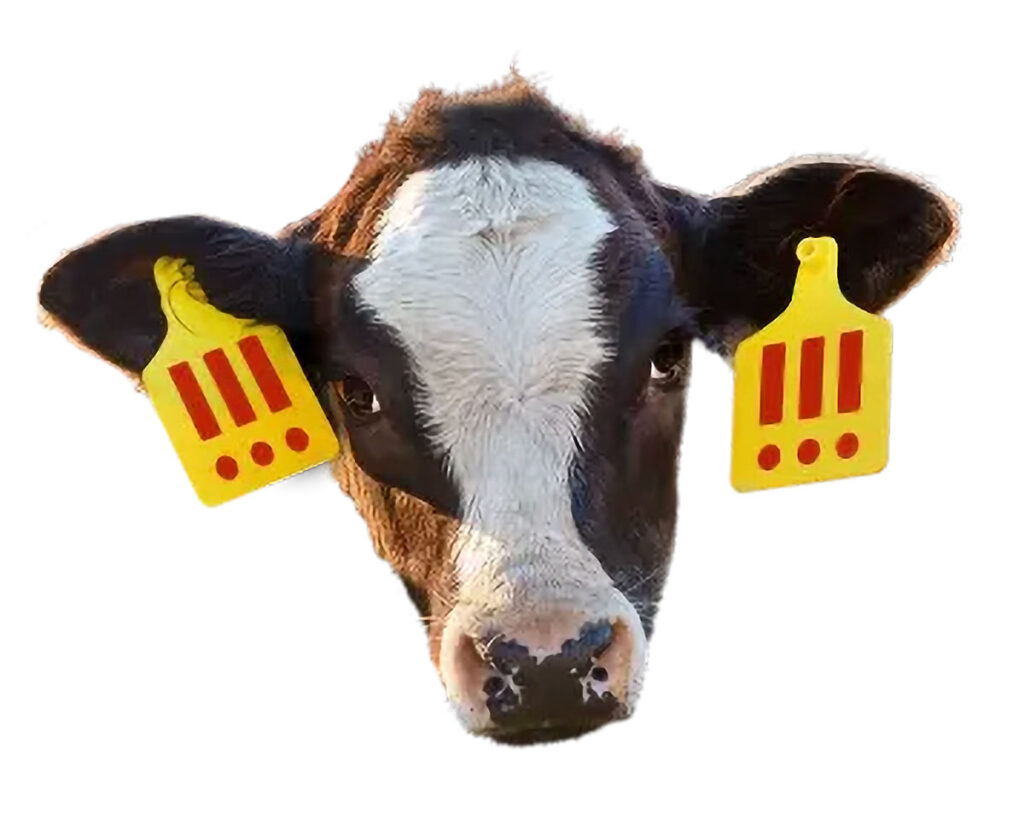
Background
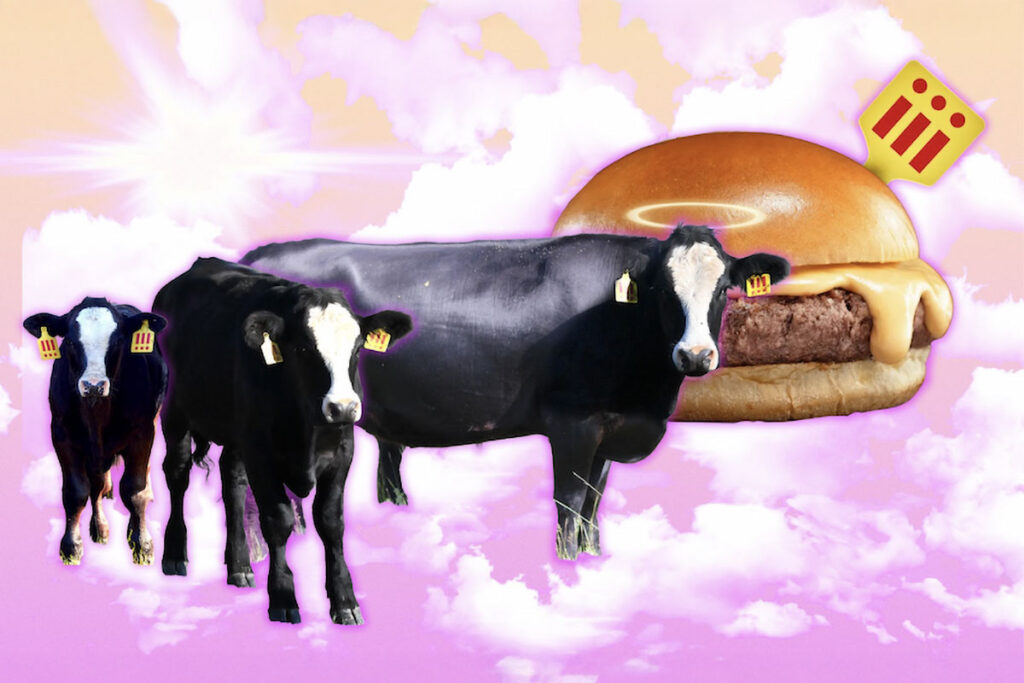
MSCHF bought Angus and presold him as 1,200 hamburgers and four leather handbags, represented by “Angus Tokens.” Now, here’s the thing with these “products.” Buyers who preorder them do not necessarily want the items. The preorder gives them the power to decide if they want to save Angus or not.
Here’s how it works:
If over 50% cancel, Angus is spared and sent to a sanctuary. If not, he will be slaughtered and turned into the promised products.
The deadline is 11:59 PM on March 13 this year.
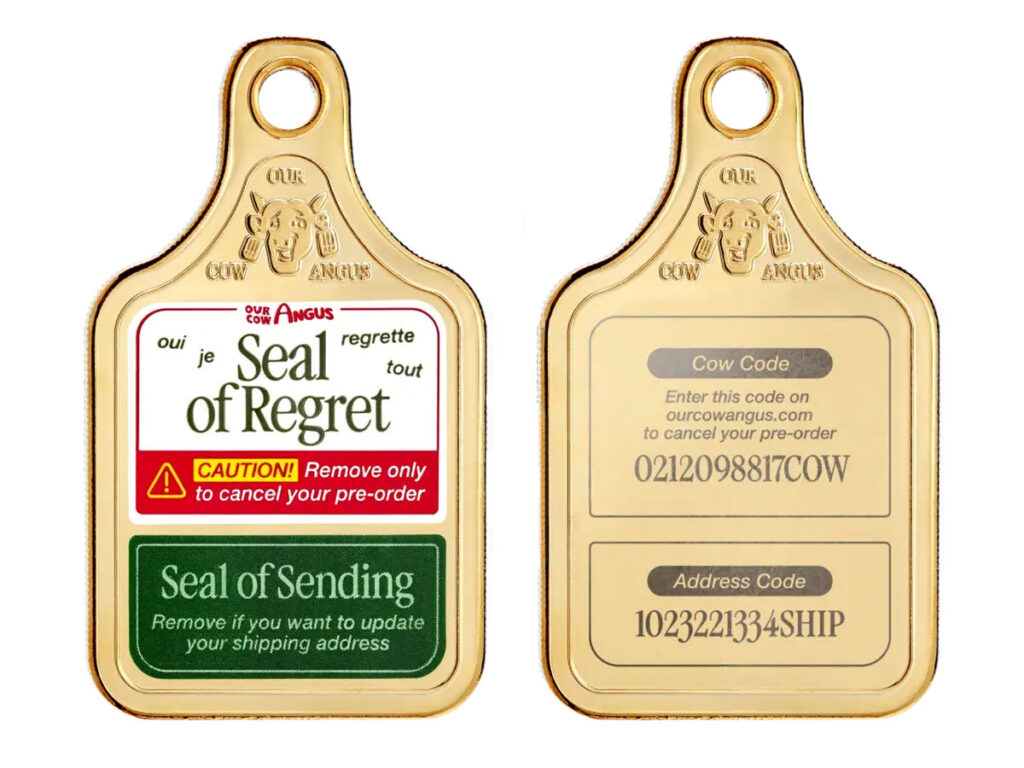
The Angus Token
The Angus Token has two seals, namely, the Seal of Regret and the Seal of Sending. Under each seal is a random code that you can enter on the Remorse Portal to either cancel your preorder, thus raising the guillotine for Angus back up a little, or update your shipping address to continue with your preorder.
There’s a catch. If you choose Regret, it is a personal decision that has a price to pay, and that price is whatever you paid for the Angus Token. That’s right. You will not be refunded. This decision is final and can only be made once.
If you choose to update your shipping, well then, you are free to update it any time—and multiple times—while Angus is alive.
Current Status
At the time of this post, Angus will be finalized in 15 days, and 32.5% of the required 50% preorder cancellations have been made so far.
Commentary
Here is what I understand from this project.
Core Premise
- You cannot change the status quo of meat consumption or anti-meat consumption. Both realities exist and continue to coexist.
- Meat has always been part of human life. However, in recent years, it has also become a symbol and tool in larger ideological battles involving climate change, veganism, animal cruelty, and environmental responsibility.
The Narrative Around Responsibility
- Some organizations and movements place the burden of climate change on consumers. In this case, cows are often highlighted as contributors to greenhouse gas emissions, and by extension, meat consumption is framed as a major environmental problem.
- Over time, repeated exposure to this ideology has created a strange numbness. Many people are aware of the narrative but continue consuming meat. Even those who feel empathy often question the impact of individual action. One person stopping meat consumption does not visibly save a specific animal from slaughter.
- This creates a psychological and moral disconnect between belief and action.
The Existential and Ethical Quandary
- The campaign explores a deeper question about life and humanity. In attempting to save animals, are humans truly acting in the animals’ interest, or projecting human morality onto them?
- Humans cannot speak for animals. The assumption that saving them aligns with their own will remains unknowable.
- This raises questions about agency, morality, and the limits of human empathy.
The Campaign’s Position
- The campaign neither approves nor disapproves of meat consumption. It does not align itself with either pro-meat or anti-meat ideologies.
- Instead, it observes how meat has become entangled in larger systems of influence, belief, and control. These systems operate beyond individual comprehension, similar to what could be described as a hyperobject shaping behavior and perception.
- The campaign’s purpose is not to persuade, but to offer a mechanism for action to those who feel compelled to act. Will so-called ethics and the desire to save an animal push you to write off the money you paid for the token? Or would you go ahead and look forward to having a taste of Angus and/or also parading him, his skin, around, either because you do not believe in one cause, or you do not want to waste that money. Yes, the financial aspect may also be a tipping point for some consumers. The reality is harsh.
The Simulation Mechanism
- The campaign operates as a simulation.
- Participants can purchase a preorder token from the secondary market and cancel it. Through this act, the animal is slowly being removed from the supply chain and spared from slaughter.
- This transforms abstract belief into tangible intervention, bridging the gap between ideology and action.
The Underlying Question
- The campaign challenges humanity to confront its true position.
- Are people genuinely anti-meat, or have larger ideological systems influenced them without fully internalizing them?
- It seeks to expose the nature of consumerism and moral responsibility.
Final Position
- There is no right or wrong answer.
- The campaign does not dictate morality.
- It simply reveals the choice.
- To live or die for Angus.
Anyhoo, you can have a dip in the Our Cow Angus Project by MSCHF HERE.
Images: MSCHF/Mikeshouts.


