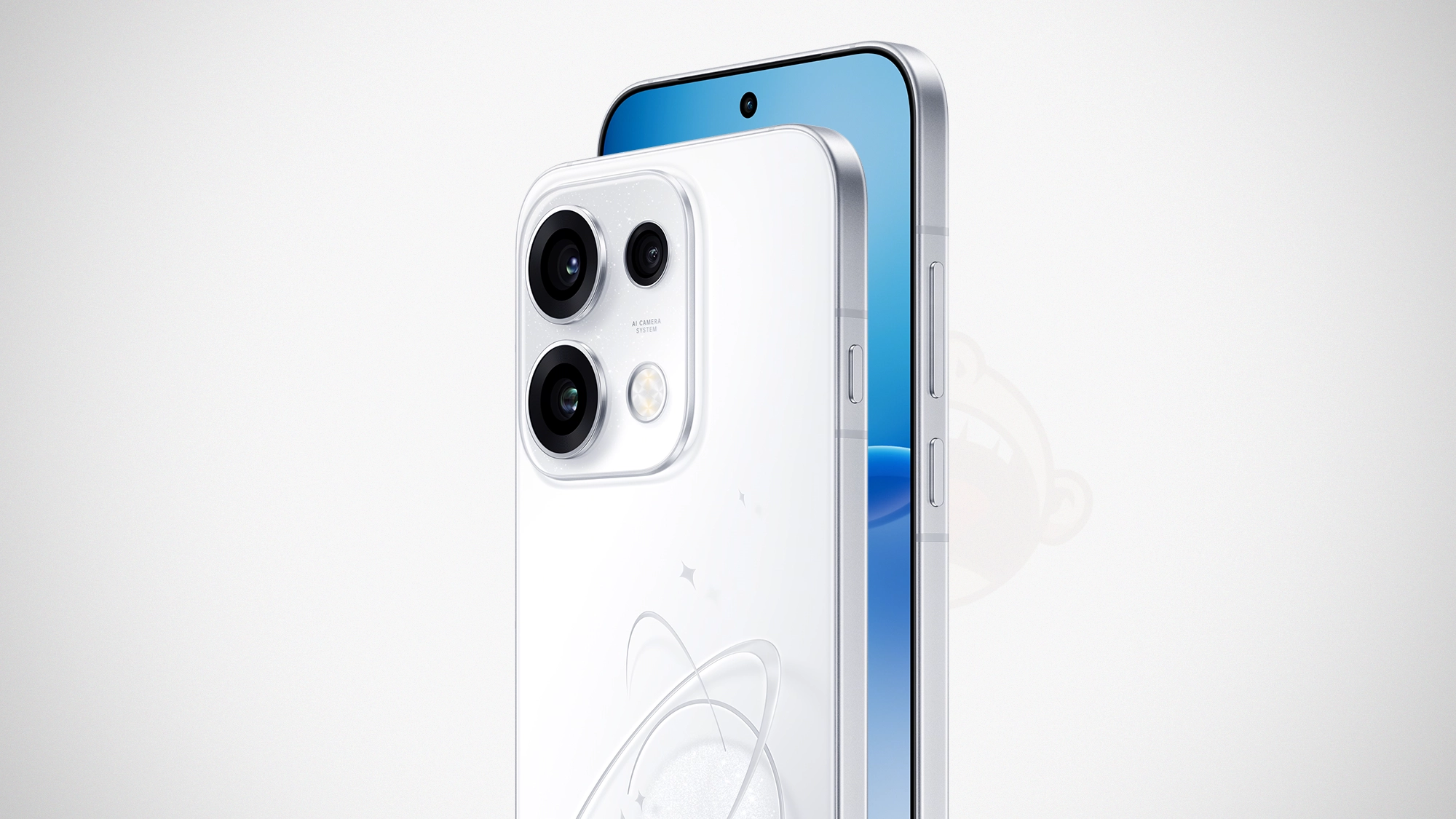
Another year, another Oppo Reno. But I think this year’s Reno came six months earlier (the Reno15 was launched last November). Launched last month, the Reno16 comprises two models: the Reno16 and the Reno16 Pro. Let’s address the elephant in the room: what are the upgrades?
Difference between Reno16 and Reno15
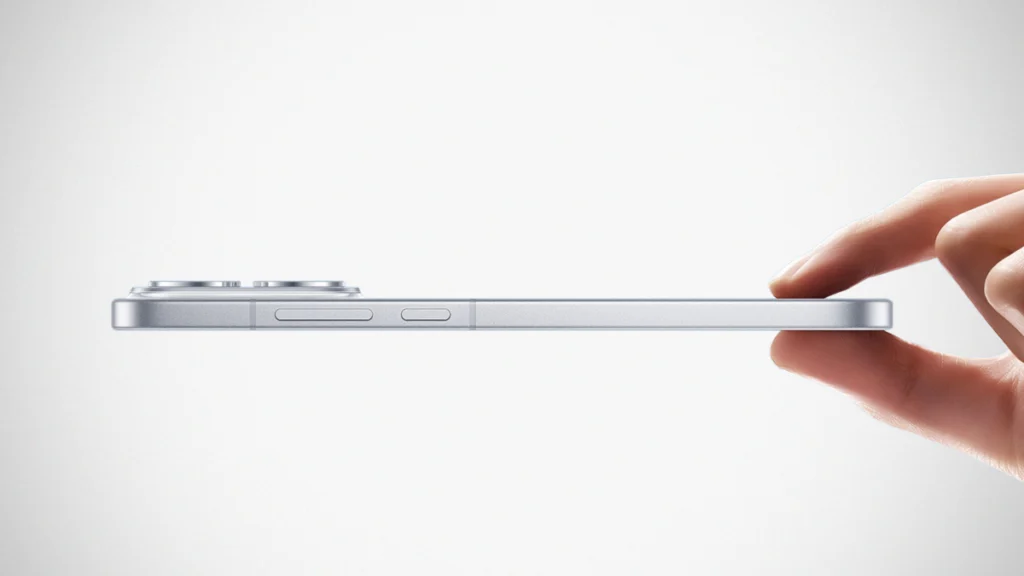
For the standard Reno16 [CH], the dimensions are nearly identical, except that it is now a tad thicker and, depending on the color, could be a wee bit heavier. Not quite an upgrade, is it? And then there’s the RAM, which is now offered in either LPDDR5X or LPDDR5, instead of LPDDR5X across the board. The major “upgrade” is the SoC, which is now the Dimensity 8550 SUPER, featuring an octa-core processor with a clock speed that tops out at 3.4 GHz. The battery also gets a boost. It now rocks a 6,700 mAh (typical) battery—500 mAh more than the Reno15, which explains the bump in thickness.
There are a couple of finer details too, such as the inclusion of NavIC for positioning, in addition to Beidou, GPS, GLONASS, Galileo, and QZSS. It also appears to have the option to include the previously announced detachable display, Oppo Bubble, as standard, which kind of explains the price bump from the previous launch price of 2,999 yuan to 3,499 yuan (or 3,998 yuan with the Bubble).
Reno16: The rest of the specs
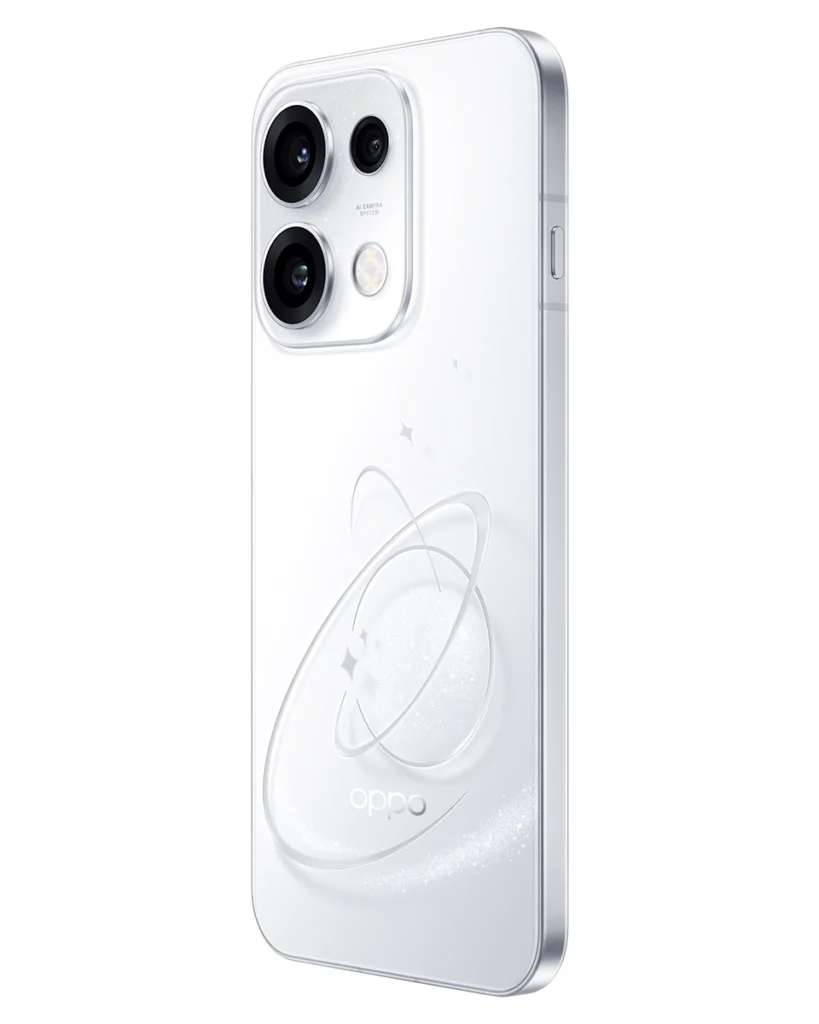
The rest of the specs are literally carried over from the previous generation. This means the same camera setup, featuring a 200 MP wide-angle camera (f/1.8, equivalent to a 24 mm focal length, 6P lens, supports AF, supports dual-axis OIS), a 50 MP ultra-wide-angle camera (116° FoV, f/2.0, 16 mm equivalent focal length, 6P lens, supports AF), a 50 MP telephoto camera (f/2.8, equivalent to an 80 mm focal length, 4P lens, supports AF, supports dual-axis OIS).
Around the front, it is the same 50 MP selfie camera (f/2.0, equivalent to an 18 mm focal length, 5P lens, supports AF). Speaking of the front camera, this device does support face unlock. As for video recording, the rear camera offers up to 4K60p video recording with stabilization.
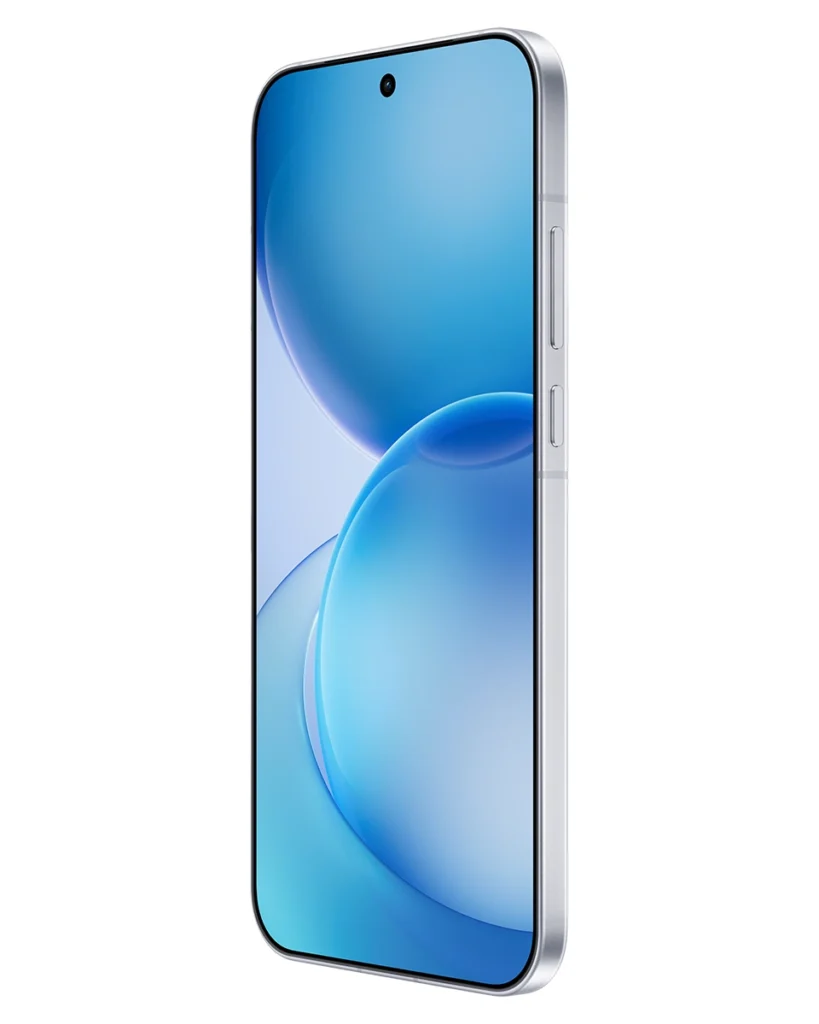
The display is a 120 Hz 6.32-inch FHD+ (2,640 × 1,216 pixels) display, with 600 nits maximum full-screen brightness, and 1,800 nits maximum HBM brightness. The display further touts a 240 Hz touch sampling rate. And then there’s the under-display optical fingerprint sensor.
Other spec sheet details include UFS 3.1 storage, support for up to 80 W Super Flash Charge and 80 W UFCS fast charging, the usual suite of sensors, dual nano-SIM support, support for 2G GSM to 5G NR networks, Wi-Fi 6, 802.11a/b/g/n, support for 5 GHz Wi-Fi with 160 MHz bandwidth, Bluetooth 5.4, Bluetooth Low Energy (BTLE), a USB Type-C port (version not stated), and NFC.
Difference between Reno16 Pro and Reno15 Pro
The Reno16 Pro [CH] has subtle dimensional differences. Despite sharing the same 6.78-inch display, it is a teeny-weeny bit taller (161.31 mm versus 161.26 mm). The thickness varies by color (i.e., material). It can be thinner than the Reno15 Pro, or thicker (7.86, 7.70, or 7.79 mm versus 7.65 and 7.75 mm). Weight-wise, it also depends on the color/material, but the lightest version weighs the same as the Reno15 Pro. Interestingly, Oppo has struck off the 1 TB storage option for the new Reno16 Pro, leaving only the standard Reno16 with this storage option.
The biggest upgrade from the previous generation has to be the SoC, which is a MediaTek Dimensity 9500s, featuring an octa-core processor with a maximum clock speed of 3.73 GHz. And then there’s the battery, which gets a bump to 7,000 mAh (typical) from 6,500 mAh (typical). Like the standard Reno16, it also benefits from NavIC for positioning, in addition to Beidou, GPS, GLONASS, Galileo, and QZSS. But it has one more detail: it supports Wi-Fi 7 (along with Wi-Fi 6 and Wi-Fi 5), rather than only Wi-Fi 6 and Wi-Fi 5. There’s more in this department. It also supports simultaneous 2×2 MIMO on both the 2.4 GHz and 5 GHz Wi-Fi bands.
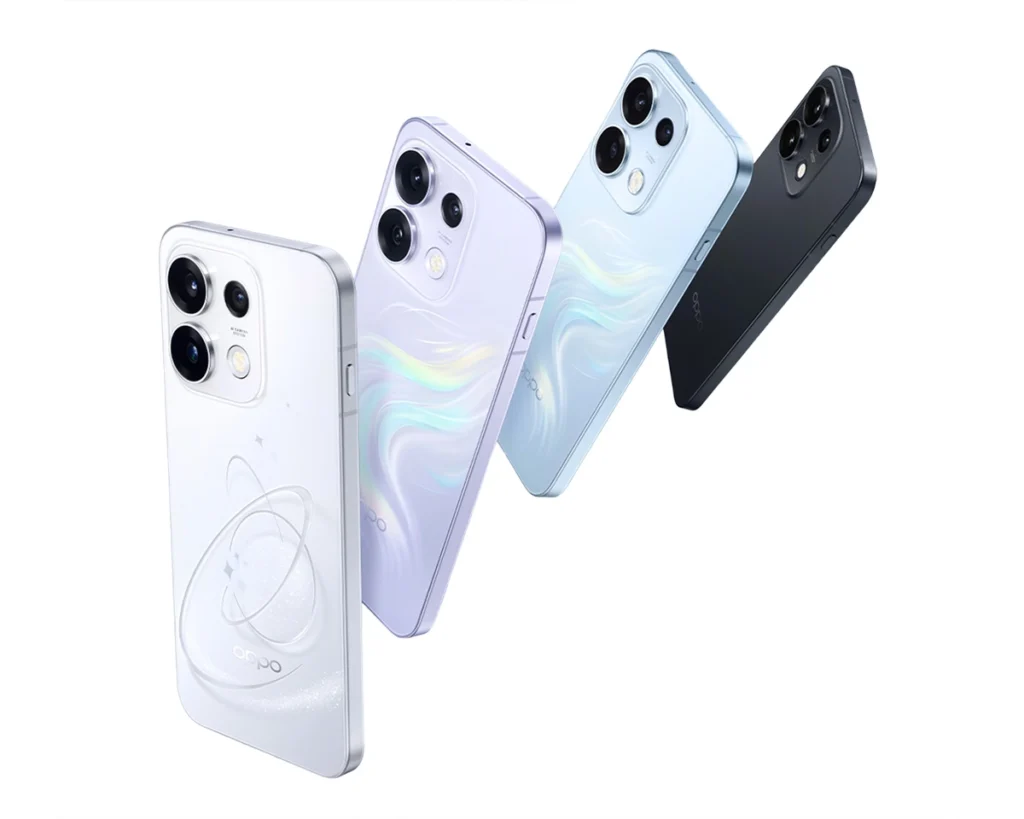
Reno16 Pro: The rest of the specs
Like the Reno16, the remaining specs are carried over from the previous model. Front the device is a 120 Hz 6.78-inch FHD+ (2,772 x 1,272 pixels) display, offering a 600 nits maximum full-screen brightness, and 1,800 nits maximum HBM brightness. It has a 240 Hz touch sampling rate, if that concerns you. The display also hides an optical fingerprint sensor, and is home to a 50 MP selfie camera (f/2.0, equivalent to an 18 mm focal length, 5P lens, supports AF), which supports face unlock.
Speaking of cameras, the rear has a triple camera setup, featuring, you guessed it, a 200 MP wide-angle camera (f/1.8, equivalent to a 24 mm focal length, 6P lens, supports AF, supports dual-axis OIS), a 50 MP ultra-wide-angle camera (116° FoV, f/2.0, 16 mm equivalent focal length, 6P lens, supports AF), a 50 MP telephoto camera (f/2.8, equivalent to an 80 mm focal length, 4P lens, supports AF, supports dual-axis OIS). The rear camera supports up to 4K60p video recording with stabilization.
Other notables include UFS 3.1 storage, support for up to 80 W Super Flash Charge and 80 W UFCS fast charging, the usual suite of sensors, dual nano-SIM support, support for 2G GSM to 5G NR networks, Bluetooth 5.4, Bluetooth Low Energy (BTLE), a USB Type-C port (version not stated), and NFC.
Differences between Reno16 and Reno16 Pro
At this point, you may feel like you’re having déjà vu while comparing the specs of the Pro and non-Pro models. Well, that isn’t déjà vu, my friend. The two models are almost identical, differing only in size—both in terms of dimensions and screen size—the battery, storage options (barely), RAM type to some extent, the SoC, and Wi-Fi. The Pro model also benefits from one extra sensor: a Hall sensor. Oh, and the Reno16 Pro does not appear to have the Bubble bundle.
A few more common denominators between Reno16 and Reno16 Pro
Both devices also boast impressive durability credentials. They are rated IP66, IP68, IP69, and IP69K for water and dust resistance, and feature 360° drop resistance. The Smart Flash also gets an upgrade. When using the main camera, brightness is increased by 31% at a distance of 1 meter. Switch to the telephoto camera, and brightness at 2 meters sees an even more impressive 72% increase.
Pricing and availability
The final difference is, of course, the price. The Reno16 Pro starts at 4,499 yuan [CH] (~663 USD), while the Reno16 starts at 3,499 yuan [CH] (~515 USD), as detailed earlier. The new Oppo Reno16 series is available in China as we speak.
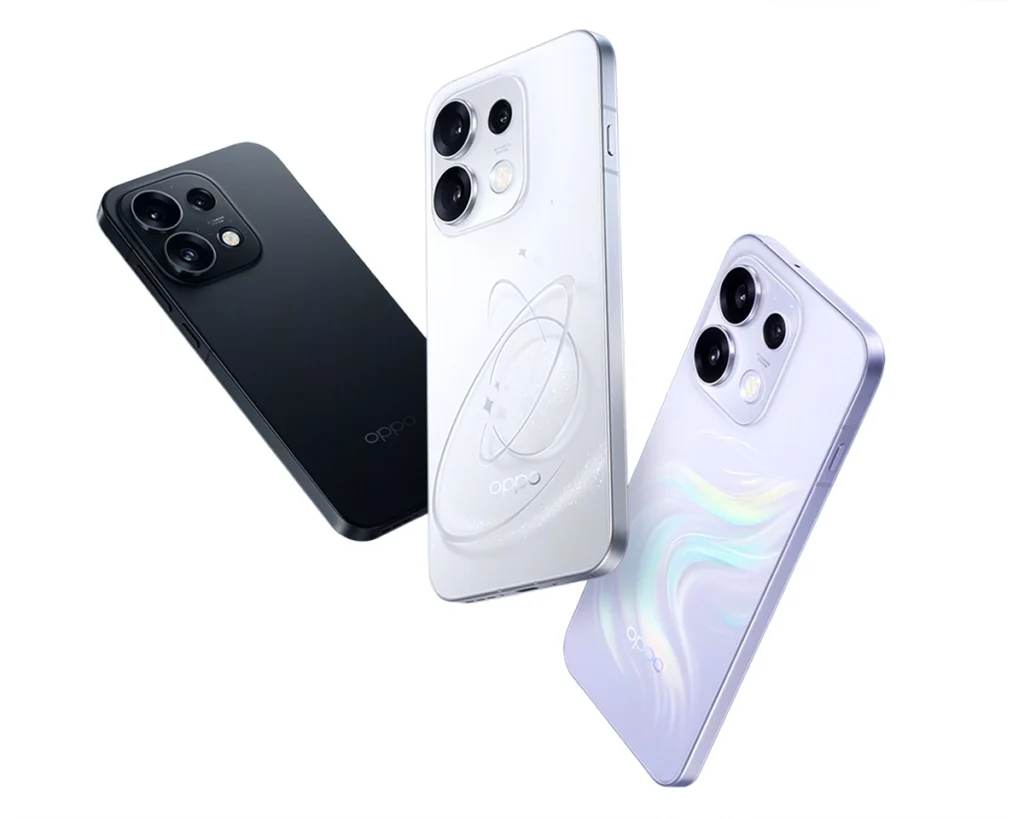

Images: Oppo [CH].