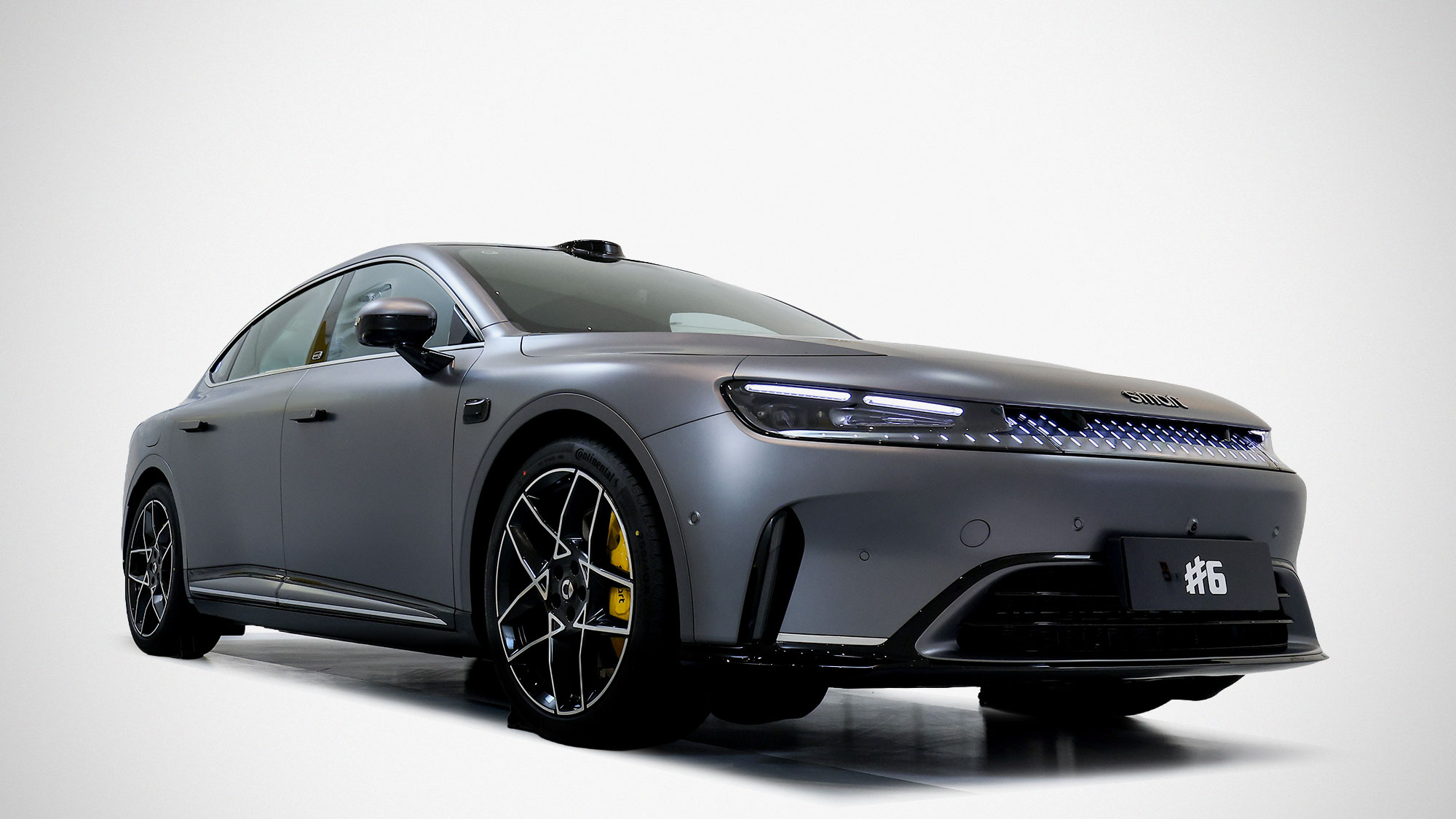
The soon-to-be Smart #2 we told you about earlier is just the beginning of the even number series. We are very sure because in the same event revealing the Smart Concept #2, the electric marque also introduced a ready-for-the-market luxury sports sedan called, wait for it… Smart #6.
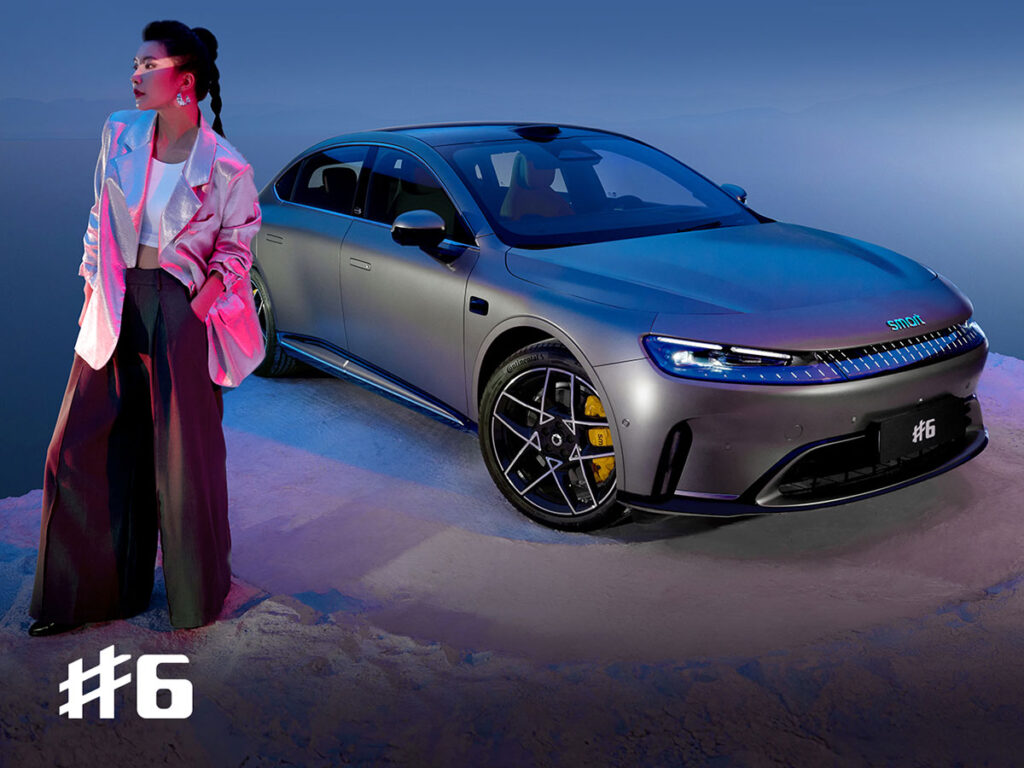
That kind of dispelled last year’s automaker claim of “no plans for a direct successor to the original Forfour,” doesn’t it? The fact that there is a #6 now, albeit only for the Chinese market for now, further reinforces my belief that a Forfour successor is in order. But, here’s the thing. #6 IS NOT a fully electric drive. The Smart #6 is an Extended Hybrid Drive (EHD).
This hybrid system allows it to operate in both series and parallel modes, even automatically switching for maximum efficiency based on the speed, load, and battery status. This tech is built on Geely’s NordThor 2.0 hybrid platform that combines a turbocharged petrol engine with electric motors. It is very much an electric-first, ICE-second setup, allowing for long pure-electric drive with the ICE as backup.
We are talking about a combined mileage of a mind-boggling 1,810 km (1,125 miles) range (CLTC) and with a fuel consumption as low as 3.9 L/100 km (60.3 mpg). It has a CLTC electric-only range of 285 km (177 miles), and charges fast. Taking it from 30% to 80% is just 15 minutes.
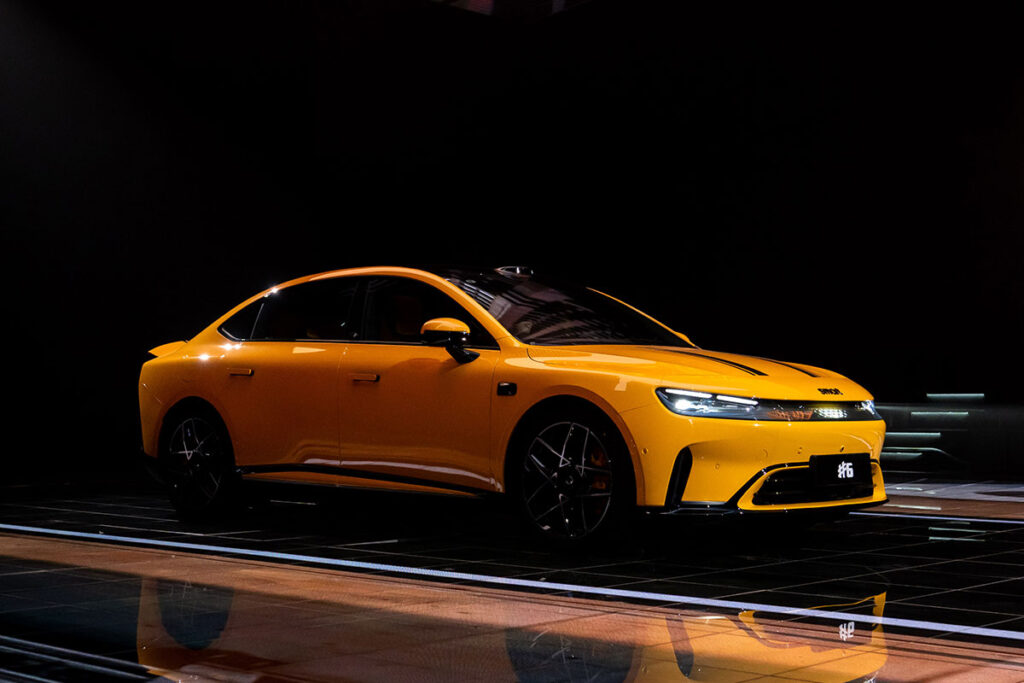
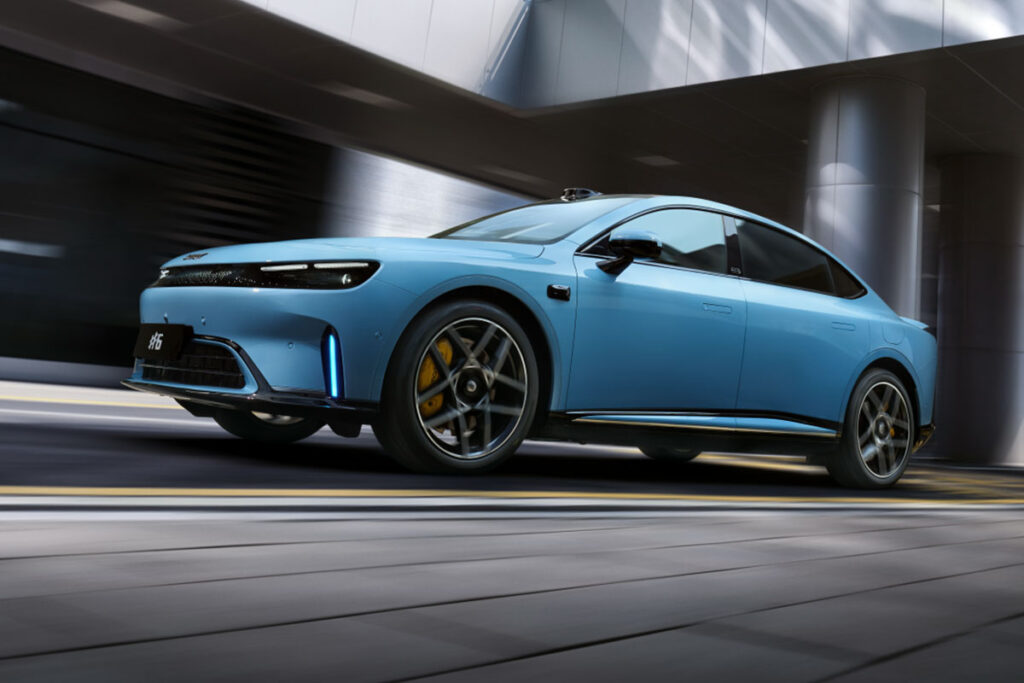
Styled by Mercedes-Benz in Europe, the #6 is the first-ever Smart sedan with ambitions. It pairs executive-level spaciousness with a sleek, aerodynamic silhouette inspired by a shark. Basically, it is both sporty and luxurious.
Under the hood, the Extended Hybrid Drive setup pairs a 1.5-liter turbocharged inline-four rated at 120 kW (160 HP) with a 200 kW (268 HP) electric motor and a 3-speed DHT hybrid transmission, delivering a combined output of 320 kW (429 HP).
The system supports both series and parallel operation automatically, depending on conditions, which explains how the car manages to behave like an EV most of the time while still carrying long-distance capability that full EV drivers sometimes wish they had. It also runs on regular 92 RON fuel and features an EasyFuel capless refueling system, which are both nice touches.
Performance figures suggest Smart is not treating the #6 as just another efficiency experiment. The sedan does 0–100 km/h (0-62 mph) in 6.7 seconds, records an ISO 3888-1 moose-test result of 131 km/h (~81 mph), and stops from 100 km/h (62 mph) in 33.87 meters.
Suspension consists of MacPherson struts up front and a multi-link setup at the rear, supported by adjustable damping shock absorbers. The chassis itself uses a structure made up of 85% high-strength steel and aluminum alloy, including 16% hot-formed steel, alongside what Smart calls a “honeycomb anti-intrusion ring” structural layout.
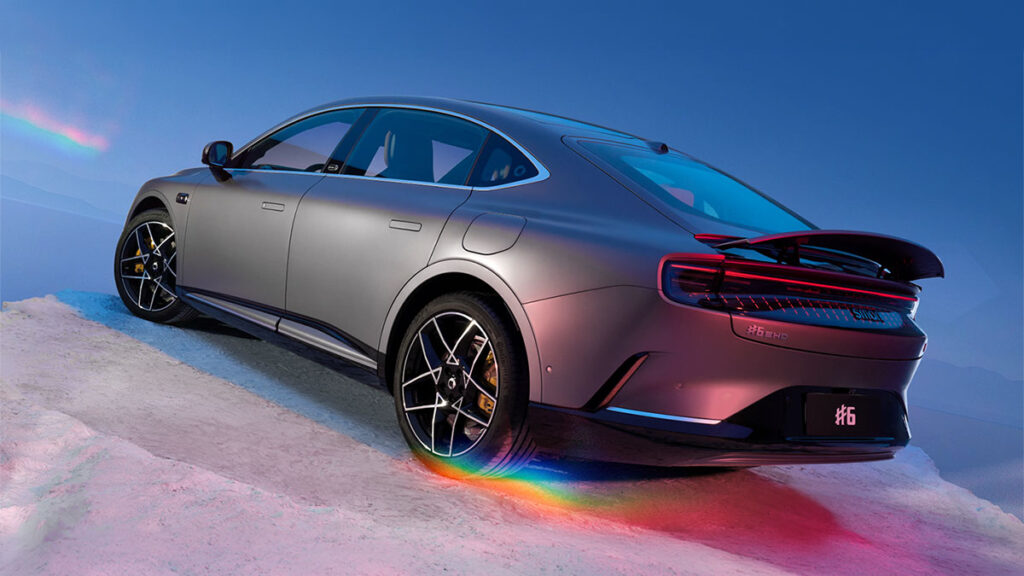
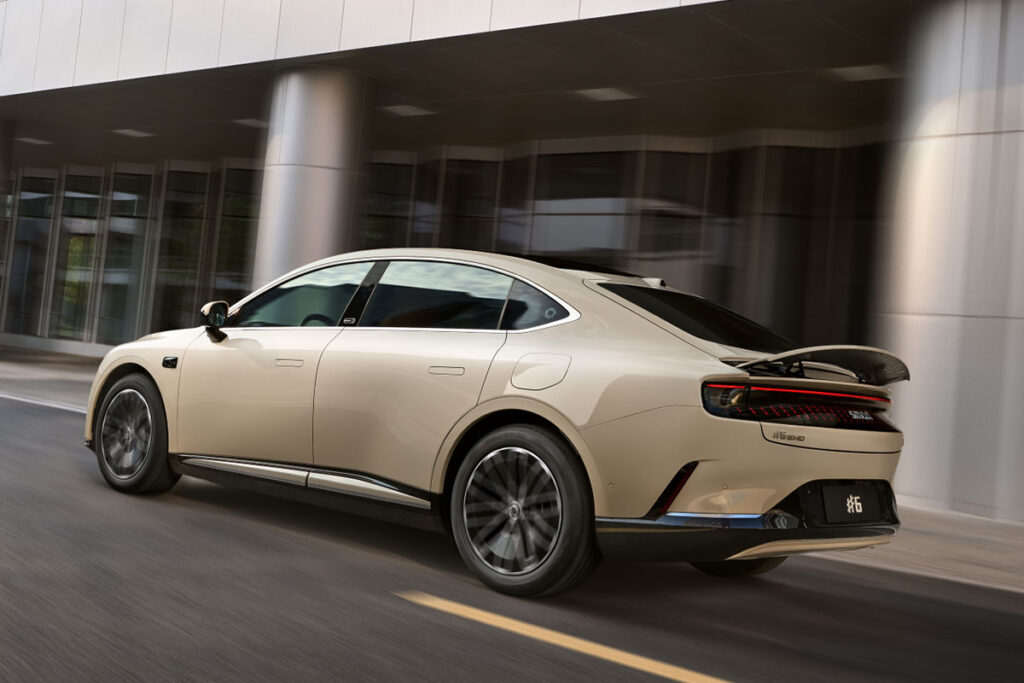
Design plays heavily into the shark inspiration hinted at earlier. Up front sits a biomimetic shark-nose fascia with a through-channel airflow design to reduce drag. Along the side is a fin-style D-pillar window incorporating a hidden triangular logo light, while at the rear, there is what Smart calls a “swimming-shark liftback” tailgate integrated with aerodynamics.
Meanwhile, the active four-stage intelligent rear spoiler adjusts automatically depending on speed—stable at high speed, efficient at medium speed, and, apparently, stylish when parked.
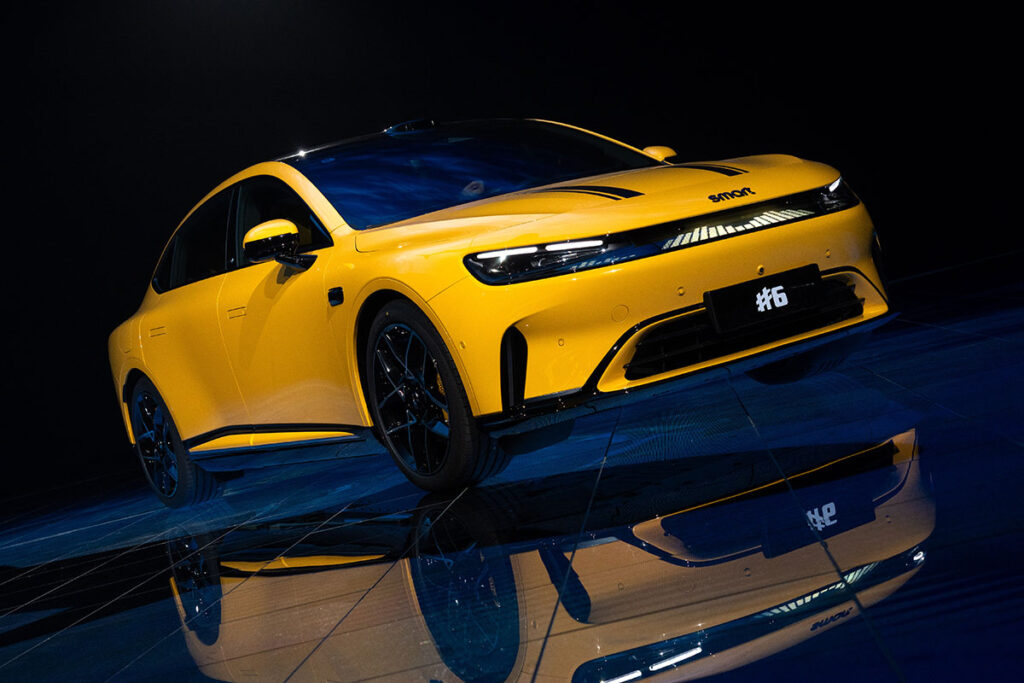
Lighting gets its own moment, too. The PixelTalk interactive front light matrix uses 10,666 millimeter-level micro-LED elements and supports more than 20 preset lighting effects. It is not subtle, but subtle was never really the point here. Though I have to be honest. The exterior feels a little too busy for my liking.
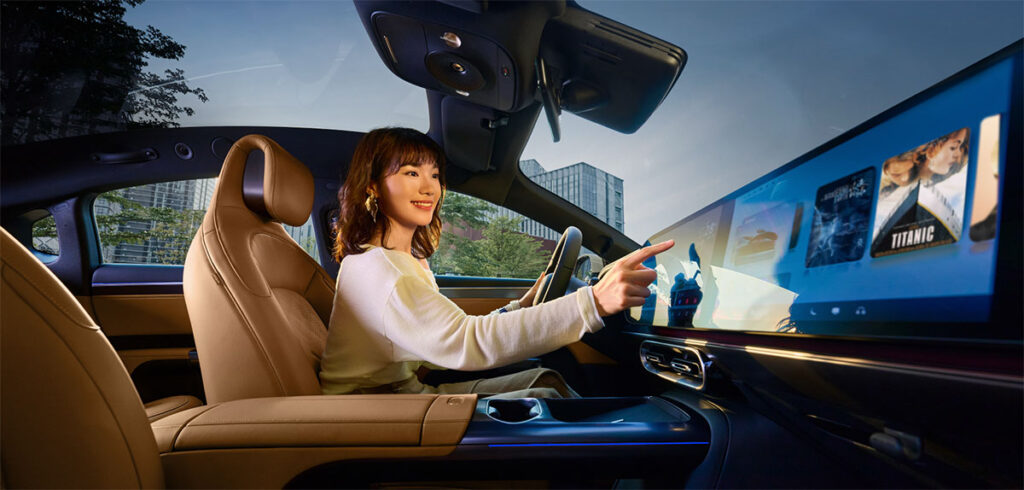
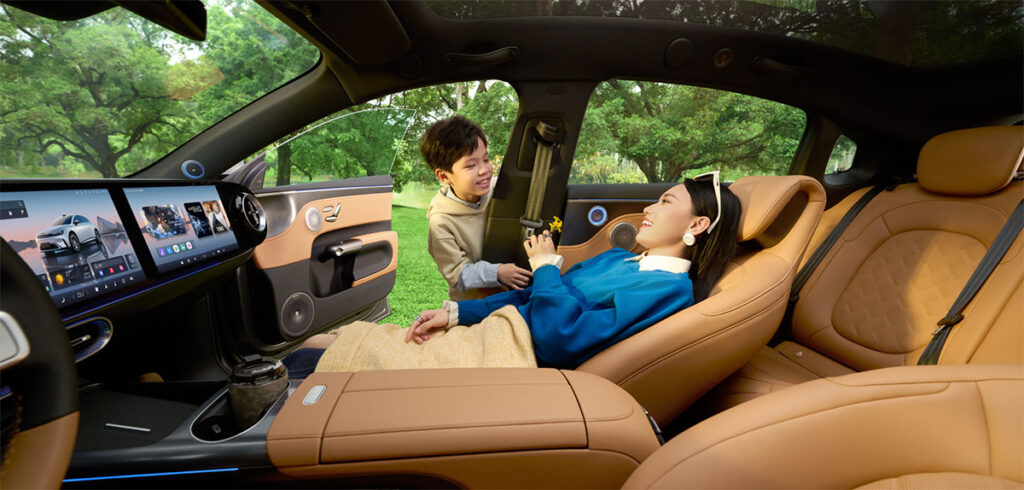
Inside, the Smart #6 goes all in on comfort and spectacle. The cabin features a five-screen intelligent command cockpit that keeps vehicle information within easy sight lines, while a Sennheiser signature audio system in a 7.1.4 configuration—with four-door true three-way speakers and rising “flying-saucer” tweeters—delivers what Smart describes as a mobile Vienna concert-hall experience.
Ambient lighting includes a 256-color star-ring system supported by 192 laser-engraved LED light sources and roughly 800 interior lighting design elements. Turbine-style air vents inspired by GT aircraft engines add another visual layer to the interior theme.
Comfort does not stop there. The seats feature a 12-layer structure with SPA-grade eight-point massage, plus ventilation and heating functions. There is also the “Shark Knows Everything” avatar assistant acting as a conversational in-car companion, along with LiDAR-equipped advanced driver-assistance hardware fitted as standard across the range to improve both driving and parking support.
Reservations are already open in China, starting from 189,900 yuan [CH] (about US$27,832), with first deliveries expected to begin around mid-June 2026. Smart may have started life building some of the smallest city cars on the road, but the #6 makes it clear the brand is now perfectly comfortable swimming in much deeper water—among the big sharks.
Images: Smart.