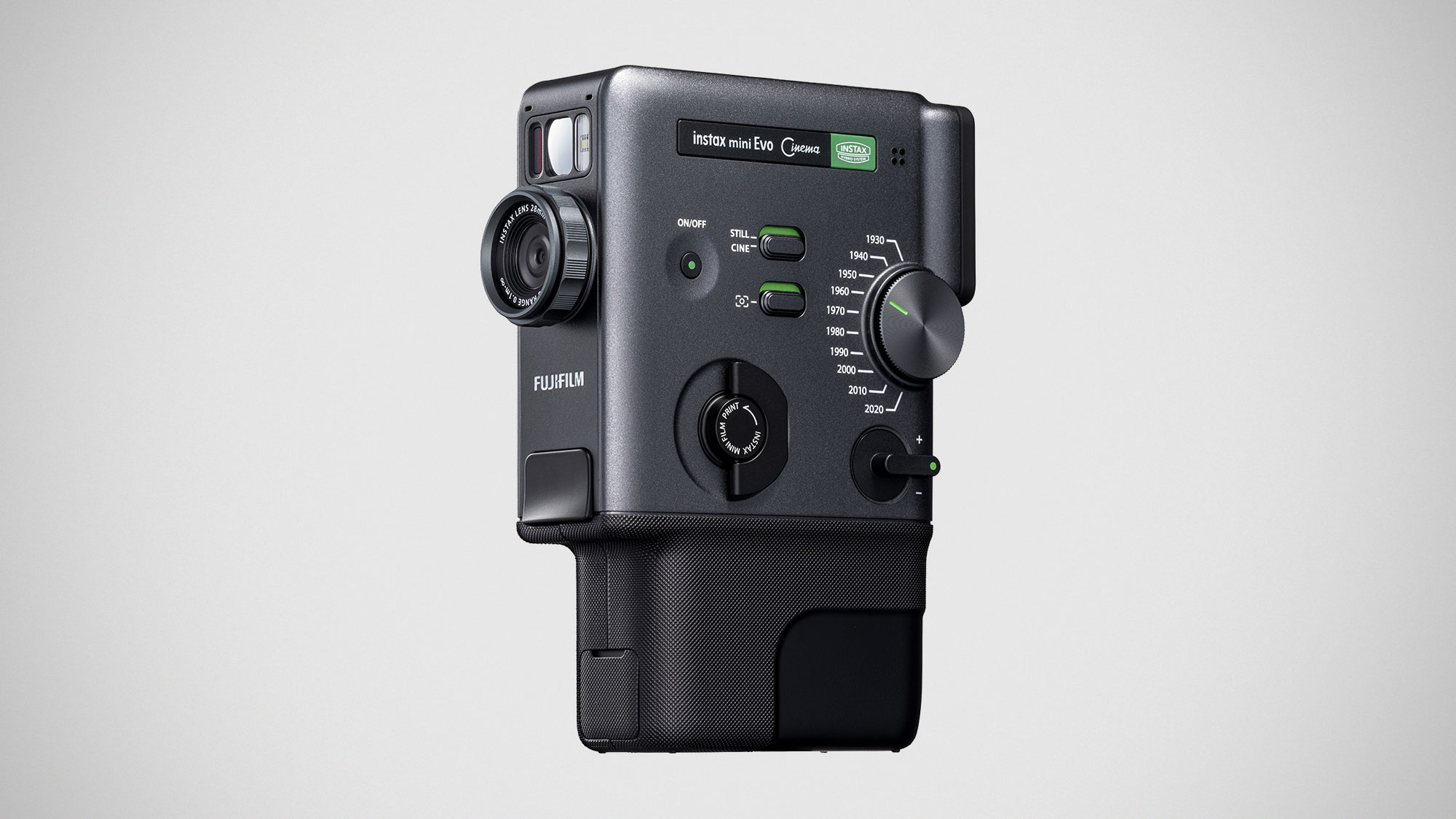
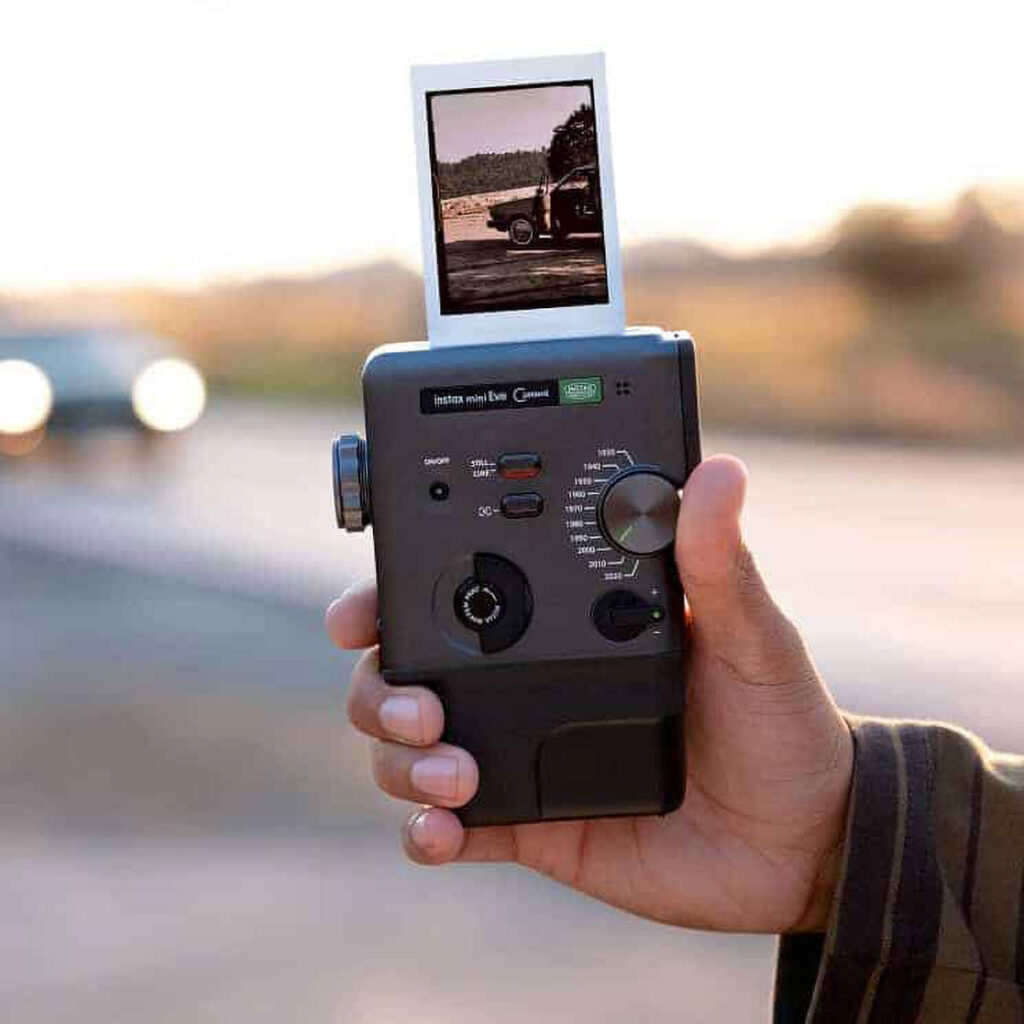
You have heard of instax. It’s Fujifilm’s line of instant cameras and printers. Up to this point, instax means stills, well, that’s until now. Folks, meet the instax mini Evo Cinema, an instax camera that can, wait for it… capture videos and “hand them over” in instax print. Well, it does not do Magical Portraits like the Wizarding World of Harry Potter, if that’s what you are thinking, but it is kinda close.
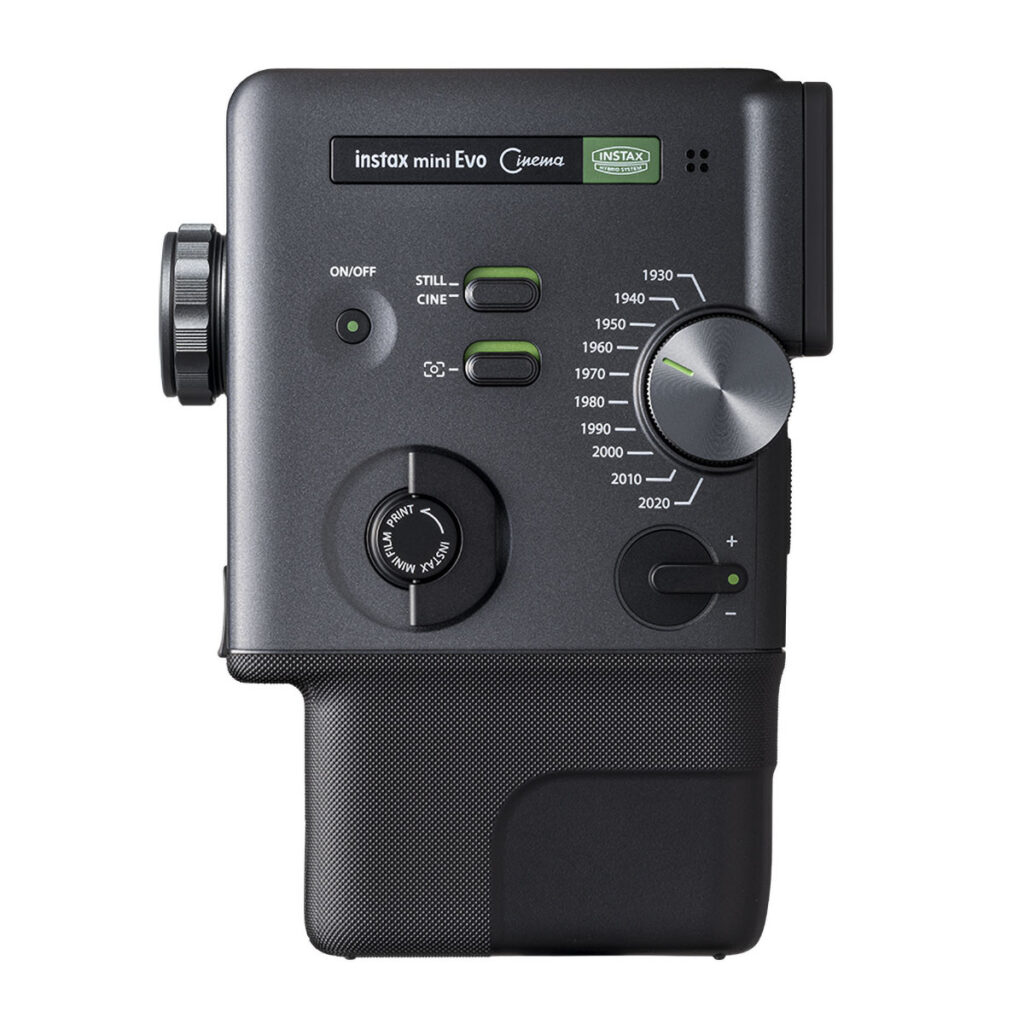
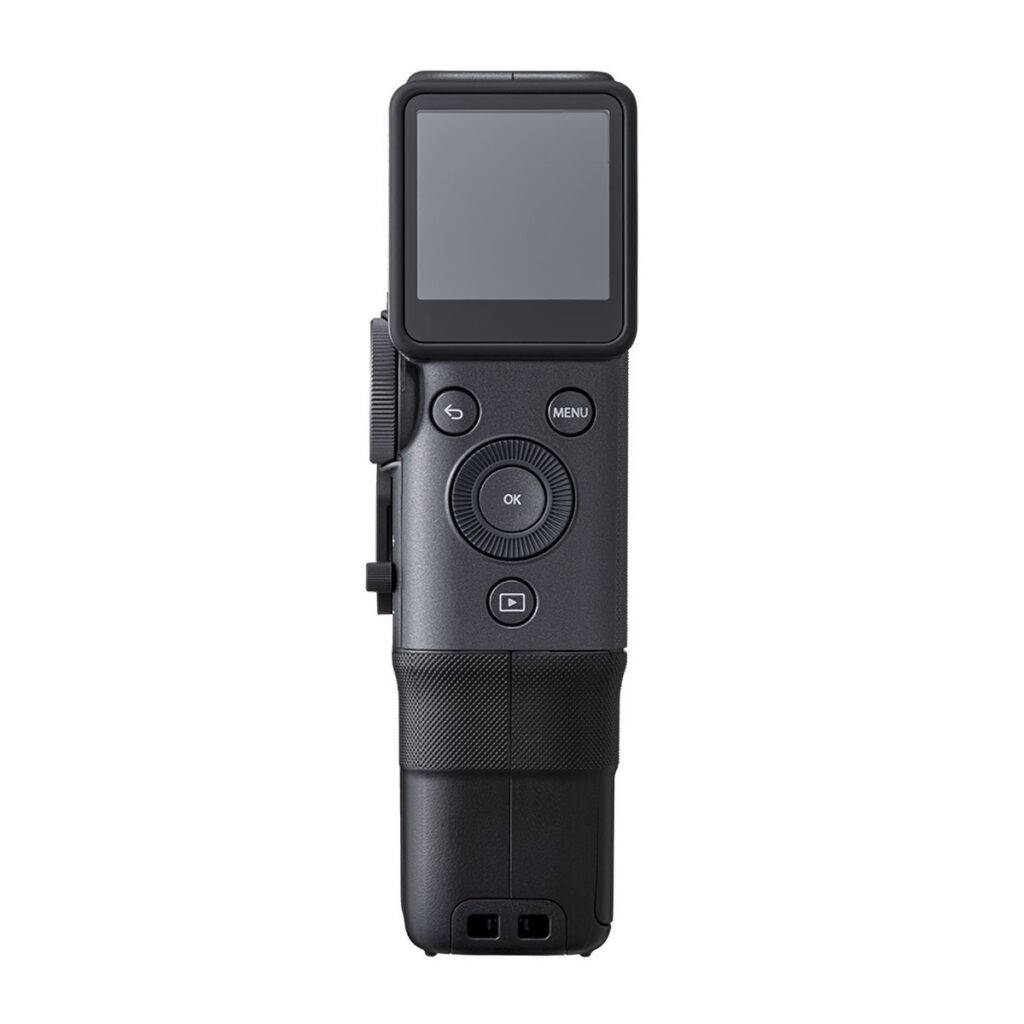
You can review the recorded videos on the built-in LCD and, if so desired, you can select the scenes to print as instax prints. Now, this is where the “magic” begins. The prints will have a QR code, which can be scanned with a smartphone to play the video. So, no Hogwarts magic in the traditional sense, but it is kind of like one for Muggles like us. That is also how the “hand over a video” plays out.
The new Fujifilm instax mini Evo Cinema Camera can record 15 seconds’ worth of short video clips, and as said, the device itself is also a printer, which fulfills the basic requirement of an instant camera. Part of the “Evo Series”, a hybrid instant camera, the mini Evo Cinema Camera does not have a traditional camera setup.
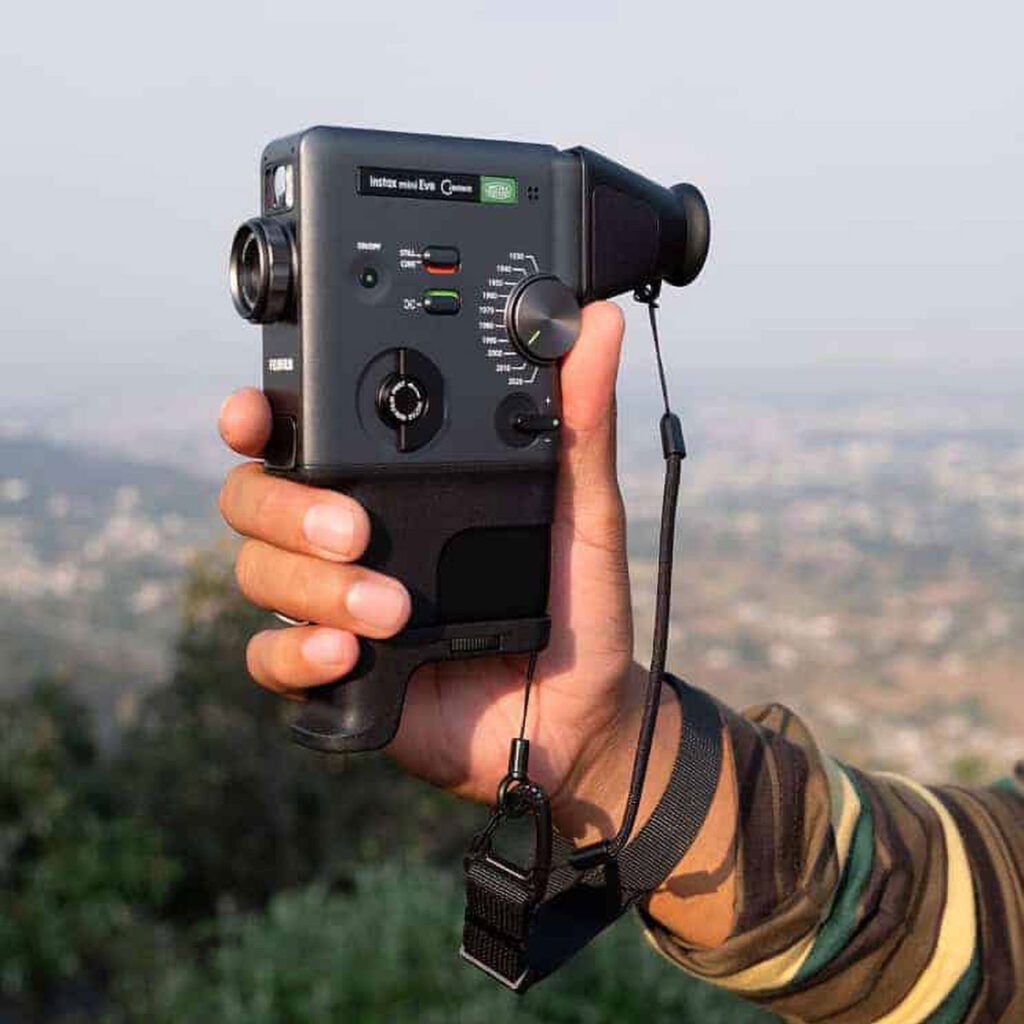
For starters, it does not have a viewfinder—though it does include a viewfinder accessory to recreate the immersive shooting experience. Instead, you frame using the said LCD monitor on the back of the camera and select the photos to print, and enjoy an immersive photography experience with a variety of creative effects.
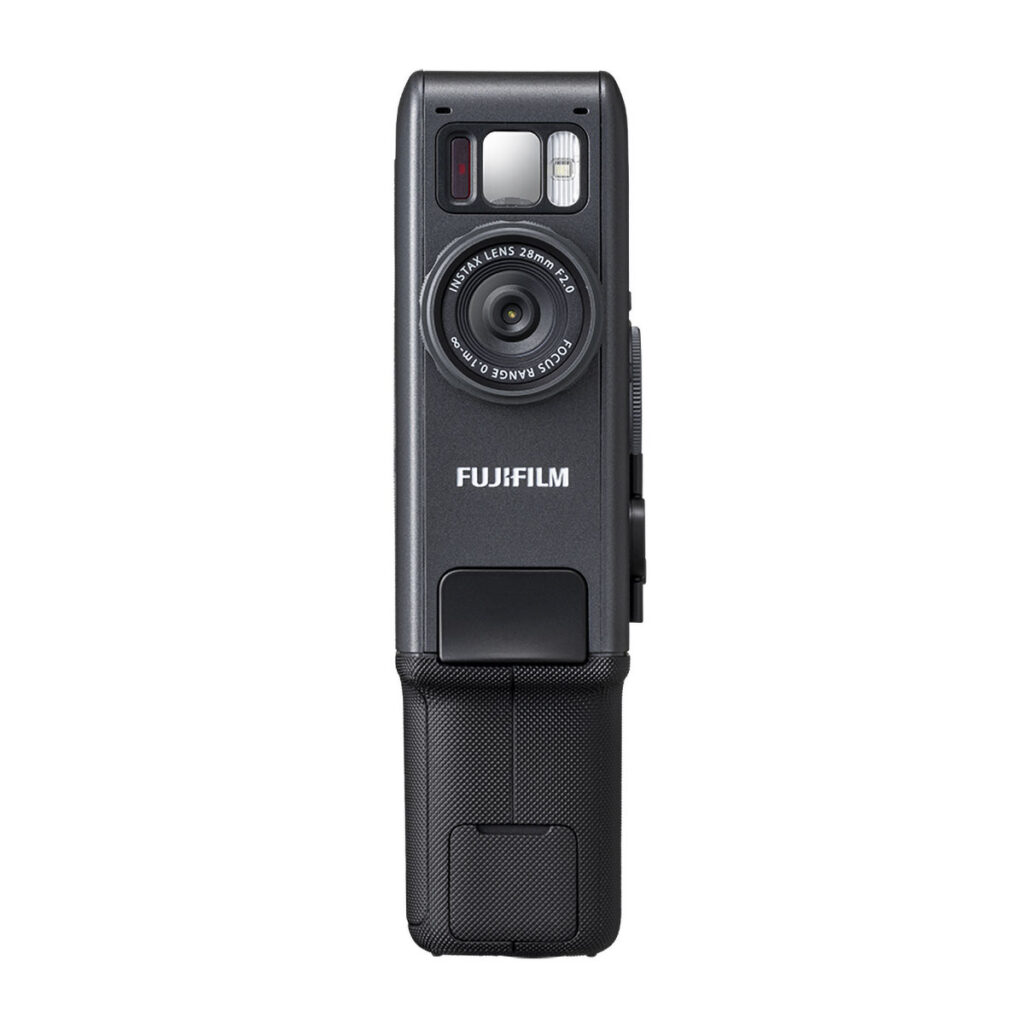
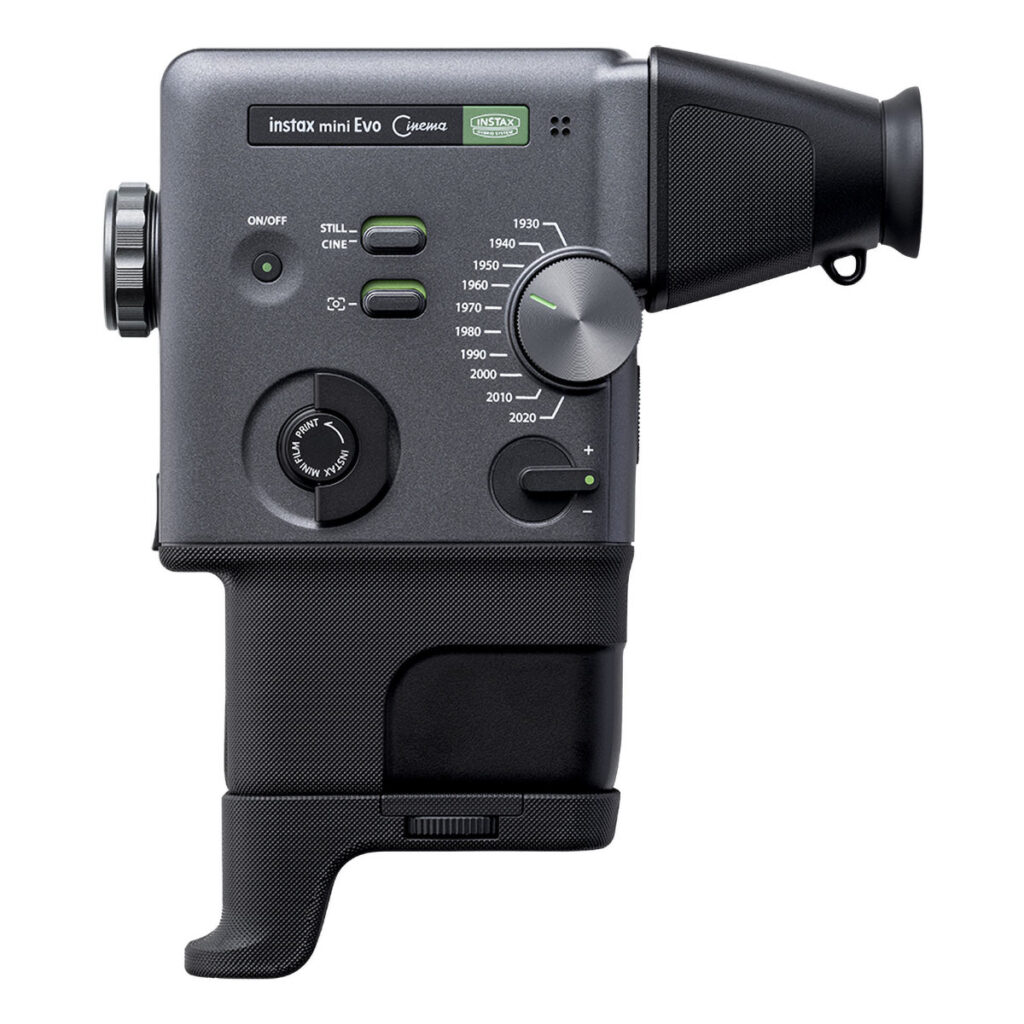
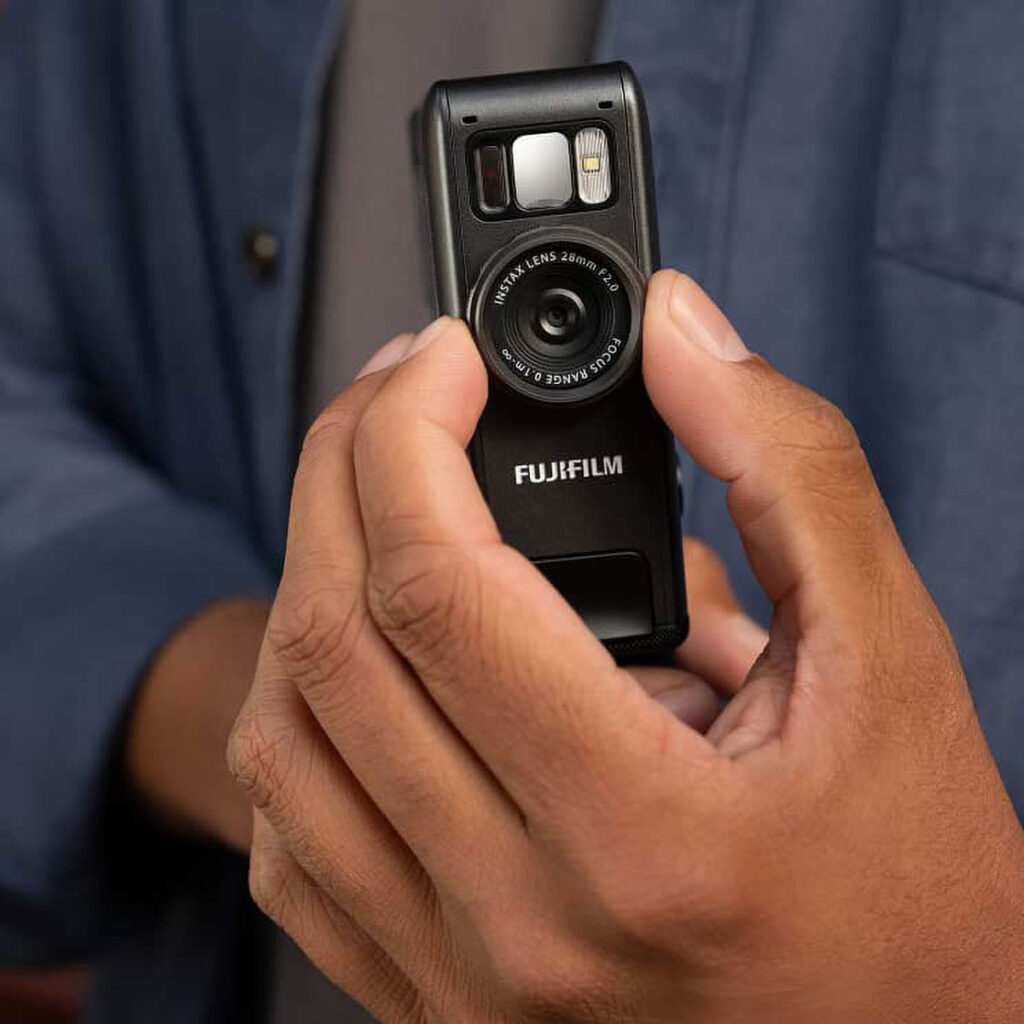
This camera one-ups modern-day digital instant cameras, which are 2-in-1 devices, by being a 3-in-1 device. It has a compact rectangular body with rounded edges, but here’s the thing: the front, i.e., where the lens is, is what you will consider the side of a regular camera. This means it has a vertical grip-style setup, which is a nod to Fujifilm’s FUJICA Single-8, an 8 mm home movie system launched in 1965. Completing the design is a grip attachment that makes handling the otherwise gripless device easier.
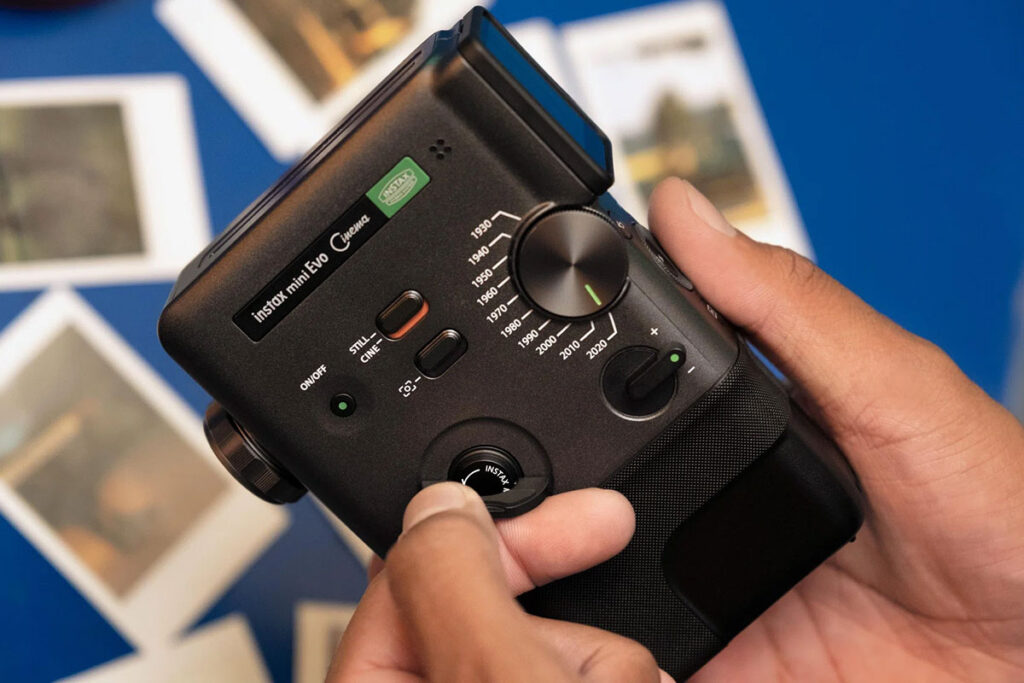
The camera further touts an “Eras Dial”, allowing you to pick from 10 filters, each based on a specific era—hence the name of the dial. The eras start from 1930 to 2020, each featuring visual textures and subtle details such as noise and tape flutter to recreate the feel of the era. In addition, each effect offers 10 adjustable degree levels, resulting in a total of 100 unique expressions.
As far as video goes, audio also gets the Eras Dial effects, which add distinctive sound characteristics, including the whir of film reels during shooting. The Eras Dial has a tactile feel, delivering a satisfying click with every turn, and then there is a Print Lever, which is designed to evoke the feel of winding film by hand, adding to the analog charm of this imaging device.
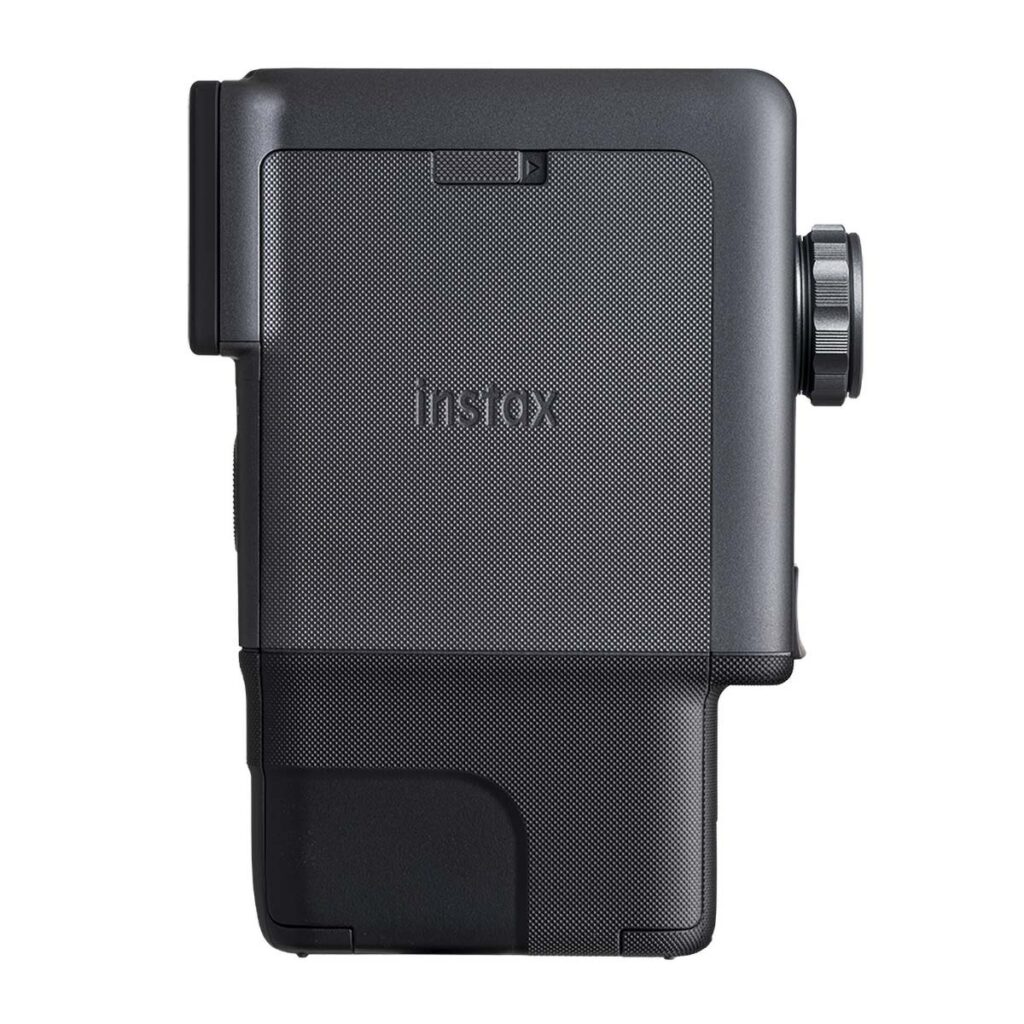
The hardware itself has everything you need to create your next viral short video—and share it—but if you are so inclined to demonstrate your creativity, there’s an app that not only allows you to view captured videos, but also lets you combine multiple clips of up to 30 seconds long, add cinematic opening and ending templates, and even turn your instax prints into a movie-poster look. You can also print photos that are on your smartphone using the mini Evo Cinema.
Finally, there’s, of course, Bluetooth and Wi-Fi connectivity to enable wireless transfers of photos and videos. But there is also USB-C and microSD, both of which can be used to move your stills and videos between devices that support them. The Fujifilm instax mini Evo Cinema Camera is expected to hit the market starting January 30 with a US$409.95 sticker.
Images: Fujifilm.

