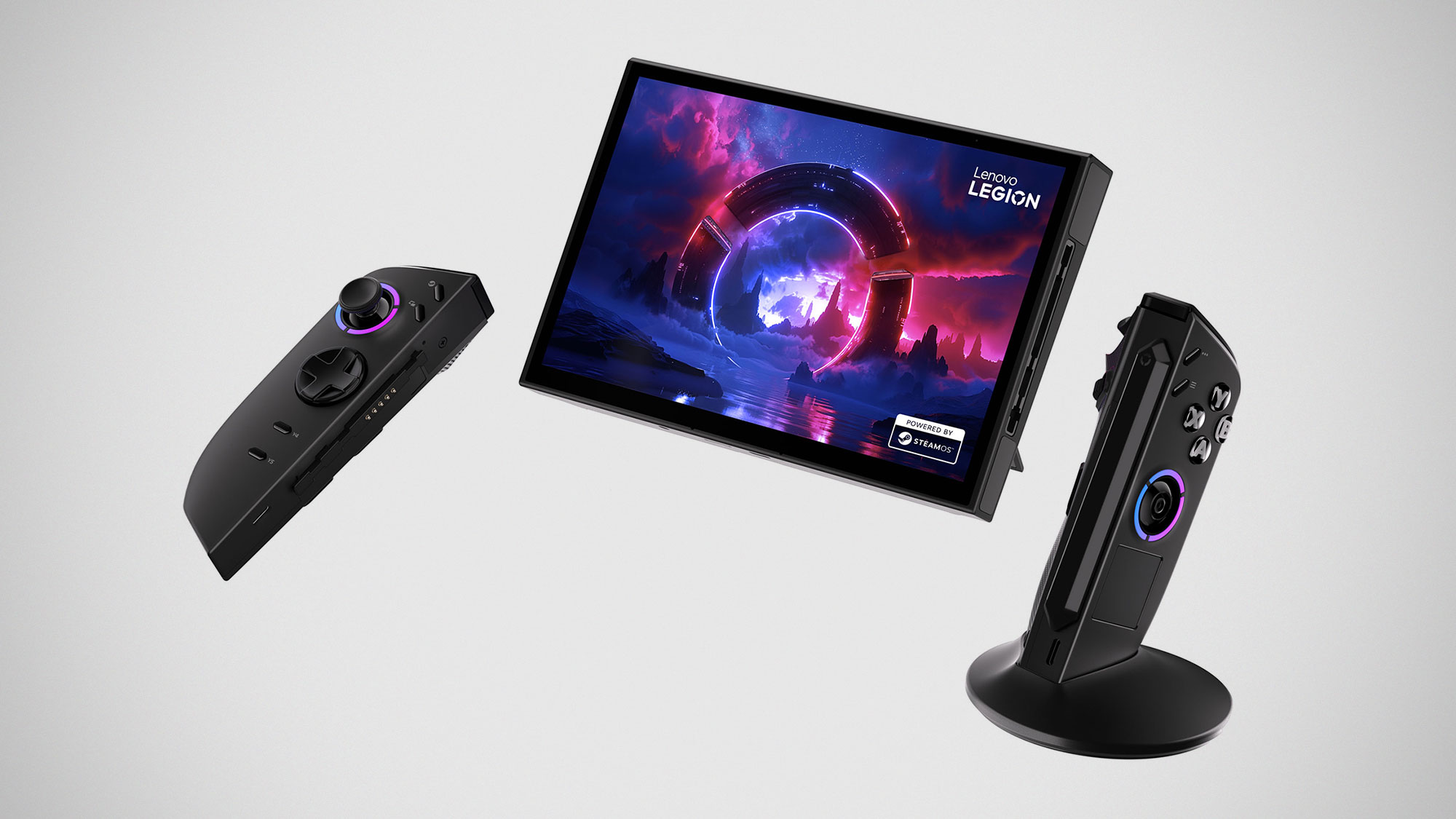
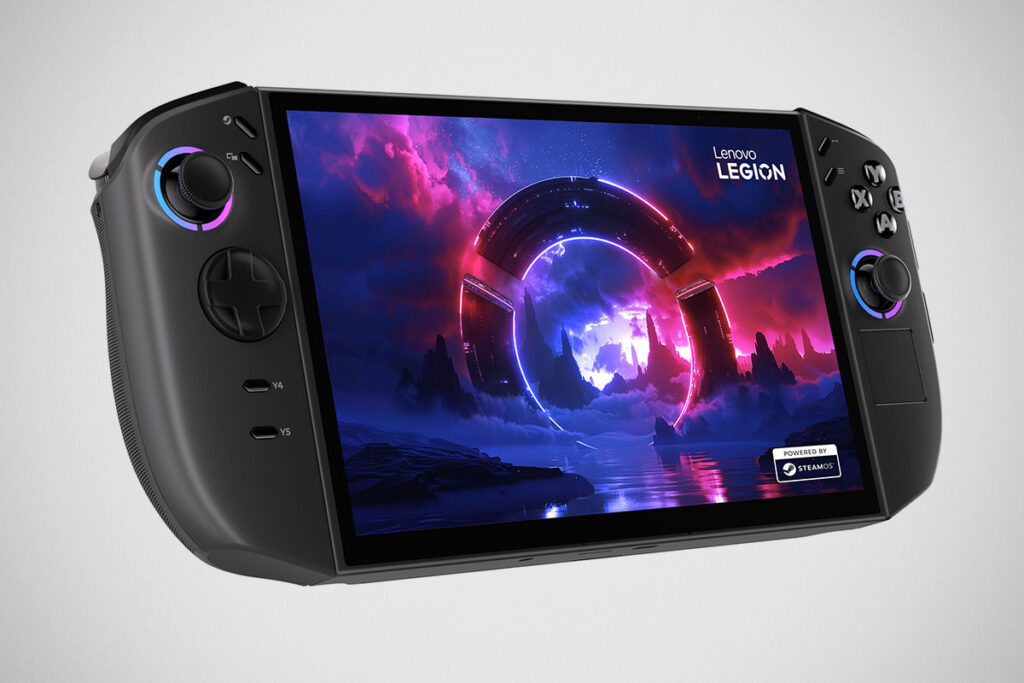
The Lenovo Legion Go (8.8”, 2) that was revealed at CES 2025 is already on the market. And no, we did not tell you that. But we are going to tell you about something even more exciting, well, exciting if you are a Steam platform user, that is. At this CES, Lenovo has already revealed the Legion Go, Powered by SteamOS (8.8”, 2). That’s right. The Legion Go is welcoming the SteamOS, blending desktop-class performance with console-like ease offered by SteamOS.
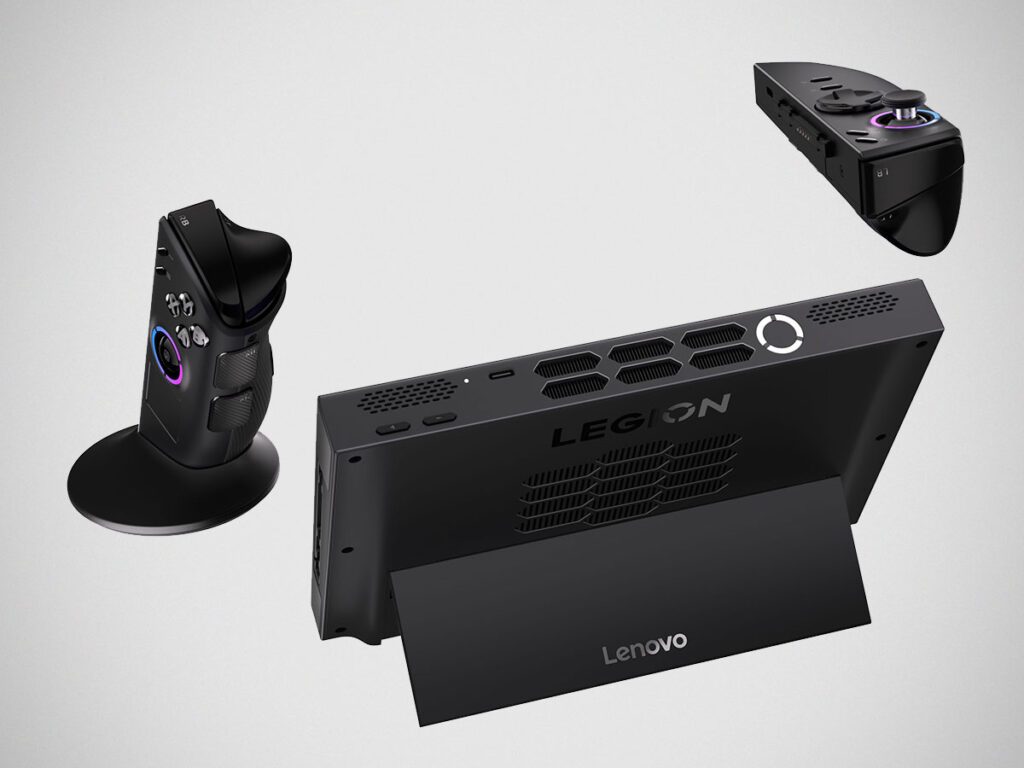
And that detail matters more than it sounds. Up until now, most Windows-based handhelds have felt like tiny PCs pretending to be consoles. Powerful, yes, but also fiddly. Boot sequences, background updates, random pop-ups, and the constant reminder that you are basically gaming on a laptop that happens to have thumbsticks. By natively running SteamOS, Lenovo is clearly aiming at people who want to press a button, land in their library, and get straight into a game without negotiating with an operating system first.
Hardware-wise, this is still very much the Legion Go you already know. It is powered by up to an AMD Ryzen Z2 Extreme processor, paired with up to 32 GB of LPDDR5X memory running at 8000 MHz. Storage goes all the way up to 2 TB via PCIe SSD, which can be expanded to an additional 2 TB through the microSD card slot if the situation calls for it.
The display remains one of the standout features. You get an 8.8-inch PureSight OLED panel with a WUXGA resolution of 1920 by 1200 pixels in a 16:10 aspect ratio. Refresh rate hits 144 Hz, brightness goes up to 500 nits, and color coverage reaches DCI-P3. It is a screen that makes desktop games feel surprisingly comfortable on a handheld, whether you are playing indie titles or something that really should not be running on a device this size.
SteamOS does the rest of the heavy lifting. The interface is built for controller-first navigation, with quick suspend and resume, seamless cloud saves, centralized notifications, Steam Chat, and built-in game recording. Your full Steam library is available out of the box, along with access to the Steam Store, without needing workarounds or third-party layers. This is plug-and-play gaming applied to proper handheld hardware, not an afterthought.
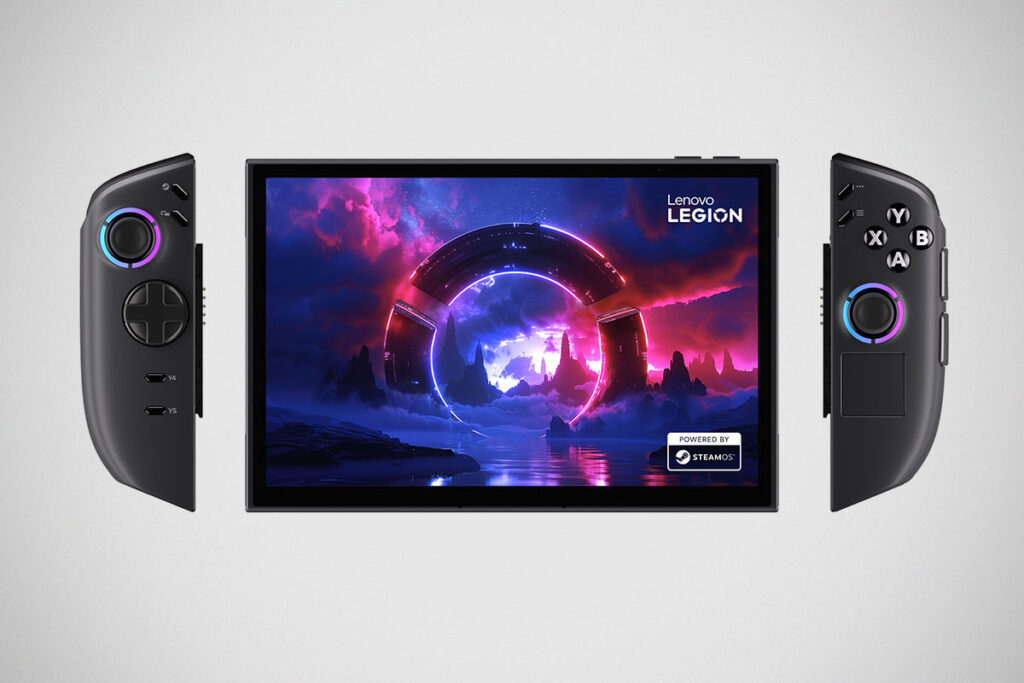
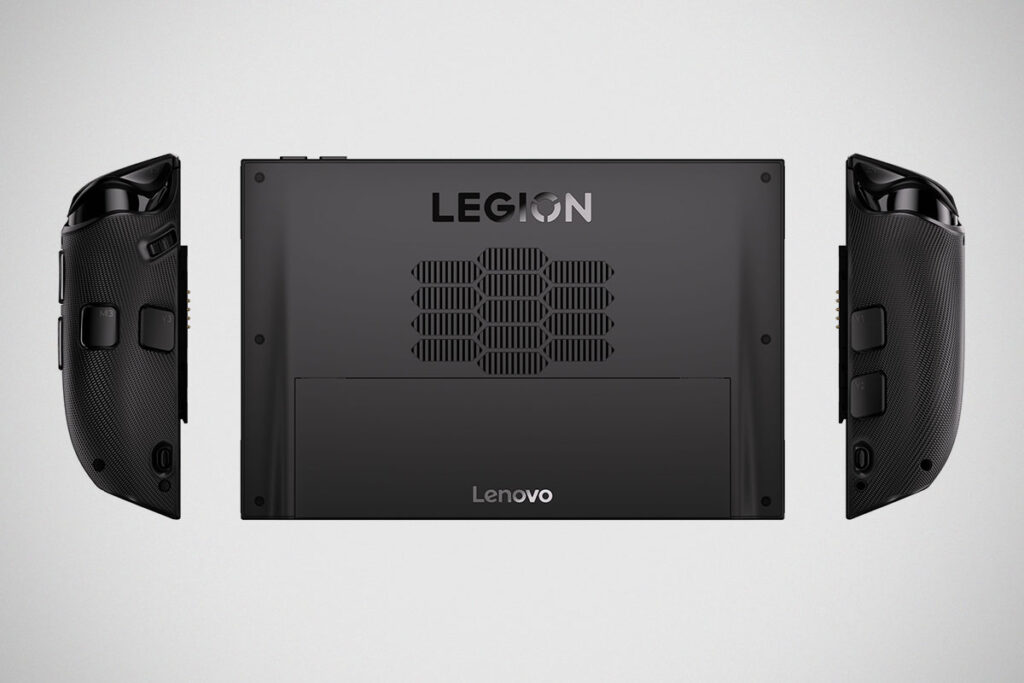
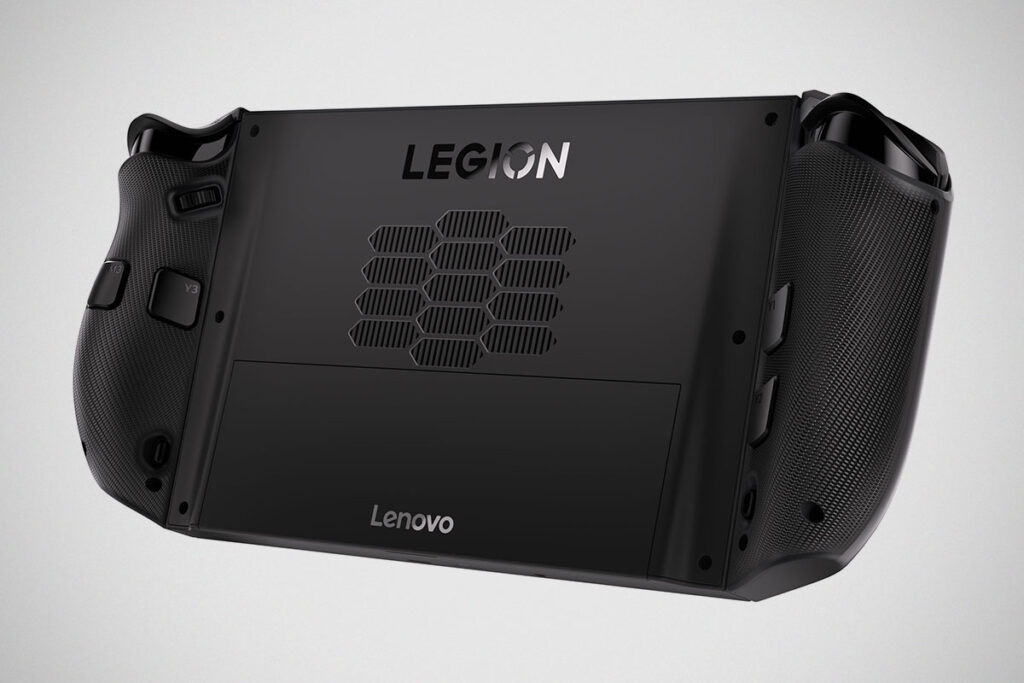
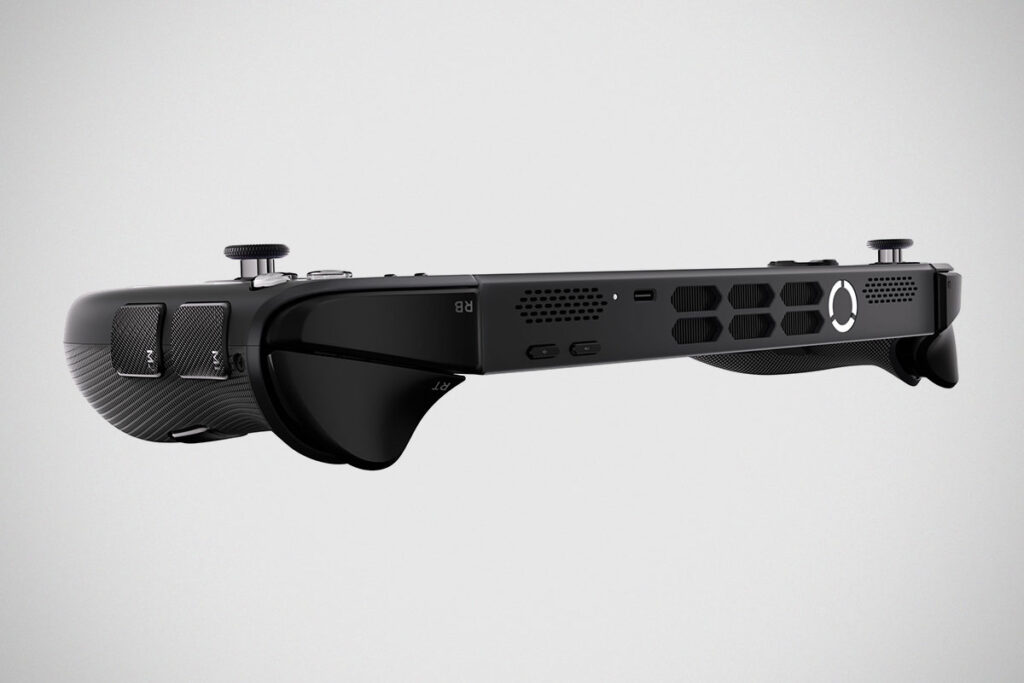
Physically, the Legion Go remains unapologetically substantial. The tablet alone measures 206 mm long, 136.7 mm wide, and 22.95 mm thick. With the controllers attached, it stretches to 295.6 mm wide and 42.25 mm thick. Weight comes in at about 920 g for the full setup, with the detachable controllers weighing around 210 g on their own. It is not pocket-friendly, but it was never meant to be. This is closer to a portable console than a mobile gadget.
Battery capacity sits at 74 Wh, charged through a 65 W USB-C adapter. Connectivity includes Wi-Fi 6E with 2×2 MIMO, Bluetooth 5.3, dual USB-C ports supporting USB4 and DisplayPort, a 3.5 mm audio jack, and a microSD card reader. Audio is handled by dual speakers paired with near-field microphones, which should be more than adequate for handheld play and voice chat.
Lenovo is positioning this as its most powerful handheld to ship with SteamOS out of the box, and that positioning actually makes sense. This feels like Lenovo leaning into what handheld gaming PCs should have been from the start. Less desktop friction, more console flow, and hardware that does not feel compromised just to tick spec-sheet boxes.
For Steam users who have been curious about handheld PCs but never fully comfortable with Windows on a small screen, this version of the Legion Go might finally be the one that clicks.
Pricing and availability sit at the end, where they belong. The Legion Go, Powered by SteamOS (8.8”, 2) is estimated to start at US$1,199, with availability expected from June 2026.
If handheld consoles aren’t your cuppa, and you prefer the traditional on-the-go game, i.e., gaming laptops, Legion has a couple of new portable rigs too.
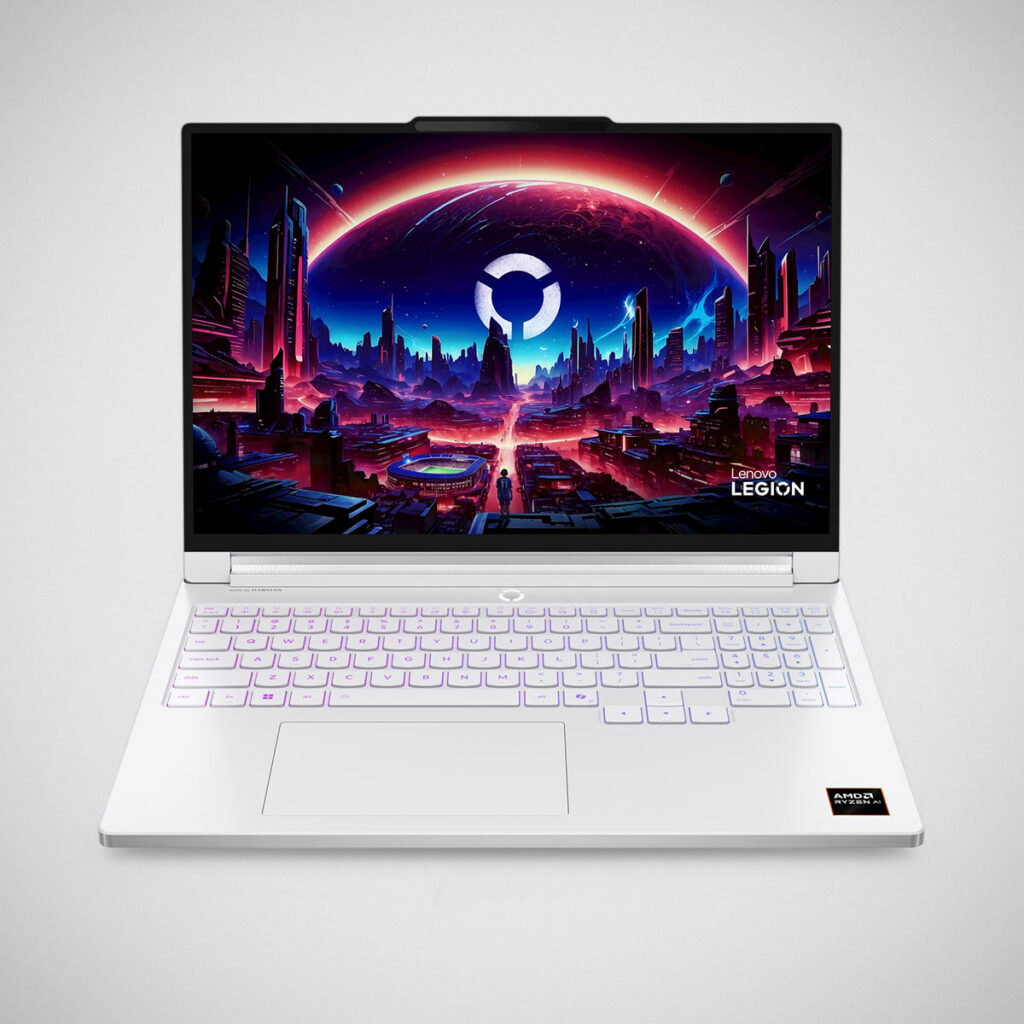
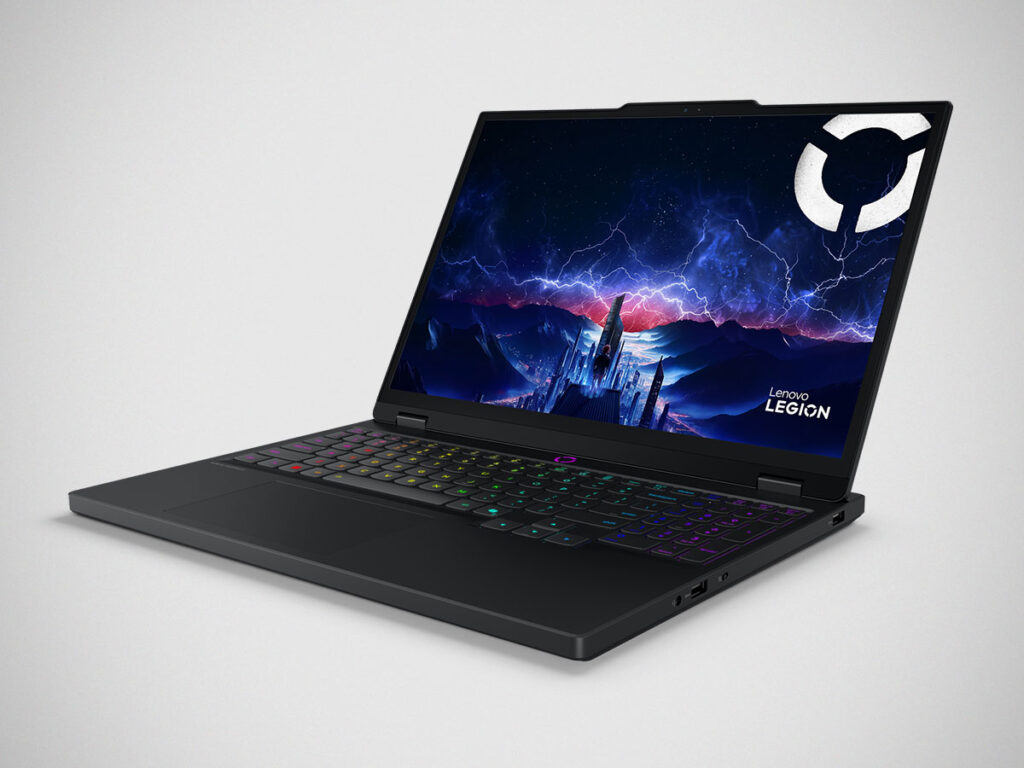

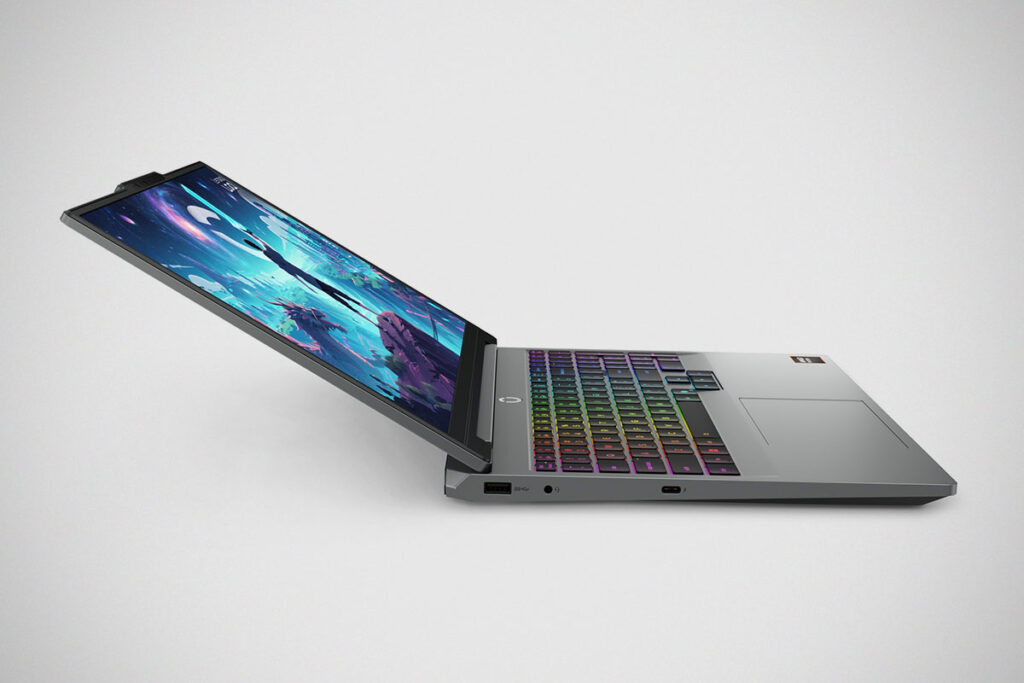
The Legion 7a (16”, 11) sits at the top of the non-rollable pile. It is a thinner, lighter performance laptop aimed at people who bounce between gaming, streaming, and heavy workloads. It runs on AMD’s new Ryzen AI 400 Series processors paired with NVIDIA GeForce RTX 50-series Laptop GPUs, with Lenovo’s AI Engine+ constantly juggling power, thermals, and performance in the background. In short, it is built for people who game hard but also pretend they bought it for work.
Below that, the Legion 5i (15”, 11) and Legion 5a (15”, 11) cover the mainstream sweet spot. These are the do-it-all Legion laptops that handle AAA games, creative work, and everyday tasks without drama. The Legion 5i goes the Intel route, while the Legion 5a offers AMD options, including newer Ryzen AI chips. Both get RTX 50-series graphics, OLED display options, and Legion’s Coldfront cooling, making them solid all-rounders rather than flashy headline grabbers.
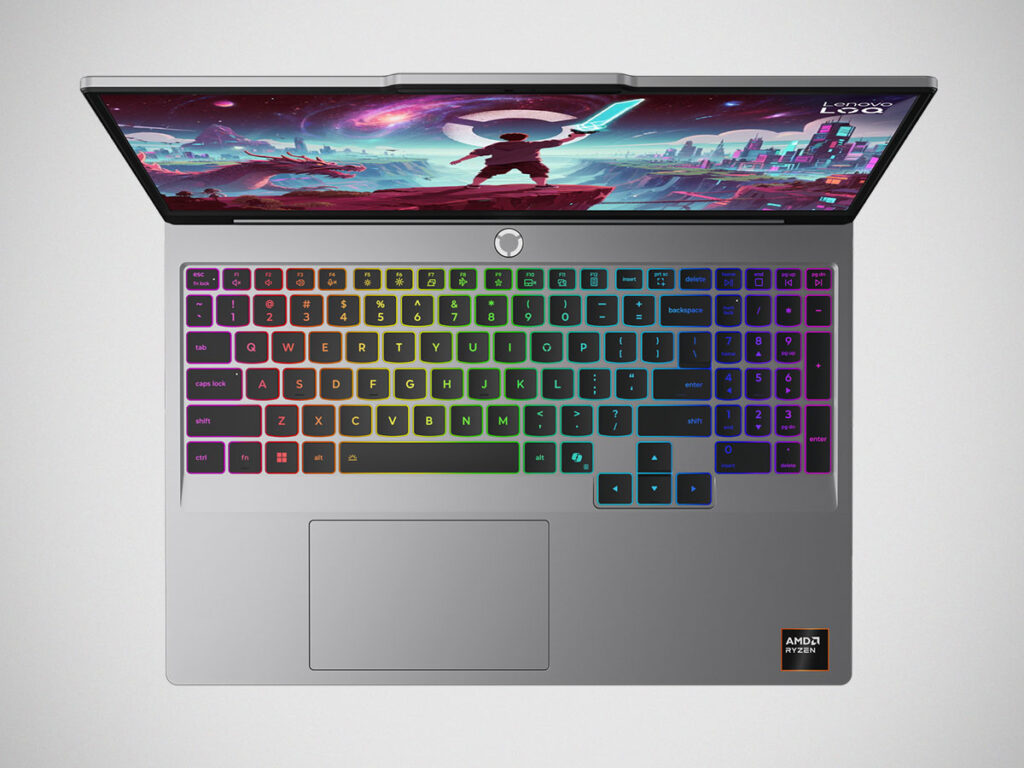
Then there is the Lenovo LOQ 15AHP11 and Lenovo LOQ 15IPH11, which target gamers and students who want dedicated graphics without stepping fully into premium territory. These models combine AMD or Intel processors with RTX 50-series Laptop GPUs and a more restrained design, focusing on value, reliability, and enough power to handle both coursework and late-night gaming sessions.
They may not roll, slide, or detach, but they do exactly what gaming laptops are supposed to do for old-school gamers who need to game elsewhere outside of their homes.
Images: Lenovo.
