I came across a comment by author Joanna Maciejewska: “I want AI to do my laundry and dishes so that I can do art and writing, not for AI to do my art and writing so that I can do my laundry and dishes.” Well, guess what, Joanna? LG heard ya. And it actually tried to make that happen. Well, almost.
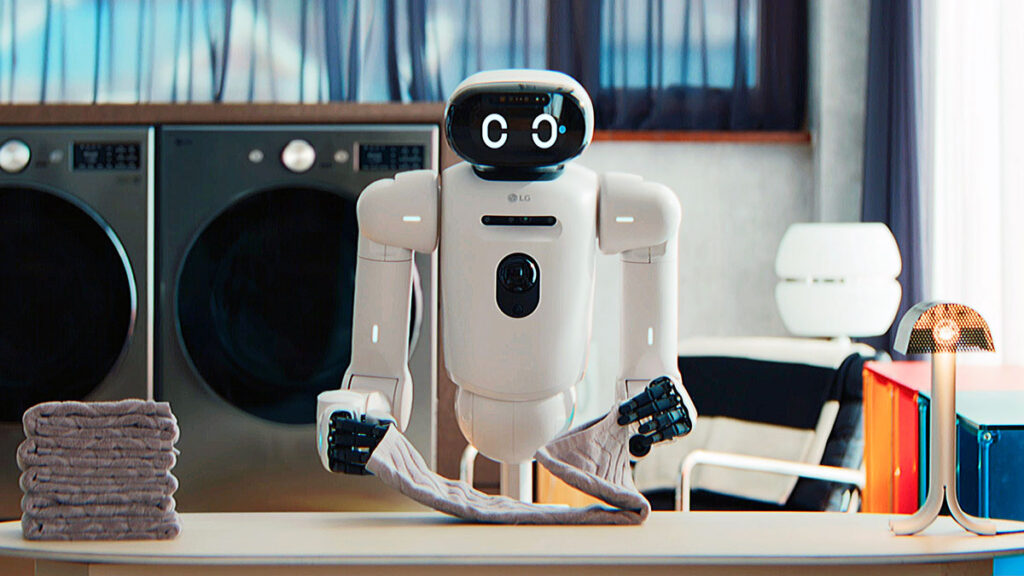
Everyone, meet the LG CLOiD Home Robot, LG’s vision of a “Zero Labor Home,” so people like Maciejewska, I, and more can be more productive. The definition of “Zero Labor Home” is simple: humans live, while machines handle the background work. Don’t expect an EngineAI-like robot butler that does everything another human would have to do, though. The AI-powered home robot leverages Physical AI to manage the time-consuming tasks of daily housework, allowing intelligent machines to handle everyday chores through robotics and connected home integration. It’s kind of like machines using machines, if you get what I mean.
LG CLOiD uses AI and vision-based technology to perform household tasks, including cooking and laundry, connecting seamlessly with LG’s ThinQ ecosystem to realize an automated home life. Debuted publicly for the first time at CES 2026, LG’s home robot demonstrates how it integrates into daily life, working in real home-style environments. In one scenario, the robot took milk from a refrigerator, placed a croissant into an oven, and started breakfast. In another, it handled laundry by starting a wash cycle, moving clothes after drying, then folding and stacking them.
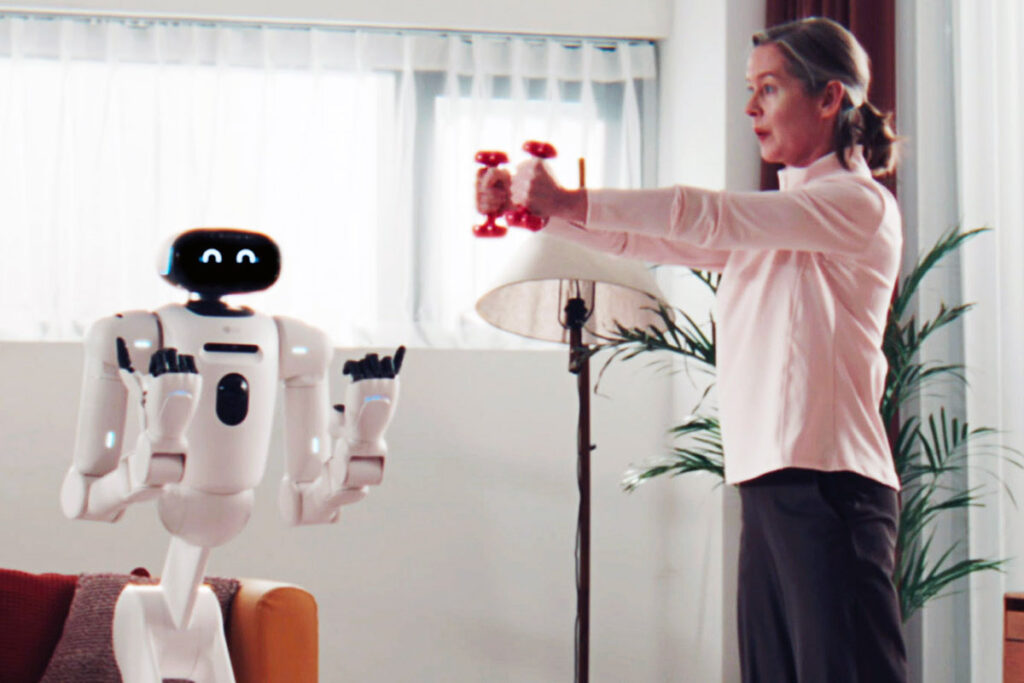
The idea is not random automation. CLOiD is designed to learn daily routines and lifestyle patterns, then act on them. When people leave home, it can trigger cleaning, laundry, or appliance tasks automatically.
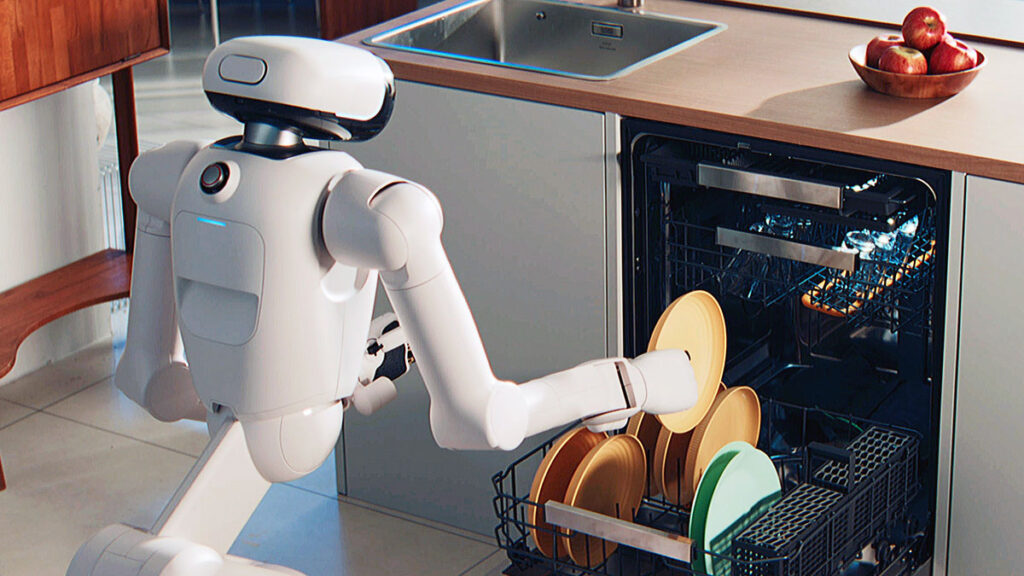
LG CLOiD has a humanoid upper body mounted on a wheeled base. It has a head unit that acts as a mobile AI hub, a torso that can tilt to adjust height, a pair of articulated arms—each with hands with five independently actuated fingers—and a wheeled base for movement. So yeah, no EngineAI-like bot as said, but if it works, well, what do we care, right?
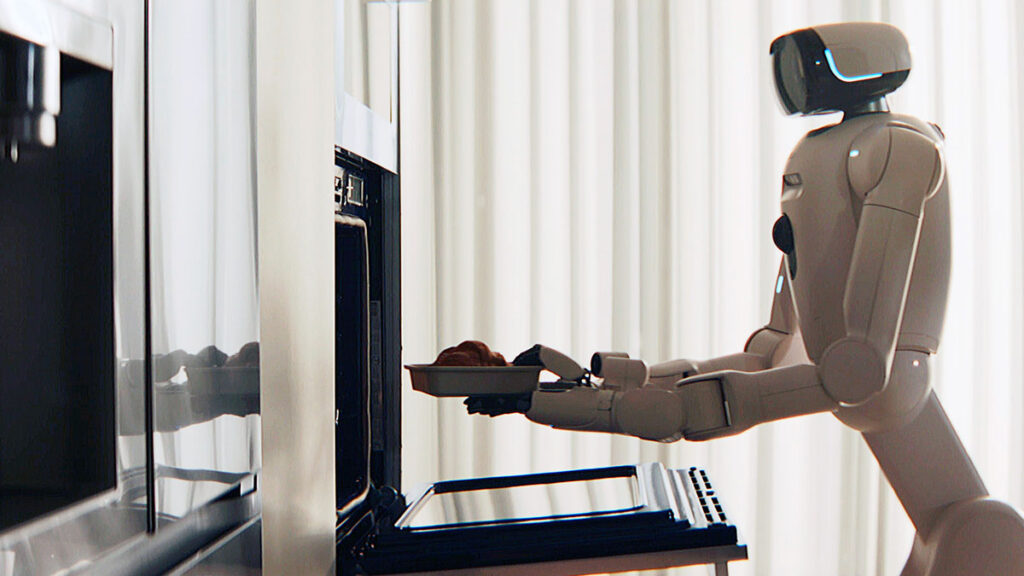
The torso can change its height so it can pick up objects from knee level and above. Each arm has seven degrees of freedom, similar to a human arm. The shoulder, elbow, and wrist allow forward, backward, rotational, and side movement. Each hand has five independently actuated fingers for fine handling of objects like cups, food, clothes, and appliance controls.
The wheeled base uses autonomous navigation technology developed from LG’s robot vacuum systems and its earlier AI Home Hub projects. LG chose wheels instead of legs for stability, safety, and cost control. The low center of gravity reduces tipping risk if children or pets bump into it.
CLOiD’s head is not just for the sake of fulfilling a sci-fi look. It functions as a mobile AI control center, packing a main chipset that runs the system, along with cameras and sensors for vision, a display, a speaker, and voice-based generative AI. The robot communicates using speech and screen-based “facial expressions.” It studies living spaces, recognizes objects and appliances, and learns daily habits. Over time, it uses those patterns to decide what to do and when to do it.
At the core of CLOiD is LG’s Physical AI system. It is built from two key models: Vision Language Model (VLM) and Vision Language Action (VLA). The former turns images and video into structured language understanding and the latter converts visual and spoken input into physical actions. These systems were trained on tens of thousands of hours of household task data. That training allows CLOiD to recognize appliances, understand user intent, and perform actions like opening doors, picking up items, or moving objects between rooms.
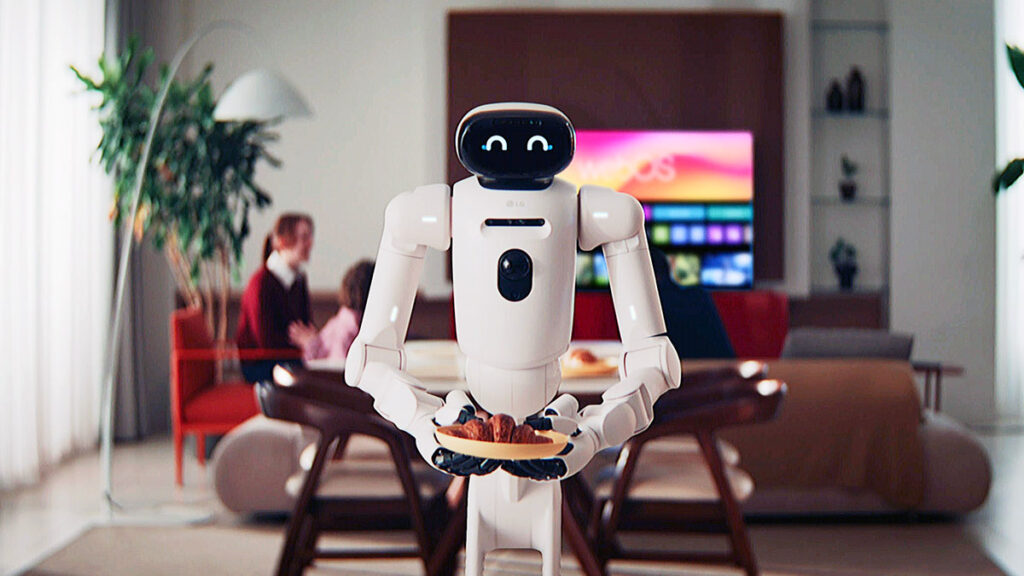
So, no. This is not just voice-command-only automation. This is real-life Sonny, minus the lower limbs and the ability to jump down several stories, who sees, interprets, and reacts.
The real “power” of CLOiD becomes more apparent when it connects to LG’s ThinQ ecosystem and the ThinQ ON hub. Through ThinQ, it empowers the LG home robot to control LG appliances, coordinate multiple devices, automate routines across rooms, and adjust actions based on user habits. In other words, CLOiD is your live-in butler, the manager of your home.
Debuting the bot, LG also showcased LG Actuator AXIUM, the muscles behind the robot. It is pretty much a robot joint that packs a motor, a drive for signal control, and a reducer to manage torque and speed. AXIUM is lightweight and compact, highly efficient, high torque, and modular, allowing it to fit different robot designs. So, yeah, it is not just for CLOiD.
That said, this is just the beginning. LG plans to build more home robots to handle daily chores, in addition to appliance robots like robot vacuums and robotized appliances like refrigerators that open automatically when someone approaches. The long-term goal is an AI home where machines handle routine labor, leaving people more time for work, rest, and life.
LG has not announced pricing for the LG CLOiD Home Robot. Availability details have also not been confirmed. At this point, it feels more like a bold concept, but we have no doubt it will become a reality. The question is: when?
Images: LG.