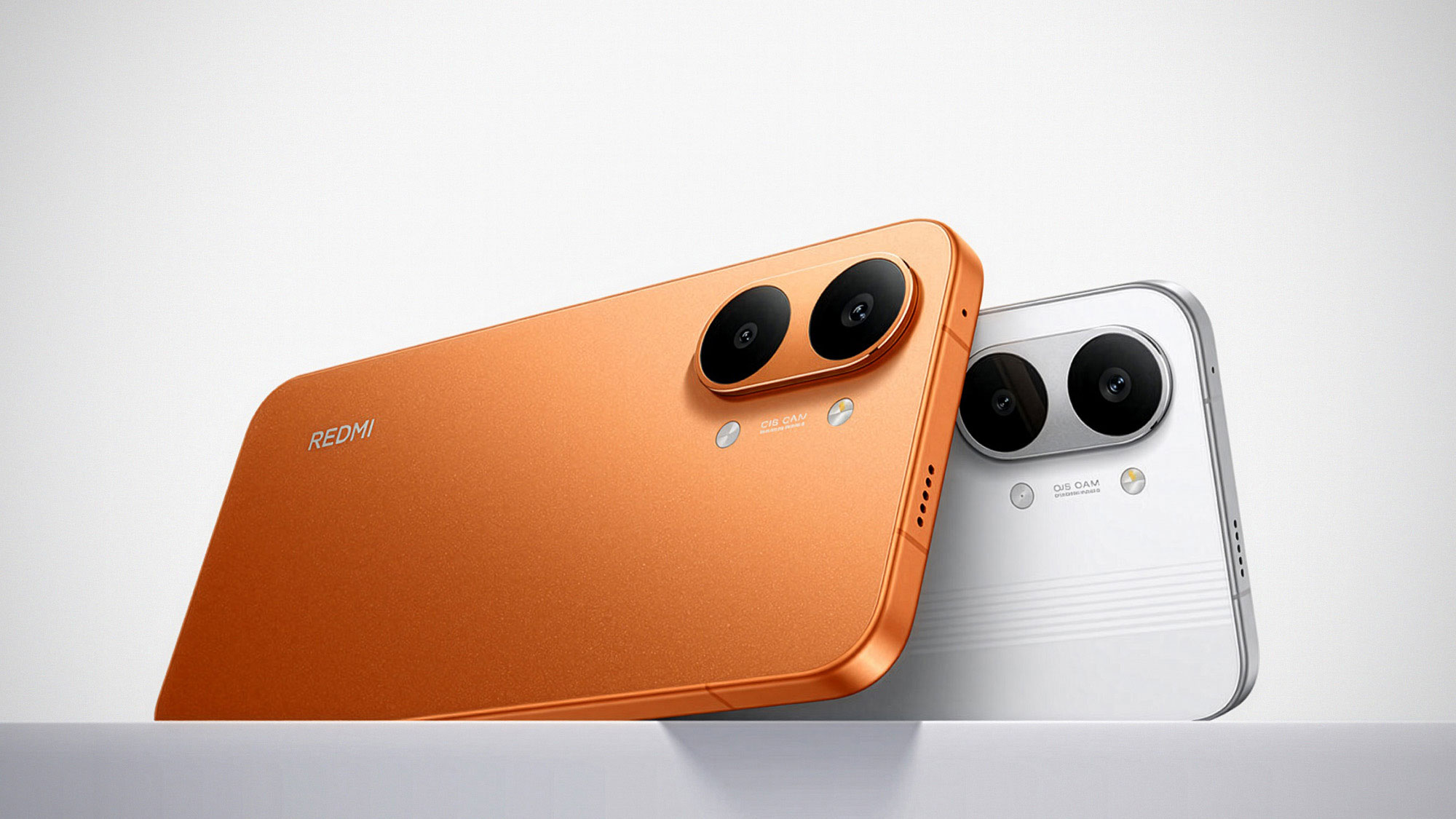
One of Redmi’s most successful models, the Redmi Turbo, has welcomed the latest generation: the Redmi Turbo 5. The new Turbo model also adds a brand-new “Max” model to the lineup. It looks like the “Max” is here to replace the “Pro.” We noted that on the product page, the Redmi Turbo 5 is listed alongside Redmi Turbo 4, while the Redmi Turbo 5 Max is listed alongside Redmi Turbo 4 Pro, which hints that the Max is the new Pro for the Turbo line.
Anyhoo, moving on… launched earlier this year, both the regular Redmi Turbo 5 and the Max model are rocking designs that, IMHO, will appeal to style-conscious users who have a thing for minimalism. No, I am not poking fun at it. I am truly captivated by the minimalistic design of the devices. The Max model has a camera bump that looks like the visor camera module from the Pixel 10 series, but shrunk to half the size and oriented vertically. The rest of the back is as clean as it can be, interrupted only by minimalist REDMI branding and a dual-LED flash.
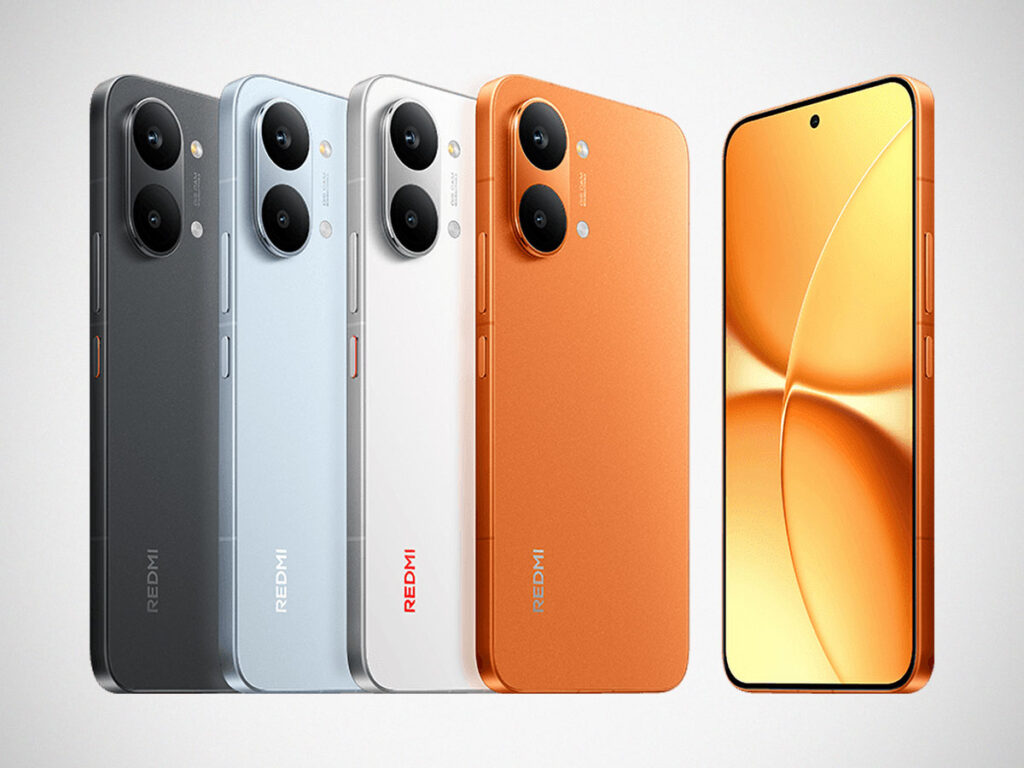
Meanwhile, the Turbo 5 does not have a single camera bump. It has two protruding camera modules, much like the Samsung Galaxy S25 series. The rest of the back cover is minimal, with only the REDMI branding and an LED flash. The two models are very different in features and specs—not just in physical size. Let’s start with the Redmi Turbo 5.
Redmi Turbo 5
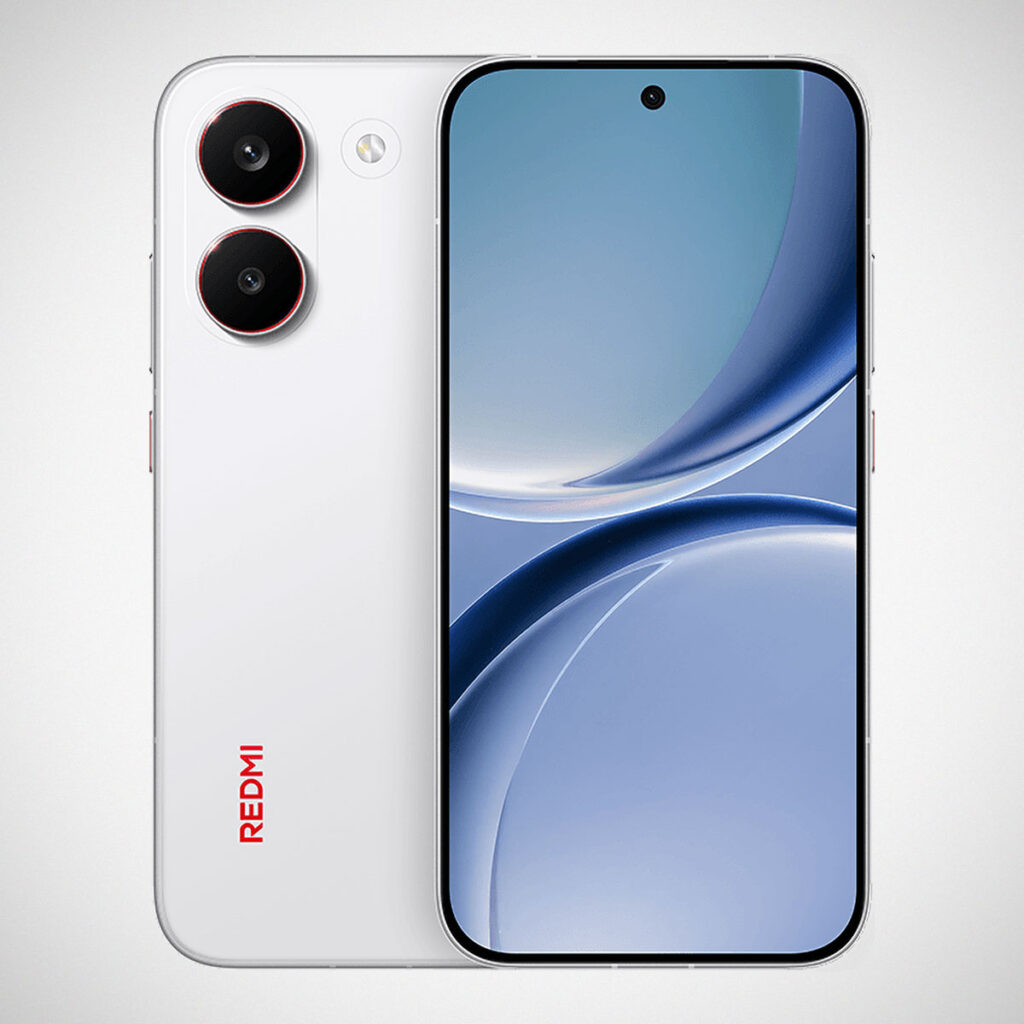
Redmi Turbo 5 [CH] runs on a mid-to-high-end chip, the Dimensity 8500-Ultra. This chip is marketed as a “Flagship-level Efficiency Core,” which basically translates to a mid-to-high-end chip that delivers near-flagship performance while excelling in power efficiency and thermal control. The Dimensity 8500-Ultra is a 4 nm process chip featuring an octa-core processor peaking at 3.4 GHz, and is paired with an Arm Mali-G720 MC8 GPU and NPU 880 for AI duties.
The SoC is bolstered by 12/16 GB LPDDR5X Ultra memory and 256/512 GB UFS 4.1 storage. Man, Xiaomi is definitely not cutting corners on this. We have seen many mid-high range phones that either cut on the SoC or use slower RAM and storage. So, yeah, the Turbo 5 is a refreshing change—especially given the price point. But more on that in a sec.
Fronting the device is a 6.59-inch 1.5K “super sunlight eye protection” display featuring a flat AMOLED panel with 2,756 × 1,268 pixels and up to a 120 Hz refresh rate. This display has a touch sampling rate of 480 Hz and an instant touch sampling rate of 2,560 Hz. Brightness peaks at 3,500 nits, and it supports PWM + DC dimming.
In the color department, it boasts 12-bit color depth (68.7 billion colors), DCI-P3 wide color gamut, a professional original color screen, and multi-screen color synchronization. The display supports HDR10+, HDR Vivid, Dolby Vision, and further touts Wet-hand Touch 2.0. Also on the display is an under-display optical fingerprint sensor and a 20 MP high-resolution camera featuring a 1/4-inch sensor, ƒ/2.2 aperture, and 4P lens elements, with support for up to 1080p/60 video recording. It does 720p slow-mo, too, at 120 fps.
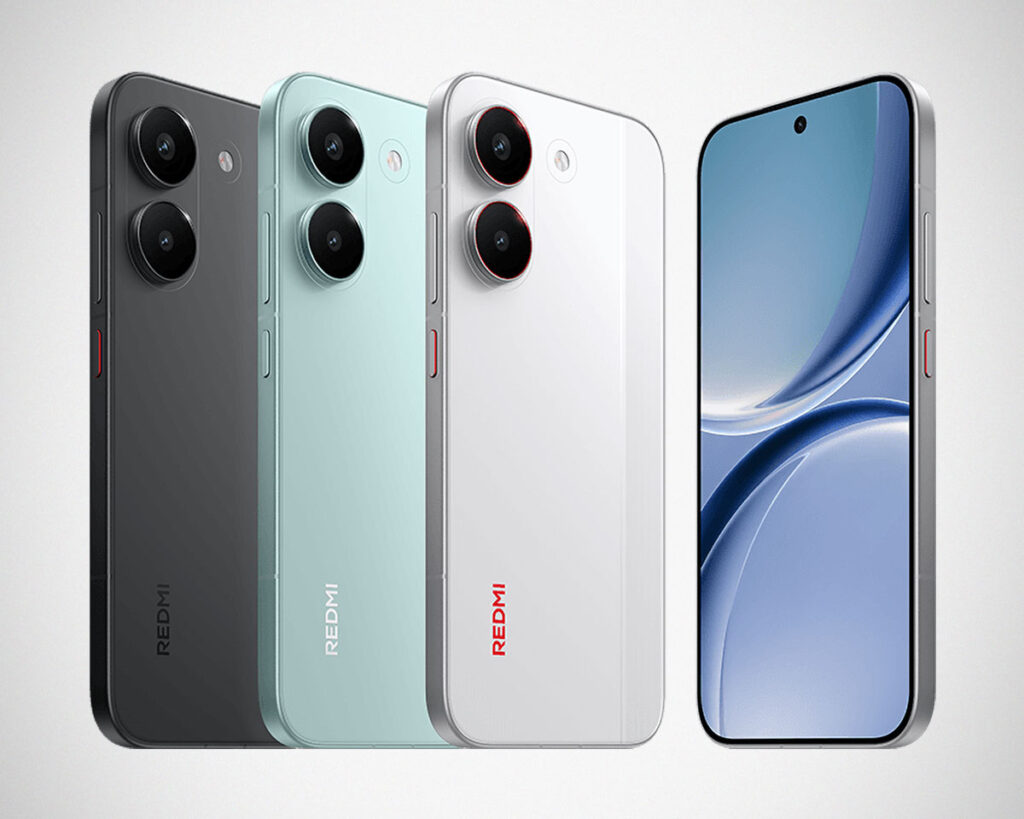
Speaking of cameras, the rear is set up with two: a 50 MP Sony IMX882 main camera and an 8 MP ultra-wide-angle camera. The former features a 1/1.95-inch large sensor with an ƒ/1.5 aperture, 1.6 μm 4-in-1 large pixels, OIS optical image stabilization, and a 6P lens. Meanwhile, the 8 MP camera is rocking a 1/4-inch sensor, ƒ/2.2 aperture, and a 4P lens. The main camera supports up to 4K 30/60 fps video recording, as well as up to 1080p super slow-mo at 960 fps.
It is outfitted with a 7,560 mAh lithium-ion battery, bolstered by a Hyper P3 charging chip and a Hyper G1 self-developed battery management chip. The battery supports 100 W wired fast charging and 27 W wired reverse charging. The handset itself supports PD2.0 as well as PD3.0 fast-charging protocols and features a USB Type-C interface. The Redmi Turbo 5 comes supplied with a 100 W ultra-low-power GaN charger, compatible with the PD charging protocol, as standard.
Other notables include a 3D “Ice-sealed Circulating Cooling Pump” for cooling duties, support for dual nano SIMs, support for 2G up to 5G networks in China, Wi-Fi 6 and older standards, 2×2 MIMO, Wi-Fi Direct, Miracast, Bluetooth 5.4, NFC, and a complete suite of positioning systems and sensors (including an ultrasonic distance sensor, front and rear dual light sensors, IR blaster, X-linear haptic motor, and more).
This may be a mid-range phone in China, but it is also Hi-Res and Hi-Res Audio Wireless certified, and has Dolby Atmos. Finally, the device is multi-IP rated with IP66, IP68, IP69, and IP69K ratings. It has physical dimensions measuring 157.53 mm tall, 75.19 mm wide, and 8.18 mm thick, and weighs 204 g.
Redmi Turbo 5 Max
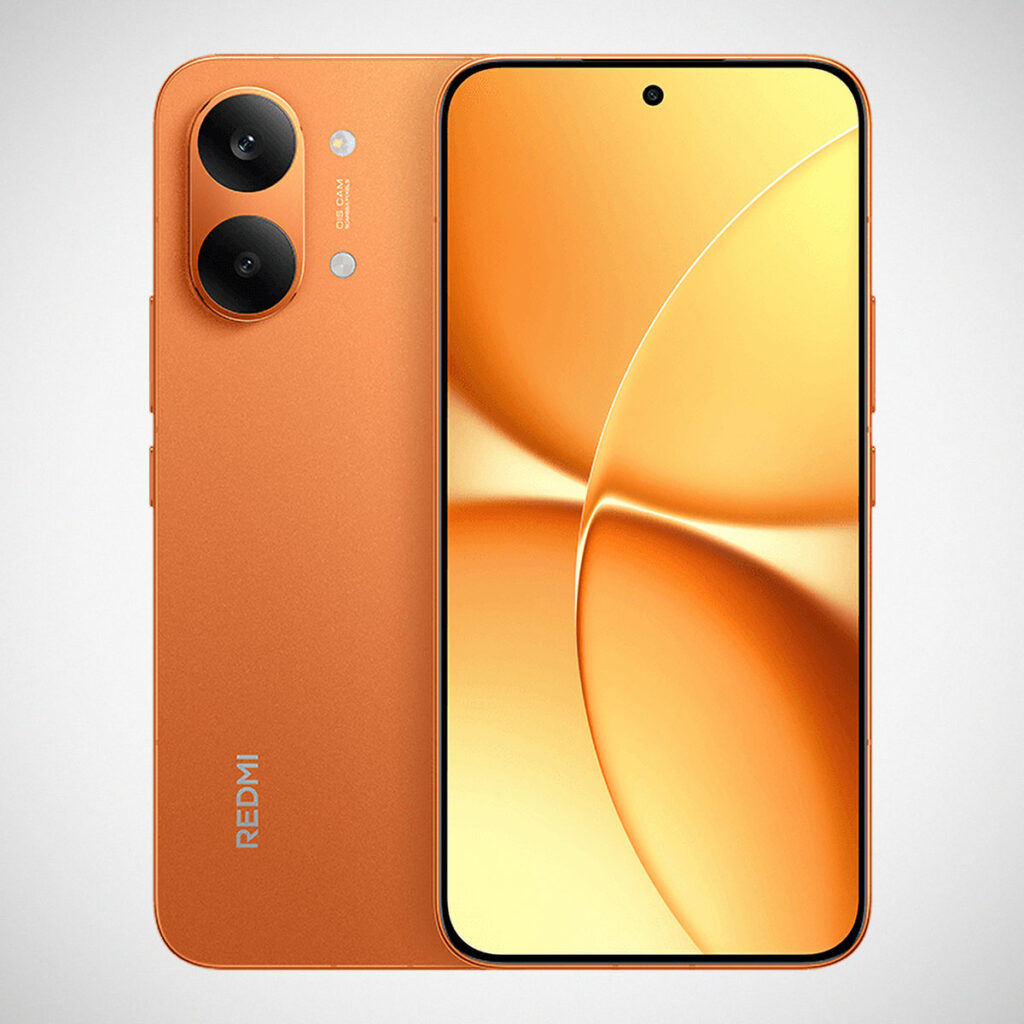
Redmi Turbo 5 Max [CH] is not just bigger in size than the two, but it is the obvious “flagship,” featuring the 3 nm process Dimensity 9500s flagship performance chip. This chip boasts an octa-core processor that peaks at 3.73 GHz and is paired with a 12-core Immortalis-G925 flagship-grade GPU that supports hardware-level ray tracing.
This chip reportedly scores approximately 3.13 million on AnTuTu and approximately 8,510 on Geekbench 6 multi-core tests. And get this: it apparently achieves near-full frame rates in demanding games like Genshin Impact and demonstrates excellent energy efficiency. Now, my interest is piqued!
The SoC also touts the 8th-generation MediaTek NPU 890. It shares the same LPDDR5X ultra-high-speed memory and UFS 4.1 high-speed storage as the Turbo 5. Memory capacities offered include 16 GB and 1 TB, while storage options come in at 256 GB, 512 GB, and 1 TB.
The Max has a larger display. It is a 6.83-inch 1.5K “super sunlight eye protection” display featuring a flat AMOLED panel with 2,772 × 1,280 resolution and up to a 120 Hz refresh rate. The rest of the screen specs are pretty much the same as the regular Turbo 5, except it is rocking a 3D ultrasonic fingerprint sensor. You will also find the same front-facing selfie camera as the regular Turbo 5 on the display.
Speaking of cameras, Redmi Turbo 5 Max definitely has it going for imaging enthusiasts. While it shares the same ultra-wide-angle camera as the standard Turbo 5, it has a different flagship snapper: a 50 MP “flagship dynamic range” main camera featuring the Light Hunter 600 HDR sensor with an ƒ/1.5 ultra-large aperture, a 1/1.95-inch large sensor, 12.5EV high dynamic range, 1.6 μm fused large pixels, OIS optical image stabilization, and a 6P lens. This camera setup also affords up to 4K 30/60 fps video recording and up to 1080p slow-mo at 960 fps.
The Max model also stands out with a huge-capacity battery: a 9,000 mAh lithium-ion battery that also benefits from the Hyper P3 charging chip, Hyper G1 self-developed battery management chip, 100 W Hyper Flash Charge, and 27 W wired reverse charging. It also supports PD2.0 as well as PD3.0 fast-charging protocols, uses a USB Type-C interface, and comes supplied with an ultra-low-power GaN charger compatible with the PD charging protocol, as standard.
The rest of the features are pretty much the same as the Turbo 5, except it has the addition of Dual-Bluetooth and 360° front/rear dual sensors. Physically, it is clearly larger at 162.99 mm tall, 77.93 mm wide, and 8.15 mm thick, and a tad heftier at 219 g.
Pricing and Availability
The Redmi Turbo 5 and Redmi Turbo 5 Max have been launched in China with a starting price of 2,299 yuan [CH] and 2,499 yuan [CH], respectively (about US$337 and US$366).
Images: Xiaomi [CH].


