Remember the sleek 4×4 amphibious vehicle based on the Toyota Land Cruiser from Amphicruiser, a Dutch Amphibious Transport (DAT) project? Well, what we did not tell you is that this platform is not only for leisure. One of its non-recreational purposes is fire and rescue.
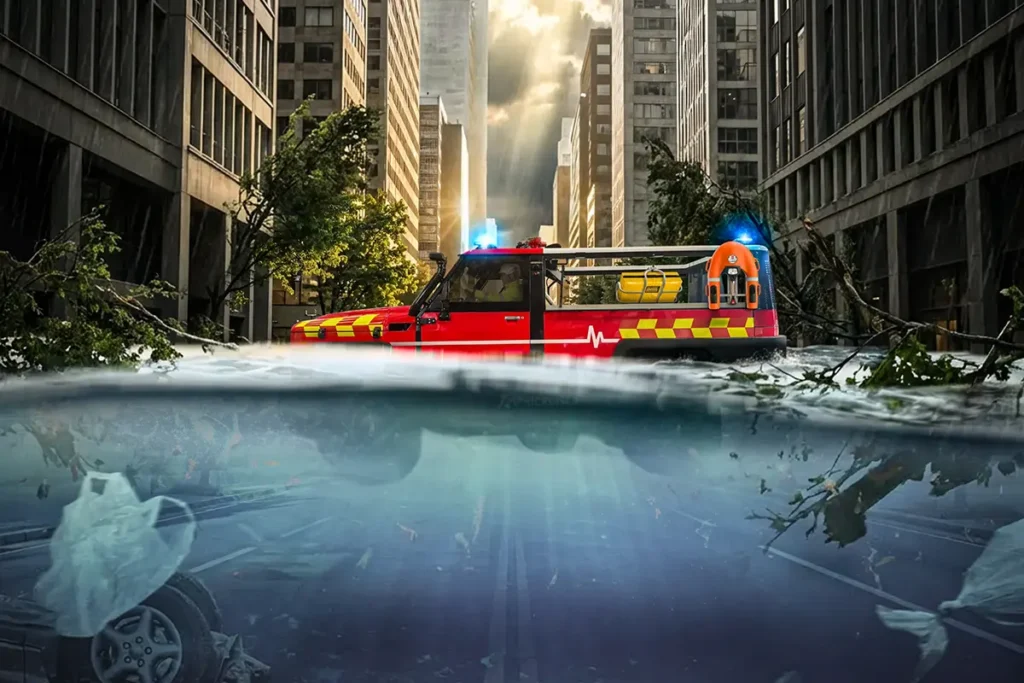
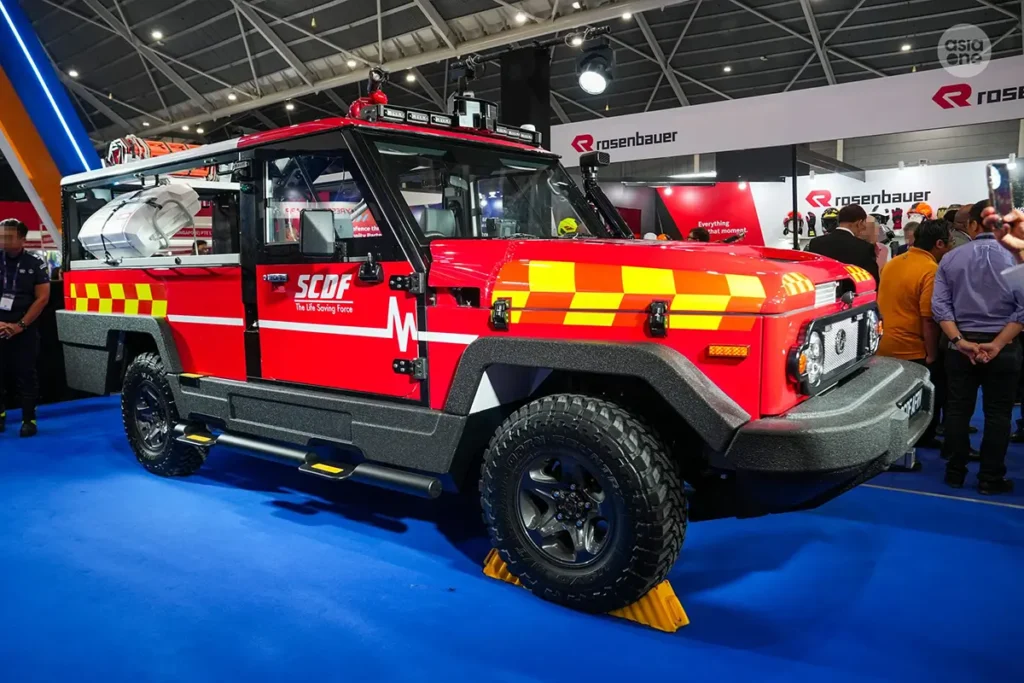
It is not clear when the branching happened, but it sure made the news in recent years when the Amphicruiser Fire & Rescue saw its first real-world deployment with the Singapore Civil Defence Force (SCDF) in 2025.
Jointly developed with the Home Team Science and Technology Agency (HTX), the SCDF Amphibious Firefighting and Rescue Vehicle (AFRV) debuted at last year’s Singapore International Disaster and Emergency Management Expo (SIDEX).
Built on the proven Toyota Land Cruiser J79 chassis and certified for both road and water use, the AFRV keeps emergency response teams moving even when infrastructure fails.
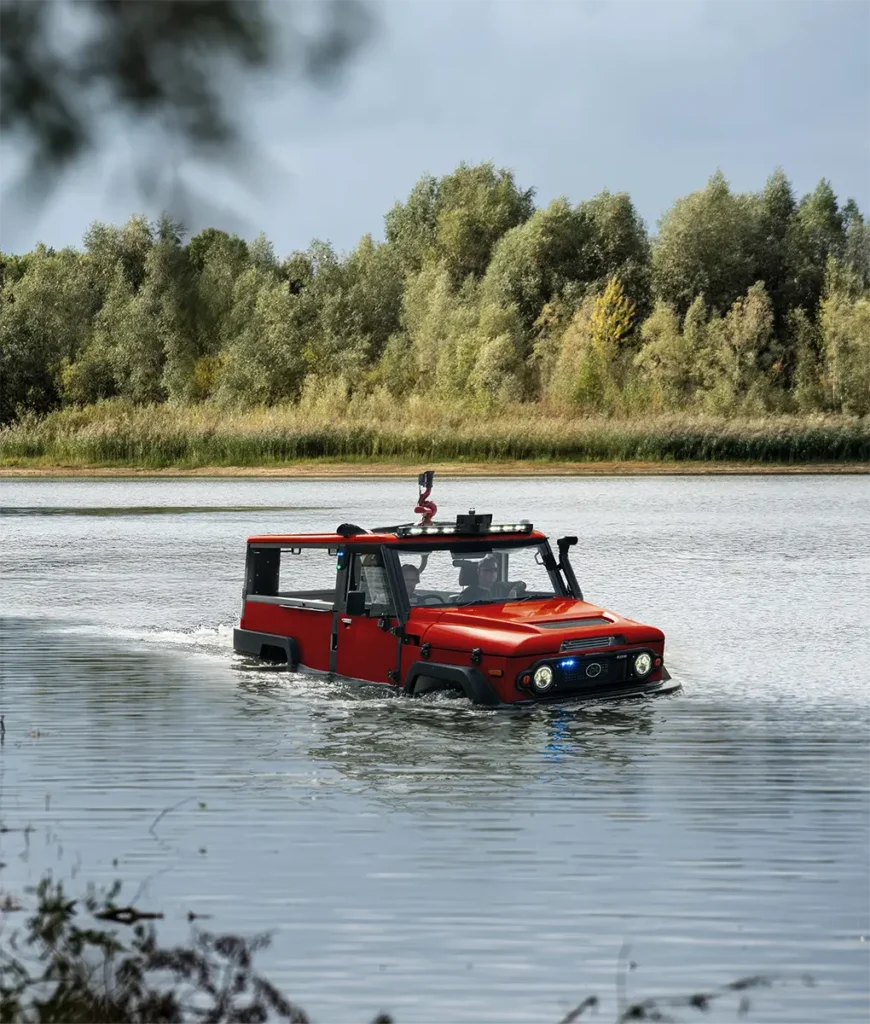
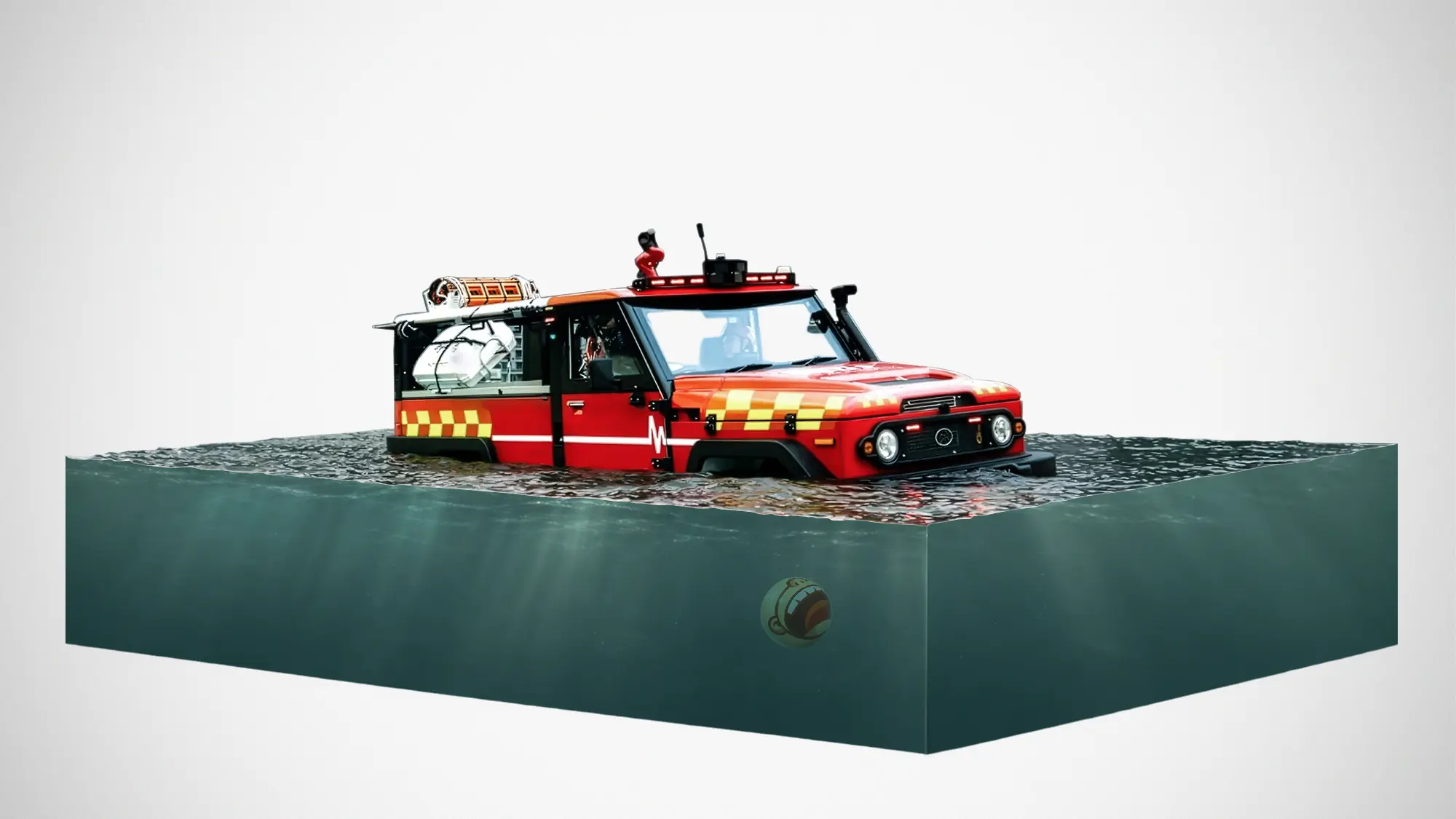
In other words, it bridges the gap between land-based and marine operations, allowing it to handle emergencies on land and on water.
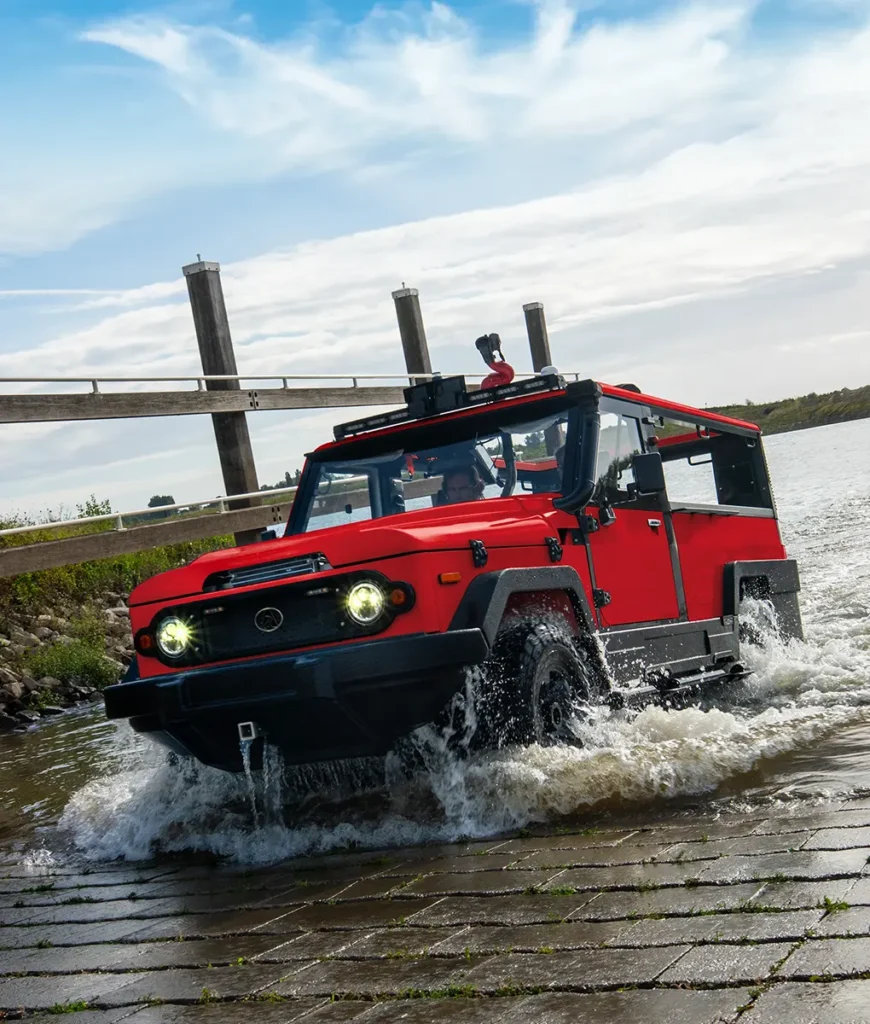
It can transition seamlessly from road to water in seconds at the push of a button. Best of all, it can enter the water without the need for slipways, trailers, or traditional infrastructure.
Amphicruiser’s Fire & Rescue can be configured for a wide range of emergency response tasks. In the case of SCDF’s vehicle, it is equipped with a water cannon and a water rescue net for hauling victims out of the water.
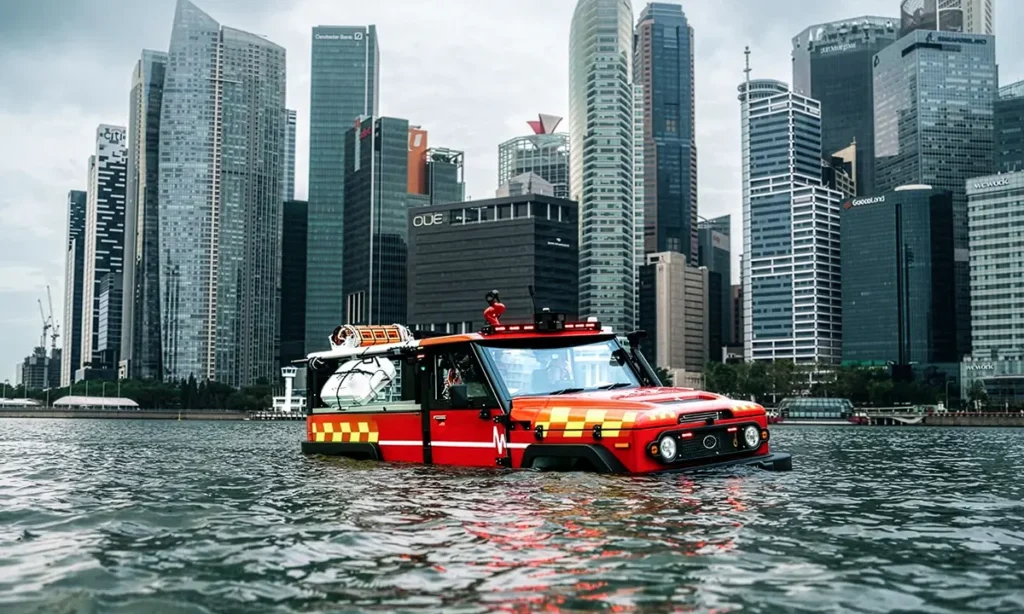
It is unclear whether it is equipped with a hose extension that turns the vehicle into a water-pumping station.
As of November 2025, the AFRVs were deployed at four fire stations across the island state of Singapore. For a country this small, and one that hardly experiences serious flooding, Singapore sure is obsessed with preparing for water-based firefighting.
This is not the first amphibious firefighting and rescue vehicle, though, nor is it the first vehicle designed for water-based firefighting. Back in 2018, its Disaster Assistance and Rescue Team added a DART Amphibious Vehicle (DAV), and a couple of years ago, defense contractor ST Engineering introduced an unmanned firefighting surface vessel.
General specs include a road speed of up to 135 km/h (85 mph), a water speed of around 9 km/h (5 knots), and a capacity of 2–6 people plus 300–1,200 kg (661–2,646 lbs.) of gear.
It is not clear what the drivetrain is, though we noted that it has a water jet for propulsion in water. It looks like it has a vectoring nozzle. We could be wrong.
Anyhoo, you may learn more about the Amphicruiser Fire & Rescue here.