If you haven’t already heard, Ferrari is finally getting into the EV game. The Italian marque that famously treated electric propulsion like an awkward family topic quietly revealed its electric drivetrain last October under a placeholder name. Fast forward to now, and we finally have a proper identity, Ferrari Luce, along with an early look at its interior ahead of the full reveal in May. Ferrari, unsurprisingly, chose to show the inside first. Priorities.
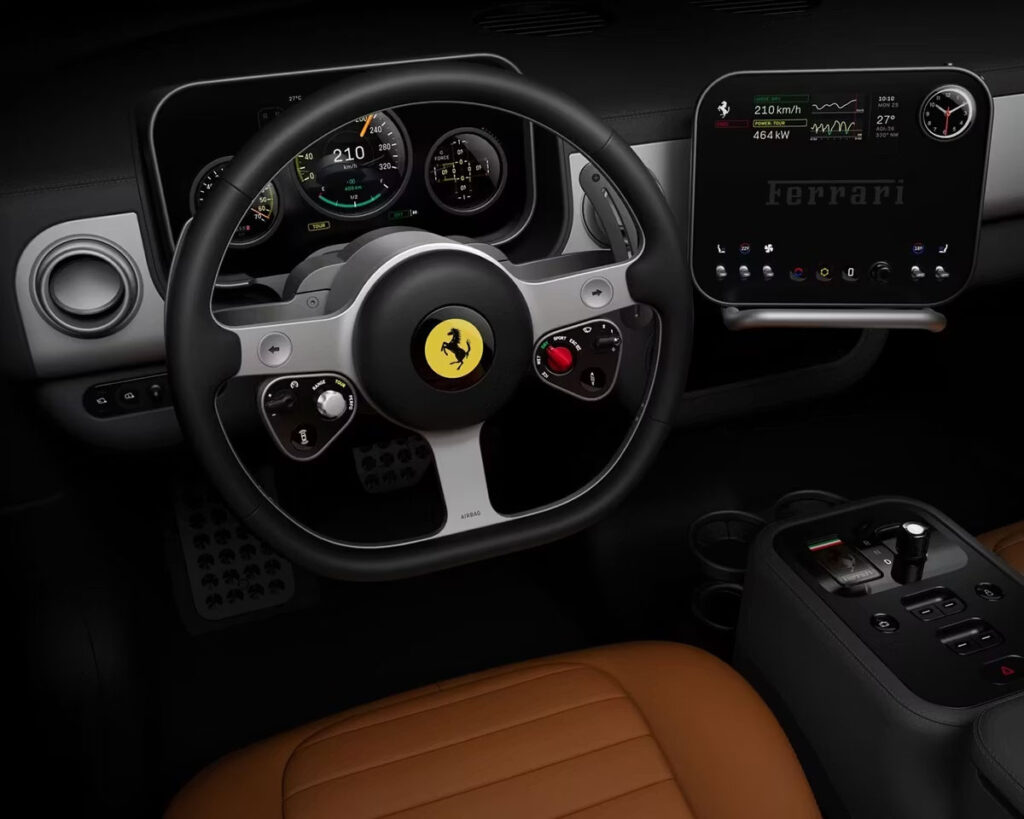
Luce translates to “light” in Italian, and Ferrari is keen to stress that this is not just about electrons and batteries. The interior makes that clear immediately. This is not a touchscreen-first cabin trying to cosplay as a smartphone. Instead, the Luce interior is designed as a single, clean volume where physical interaction still matters. Calm, focused, and almost minimalist by Ferrari standards, the cabin feels intentional rather than trendy.
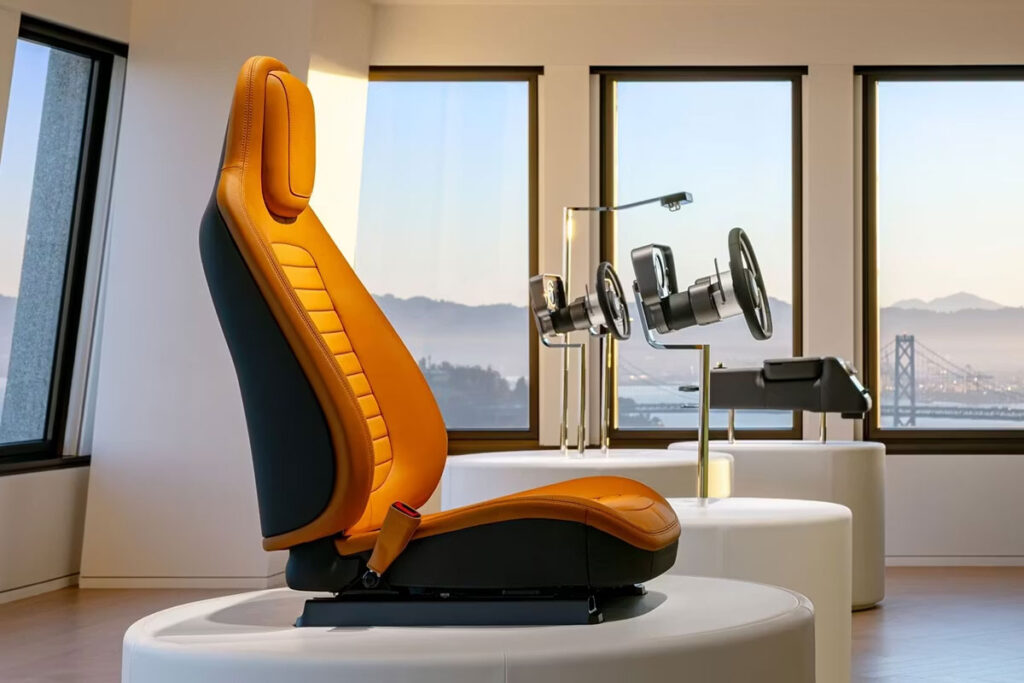
Much of that restraint comes from Ferrari’s five-year collaboration with LoveFrom, the creative collective founded by Sir Jony Ive and Marc Newson. Revealed in San Francisco, the interior leans heavily into tactile controls. Mechanical buttons, dials, toggles, and switches dominate the experience, quietly pushing back against the idea that electric cars must be ruled by giant touchscreens.
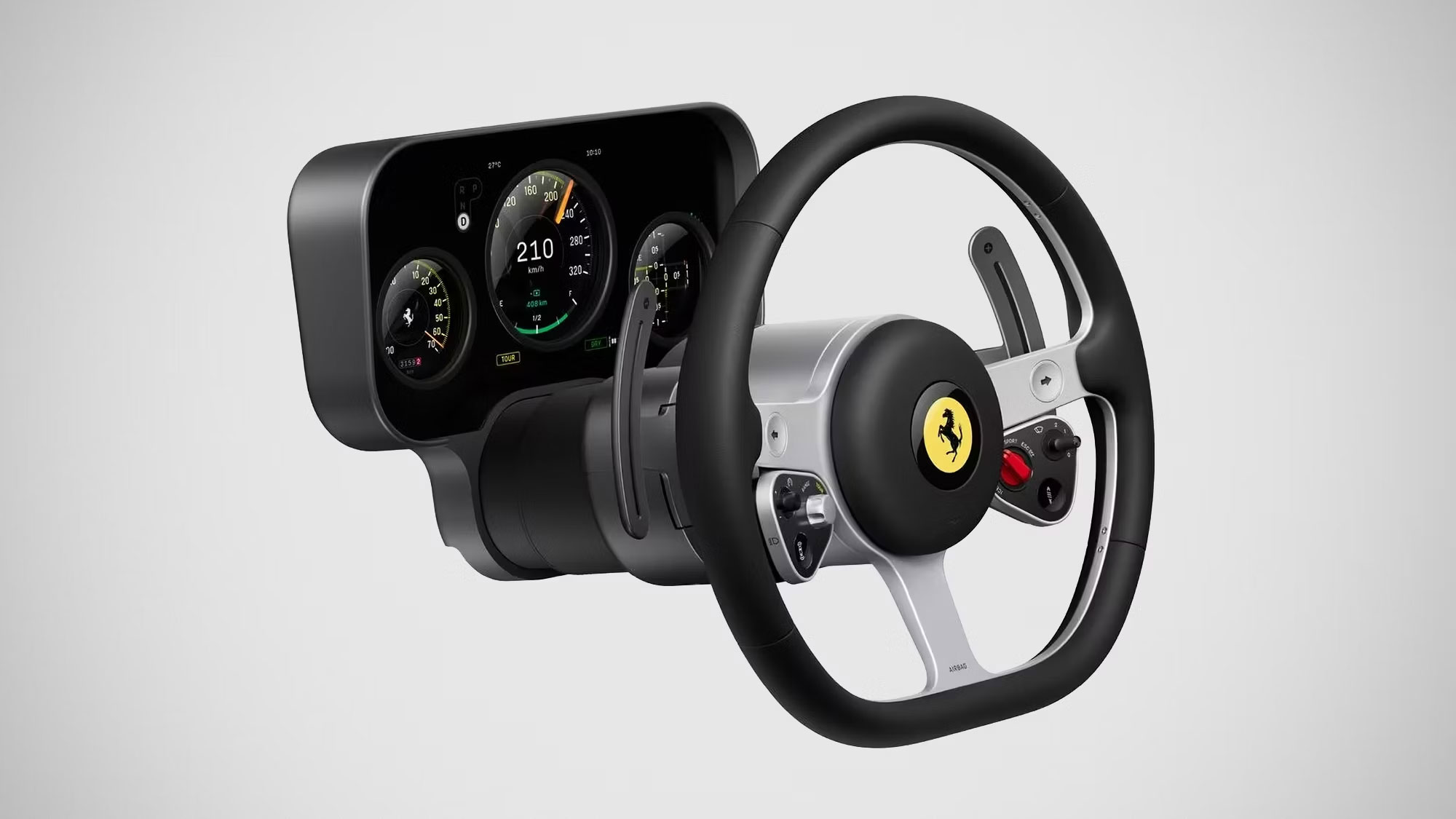
The steering wheel sets the tone. It uses a simplified three-spoke layout inspired by classic Ferrari wheels from the 1950s and 60s, executed in exposed aluminium. The structure is CNC-machined from 100 percent recycled aluminium alloy, made up of 19 individual parts, and weighs 400 grams less than a standard Ferrari steering wheel. Controls are split into two analogue modules inspired by Formula One single-seaters, refined through more than 20 evaluation tests to perfect feel and feedback.
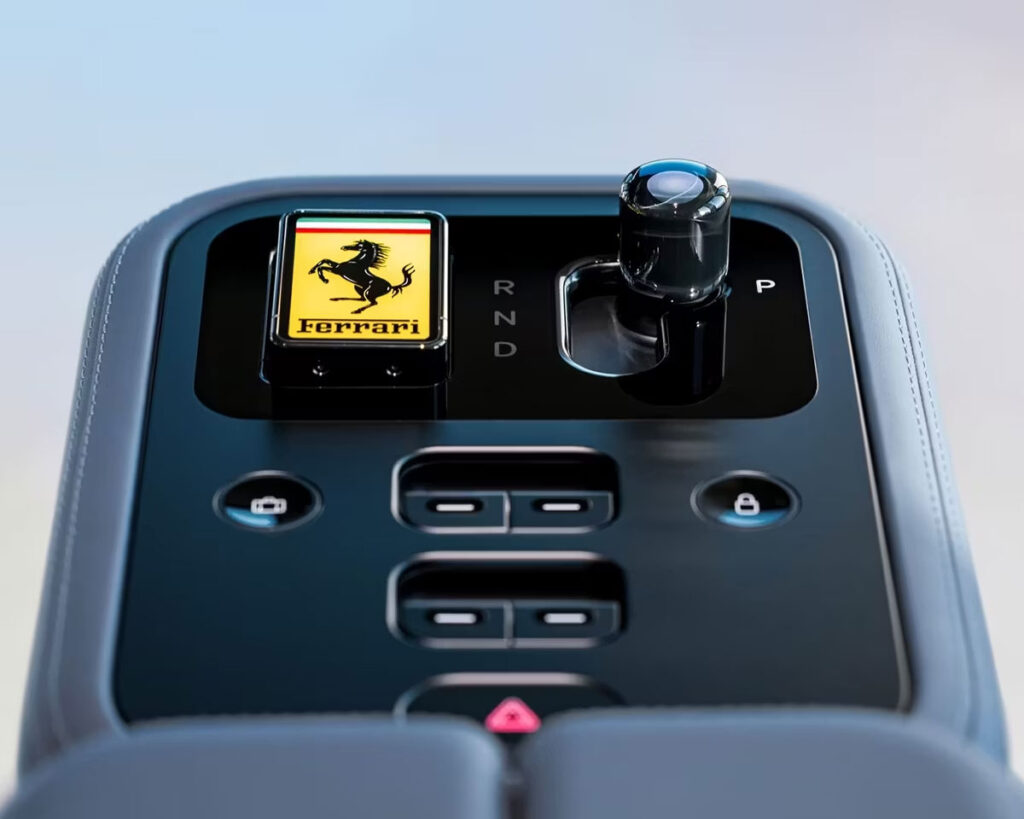
Starting the Ferrari Luce is deliberately theatrical. The key itself is made from Corning Gorilla Glass and features an automotive-first E Ink display that only consumes power when changing state. Slotting it into the central dock triggers a choreographed lighting sequence across the binnacle and control panel, easing the car from rest into readiness.
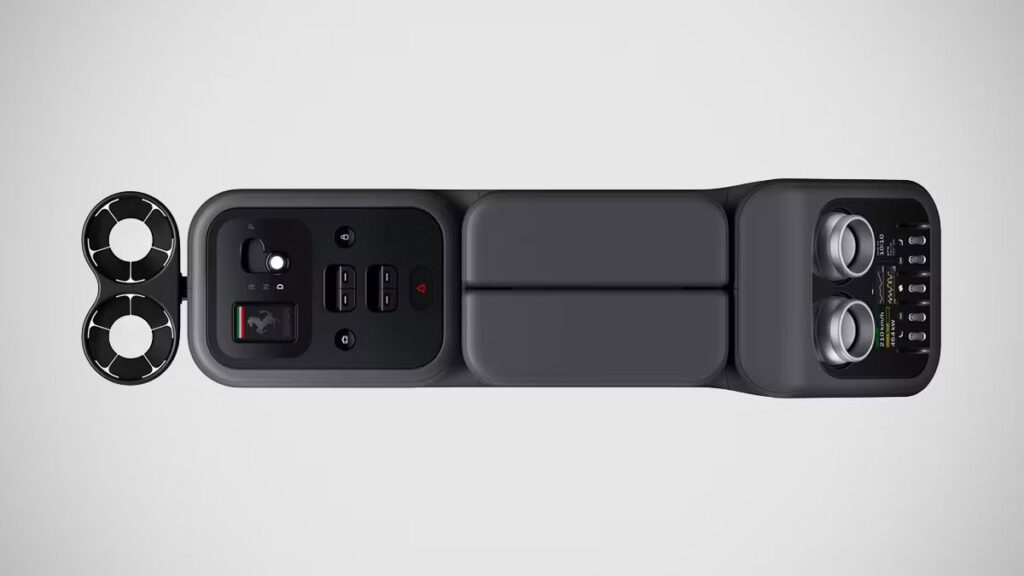
Three displays define the interface: a driver binnacle, a central control panel, and a rear control panel. The binnacle is mounted on the steering column, moving with it, and uses overlapping OLED displays developed with Samsung Display to create depth and clarity. The central panel can rotate toward the driver or passenger and even includes a palm rest, while a beautifully over-engineered multigraph offers clock, chronograph, compass, and launch control modes.
Materials across the cabin are unapologetically premium. Precision-milled Corning Gorilla Glass and anodised aluminium dominate, with components machined from solid billets using advanced CNC processes. It feels modern, durable, and distinctly Ferrari.
Key interior highlights include a steering-column-mounted OLED binnacle, a rotating central control panel, a laser-etched Gorilla Glass shifter, a lightweight recycled aluminium steering wheel, and a mechanical-first interface designed to keep drivers engaged.
You can learn more about this beautiful—possibly game-changing—EV interior HERE.
Images: Ferrari.