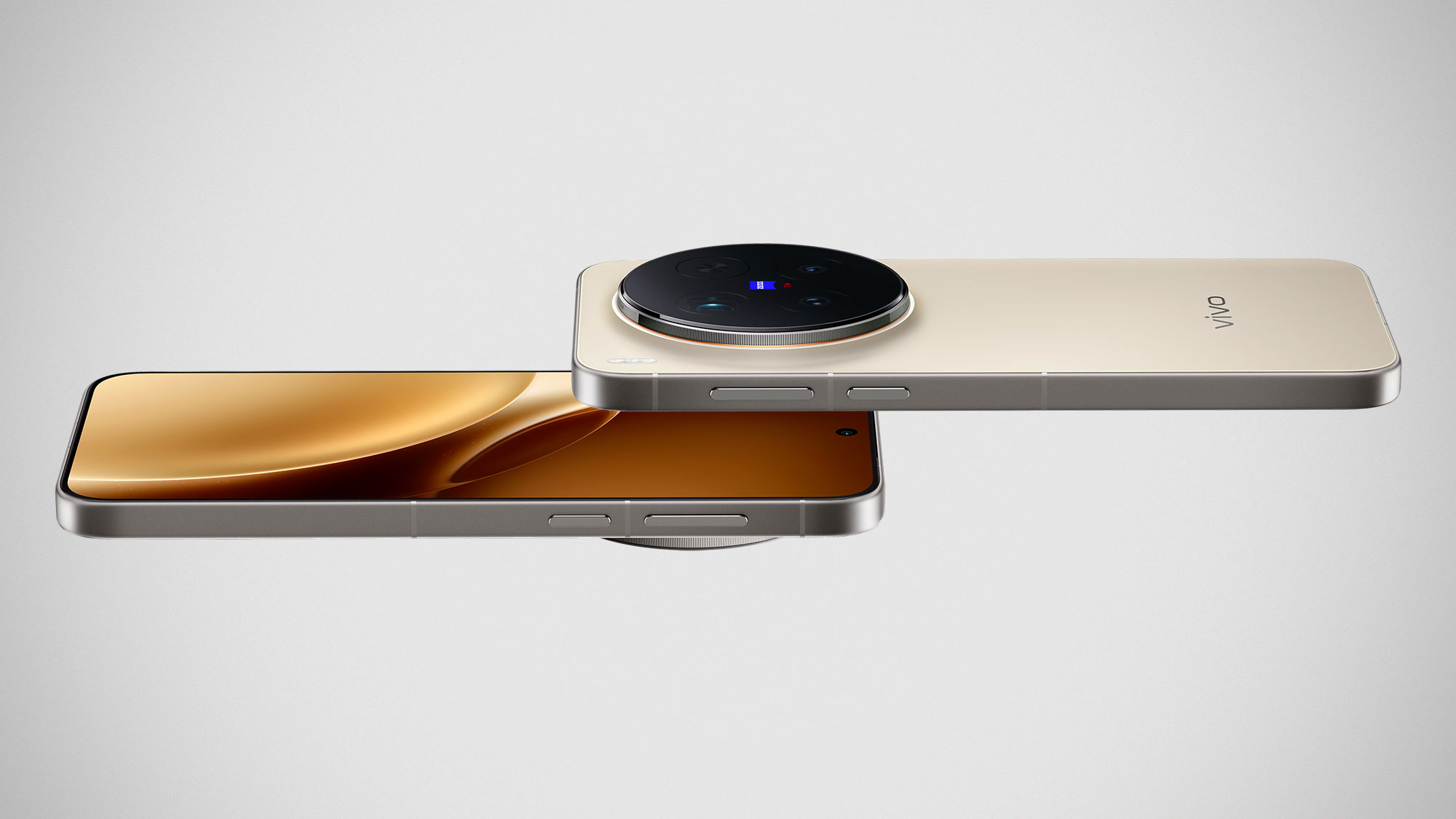
Oppo is not in the 200 MP camera race against itself. Prior to the Oppo Find X9 Series being revealed with a 200 MP telephoto snapper co-developed with Hasselblad, Vivo’s X300 Series already had a device with a 200 MP primary HPB sensor. 200 MP isn’t new, but there appears to have a renewed interest among the handset makers. Last year, the Honor Magic7 also rocked a 200 MP sensor camera, and the Motorola Moto X30 Pro was likewise outfitted with one—way back in 2022. Even a tank-like device such as the 8849 Tank 3 Pro touts a 200 MP AI camera.
But obviously, like Oppo’s, Vivo’s 200 MP snapper is not just another 200 MP. It is a Zeiss 200 MP APO super telephoto camera. There’s a catch: this crazy megapixel zoom camera is only available on the Pro model [CH]. This camera uses Samsung’s HPB 200 MP 1/1.4” sensor, paired with an f/2.67 aperture and an 85 mm equivalent focal length, and is capable of macro photography with up to 20x zoom. Also present are Zeiss T* coating, CIPA 3.3 professional-grade image stabilization, as well as OIS.
Accompanying the flagship camera is a Vivo x Sony LYT-828 50 MP 1/1.28” sensor with an f/1.57 aperture, 24 mm equivalent focal length, VCS bionic spectrum 3.0, Zeiss T* coating, and both CIPA 3.3 stabilization and OIS. Finally, there is a 50 MP Zeiss ultra wide-angle camera featuring a 1/2.76” sensor, f/2.0 aperture, 15 mm equivalent focal length, autofocus, and Zeiss T* coating. Rounding up the package is a flash module outside of the large camera bump—like the non-Pro model.
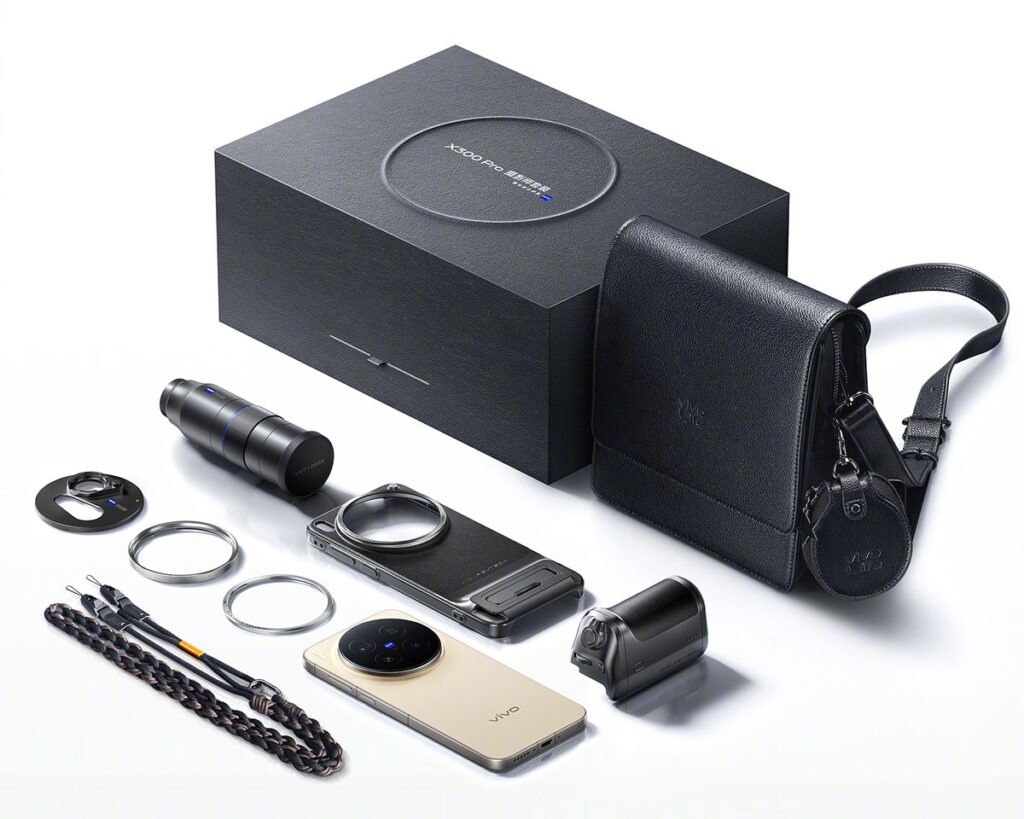
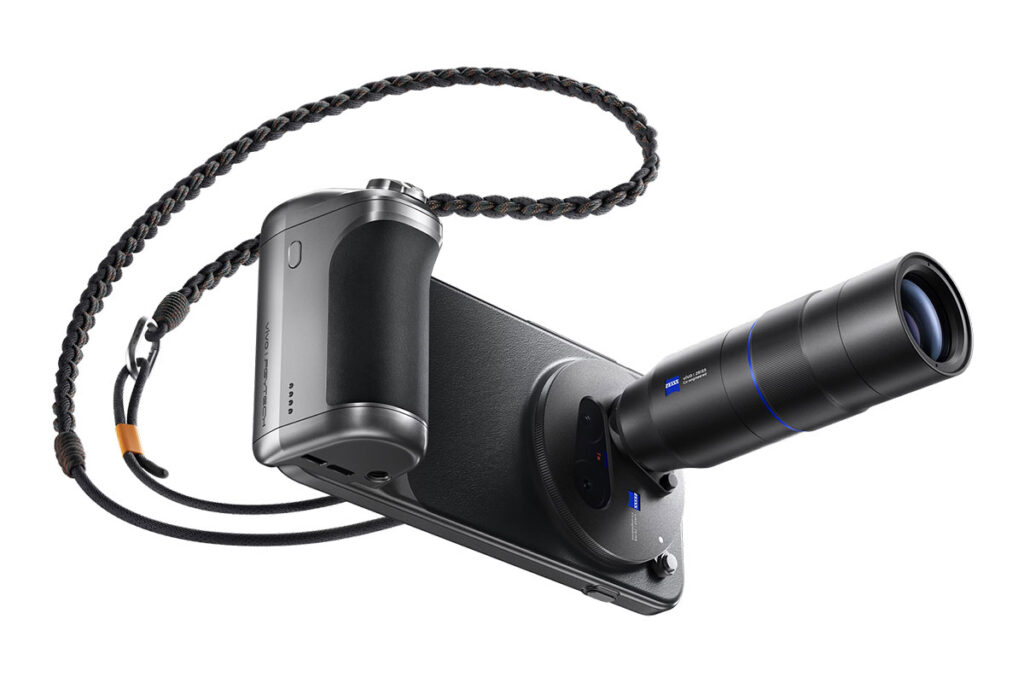
Meanwhile, on the display side, there’s a hole-punch 50 MP Zeiss front-facing camera with autofocus, a JN1 1/2.76” sensor, a 92° wide-angle lens, and an f/2.0 aperture. Imaging features include Dolby Vision 4K 60 fps video recording, simultaneous 4K front and rear video recording, and still capture while recording. Other tricks include Live Photo, 4K 120 fps 10-bit Log video, AI creation tools, and more. Rounding up the imaging capabilities are optional accessories like a camera grip and a 200 mm telephoto lens. Oppo’s Find X9 Pro has a similar setup too, further blurring the line between camera and phone.

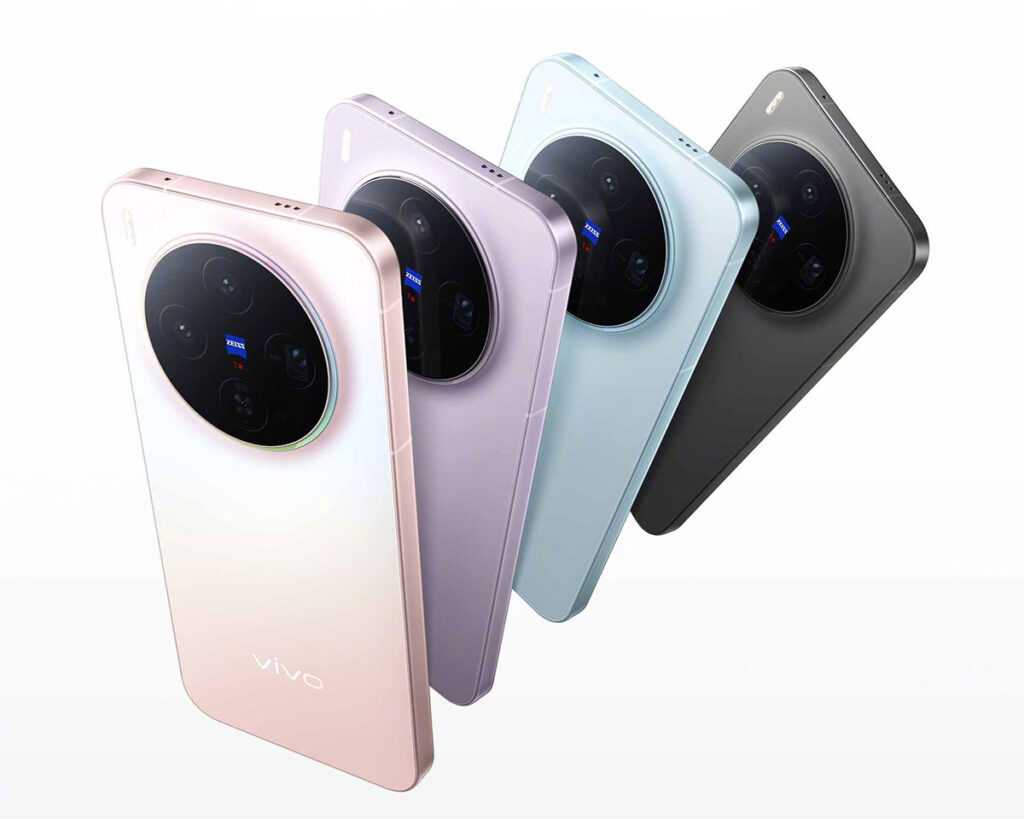
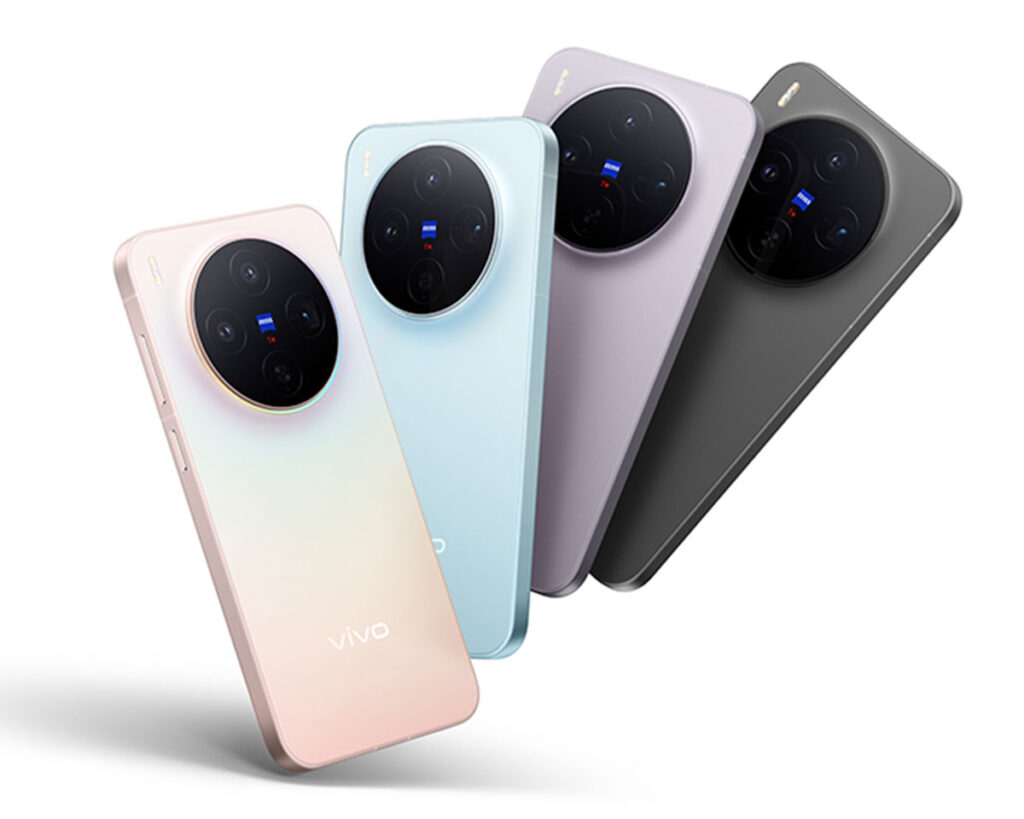
The regular X300 [CH] may not have the insane 200 MP zoom, but it does have a 200 MP Zeiss main camera (f/1.68) with OIS, a 50 MP Zeiss APO super telephoto (f/2.57) with 3x optical and 100x digital zoom, and a 50 MP Zeiss ultra wide-angle camera (f/2.0). Autofocus is available across all cameras.
The two models also differ in size, screen, battery, and, for one configuration, memory type. The Pro has a 6.78-inch AMOLED display with 1–120 Hz adaptive refresh rate and 2,800 × 1,260 resolution, while the standard X300 has a 6.31-inch AMOLED display, also 1–120 Hz, with 2,640 × 1,216 resolution. The Pro packs a 6,510 mAh (typical) battery, while the X300 gets a 6,040 mAh (typical) cell. Both support 90 W wired flash charging and 40 W wireless flash charging. Both also use UFS 4.1 storage and LPDDR5X Ultra memory, though the Pro’s 16 GB + 1 TB “photographer box set” version features LPDDR5 Ultra Pro memory. The Pro also stands out with satellite communication capability.
Under the hood, both are powered by the MediaTek Dimensity 9500 3 nm chipset alongside Vivo’s imaging chip V3+. Both include an under-display 3D ultrasonic fingerprint sensor. The rest of the specs are fairly standard. Nothing else that will make you drool — the imaging already did that for most tech heads.
The Vivo X300 Series has launched in China in various colors and configurations, with the X300 starting at 4,399 yuan [CH] (~618 USD) and the X300 Pro starting at 5,299 yuan [CH] (~744 USD). The so-called “photographer box set” is available for a grand 8,299 yuan (~1,166 USD). In addition, the photography set, which includes the camera grip, the Vivo Zeiss 2.35x telephoto lens, and associated accessories are available to purchase for 1,499 yuan (~211 USD).


Images: Vivo [CH].